Pitcairn PA-18 (one of a kind)

Posted By on June 14, 2005

Jack and Kate Tiffany

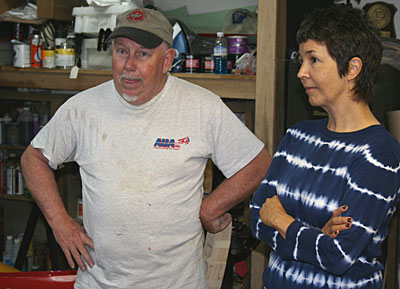
Our EAA chapter was hosted by Jack and Kate Tiffany in their Spring Valley, Ohio shop last Sunday afternoon. (June 12, 2005) Jack and his two talented partners, Don Siefer and Herman Leffew, have been rebuilting an extremely rare Picairn PA-18 Autogiro from the 1930′s. If I were ‘twitcher‘ this ‘bird’ would be considered a ‘lifer.’ :) Our visit to his shop was educational and super interesting; thanks Jack!
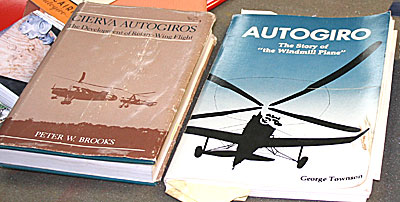
Autogiro Books

The short and ‘no’ runway aircraft have been the Holy Grail in aviation for many years. Pitcairn originally got a start building biplanes that flew much of the US Airmail in the 1920s and was very successful in securing contracts with the US government. Harold Pitcairn decided to move forward and make an investment of some $600,000 dollars in 1929 from Juan de la Cierva, the Spanish aviation pioneer that developed the autogiro. (history) The Pitcairn company then began development of the handful of autogiros in the Pitcairn series. Eventually the contract was not awarded to Pitcairn and the technology was shared with other companies. A long drawn out court battle between Pitcairn and the US Army lasted for years. (finally settled in favor of the Pitcairn estate) Jack recommended the book Legacy of Wings if we wanted the full Harold Pitcairn story.
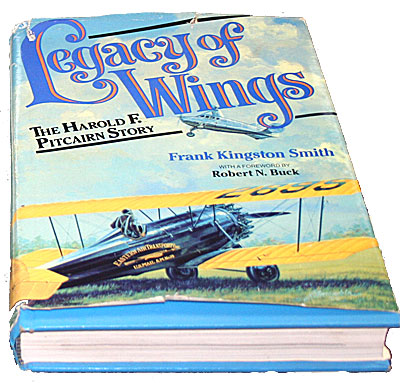
Legacy of Wings

Unfortunately I don’t do the full Pitcairn story justice and will have to rely on remembering the information that Jack and his talented partners shared. Below is the slightly larger PCA2 flying over Philidelphia; notice the flex in each of the wooden ribbed, cloth covered rotor blades. Unique to say the least.
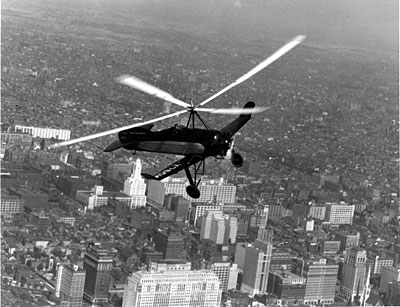
Pitcairn PCA-2 over Philidelphia

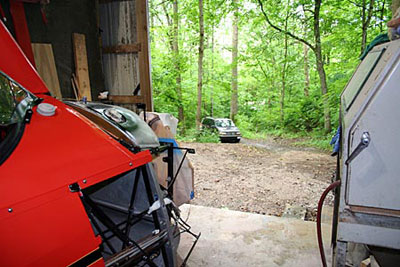
Between these two was the PA-18 that we saw being restored in Jack’s out of the way’ shop. (the slippery drive up the slope made for an interesting place to be restoring antique airplanes. :) )

Jack\'s slippery drive

Below is an original photo of Jack’s PA-18 Autogiro (NC12678) at Wings Field, Ambler, PA. It was owned by Anne Strawbridge of Philadelphia who is sitting in the front cockpit.
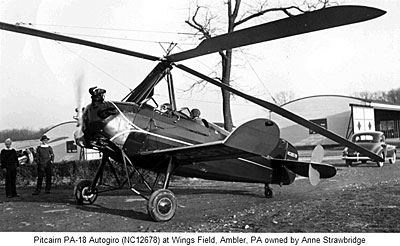
Pitcairn P-18 from the 1930s

Our visit started with a bit of history as Jack explained how he acquired this rare bird and the excitement that ensued in the on again off again deal. The fairly intact autogiro was pack up along with another plane and trucked in from California. The three partners did an exceptional job of photographing, removing and cataloging every part removed. Jack continued to relay interesting stories about traveling to New Jersey to visit with Stephen Pitcairn (son of Harold Pitcairn) who also restores old Pitcairn airplanes. Interestingly, Stephen Pitcairn owns a PCA-2 known as “Miss Champion” that was originally purchased by the Champion Spark Plug company. This aerogiro will be flown this July to “Airventure” in Oshkosh, Wisconsion and will then reside permanently in the EAA museum’s Pitcairn Hanger at the Pioneer airport. (It made one past appearance at the Oshkosh airshow in 1986) It will be hangered along with a Mailwing biplane and a one of a kind Pitcairn PA-38.

Once we had a handle on the history of both the autogiro and Jack’s current project, we had an opportunity to see the almost completed plane. (and do I like to touch, feel and question … oh, and photograph.)
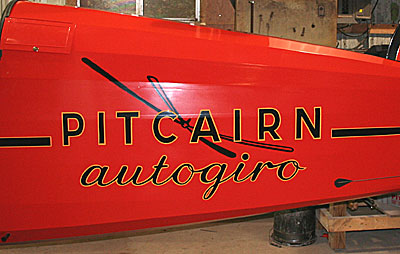
Pitcairn Graphics

His project is coming along beautifully and is being restored to original condition at great pain and expense. Finding things like the special flat head rivets and matching colors precisely are all part of the process. Interestingly there have been a few safely improvements since this PA-18 will be flown. The first flight will be by our own EAA Chapters Red Stewart Field’s Emerson Stewart III. (I’ll try to update this fall) I recall one of the improvements was to replace the spot welding technique that was originally used to attach each of the rotor ribs to the single spar; the partners chose to epoxy each to the spar after noticing many of the spot welds had failed.
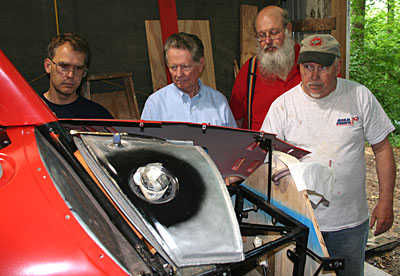
Engine not included

The engine has been fully restored and is being stored at the airport hanger, but from the photo alone, it is an impressive looking piece of hardware. I thought it looked extremely heavy, but Jack said it was about 300 lbs. and developed 160 hp.
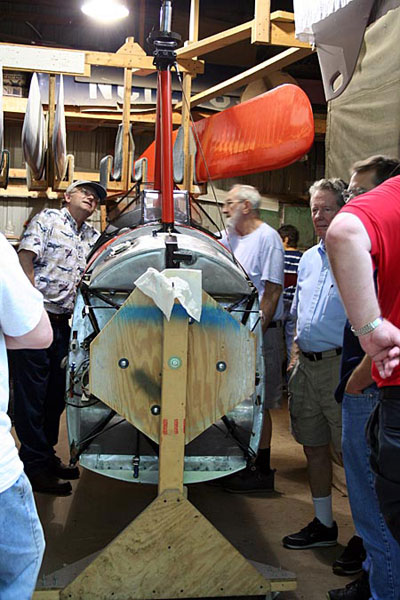
View from the Front

The most unusual part of the autogiro is perhaps the number of cables and rigging and mast structure. Nothing is square as the rotors must be at 2 degrees from vertical. Obviously what makes the autogiro unique is the 4 ‘wings’ (rotors) that rotor at 120 rpm and develop enough lift to keep the PA-18 in the air iand shorten the takeoffs. Their are still short wings that develop the balance of the lift and ailerons/rudders that control the extremely smooth flight. Jack joked that he plans on flying it with a mohawk haircut as the rotors develop lift but don’t have a downwash like today’s helicopters. Below is a photo of one of the very flexible rotor wings in the paint booth.
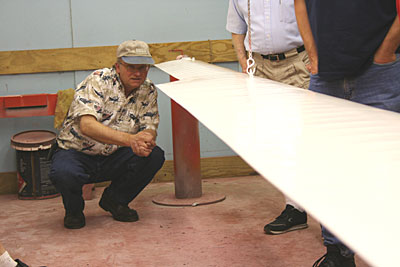
Rotor blade in paint booth

The workmanship was exceptional and I can see that these three would be swamped if they took on many outside projects. For them this is obviously a project of love. The years of work and patience is evident.
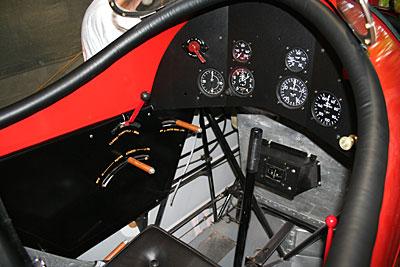
Cockpit

In case you are reading this, thanks for having our chapter and including us in the select group of ‘lookers’ to a very rare restoration. I look forward to the first ‘official’ flight and someday sharing the story ‘that I was there’ when that museum quality restoration of a Pitcairn PA-18 Autogiro was being completed.
Autogiro Animation__

Comments

  • Jim Tucker

    What don’t you do? Your blog is by far the most interesting I read. Thanks for the great aviation history article. I can’t wait until I hear about this autoglider flying. -Jim Tucker, MD

  • Jim Tucker

    What don’t you do? Your blog is by far the most interesting I read. Thanks for the great aviation history article. I can’t wait until I hear about this autoglider flying. -Jim Tucker, MD

  • Jim Tucker

    What don’t you do? Your blog is by far the most interesting I read. Thanks for the great aviation history article. I can’t wait until I hear about this autoglider flying. -Jim Tucker, MD

  • Jeff Parren

    Nice post rich. Keep sending this stuff to Cinci TDI so we can see how it progresses! I would love to be there for the first flight of such a unique bird. Which leads me to this bad joke: How do you catch (sneek a peak) of a unique bird?
    A: unique up on it!

    Ha ha.

    Jeff aka jbleu101

  • Jeff Parren

    Nice post rich. Keep sending this stuff to Cinci TDI so we can see how it progresses! I would love to be there for the first flight of such a unique bird. Which leads me to this bad joke: How do you catch (sneek a peak) of a unique bird?
    A: unique up on it!

    Ha ha.

    Jeff aka jbleu101

  • Jeff Parren

    Nice post rich. Keep sending this stuff to Cinci TDI so we can see how it progresses! I would love to be there for the first flight of such a unique bird. Which leads me to this bad joke: How do you catch (sneek a peak) of a unique bird?
    A: unique up on it!

    Ha ha.

    Jeff aka jbleu101

  • Mark Grafstrom

    I have been interested in autogiros for a long time. I would like to initiate a renisance of the large tractor type gyrocraft to an entirely new application. This application being ag-aviation. The large tractor type autogiros could handle a suffuciently large hopper, the machine could also assume a slower speed to deliver more gallons per acre, and wingtip vorticies would be kept to a minumum. Rotodyne variations could also be further developed along these lines to deliver fire retardant and water to wildfires. Even further applications could be explored in landscapacing and buiding fields to deliver up to three yards of gravel or other fill to pinpoint areas other-wise unacessible by road. Helicoptors are maintainace hogs and are usually accidents waiting to happen. In an all comsuming quest for a sustained hover performance, the good and practical ascepts of the autogiro have been overlooked. It is good to here that these wonderfull and usefull machines are being restored. My hope is that modern examples will soon be built that utilize composiite construction and turbine powerplants. One day I hope to see these wonderfull machines take a prevelent part once again in the scope of modern aviation.

    Mark Grafstrom

  • Mark Grafstrom

    I have been interested in autogiros for a long time. I would like to initiate a renisance of the large tractor type gyrocraft to an entirely new application. This application being ag-aviation. The large tractor type autogiros could handle a suffuciently large hopper, the machine could also assume a slower speed to deliver more gallons per acre, and wingtip vorticies would be kept to a minumum. Rotodyne variations could also be further developed along these lines to deliver fire retardant and water to wildfires. Even further applications could be explored in landscapacing and buiding fields to deliver up to three yards of gravel or other fill to pinpoint areas other-wise unacessible by road. Helicoptors are maintainace hogs and are usually accidents waiting to happen. In an all comsuming quest for a sustained hover performance, the good and practical ascepts of the autogiro have been overlooked. It is good to here that these wonderfull and usefull machines are being restored. My hope is that modern examples will soon be built that utilize composiite construction and turbine powerplants. One day I hope to see these wonderfull machines take a prevelent part once again in the scope of modern aviation.

    Mark Grafstrom

  • Mark Grafstrom

    I have been interested in autogiros for a long time. I would like to initiate a renisance of the large tractor type gyrocraft to an entirely new application. This application being ag-aviation. The large tractor type autogiros could handle a suffuciently large hopper, the machine could also assume a slower speed to deliver more gallons per acre, and wingtip vorticies would be kept to a minumum. Rotodyne variations could also be further developed along these lines to deliver fire retardant and water to wildfires. Even further applications could be explored in landscapacing and buiding fields to deliver up to three yards of gravel or other fill to pinpoint areas other-wise unacessible by road. Helicoptors are maintainace hogs and are usually accidents waiting to happen. In an all comsuming quest for a sustained hover performance, the good and practical ascepts of the autogiro have been overlooked. It is good to here that these wonderfull and usefull machines are being restored. My hope is that modern examples will soon be built that utilize composiite construction and turbine powerplants. One day I hope to see these wonderfull machines take a prevelent part once again in the scope of modern aviation.

    Mark Grafstrom

  • Todd Shiverdecker

    I helped put the rotors on today (just happened to be walking at the airport with my wife…). It is beautiful and should be flying in a month or so…

  • Todd Shiverdecker

    I helped put the rotors on today (just happened to be walking at the airport with my wife…). It is beautiful and should be flying in a month or so…

  • Todd Shiverdecker

    I helped put the rotors on today (just happened to be walking at the airport with my wife…). It is beautiful and should be flying in a month or so…

  • http://www.myarchive.us/richc/2003jettatdi RichC

    Todd,

    Outstanding … I’m really looking forward to hearing more about this. Any comments as to Emerson Stewart taking the first test flight? I sure sounds like it will be in the air this summer. I’ll put my feelers out and see if I can get a little coverage when Jack and Kate approve of some video coverage and photos. I’d love to be there at ‘first’ flight but know how that moment is for the guys doing the work. The last thing you need is a hoard of onlookers and guys with cameras and questions. I’ll honor their wishes and wait for an invite.

    Rich

  • http://www.myarchive.us/richc/2003jettatdi RichC

    Todd,

    Outstanding … I’m really looking forward to hearing more about this. Any comments as to Emerson Stewart taking the first test flight? I sure sounds like it will be in the air this summer. I’ll put my feelers out and see if I can get a little coverage when Jack and Kate approve of some video coverage and photos. I’d love to be there at ‘first’ flight but know how that moment is for the guys doing the work. The last thing you need is a hoard of onlookers and guys with cameras and questions. I’ll honor their wishes and wait for an invite.

    Rich

  • http://www.myarchive.us/richc/2003jettatdi RichC

    Todd,

    Outstanding … I’m really looking forward to hearing more about this. Any comments as to Emerson Stewart taking the first test flight? I sure sounds like it will be in the air this summer. I’ll put my feelers out and see if I can get a little coverage when Jack and Kate approve of some video coverage and photos. I’d love to be there at ‘first’ flight but know how that moment is for the guys doing the work. The last thing you need is a hoard of onlookers and guys with cameras and questions. I’ll honor their wishes and wait for an invite.

    Rich

  • Bob Alexander

    My father’s stepdad had a Pitcairn airplane when they lived in Anderson, SC in late ’20′s or early 30′s. At that time there were only 3 airplanes in the area. He later learned to fly in this plane. He seems to recall (he’s in his 90′s so his memory isn’t the best) it was called a Pitcairn Aurowing or Orowing. It was not the gyro plane I’ve seen, but an open cockpit biplane with tandem seats. I found a photo of one several years ago when I did an Internet search, but can’t seem to find one now. I’m not sure of the proper spelling, but I’m confident it wasn’t the gyro plane. I also don’t think it was the one called the “mail plane”. Do you have any idea how I might locate some information about this aircraft?
    Thanks, Bob

  • Bob Alexander

    My father’s stepdad had a Pitcairn airplane when they lived in Anderson, SC in late ’20′s or early 30′s. At that time there were only 3 airplanes in the area. He later learned to fly in this plane. He seems to recall (he’s in his 90′s so his memory isn’t the best) it was called a Pitcairn Aurowing or Orowing. It was not the gyro plane I’ve seen, but an open cockpit biplane with tandem seats. I found a photo of one several years ago when I did an Internet search, but can’t seem to find one now. I’m not sure of the proper spelling, but I’m confident it wasn’t the gyro plane. I also don’t think it was the one called the “mail plane”. Do you have any idea how I might locate some information about this aircraft?
    Thanks, Bob

  • http://none Bob Alexander

    My father’s stepdad had a Pitcairn airplane when they lived in Anderson, SC in late ’20′s or early 30′s. At that time there were only 3 airplanes in the area. He later learned to fly in this plane. He seems to recall (he’s in his 90′s so his memory isn’t the best) it was called a Pitcairn Aurowing or Orowing. It was not the gyro plane I’ve seen, but an open cockpit biplane with tandem seats. I found a photo of one several years ago when I did an Internet search, but can’t seem to find one now. I’m not sure of the proper spelling, but I’m confident it wasn’t the gyro plane. I also don’t think it was the one called the “mail plane”. Do you have any idea how I might locate some information about this aircraft?
    Thanks, Bob

  • David Pitcairn

    Bob,
    There is a picture of the PA-3 Orowing at the following website: LINK

    Also, the “Legacy of Wings” book describes all the Pitcairn aircraft and is a good recource.

  • David Pitcairn

    Bob,
    There is a picture of the PA-3 Orowing at the following website: LINK

    Also, the “Legacy of Wings” book describes all the Pitcairn aircraft and is a good recource.

  • David Pitcairn

    Bob,
    There is a picture of the PA-3 Orowing at the following website: LINK

    Also, the \”Legacy of Wings\” book describes all the Pitcairn aircraft and is a good recource.

  • http://www.ord-hume.net Arthur W. Ord-Hume

    I have read your piece with great interest. My interest in the Autogiro began back at Hanworth in the mid-1930s shortly before Juan de Cierva was killed. As part of a historical publishing project, I wonder if I could have your assistance on two counts. First, if your machine is flying, could you possibly let me have one or two air-to-air photographs of it. Second, I am anxious to trace Stephen Pitcairn (or other close member of Harold F Pitcairn’s family) as I wish to correspond regarding early illustrations. Are you able to help? I rather hope so! All the best – and happy landings.
    Arthur

  • http://www.ord-hume.net Arthur W. Ord-Hume

    I have read your piece with great interest. My interest in the Autogiro began back at Hanworth in the mid-1930s shortly before Juan de Cierva was killed. As part of a historical publishing project, I wonder if I could have your assistance on two counts. First, if your machine is flying, could you possibly let me have one or two air-to-air photographs of it. Second, I am anxious to trace Stephen Pitcairn (or other close member of Harold F Pitcairn’s family) as I wish to correspond regarding early illustrations. Are you able to help? I rather hope so! All the best – and happy landings.
    Arthur

  • sebastian baumgardner

    i just wanted to say i recently visited the new carlise airport and meet jack and kate tiffany a group from VAA chapter 37 flew in for a visit and i have to say that was one of the best trips i have had the chance to go on the pitcairn autogyro was absolutely beautiful, was breath taking at first sight they did an excellent job with the aircraft and it is such an amazing piece of history there so many other hidden treasures at the airport i strongly recommend anyone to visit if they get the chance and in closing i have to thank jack and kate for their hospitality and their world of wonder and amazement

  • sebastian baumgardner

    i just wanted to say i recently visited the new carlise airport and meet jack and kate tiffany a group from VAA chapter 37 flew in for a visit and i have to say that was one of the best trips i have had the chance to go on the pitcairn autogyro was absolutely beautiful, was breath taking at first sight they did an excellent job with the aircraft and it is such an amazing piece of history there so many other hidden treasures at the airport i strongly recommend anyone to visit if they get the chance and in closing i have to thank jack and kate for their hospitality and their world of wonder and amazement

  • http://www.myarchive.us RichC

    I need to get up there and visit (and take pictures) … now I have two reasons: Jack and Kate’s autogiro and Don Gum’s Waiex!

  • http://www.myarchive.us RichC

    I need to get up there and visit (and take pictures) … now I have two reasons: Jack and Kate’s autogiro and Don Gum’s Waiex!

  • http://www.myarchive.us RichC

    I need to get up there and visit (and take pictures) … now I have two reasons: Jack and Kate’s autogiro and Don Gum’s Waiex!

  • http://www.myarchive.us RichC

    Great article in the January 2010 EAA Sport Aviation magazine … now in ‘digital edition.’
    http://www.sportaviationonline.org/sportaviation/201001/#pg22

  • http://www.myarchive.us RichC

    Great article in the January 2010 EAA Sport Aviation magazine … now in ‘digital edition.’
    http://www.sportaviationonline.org/sportaviation/201001/#pg22

  • http://www.myarchive.us RichC

    Great article in the January 2010 EAA Sport Aviation magazine … now in ‘digital edition.’
    http://www.sportaviationonline.org/sportaviation/201001/#pg22

Desultory - des-uhl-tawr-ee, -tohr-ee

  1. lacking in consistency, constancy, or visible order, disconnected; fitful: desultory conversation.
  2. digressing from or unconnected with the main subject; random: a desultory remark.