Algae based biofuel company Solazyme goes public

Posted By on May 27, 2011

I’ve been watching (but not participating) in the initial public offering solazymelogoof Solazyme (SZYM), one of the first algae based biofuel companies to come to the market. Although they haven’t been trading for much more than an hour, the price well well above their $10 target and $19.70 open. As I post this over my lunch at 12:20 EST, shares are trading $21.43.

They are a one of the leaders in making fuel from algae and have worked with the US Navy as well as a couple big corporations: Chevron, Dow Chemical and Unilever. With all the buzz in their attempt to raise the $100 million, management must be thrilled with their IPO generating almost twice that – $197 million. Now to see they and generate enough business and fast enough advancements with this new capital.

  CNBC: Solazyme (SZYM) IPO interview

szymchart_1105271205

According to TheStreet.com, “the energy IPO market played out according to plan this week, with the buzz surrounding the Solazyme deal leading to the better-than-expected pricing. Solazyme was the energy IPO of the week.”

My personal twist on summer tech oriented Dogs of the Dow

Posted By on May 26, 2011

Has anyone back-tested Dog of the Dow technology stocks as a second half of the year purchase? Most of the technology upgrade cycles and business purchases happen during the second half of the year … and with CSCO (1.5% dividend yield) and  MSFT (2.6% dividend yield) at the bottom of the Dow 30, they certainly have under performed during the first part of 2011. Perhaps they make for an interesting summer dividend stock buying strategy? (ignoring BAC since its yield is only .40% and isn’t a tech stock)

MSFTchart110525
Microsoft indicates 5 up half years plus dividends in the 6 previous years.

CSCOchart110525
Cisco … not so good, new Dow stock and only a recent dividend stock.
CSCO has 3 down years and 2 up years – pretty “doggie.”

Here’s a $10,000 “paper trade” split between these two “dogs.” I’ll try to remember to check at the end of 2011 – perhaps it would have been best to buy mid-summer?

05/25/2011 BUY 300 shares CSCO @ $16.19 = $4857.00
05/25/2011 BUY 200 shares MSFT @ $24.19 = $4838.00
CASH = $ 305.00
——–
$10,000.00
Check back in December 2011

Current Dow Stocks for 2011 

  • Cisco, -12.1%

  • Bank of America, -8.0%

  • Microsoft, -8.0%

  • Hewlett Packard, -1.2%

  • Merck,2.0%

  • Procter & Gamble, 2.2%

  • Coke, 2.4%

  • Wal-Mart, 3.0%

  • McDonald’s, 3.8%

  • Verizon, 5.0%

  • Home Depot, 6.3%

  • Johnson & Johnson, 6.3%

  • JP Morgan Chase, 6.5%

  • AT&T, 7.9%

  • Kraft, 8.6%

  • Intel, 9.5%

  • 3M, 10.9%

  • General Electric, 11.0%

  • Dupont, 12.0%

  • Alcoa, 13.8%

  • Exxon, 14.0%

  • United Technologies, 14.0%

  • Chevron, 14.0%

  • Travelers. 14.6%

  • IBM, 16.0%

  • American Express, 16.9%

  • Walt Disney, 17.0%

  • Pfizer, 19.2%

  • Caterpillar, 20.5%

  • Boeing, 22.5%

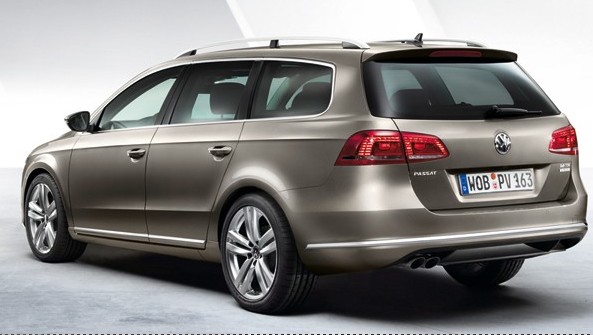
  • 2012 VW Passat TDI pricing starts at $26,765 | CinciTDI.com

    Posted By on May 26, 2011

    2012 Passat interior

    Priced too high, too low, just right? Perhaps we’ll have to see how well the American built Passat is equipped and how well it drives? Check out the Car and Driver article.

    The Passat TDI, which has VW’s outstanding 2.0-liter four-cylinder diesel, making 140 hp and 236 lb-ft, starts at $26,765. At that price, buyers get a six-speed manual, 17-inch wheels, a leather-wrapped steering wheel, some nicer-looking interior trim, and leatherette seats (one of which, if your name is “the driver,” is heated and power-adjustable). Want an auto with your diesel? The six-speed dual-clutch automatic comes with a mandatory sunroof; the bill will be $28,665, please. More options are available for, you guessed it, even more money.

    Posted via email from RichC’s posterous

    Looking forward to hearing more about diesel hybrids

    Posted By on May 26, 2011

    tdi-hybrid 

    With the recent overseas photos of a TDI (Volkswagen) with the “hybrid” badge, the Peugeot 3008 Hybrid4 and indications that Mercedes is planning a 2012 E300 Bluetec diesel hybrid … then I’m getting pretty excited. As someone sure to take a bit of heat from my diesel and biodiesel oriented friends, I’m still going to think positive after my excellent Toyota Prius experiences earlier this year. I’ll be watching both VW and Mercedes closely in hopes that the U.S. gets a chance to see a diesel hybrid relatively soon.

    Mercedes E300 Bluetec diesel hybrid could make it to the U.S.

    We’re about to witness the first-ever mass-production diesel hybrid in this summer’s Peugeot 3008 Hybrid4 crossover; this sort of powertrain has had engineers and many consumers drooling for a few years. The miles-per-gallon possibilities and environmental benefits are fascinating right away. All that has held them at bay was the expense of development and production, plus the unwanted risk of passing that big price tag on to buyers.

    Mercedes confirms that its E300 Bluetec Hybrid is on the way and will be on sale by the end of 2012. We asked them right away what this means for Mercedes‘ diesel investment in the United States. The team members in Germany grinned a lot and said they could neither confirm or deny anything at this time. But to stay tuned.

    The first viable diesel hybrid from Stuttgart for public consumption was first shown at this past March’s Geneva Motor Show. It combines a latest-generation 2.2-liter four-cylinder diesel good for 204 horsepower with an ultra-sophisticated 20-hp electric motor module. Effective combined torque, however, booms out at 428 pound-feet from way down low in the revs, while estimated miles per gallon in European city/highway combined cycle hits 57.4 mpg at its best. For the EPA cycle, knock that down to a more earthbound 45 mpg or so average in normal driving. Still, not too shabby for an E-Class, kids.

    The lithium-ion battery assembly used in the E300 Bluetec Hybrid is the same one tried and liked already in the S400 Hybrid. Please, oh, please, get this baby over here for a near-future One Lap of America.

    READ

    Will the US get more fuel sipping European diesels?

    Posted By on May 26, 2011

    Great article in the WSJ talking about European diesels …

    Coming to America: European Gas Sippers

    Luxury Car Makers to Launch in the U.S. Fuel-Efficient Variations of Popular Models Previously Found Only Overseas

    European luxury-car makers are going to give U.S. consumers some tastes of the forbidden fruit they have been keeping to themselves.

    Joe White discusses why $4 a gallon gas is convincing luxury European automakers, including BMW and Mercedes, to bring their fuel-efficient diesel models to the United States.

    The goodies in question are some of the more fuel-efficient variations of popular models sold in the U.S., and perhaps some of the small cars and crossover wagons that have until now been offered only in Europe and other markets where fuel prices are high. Mercedes Benz, Audi and BMW all are planning to launch in the U.S. new cars—or new engines for existing models—that offer more advanced fuel-saving technology.

    Travelers to Europe know that the big German luxury brands have been holding out on the U.S. for years. Consider BMW AG. The most efficient 3 Series model in the U.S. is the BMW 335D, a diesel model rated at 27 miles per gallon. BMW only started offering a 3 Series diesel in the U.S. about three years ago.

    But the one Americans get isn’t the best BMW can do when it comes to fuel-saving technology on the 3 Series line. For that, you still need to go to Europe, where BMW offers a model called the 320d Efficient Dynamics sedan (or saloon, in Euro-terms). This comes with a variety of petrol-saving features, such as an automatic start-stop function that shuts off the engine at stop lights, low-friction tires, and a system that uses braking energy to recharge the battery. These allow it to put out just 109 grams of carbon dioxide per kilometer under Europe’s mileage-measuring system, which translates to roughly 57 miles per U.S. gallon. The European 335D, roughly comparable to the U.S. model, is rated at about 35 miles per gallon.

    The 320d: The so-called efficient-dynamics version of the 3 series comes with a series of gas-saving features that gives it roughly 57 miles per U.S. gallon.

    It’s easy to hop on the Internet and find mileage ratings for cars sold in Europe. But comparing European and U.S. mileage and carbon-dioxide ratings is a difficult, apples-to-oranges problem, industry and government officials say.

    Europe uses a different—some industry officials say overly optimistic—set of calculations to estimate fuel efficiency (usually expressed as liters per 100 kilometers or grams of carbon dioxide per kilometer, instead of miles per gallon). European regulators also give more mileage credit for technology such as stop-start systems than the U.S. does. Counting grams of carbon dioxide emitted per kilometer is a different way of measuring gasoline consumption since the more gasoline or diesel fuel a vehicle consumes, the more carbon dioxide it will emit. U.S. regulators are starting to compare vehicles based on carbon-dioxide emissions.

    Europe uses different testing methods to estimate fuel consumption in city and highway driving. And U.S. regulators adjust mileage test results down in an effort to match the values advertised to consumers more closely to the likely mileage they’ll get in real-world driving.

    Still, it’s still clear that U.S. consumers haven’t gotten the most advanced fuel-efficiency technology the luxury-auto industry could offer. Among the reasons: U.S. clean-air regulations require expensive exhaust-scrubbing technology on diesel engines, and most U.S. luxury-car buyers measure prestige in terms of horsepower and performance, not fuel efficiency. Car makers worried customers wouldn’t pay up for expensive technology designed to cut fuel consumption. Even now, fuel costs aren’t a real financial challenge for wealthy households.

    But who feels smart spending $60 or $70 filling up on premium gasoline? Moreover, U.S. regulators have signaled they plan to demand big, additional gains in fuel economy when new federal mileage targets are issued this fall for the 2017-2025 period.

    Facing these pressures, European luxury-car brands are moving to offer U.S. consumers more of the high-mileage models and engines once kept back in their home markets. This will delight some Americans who have lusted after high-performance diesels and nimble four-cylinder models they once had to fly across the ocean to drive. Others will take a more practical view: Fewer top-of-the-line Mercedes models will come with a gas-guzzler tax added to the price.

    Leading the parade of more Europeanized European cars is the 2012 Mercedes S Class diesel—the first diesel S Class the brand has offered in the U.S. since 1996. The all-wheel-drive, 3.0 liter, V6, S Class diesel is expected to average 20 miles to the gallon in the city, and 31 on the highway—a substantial improvement from the current S550 4Matic, which is rated at 14 city, 21 highway. The S-diesel’s fuel efficiency is also better than the current S Class hybrid.

    Mercedes is going for better mileage across its lineup. The brand already had added stop-start systems to its ultra-high-performance S63 and CL63 AMG models, and substituted a smaller V8 engine that uses direct fuel injection and turbo charging to boost power. The result: 563 horsepower and an Environmental Protection Agency mileage rating of 15 city, 22 highway—and no guzzler tax.

    Mercedes also plans to start offering a four-cylinder version of the C Class for 2012, and replace its current 5.5-liter V8 in many models with a smaller, more efficient, 4.6-liter eight-cylinder engine.

    Audi, the luxury unit of Volkswagen AG, has been relatively cautious about bringing its European diesel engines to the U.S. But for 2012, the brand plans to expand its Euro-diesel offerings in the U.S. to the top of the line A8 sedan, the A6 and the Q5 crossover. The company’s best-selling model in the U.S., the A4, might be offered with a diesel at some point, but Audi isn’t saying yet.

    Audi is still withholding some of its most fuel-efficient vehicles, including the subcompact A1. And the company is being coy about when it will launch a U.S. version of its compact Q3 crossover, officially unveiled at the Shanghai Motor Show last month. That vehicle saves fuel with a stop-start system, but an Audi spokesman says the company isn’t convinced U.S. customers will embrace the feature. “Americans think something’s wrong with the car,” he said.

    Other car makers are starting to offer vehicles with this technology. General Motors Co.’s Buick brand plans to offer a stop-start system branded eAssist on its 2012 LaCrosse and Regal models.

    As for BMW, the company is making plans to offer at some point a U.S. version of its compact X1 crossover—a vehicle that is a size down from the X3 model that is currently the most-efficient crossover BMW sells in the U.S.

    Whether there’s a mass market in the U.S. for a BMW crossover that is roughly three inches shorter than a Ford Focus sedan is no sure thing, even if it does average about 45 miles per U.S. gallon in the European mileage tests. A BMW spokesman says the American debut of the X1 has been delayed “due to demand in other parts of the world.”

    Posted via email from RichC’s posterous

    Finally registered the domain name: mydesultoryblog.com

    Posted By on May 25, 2011

    mydesultoryblogheader

    After 6 years and over 2600 posts to My Desultory Blog, I’ve finally decided to use a few dollars from my Google’s Adsense earnings (small as it is) to register the domain name mydesultoryblog.com.

    For the time being I’ll still post under my originally richc.myarchive.us (and probably will continue); this myarchive.us site was intended to be used to host other WordPress installs for paying customers. I never really developed this business venture since so many companies are offering blogs for free – few clients see a need to pay for a yourname.myarchive.us WordPress blog. Who knows if my paying for yet another domain is a worthwhile expense, but after noticing the yearly renewal cost is going up in June, now was the time to register it.

    I also took some time between storms this evening to do a couple other computer oriented house keeping duties. One was to clear my comment spam (not bad after using Disqus) and another to upgrade to the latest WordPress version 3.1.3.

    Next perhaps I’ll do something with my personal name domain? (richcorbett.us)

    CNBC anchor Mark Haines dies at age 65

    Posted By on May 25, 2011

    markhaines_cnbc_slingboxAlthough I’ve never been a big Mark Haines fan, he was part of my routine for the 22 years he was on as on CNBC as one of the founding faces. I saw him the way many watchers and coworkers did, as a “crusty curmudgeon” on Squawkbox. I  would often catch myself “squawking” back at the TV, Slingbox feed or satellite radio audio (or streamed it from home via cellphone in the early years) at his comments. His passing at 65 make one recognize the limited number of year we have to make a difference in this world … and for financial cable TV, Mark Haines did — April 19, 1946 – May 24, 2011. (CNBC’s page)

      CNBC: Mark Haines – a little audio sarcasm

    The tributes from his colleagues, those he interviewed and viewers has been touching this morning … and their special tonight at 7PM will no doubt be much appreciated.

    The memory which is burned in my mind is his coverage and professionalism in the way he was broadcasting the events happening the morning of 9/11/2001. As I was getting my son up and ready for school,

    markhainesspecialMark covered a plane hitting one of the World Trade Center towers. I called Taylor in and we sat in shock as a second tower was hit. Mark’s coverage will forever be in my memories.

    I also appreciated his common man approach to talking with high powered guest and treatment of his more professional coworkers … minus Joe Kernen, “The Kahuna” (his personality is a bit lighter). Mark always seemed to come up with a nickname for all of his friends … David Faber (The Brain), Steve Liesman (The Professor), Bob Pissani (The Italian Stallion) and even without a nickname seemed to shorten names that make coworkers feel like family – Becky Quick as “Beck” or Jane Wells as “Janie.” I will miss his face on my morning TV. My condolences to his coworkers and family that he loved so much.

    markhainestweet

    Greenberg vs. Cramer: Sodastream challenge on CNBC

    Posted By on May 25, 2011

    sodastreamchallengeHerb Greenberg and Jim Cramer took the Sodastream challenge on CNBC Tuesday … I’m not so sure it’s the best option for those who enjoy Coke or Pepsi … or other brand named soft drinks? The beef for me is still the relatively high cost, limited availability and smallish CO2 canisters. Give me a small restaurant quality Diet Pepsi and Diet Mountain Dew dispenser … with a cost savings over “a 24 pack cans on sale” (ie. $4.00/24 cans) and I’m sold. (video below)

    CNBC’s Phil LeBeau interviews VW’s Jonathan Browning

    Posted By on May 24, 2011

    browning-90Volkswagen Group’s Jonathan Browning, President and CEO (Volkswagen of America, Inc) gave a quick interview on an important day for VW’s new Chattanooga Tennessee facility. It is exciting to American workers building what hopefully will be a great mid sized car: 2012 VW Passat.

    CNBC: Phil LeBeau‘s interview with VW’s Jonathan Browning

    EV tax credit could become a cash rebate in 2012

    Posted By on May 24, 2011

    leaf-plugHow about a quicker way for car buyers willing to invest in the latest green automotive technology to get their tax credit? If Secretary of Transportation Ray LaHood gets his way those purchasing an EV could apply it to the price of the vehicle. ray-lahoodHe’s suggesting that instead of a tax credit when filing income taxes that buyers of plug-in vehicles could get the money in the form of a rebate immediately when they purchase a car like the Chevrolet Volt, Amp Equinox or Nissan Leaf. We’re talking some serious change … like $7500 when purchasing one of these plug-in green machines. Unfortunately the price tag for the latest technology is pretty high too … a tiny Nissan Leaf is well over $30,000 and a Chevrolet Volt adds at least another $10,000.

    On the political side, our divided government might not be in all that much of a hurry to incentify one particular technology over another … picking winners and losers as they often do. I would not be all that confident that Mr. LaHood can twist enough arms and convince members of congress that our government administers programs all that efficiently … remember the Wall Street bank trillions, GM bailout, Stimulus One, Two and Cash for Clunkers? My personal take on trying the Cash for Appliances failed miserably … and suspect only the bureaucrats running the the program really ended up happy. Personally I’d rather Uncle Sam stay out of “business” decisions all together and would have no problem restricting big lobby money, be they corporate interests or labor unions … but that’s just me and a point for a different post.

    Desultory - des-uhl-tawr-ee, -tohr-ee

    1. lacking in consistency, constancy, or visible order, disconnected; fitful: desultory conversation.
    2. digressing from or unconnected with the main subject; random: a desultory remark.
    My Desultory Blog