How much truth in “Opinion from a Former Judge” … Grok?
Posted By RichC on December 4, 2025
After reading an opinion from several years ago, but also after recent events, rising 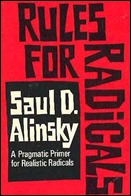 tensions and political divide in the U.S. … the same article is being passed around social media again. The writings seemed almost too spot on so I was interested in knowing how much truth there was to it — so I’m asking AI’s Grok.
Nevertheless, it should be obvious to nearly all though who pay attention, that the leftist strategy is real … and reminds me of the radicals from the 1960-70s (see previous post) and Saul Alinsky‘s Rules for Radicals: A Pragmatic Primer (1971).

Verification of the Claim
The “Opinion from a Former Judge” letter you provided is a real piece written by Keith M. Alber, a retired California Superior Court judge. It was originally published as a letter to the editor in local newspapers starting around 2021 (e.g., in the *Napa Valley Register* and others), and it has since gone viral on social media. Alber, who was 85 at the time of writing, explicitly references a half-page in a political science textbook he encountered during his first year of college in 1954, when he was a student at Napa College (now Napa Valley College). He describes it as outlining hypothetical “steps to overturn a democracy” as a “possible diabolic nightmare”—a thought experiment on vulnerabilities in democratic systems, likely in the context of Cold War-era fears about communism or authoritarian subversion.
However, the core claim—that these exact nine steps were printed verbatim in a 1954 textbook—appears unsubstantiated and likely exaggerated or misremembered. Alber himself admitted in interviews (e.g., with fact-checkers) that he could not recall the textbook’s title, author, or publisher, despite extensive prompting. No such book matching this description has been identified in historical records, library catalogs, or academic archives from 1954 (or surrounding years). Searches for key phrases from the steps (e.g., “foment racial strife,” “cause distrust of police authority,” “swarm the nation’s borders,” “control all balloting”) yield no matches in pre-2021 publications. The list seems tailored to contemporary U.S. political concerns (e.g., border security, election integrity, racial tensions), which weren’t phrased this way in mid-20th-century texts.
Possible Origins or Inspirations
While not from a specific 1954 book, the ideas echo broader discussions in political science literature from that era about threats to democracy:
Cold War anticommunist writings: Texts like J. Edgar Hoover’s *Masters of Deceit* (1958) or earlier works by anticommunist authors warned of Soviet-style tactics to undermine Western societies through division, propaganda, and institutional erosion. These often included general steps like “divide and conquer” or eroding trust in authorities, but not this exact list.
Hypothetical scenarios in textbooks: 1950s political science courses (common at community colleges like Napa) used books like *American Government* by textbooks from publishers such as Macmillan or Holt, which discussed democratic vulnerabilities abstractly. A half-page sidebar on “how dictatorships arise” (inspired by events like the rise of fascism in the 1930s) could have stuck in Alber’s memory, but adapted over decades.
Evolution of the letter: Early versions of Alber’s letter (2021) listed only the first five steps, with the latter four added in later republications, suggesting personalization rather than direct quotation.
In summary, the letter is authentic to Alber, and he genuinely believes he read something similar in 1954, but there’s no evidence of a matching book. It’s best viewed as a retired judge’s reflective opinion piece using recalled (and possibly embellished) academic material to comment on modern events, rather than a literal reprint from a textbook.
Comments