The E-Volo Multicopter makes a historic flight

Posted By on November 3, 2011

quadrocopter

I’m glad there are some innovative types out there, but flying and electric sixteen propeller multicopter is not ever going to be as comforting as being in a Boeing 767 (see yesterday’s belly landing in Warsaw, Poland).

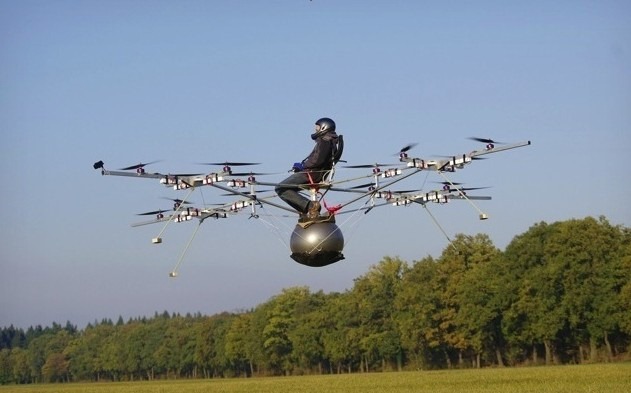
A company called E-Volo in Germany has built a spider-like multicopter that is capable of lifting a “rider”using battery powered motors. The programming of motion sensors and gyroscopes helps to property control the attitude of the aircraft and had demonstrated this on video (below) in order to makea historic flight … one for the record books I believe?

What is a multicopter?

The e-volo multicopter is an innovative, vertically starting, human carrying transportation device that is uncatagorisable to its current flight counterparts.

The e-volos sixteen propellers allow it to take off and land similar to a helicopter. Its massive plus points compared to a helicopter are the simplicity of its engineered construction without complicated mechanics and its redundant engines. Should anything go wrong, e-volo can still safely land even if up to four of its sixteen motors should fail. Flight time can last between ten to thirty minutes, depending on the payload and the capacity of the lithium batteries. With an empty weight at 80 kg (including batteries), e-volo fits into the class of ultralights.

In difference to other helicopters or multi-rotors, e-volo can use a safety parachute, as there are no propellers blocking the deployment area above.

The propellers create the full lift, and are also responsible for balancing the device on all three axes only by independent speed control of the motors. E-volo from the beginning has been designed entirely as an electrically powered device. Unlike the rotor of a helicopter, the propellers dont´t have any pitch control and therefore no wear. These factors make the multicopter mechanically simple, with close to no maintenance necessary.

The automatic attitude and directional control are taken care of by multiple separate and mutually monitoring onboard computers, controlling the engines with the precise rotation speed necessary to fly this tri-axis device. A simple joystick allows the pilot to control the aircraft via a fly-by-wire system. Whether during vertical takeoff, in flight, or landing, the pilot has to pay little attention to minimum speed, stall, gas mixture control, pitch control or one of many other things that make conventional flight as challenging as it is.

This electrically driven system is quiet, clean and economically cost efficient. A one-hour flight would cost something near to 6 Euro for electricity. In addition, the device holds few parts, which could wear out, making maintenance intervals and cost low and far between.
The control firmware can be integrated with a sophisticated integrated GPS system or obstacle detection. As such, automated flight for predetermined points on a 3D map is possible. In addition to the relieving the pilot of strenuous navigational tasks, unmanned flight would be feasible similar to other devices (drones).

Possible applications
The main purpose for a single seat device would most likely be for air sports equipment and in the leisure sector. A professional application could be made in areas where helicopters are too big and expensive, for aerial photographs or field inspection of large facilities (wind turbines, pipelines), areas where its flight capabilities (vertical take off, landing, and hovering) are of crucial importance. 
As a multi-seater it would also be conceivable to use for sightseeing flights, air ambulance, or air taxi.

There most certainly will be entirely new use areas that no one has yet imagined.

Vision for the future
A limiting factor is still the energy capacity of modern batteries. Longer flight times are achievable, with higher energy amounts. However during flight, less is more, as you carry the extra weight, successfully voiding the capability of extra batteries.
In any case, the next few years show a significant advancement in technology applicable to life and duration capabilities of batteries. With a current flight time of on average 20 minutes, future versions promise anywhere from an hour or more. A hybrid drive, in which a conventional internal combustion engine generates the necessary electrical power, would already show an hour-long flight time.
Only then, multi-seaters with a higher payload seem better conceived for daily application. With a somewhat different approach, one could use the high cruising speeds of the e-volo multicopter to develop full-blown general aviation vehicles from a pure recreational sporting device.

In some areas the multicopter may replace the average helicopter. The simple and cost efficient maintenance make it a viable counterpart to current aviational transport.
Xtreme Shooter Patrick Flannigan still impresses me

Posted By on November 2, 2011

Five year ago I did a video post about Xtreme Shooter Patrick Flannigan (wow, has it been that long?)… and today he still impresses me and about everyone I know who has ever handled a shotgun just as much. Check out the old 2006 link (and a follow up posts) as well as a new promotional video clip (below) promoting the Hot Shots TV show premiering in January 2012. (BTW, and yes he is an athlete)

Hmm … re-powering the MG … but will it fit?

Posted By on November 2, 2011

Since I’m having a few problems getting my carburetor/idle issue corrected on my tiny MGB, perhaps picking up a new engine might be a solution?

webmoparv10crate

Mopar® to Highlight Cubic Inches and Horsepower at SEMA

800 horsepower V-10 Crate engine takes center stage at SEMA
– Gen III High Output HEMI® V-8 with 590 horsepower to debut
– New Bolt-On Upgrade Kit for Gen III Dodge Viper owners adds up to 150 horsepower
– New Ready-to- Run Gen III HEMI Kits simplify engine controls for select Mopar® crate engines
– New 500 CID Pro Stock Cylinder Heads feature symmetrical port design

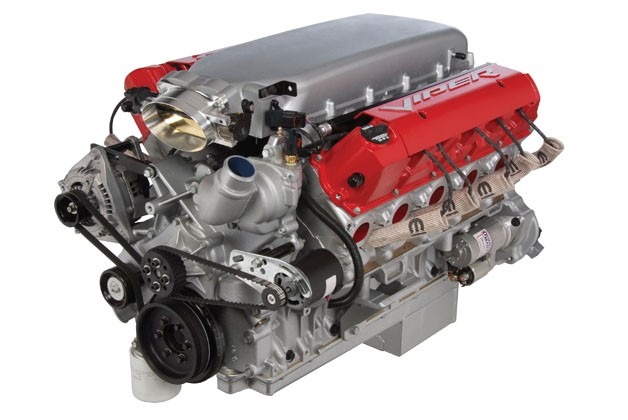
November 1, 2011 , Auburn Hills, Mich. – A new 512 CID, V-10 engine with more than 800 horsepower and a new 426 Gen III High Output HEMI® crate engine will highlight the Mopar® display at the Specialty Equipment Market Association (SEMA) show, Nov. 1 – 4 in Las Vegas.

Along with the new, more powerful engines, will be a full range of performance, restoration and off-road parts available from Mopar, Chrysler Group’s service, parts and customer-care brand. Included are kits to extract more power from Gen III Dodge Vipers and a new Gen III High Output HEMI V-8; new Pro Stock cylinder heads and Mopar Gen III HEMI front drive kits.

"SEMA is the perfect platform to introduce some of Mopar’s newest high performance and restoration parts and products," said Pietro Gorlier, President and CEO of Mopar. "If you’re looking for horsepower that can be dropped in or bolted on, the Mopar exhibit area has a full range of small- and big-block products for the enthusiast.

"Mopar has been in the performance business for decades. In fact, the brand really came to life at the track," said Gorlier. "We are committed to supporting performance enthusiasts. We have an extremely rich product plan that will not only support the more than 5 million HEMI engines in market today and the 30 million Chrysler Group vehicles on the roads across the country, but will also support the products of tomorrow. The engines we are launching are the first of many exciting products to come for both on and off-road needs. We have an amazing track record of fueling enthusiasts and are committed to continuing this legacy."

V10 Competition Crate Engine and Gen III V10 Performance Upgrade Kit

Leading the way is an 800 horsepower V-10 Competition Series engine, part number P5155872 that is designed specifically for drag racing. Hand assembled to exacting standards by race engine builders, the Competition Series V-10 features an aluminum block with aluminum cylinder heads. Designed for the rigors of drag racing and pulling 695 lb. ft. of torque with an operating range of up to 7,000 rpm, these race-calibrated engines include a forged steel crankshaft with forged steel connecting rods and forged aluminum pistons with a compression ratio of 12.5:1. All rotating components have been balanced for maximum performance at the track.
The Competition Series engine includes a JTEC controller with race calibration and engine harness. Designed specifically for drag racing, future applications include an off-road and road-race version.
Enthusiasts looking to extract up to 150 more horsepower from their Gen III Dodge Viper can now bolt on a Performance Upgrade Kit, part number P5156137, to their stock V-10 engine. Each kit includes a pair of aluminum cylinder heads (machined to fit the Gen III block), a custom upper intake manifold with a larger throttle body, fuel rails and injectors. The stock engine controller will have to be re-flashed.

All necessary hardware and gaskets are included.
With the Performance Upgrade Kit, owners will see up to 650 horsepower from their existing engine while still maintaining excellent low-end drivability.

426 Gen III High Out HEMI and 426 Ready-to-Run Kits
Mopar also is featuring a more powerful, new crate version of the Gen III 426 HEMI V-8.

The Gen III High Output HEMI engine, with 590 horsepower on tap out of the box, is now available under part number P5156139.
Starting with a lightweight aluminum block that shaves more than 100 lbs. from the cast iron version, the Gen III High Output HEMI is professionally built and includes a stout, balanced lower reciprocating assembly that features a forged steel crankshaft with six bolt mains at 2, 3 and 4, and cross-bolted 4-bolt mains at 1 and 5. H-beam style rods are forged steel and coupled to forged 11:1 compression ratio aluminum pistons. Included is a revised windage tray to provide excellent oil dispersion and prevent oil aeration by the crankshaft.

The valvetrain starts with a more aggressive roller camshaft with .639 intake and .628 exhaust lift and cylinder heads that feature the latest designs for exceptional flow characteristics.
To help stabilize the valvetrain at high engine rpm, tie bars are available. Cast aluminum valve covers and billet fuel rails also are part of the Gen III High Output engine. Designed to run on premium pump gas with a minimum octane rating of 93, the newest HEMI V8 is ideal for off road competition or the latest restoration or resto – mod project.

Mopar also is offering two 426 Ready-to-Run engine control/base calibration kits, one for the High Output engine and one for the existing 426 crate engine.
Kits include a throttle body, engine harness and engine controller with base cal. These kits greatly reduce guess work and gets projects up and rolling. Depending on transmission type, axle ratio, and tire size, some final tuning may be required.

Pro Stock Cylinder Head
Debuting for Pro Stock competition in the National Hot Rod Association (NHRA), is a new symmetrical port design cylinder head. The bare aluminum cylinder head is available under part number P5155906. For teams running Dodge Avengers for 2012 in NHRA, either the current asymmetrical cylinder head or the new symmetrical will be permitted.

GEN III HEMI Front Drive Kit
A distributor front drive kit for GEN III HEMI engines is now available. The drive kit is for enthusiasts who prefer to run a distributor-type ignition system and includes a machined front cover, camshaft timing gear, fuel pump push rod and bolt kit. Kits for 2009 and later 5.7-liter and all 6.4 engines are available under part number P5155929. For pre-2009 5.7-liter and all 6.1-liter engines, part number P5155930 is available.
Dodge Challenger Body-in-White
New Dodge Challenger body shells that provide an excellent starting point for a race car now are available in limited quantities from Mopar. Bodies are complete with doors, decklid and hood. These shells eliminate the bodywork or welding that’s normally required with a project car that may be damaged or a salvage car. Bodies are designed for competition use only, have no vehicle identification numbers and cannot be used for a street application.
Fascias and other trim items will be available as a "builder’s kit."

Mopar-First Features
Mopar has introduced numerous industry-first features including:
– Camper trailers: first to introduce off-road camper trailers
– Vehicle-information apps: first to introduce smartphone vehicle-information applications, a new channel of communication with consumers
– Electronic owner manuals: first to introduce traditional owner manuals in a DVD and brief user-guide format
– Electronic Vehicle Tracking System (EVTS): first to market with a new interactive vehicle tracking device that sends owner a text when vehicle is driven too fast or too far based on pre-set parameters
– 2011 Mopar Challenger Drag Pak: first to introduce a 500-plus cubic-inch V-10 drag-race package car
– Wi-Fi: first to offer customers the ability to make their vehicle a wireless hot spot
– WiTECH: first to support vehicle diagnosis and software updates leveraging off-the-shelf personal computers and a dedicated wireless tool network

About the Mopar Brand
Mopar is Chrysler Group LLC’s service, parts and customer-care brand.

Mopar distributes approximately 280,000 parts and accessories in more than 90 countries and is the source for all original-equipment parts for Chrysler, Jeep®, Dodge and Ram vehicles. Mopar parts are unique in that they are engineered with the same teams that create factory-authorized vehicle specifications for Chrysler, Jeep, Dodge and Ram vehicles – a direct connection that no other aftermarket parts company can provide. A complete list of Mopar accessories and performance parts is available at http://www.mopar.com.

More than 70 Years of Mopar
When Chrysler bought Dodge in 1928, the need for a dedicated parts manufacturer, supplier and distribution system to support the growing enterprise led to the formation of the Chrysler Motor Parts Corporation (CMPC) in 1929.

Mopar (a simple contraction of the words MOtor and PARts) was trademarked for a line of antifreeze products in 1937. It also was widely used as a moniker for the CMPC. The Mopar brand made its mark in the 1960s – the muscle-car era. The Chrysler Corporation built race-ready Dodge and Plymouth "package cars" equipped with special high-performance parts. Mopar carried a line of "special parts" for super-stock drag racers and developed its racing parts division called Mopar Performance Parts to enhance speed and handling for both road and racing use.

News Source: Mopar

Fooling around with the Kodak Playsport Zx5 in camera mode

Posted By on November 1, 2011

lucas_kodakzx5_macrotest
Kodak Playsport Zx5 macro focus testing (click for larger)

While shooting some video with the Brenda’s Kodak Playsport Zx5 this past weekend I thought about the excellent autofocus camera on the new iPhone 4s and decided to test the macro focus on our my wife’s all-weather camcorder; if the lighting and distance is right, it does a pretty impressive job in camera mode. The above is about as close as I can focus and it selectively does a nice job of making the subject stand out from the background. (the above being a LucasPrince of Darkness – fuse from the MGB)

foxwing

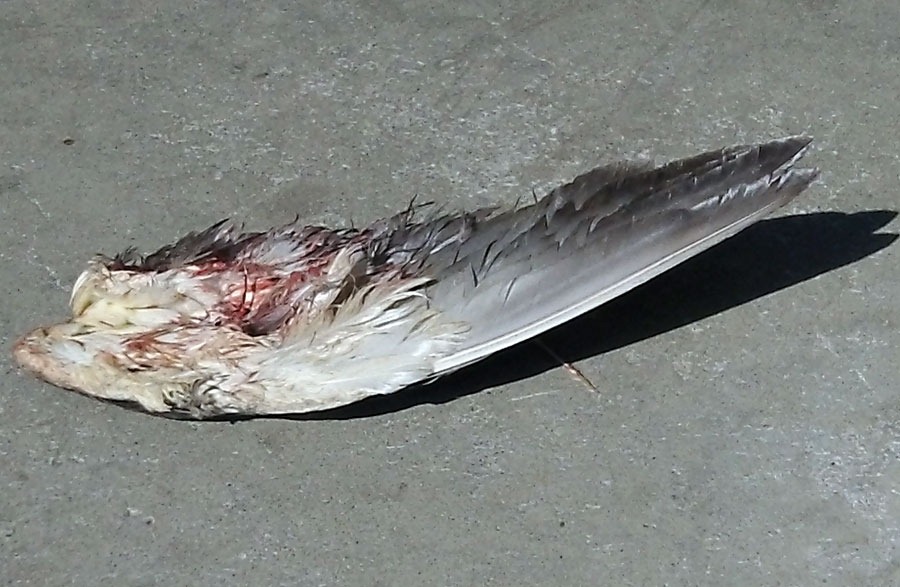
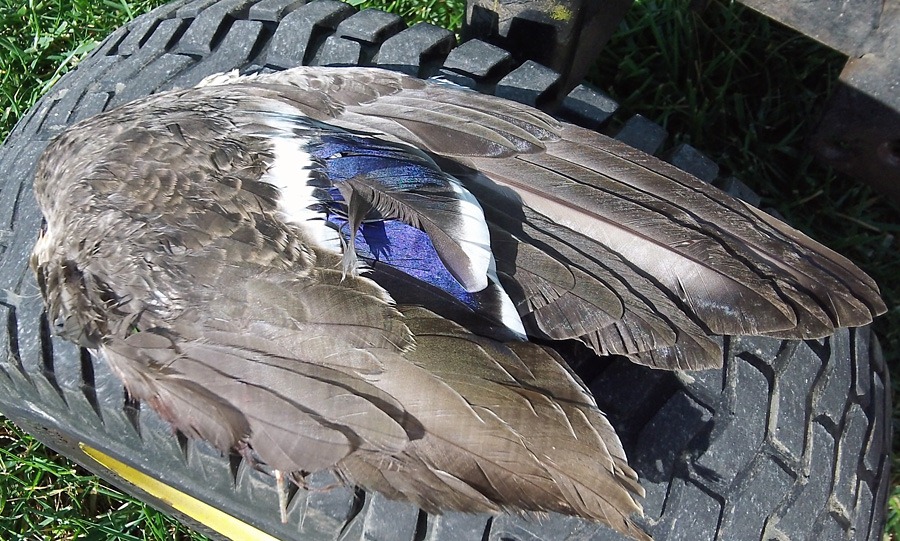
While I was in the garage (with the football game on … not really working), my dog Tootsie and I observed a bold fox strolling down our rear driveway toting his prize Sunday afternoon football “wing.”  It didn’t take long before a chase ensued having Tootsie bringing back the prize “wing” … hence the next couple of photos. (tinkering with the camera again)

foxwing1 foxwing2

Reports are hinting that HP is nailing the webOS coffin shut

Posted By on October 31, 2011

Since HP’s new CEO, Meg Whitman, reversed course on spinning off their PC division (link), many who use and appreciate Touchpads and Pre smartphones have been hoping the same thing might happen for the webOS division. Some believe (or believed) that there was new hope for webOS devices like the Touchpad and Palm Pre smartphones and that might still be a future. touchpadpre3The official comment still remains that no decisions has been made. Tony Prophet, SVP of operations for HP’s PC division states, "It’s a similar process to the one we did with the PC business, and the webOS is being thoroughly, evaluated including the software and product facets: the whole thing."

Unfortunately others don’t see it as “up in the air” as the PC business was, particularly the longer the decision drags on. First, the rumor that Amazon, Samsung or ZTE might acquire HP’s Palm acquisition aren’t showing any signs of moving forward … or that any serious talks existed in the first place. Second, reports from The Guardian suggest that HP is not seriously reconsidering development and production of webOS devices. In fact, their comment was that the webOS unit will be closed down eliminating 500 jobs. Most expect this to happen by years end. One employee stated that there is “a 95% chance we all get laid off between now and November, and I for one am thinking it’s for the best.” My personal best guess is that unlike the PC division which actually still made profits (6% as I recall), the webOS unit isn’t nowhere near profitability … and without deep pocketed continued investment, is probably a long and risky road. As most computer tablet and smartphone manufacturers have found, going up against the iPad and iPhone is not as easy as just making another “me too” gadget. 
So much for the optimism that I’ll be seeing a new Pre3 or a eventual Touchpad. Sad smile

Whale watching from a kayak and a pair of humpbacks

Posted By on October 31, 2011

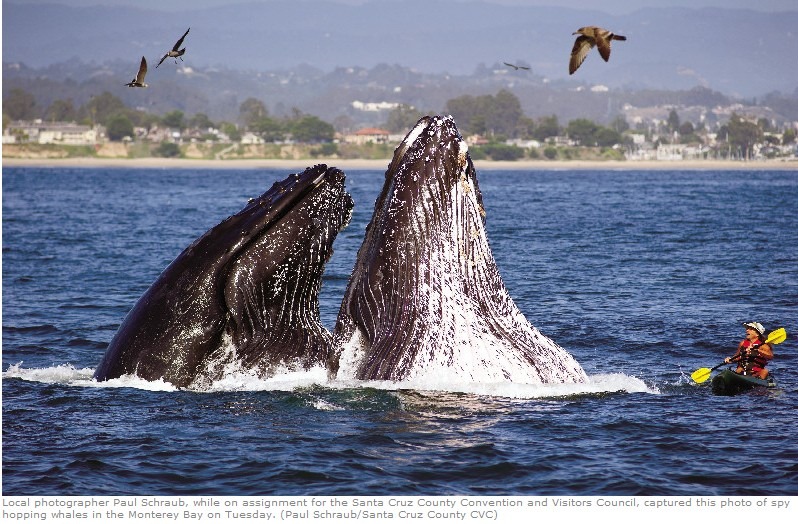
A reader knowing that I’ve posted pictures of kayakers and whales in the past forwarded me a link with a couple humpback whales off of California that looked to be uncomfortably close to this guy (click image for larger). Someday “we humans” are going to get a little too close … I personally will not have any sympathy when they get crushed.

humpbackwhaleskayak

Here were the other similar photos and video clips from past posts:

  1. Orca and kayak
  2. Great White Shark and kayak and follow up
  3. Fishing from a kayak
  4. Blue Whale and a kayak
  5. Sailboat and a breaching whale

Archive: Worth reading as a way to reset your political compass

Posted By on October 30, 2011

64392555Every once in awhile a writer captures with clarity what I’m politically thinking — I wish I could communicate this clearly. Peggy Noonan. She is a very talented speech writer and opinion columnist and wrote a superb column for Saturday’s WSJ worth sharing and saving to my archive. The content referenced current politicians, but is just as effective without including President Obama or Rep. Paul Ryan (WI). It is worth reading.

OCTOBER 29, 2011

The Divider vs. the Thinker

While Obama readies an ugly campaign, Paul Ryan gives a serious account of what ails America.

People are increasingly fearing the divisions within, even the potential coming apart of, our country. Rich/poor, black/white, young/old, red/blue: The things that divide us are not new, yet there’s a sense now that the glue that held us together for more than two centuries has thinned and cracked with age. That it was allowed to thin and crack, that the modern era wore it out.

What was the glue? A love of country based on a shared knowledge of how and why it began; a broad feeling among our citizens that there was something providential in our beginnings; a gratitude that left us with a sense that we should comport ourselves in a way unlike the other nations of the world, that more was expected of us, and not unjustly— "To whom much is given much is expected"; a general understanding that we were something new in history, a nation founded on ideals and aspirations— liberty, equality— and not mere grunting tribal wants. We were from Europe but would not be European: No formal class structure here, no limits, from the time you touched ground all roads would lead forward. You would be treated not as your father was but as you deserved. That’s from "The Killer Angels," a historical novel about the Civil War fought to right a wrong the Founders didn’t right. We did in time, and at great cost. What a country.

But there is a broad fear out there that we are coming apart, or rather living through the moment we’ll look back on as the beginning of the Great Coming Apart. Economic crisis, cultural stresses: "Half the country isn’t speaking to the other half," a moderate Democrat said the other day. She was referring to liberals of her acquaintance who know little of the South and who don’t wish to know of it, who write it off as apart from them, maybe beneath them.

To add to the unease, in New York at least, there’s a lot of cognitive dissonance. If you are a New Yorker, chances are pretty high you hate what the great investment firms did the past 15 years or so to upend the economy. Yet you feel on some level like you have to be protective of them, because Wall Street pays the bills of the City of New York. Wall Street tax receipts and Wall Street business—restaurants, stores—keep the city afloat. So you want them up and operating and vital, you don’t want them to leave—that would only make things worse for people in trouble, people just getting by, and young people starting out. You know you have to preserve them just when you’d most like to deck them.

Where is the president in all this? He doesn’t seem to be as worried about his country’s continuance as his own. He’s out campaigning and talking of our problems, but he seems oddly oblivious to or detached from America’s deeper fears. And so he feels free to exploit divisions. It’s all the rich versus the rest, and there are a lot more of the latter.

Twenty twelve won’t be "as sexy" as 2008, he said this week. It will be all brute force. Which will only add to the feeling of unease.

Occupy Wall Street makes an economic critique that echoes the president’s, though more bluntly: the rich are bad, down with the elites. It’s all ad hoc, more poetry slam than platform. Too bad it’s not serious in its substance.

There’s a lot to rebel against, to want to throw off. If they want to make a serious economic and political critique, they should make the one Gretchen Morgenson and Joshua Rosner make in "Reckless Endangerment": that real elites in Washington rigged the system for themselves and their friends, became rich and powerful, caused the great cratering, and then "slipped quietly from the scene."

It is a blow-by-blow recounting of how politicians—Democrats and Republicans—passed the laws that encouraged the banks to make the loans that would never be repaid, and that would result in your lost job. Specifically it is the story of Fannie Mae and Freddie Mac, the mortgage insurers, and how their politically connected CEOs, especially Fannie’s Franklin Raines and James Johnson, took actions that tanked the American economy and walked away rich. It began in the early 1990s, in the Clinton administration, and continued under the Bush administration, with the help of an entrenched Congress that wanted only two things: to receive campaign contributions and to be re-elected.

The story is a scandal, and the book should be the bible of Occupy Wall Street. But they seem as incapable of seeing government as part of the problem as Republicans seem of seeing business as part of the problem.

Which gets us to Rep. Paul Ryan. Mr. Ryan receives much praise, but I don’t think his role in the current moment has been fully recognized. He is doing something unique in national politics. He thinks. He studies. He reads. Then he comes forward to speak, calmly and at some length, about what he believes to be true. He defines a problem and offers solutions, often providing the intellectual and philosophical rationale behind them. Conservatives naturally like him—they agree with him—but liberals and journalists inclined to disagree with him take him seriously and treat him with respect.

This week he spoke on "The American Idea" at the Heritage Foundation in Washington. He scored the president as too small for the moment, as "petty" in his arguments and avoidant of the decisions entailed in leadership. At times like this, he said, "the temptation to exploit fear and envy returns." Politicians divide in order to "evade responsibility for their failures" and to advance their interests.

The president, he said, has made a shift in his appeal to the electorate. "Instead of appealing to the hope and optimism that were hallmarks of his first campaign, he has launched his second campaign by preying on the emotions of fear, envy and resentment."

But Republicans, in their desire to defend free economic activity, shouldn’t be snookered by unthinking fealty to big business. They should never defend—they should actively oppose—the kind of economic activity that has contributed so heavily to the crisis. Here Mr. Ryan slammed "corporate welfare and crony capitalism."

"Why have we extended an endless supply of taxpayer credit to Fannie Mae and Freddie Mac, instead of demanding that their government guarantee be wound down and their taxpayer subsidies ended?" Why are tax dollars being wasted on bankrupt, politically connected solar energy firms like Solyndra? "Why is Washington wasting your money on entrenched agribusiness?"

Rather than raise taxes on individuals, we should "lower the amount of government spending the wealthy now receive." The "true sources of inequity in this country," he continued, are "corporate welfare that enriches the powerful, and empty promises that betray the powerless." The real class warfare that threatens us is "a class of bureaucrats and connected crony capitalists trying to rise above the rest of us, call the shots, rig the rules, and preserve their place atop society."

If more Republicans thought—and spoke—like this, the party would flourish. People would be less fearful for the future. And Mr. Obama wouldn’t be seeing his numbers go up.

The continuing MGB Weber 32/36 DGV carburetor problem

Posted By on October 29, 2011

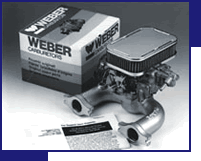
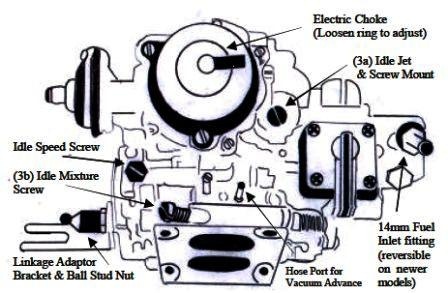
As I continue to diagnose and tinker with my MGB and the Weber 32/36 DGV carburetor and manifold kit that replace the Zenith carb, big_weberI’m still having problems figuring out why it will not idle off of choke. So as long as I have the choke on, the car will idle hot or cold at near 900 RPM, but as soon as the choke is opened up, the engine will die. I’ve check compression and look for any leaks in the manifold or gaskets that could be letting in too much air, checked the fuel pump pressure (seems fine) and replace plugs and wires. I’ve advanced and retarded the timing to the extremes and cleaned out (and adjusted) the needle valves on the carburetor.

weber-carburetor-adjustment
See adjustment pdf

Hopefully directing this post to Brit-tek or others with expertise will help in the diagnosis. I’m including a video clip for clarity below.

A hunter’s nightmare

Posted By on October 29, 2011

Hunting Trip

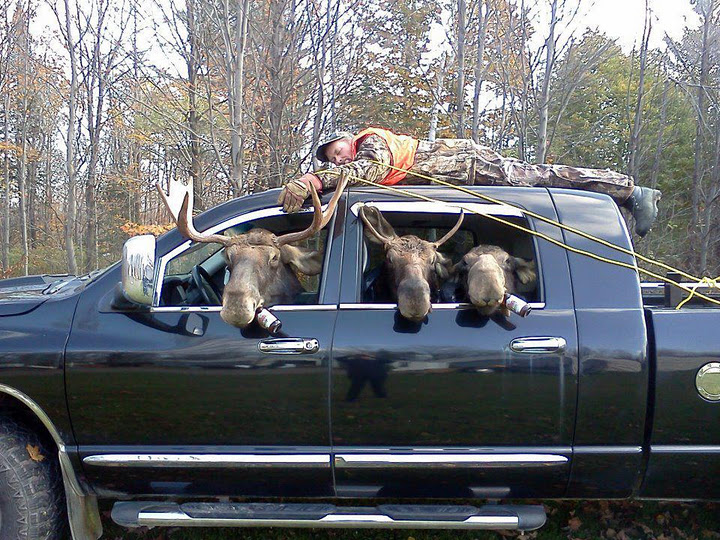
Since hunting season here in Ohio is in full swing, I thought this photo shared on G+ was funny enough to share. You’ve heard of “Planet of the Apes” … well this hunter’s dream nightmare would be “Planet of the Moose.” (see plural note below)

MOOSE


The word “moose” came to us from Algonquian Indians. Consequently its plural, instead of being “mooses” or “meese”, is the same as the singular. That is true of most Indian names whether of a tribe, such as the Winnebago and Potawatomi, or of an object such as papoose. It is also true of many wildlife names not of Indian origin — for example: deer, mink and grouse.

Moose are the monarchs of the north woods, particularly forests surrounding innumerable lakes and swamps. They are splendid swimmers fond of wading into waters where they dredge up lily roots and other aquatic plants. On land, although they do graze on grasses and sedges, moose are primarily browsers feeding on the leaves and tender twigs of hardwood trees and shrubs, especially willows, in summer; on balsam and white cedar or other conifers in winter: on twigs and bark in early spring.

Moose range from Maine to Hudson Bay, northwest to Alaska, and south into Montana, Wyoming and Minnesota. There are a few on the Upper Peninsula of Michigan; and on Isle Royale there is a herd that has become too numerous because that is a national park isolated in Lake Superior. In Wisconsin and Michigan there are early records of moose almost as far south as Detroit but apparently they did not occur in Illinois.

A moose, blackish brown except for its paler belly and legs, is the largest of the deer family. A bull may stand from 5-1/2 to 6 feet tall at the shoulders and weigh from 900 to 1400 pounds. On the Kenal Peninsula of Alaska they become even taller, heavier, and are more richly colored. He is a formidable but grotesque critter. His body, from the high-humped withers to the absurd little tail, seems too short for the long gangling legs. His gait appears awkward because the forelegs are longer than the hind ones but a moose can trot at incredible speed. His short thick neck supports a long narrow head with large nostrils and a broad overhanging flexible muzzle. Dangling from the throat is a long hairy “bell” which, in old age: shrinks to a sort of pouch.

On this massive head and neck the bull carries a tremendous pair of flattened antlers with perhaps more than 30 prongs or “points” and their spread may exceed 6 feet. Like other deer, these are shed each winter and grown anew during summer. The cows have no antlers and are about 25 percent smaller than the bulls and appear even more gaunt and ungainly. Their calves, frequently twins, are born in late spring.

Although they “yard” together in spring, during most of the year, moose are solitary secretive animals and very wary of mankind. In autumn, however, the bulls roam the forests in search of mates, bawling invitations to any cow and challenges to any male — day or night. There are vicious battles, sometimes fatal. At that time they are in prime shape, with new antlers prized as trophies, and are stalked by daring hunters who lure them by imitating their calls with birch bark horns. Then they are surly, fearless and dangerous. A bull moose, cornered or wounded, will charge like an angry elephant.

LINK

Cardinals Win World Series

Posted By on October 29, 2011

[1028series3] Getty Images

The Cardinals celebrated after defeating the Texas Rangers.

In a game that felt more like a coronation than a competition, the St. Louis Cardinals beat the Texas Rangers 6-2 to win the World Series four games to three.

It was the 11th championship for the Cardinals. For the Rangers, who have never won a World Series in a half-century of existence but were a strike away in this one, it was as heartbreaking a loss as any team in any sport will ever experience.

Posted via email from RichC’s posterous

Desultory - des-uhl-tawr-ee, -tohr-ee

  1. lacking in consistency, constancy, or visible order, disconnected; fitful: desultory conversation.
  2. digressing from or unconnected with the main subject; random: a desultory remark.
My Desultory Blog