Video interview with rescued sailor Dennis Clements
Posted By RichC on January 8, 2010
Posterous.com test post with video, but also a harrowing story from a sailor who was miraculously rescued from his boat of the coast of North Carolina.
Posted By RichC on January 8, 2010
Posterous.com test post with video, but also a harrowing story from a sailor who was miraculously rescued from his boat of the coast of North Carolina.
Posted By RichC on January 7, 2010
Playing the green energy tax credit game — the pitfalls of big government, powerful lobbyist and wealthy shrewd companies.
Walmart, others make money on Oregon’s energy tax credits
By Harry Esteve, The Oregonian
December 29, 2009, 7:00PM
When Oregon started handing out jumbo tax subsidies for renewable energy projects two years ago, one of the biggest beneficiaries was also one of the world’s richest corporations — Walmart.
No, the retail giant hasn’t branched to solar panels or wind turbines.
Instead, Walmart took advantage of a provision in Oregon’s Business Energy Tax Credit that allows third parties with no ties to the green power industry to buy the credits at a discount and reduce their state income tax bills.
State records show Walmart paid $22.6 million in cash last year for the right to claim $33.6 million in energy tax credits. The cash went to seven projects, including two eastern Oregon wind farms and SolarWorld’s manufacturing plant in Hillsboro. In return, Walmart profits $11 million on the deal because that’s the difference between what it paid for the tax credit and the amount of its tax reduction.
The loser in the transaction is Oregon’s general fund — which pays for public schools, prisons and health care programs — because the state is out the full $33.6 million in tax revenues.
Walmart isn’t alone. An analysis by The Oregonian shows Costco and U.S. Bank, which also rank among the nation’s top 200 wealthiest businesses, have made millions by buying up energy tax credits to cut their Oregon tax bills. Dozens of other companies and hundreds of individual Oregon taxpayers also have cut their tax bills by buying up the tax credits.
The practice, known as “pass-through,” has become a popular, nearly risk-free way for profitable corporations and high wage-earners to avoid paying taxes in Oregon. But it also has become one more target for critics of the green energy subsidies, which spend state tax dollars to attract low-carbon industry and jobs to Oregon.
“It’s so convoluted,” says Eric Fruits, an adjunct economics professor at Portland State University who has studied Oregon’s energy incentives. “You’ve got all these dollars swirling around. Everyone is trying to grab them as fast as they can.”
The pass-through option “turns what would otherwise be an incentive to make energy investments into a windfall that may not have anything to do with energy,” Fruits says.
Program under fireFor years, Oregon has subsidized renewable energy and energy conservation projects by granting tax credits, which can be used as a dollar-for-dollar reduction on state income tax bills. The pass-through practice was put in place in 2001 as a way to allow government agencies and nonprofit organizations to take advantage of the subsidies. Since those groups don’t pay state taxes, the credits are worthless unless they can be sold to a third party.
The ability to sell the credits also allowed start-up companies with no Oregon tax liability to leverage upfront cash for their green energy projects.
The tax credits, known as BETC, or “Betsy,” have come under increasing fire this year because the cost to taxpayers skyrocketed. It went from about $10 million in 2007 to an estimated $167 million in the 2009-11 biennium at the same time the economic recession hammered other areas of the state budget.
A previous investigation by the newspaper showed state officials intentionally downplayed the estimated cost of the program before the 2007 Legislature voted for substantial increases to the maximum subsidies. The newspaper’s latest analysis also found:
Walmart, Costco and U.S. Bank, which top the list of energy credit buyers, shelled out a combined $67 million to avoid paying $97 million in Oregon income taxes.
Walmart and others are making money on projects that were closed, went belly up or never produced the energy or energy savings they initially claimed.
Out-of-state corporations and others looking for tax breaks are claiming an increasing share of the money that is supposed to pay for clean energy and conservation.
Weyerhaeuser/WalmartThe head-scratching nature of the subsidy program perhaps is best illustrated by a case study of what happened at the former Weyerhaeuser Paper Mill in Albany.
Weyerhaeuser, based in Federal Way, Wash., received $3.3 million in Oregon energy tax credits in 2008 for rejuvenating a biomass plant that burned wood waste for heat and steam, and for capturing much of the heat to dry paper. The company, which apparently didn’t need the tax offset, turned around and sold the credits to Walmart for $2.3 million in cash.
Walmart then gets to deduct the full $3.3 million from its Oregon income tax bill over five years for a payback of $1 million. But there’s a twist.
Last year, International Paper bought a number of Weyerhaeuser mills, including the one in Albany. And last week, I-P shut down production at the Albany mill as part of a corporate cost-saving plan.
The end result: The mill no longer produces nor saves the energy for which it got the tax credits. Walmart, however, retains the full benefit of the subsidy.
Walmart, which ranked second to Exxon this year on the Fortune 500 list, shouldn’t be cast as the bad guy, says Karianne Fallow, a spokeswoman for the Arkansas-based company. Oregon officials asked Walmart to become a “pass-through partner,” Fallow says.
“The state approached us with this investment offer and we participated in the opportunity,” Fallow says. The tax benefits were clear, she says, but bringing green jobs and companies to Oregon “is very much a goal that we support.”
Legislative overhaulSimilar examples abound.
FUSP, a Portland wood recycling company, garnered $2.6 million in tax credits last year and sold them to 17 individual investors for $1.9 million in cash. The money, according to a company official, was used to buy grinding equipment and other machinery that turns old wood into new lumber and pallets.
Shortly after the credits were issued, the housing market crashed. The equipment now sits idle in a lumberyard in Turner, outside Salem. The 17 investors, however, continue to receive the tax break.
“The problem is, we’re taking taxpayer money that is supposed to be accomplishing energy efficiency or power generation and instead we’re putting it into the financial market,” says Jody Wiser, who leads a watchdog group that wants changes to the energy subsidies. A better way, Wiser suggests, would be to give clean energy or energy conservation companies outright grants, thereby saving millions that wind up in the hands of investors.
Corporations doing business in Oregon took a keener interest in the tax credits after the 2007 expansion of the program, which upped the maximum incentives to $20 million for solar facilities and $10 million for wind farms. State records show the amount of tax credits bought by third parties shot up to $152 million — more than triple the amount of the previous year.
Gov. Ted Kulongoski and state energy officials say they recognize problems with the energy tax credits and are working to overhaul the program when state lawmakers convene for a short session in February. Among the targets of the overhaul is the pass-through option.
“The governor believes there’s been a public value to the program,” says Anna Richter Taylor, Kulongoski’s spokeswoman. “That said, he also is very supportive of efforts to align the rate better with other public investment portfolios.”
The current rules allow third parties to buy the tax credits at about 67 cents on the dollar and take the tax breaks over five years. For most, that means an annualized rate of return of about 10 percent – a rate that far exceeds what most people are getting on short term investments, such as bank CDs. Acting state Energy Department director Mark Long is pushing for a rate that would be more in line with other types of market investments — about 3.5 percent a year.
“That means more money goes to the actual project,” rather than to the investors who buy the tax credits, Long says.
Posted By RichC on January 7, 2010

A few weeks ago, I noticed what I thought was a ‘scratch’ on the side of my Palm Pre next to the USB door. The ‘scratch’ has since revealed itself as a ‘crack’ which is slowly working its way to the screen. So far, besides the cosmetic issue, the touch display works fine. Unfortunately I didn’t purchase the insurance for the phone since I’ve never had issues with previous Treo/Centro models, but after a call to Sprint they indicated that warranty coverage ‘may’ not be offered for this issue. Personally speaking, I haven’t dropped the Pre or been overly rough with it and wonder if this might be a design weakness? Cracks in your Palm Pre anyone??? (thread on PreCentral)
__
Posted By RichC on January 6, 2010
Are antidepressants being over prescribed for patients with less severe depression AND are they ineffective? See JAMA Vol. 303 No. 1, January 6, 2010.
EDIT: Adding PDF of article (removed 1/16/2010) from Load2All.com.
JAMA Analysis of Antidepressants Suggests Effectiveness Varies Widely
Patients with severe depression benefit most from antidepressant medications while those with less-severe symptoms see little or no benefit, according to a new analysis released Tuesday. Wall Street Journal, page B12
Posted By RichC on January 5, 2010
While I enjoyed reading on my daughter’s new “Nook” last week, it still leaves much to be desired. A well designed “tablet” might eventually be the best option. It will be interesting to see how Apple sees there up and coming device fitting in to the niche.
By Geoffrey A. Fowler
With Apple’s much-hyped tablet computer just months away, publishers are already beginning to have visions of how the device will change their business.
People attend the opening of the Apple Store on the Upper West Side in New York City. The market is already filled with dedicated reading devices like Amazon’s Kindle, most of which feature black-and-white e-ink screens. But Coursesmart, a digital-publishing joint venture of five major textbook publishers, says many of those devices require too many concessions — like no color graphics, no consistent page numbers and no way to scribble notes — for students to adopt them widely in place of regular textbooks.
However, Coursesmart Executive Vice President Frank Lyman has a very different take on the potential of tablet computers for reading. Tablets could include the ability to look at color graphics and integrate other sources of information such as video and outside links, he said.
“The key is that with multifunction devices, you can do more than just read the textbook. You can interact with the content,” he said. “It is all about having your textbooks integrated with other tools and resources that you use for learning.”
To show the potential, he made the following video to share with folks in the industry at this week’s Consumer Electronics Show. While Coursesmart already has an app that makes its books available on the iPhone and iPod Touch, he said the schematic shown here was based on their own “imagination” of a tablet, not any specific information provided by Apple.
“Our objective is to make sure that people who are producing these devices are thinking about education,” said Lyman.
What do you think? Will all these bells and whistles help students learn — or just provide more distraction than an old-fashioned book?
Posted By RichC on January 4, 2010
 News for tomorrow’s WSJ:
Apple to Ship Tablet Device in March
Posted via email from richc’s posterous
EDIT:
Posted By RichC on January 4, 2010
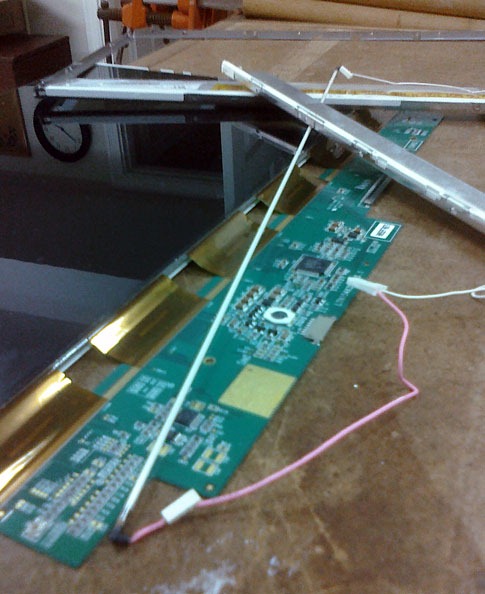
Success … finally! I been all thumbs in an ongoing struggle (post one and two) to  fix my notebook computer during the Christmas and the New Year holiday. I ordered the suspect part, ‘an inverter,’ for my Gateway notebook computer and after hassles with pre-Christmas shipping, finally received it only to find out it was incorrect (not my fault). I order once again from another ebay seller and saved $10 – only $7.99 (including shipping — cheap). It was the correct component and finally I’m back to nearly 100% at this blog posting (still need to reassemble the notebook … not necessarily an easy task).
Unfortunately, while waiting for the inverter, I also disassembled the LCD screen with the precision of a chainsaw wielding drunken lumberjack thinking I would test the backlight – not too bright of me. My display of barbarism on my computer and lack of patience required the purchase of a new display for and additional $85 as well. So, my initial $18 repair (first ‘wrong’ inverter) turned into about $100 in total … nevertheless, I’m glad to be mobile once again. (in hindsight, I could have fixed my computer for a total of $7.99 including shipping! Kudos to ebay seller techmechanic)
What I did learn from the project might be poignant to someone reading this: Don’t bother to try and replace the backlight tube in your laptop’s display (photo below), it is extremely tedious … and in my opinion not well designed for replacement. Instead, opt for a replacement screen.
Posted By RichC on January 3, 2010

Mom and Dad 01/02/10 — Palm Pre
We’ve had a couple of nice family gatherings over Christmas and New Years this holiday season, so why not include two of the most important people in my life … Mom and Dad. It was a great to be together with them and enjoying time reminiscing — I think even my kids enjoyed some of the old photos of their dad … especially the embarrassing ones. My dad who is retired seems to enjoy feeding and recording the birds that visit their feeder and mom more than ever enjoys her time working at the local “Once Around Shop” as a volunteer. I’m particularly proud of her for her 25 (now almost 26 years) of service there … something communities need more of.

I’m also thankfully they are in great health and spirit … and a great example of husband/wife and father/mother our family. I love you mom and dad.

Posted By RichC on January 2, 2010

Like many men (and women) in America, I spent New Year’s day 2010 watching way too much college football. It was really the first test of our updated HDTV home theater – totally pleased (photo).For the most part we enjoyed the games, particularly the Ohio State Buckeyes Rose Bowl victory. That said, we’re finishing the day watching ‘our’ Cincinnati Bearcats struggle against the Florida Gators in the Sugar Bowl … and it is making me ill. We are obviously overmatch and/or have underplayed (currently 51 – 24 with 3 minutes left). Perhaps Coach Brian Kelly would have made a difference if he were still here, but I doubt it. My congratulations to the Gators and their impressive quaterback Tim Tebow … both on and off the field. I look forward to seeing what the future holds for him. Defeat is imminent.
🙁
Posted By RichC on January 1, 2010
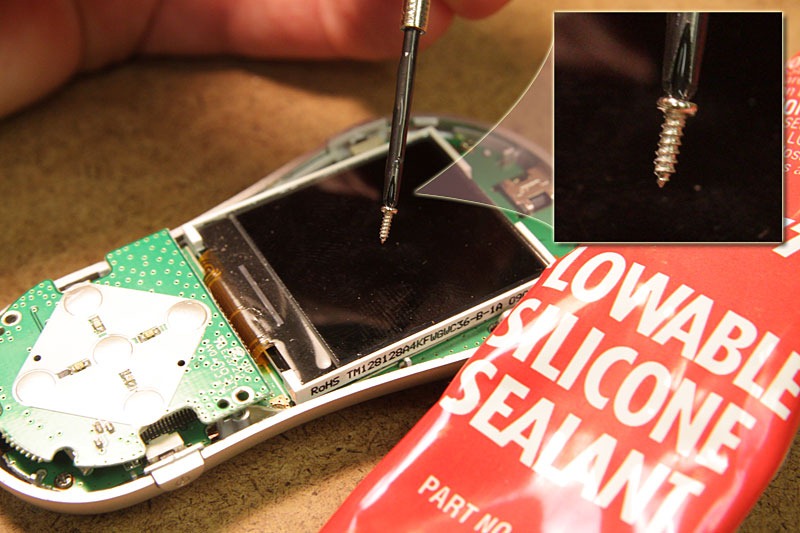
There come a time when having even small fingers and thumbs isn’t good enough, let alone bigger finger like me, isn’t to repair. Here’s a time tested technique that might just keep your frustration level down. When you’re tinkering with small parts like electronic devices screws, try a dot of silicone sealant on the end of your screwdriver. Often it is just enough to hold the tiny screw so that it can be put delicately back in the correct spot. I keep a small tube in my toolbox just for that purpose; the screw top on the tube is just the right size for most small screwdrivers so I don’t even have to squeeze any out.
__