Tech Friday: PHP 8.3.33 updates and Linux server contemplation

Posted By on August 14, 2026

Nothing really earth shattering regarding a WordPress plug-in glitch requiring a PHP update earlier this week, but it did force me to tweak my “smallish” Digital Ocean server that really is in need of more RAM. But, since I offload image serving for the most part to a separate server and audio/video streaming to AWS for the most part, the WordPress demand and bots from China, etc hammering the server are the most pressing issues.

CPU Options

Every process seems to wants more memory and even a quick chat with Claude AI is encouraging me to increase my droplet to 2 GB of RAM (currently 1GB). I’ve tried to improve efficiency by using SWAP and upgraded to a Premium AMD CPU and NVMe SSD which is better for SWAP, but a Wordfence process scanning will no longer complete the task under PHP 8.3 … even giving it more time. I’m going to set up a “pm = ondemand” to see what happens as things settle down … rather than doubling my monthly server costs.

Larger RAM, higher price

Commentary: “It’s the Economic Performance” – TheHustings

Posted By on August 13, 2026

My commentary was published in the “Gray Area” of  TheHustings in response to Stephen Macaulay’s right column, so saving it to the blog’s archive.

AUGUST 11, 2026 — There’s an important distinction missing here: Wage growth is not the same thing as economic performance. [“So, About Those Manufacturing Numbers” by Stephen Macaulay, right column.]

The Atlanta Fed numbers show that manufacturing wages grew faster during much of the Biden administration. Fair enough. But those were also years of pandemic-related labor shortages, supply disruptions and high inflation.

Wage growth alone tells us little about whether manufacturing is expanding, whether workers are gaining purchasing power, or whether companies are investing in future production. It’s a little like judging two baseball seasons solely by home runs while ignoring that the ballpark changed.

The more interesting question is what is happening to manufacturing investment, production and jobs. Those things take time. A factory announced in 2025 doesn’t start producing in 2025, and a single month’s construction-spending figure doesn’t tell us where the trend is headed. More importantly, the Bureau of Economic Affairs reports that durable-goods manufacturing was one of the leading contributors to US GDP growth in the first quarter of 2026, while manufacturing employment also increased in the quarter. That’s actual economic activity — not a campaign promise or a Truth Social post.

None of this means Trump has magically solved every economic problem. Tariffs have created legitimate concerns about input costs and uncertainty … and Americans are understandably still unhappy about the price level left behind by the inflation of the Biden years.

But that’s precisely why a little common sense is useful here. If the question is whether Trump’s policies are succeeding in rebuilding American manufacturing, let’s measure factories, investment, production and jobs — not simply whether today’s wage-growth percentage beats a number from a very different economic environment. The verdict is still out, but the evidence is considerably more complicated than those who just disagree with the Trump administration.

Corbett is a contributing pundit to The Hustings, writing primarily for the right column.

Happy Birthday to Brenda … and it was a “happy time” after some summertime fun with our granddaughters

Posted By on August 12, 2026

This content is restricted.

Investing, the economy and the future: Shifting Market Winds

Posted By on August 11, 2026

For much of the post-Global Financial Crisis era, equity investors enjoyed a structural tailwind. Low interest rates, subdued inflation and steady growth created a favorable liquidity and supply/demand backdrop. Companies borrowed cheaply, bought back Stock ticker imageshares aggressively, and pursued takeovers that further reduced the public float, according to Interactive Brokers trader insight. The net supply of shares shrank for years, mechanically boosting per-share metrics and amplifying the effect of passive inflows.

That regime is shifting. The same forces that once provided reliable support now risk becoming headwinds—or at least far less dependable tailwinds.

Policy rates sit in the mid-3% range, and inflation has remained sticky. Real rates are positive again. The cost of capital is higher, and the era of near-zero rates and financial repression is over. Markets can no longer assume every dip will be met with aggressive monetary easing.

On the supply side, buybacks remain large and still outweigh new issuance in many forecasts. Yet equity supply is rising. AI-related capital needs have driven a sharp increase in follow-on offerings and other issuance. Hyperscalers are directing cash into massive capital spending rather than solely into share repurchases. The long period of de-equitization is easing; net supply is becoming less negative and could turn positive.

Liquidity itself is more volatile. The ultra-abundant, low-volatility conditions of the 2010s have given way to a more temperamental environment of supply shocks, fiscal competition for capital, and frequent policy trade-offs.

None of this guarantees a bear market. Earnings growth, residual buyback support, and productivity gains can still sustain equities. The change is structural: a multi-year tailwind that lifted valuations and cushioned drawdowns is becoming less one-sided. Higher real rates raise the return hurdle. Rising share supply reduces the mechanical lift from a shrinking float. Liquidity is less of a one-way support.

Investors who treated the post-GFC backdrop as permanent may need to recalibrate expectations for returns, volatility, and the reliability of strategies that thrived on a shrinking free float. The market winds have shifted. They may not reverse course entirely, but they are no longer the consistent ally they once were.

Test Post After PHP upgrade: August 10, 2026

Posted By on August 10, 2026

After the PHP upgrade. Testing a few items. 


Music Monday: “Twist and Shout” by The Beatles

Posted By on August 10, 2026

The BeatlesThe recording of “Twist and Shout” is legendary for being performed in a single take by The Beatles in 1963. John Lennon delivered a raucous, throat-shredding vocal performance while suffering from a cold. Producer George Martin scheduled the track as the final song of the session to preserve Lennon’s voice, noting it as “arguably the most stunning rock and roll vocal and instrumental performance of all time.”

Recording late at night on February 11, 1963, Lennon was already suffering from a severe cold and had been singing for nearly 12 hours. Producer George Martin intentionally saved the song for last, knowing it would destroy Lennon’s voice. After the first take, Lennon’s vocal cords were so shredded that a second attempt was abandoned almost immediately; Lennon later described the sensation of swallowing afterwards as feeling like “sandpaper.”

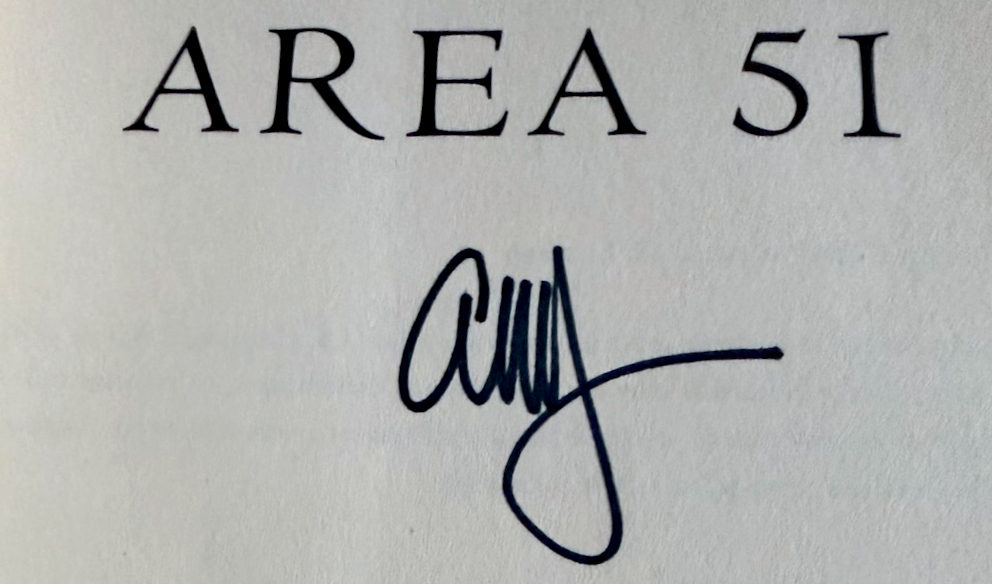
Annie Jacobsen book contest: Signed 1st Edition of “Area 51”

Posted By on August 9, 2026

Area 51 Sometimes it is the small things in life that get one excited. That happened for me as a fan of books by Annie Jacobsen last month and finding out I was the winner of a signed 1st Edition of her 2011 book Area 51: An Uncensored History of America’s Top Secret Military Base”  

Signed

Yes, I’ve read the Kindle version before, but am thrilled to have the hardback version with photos pages etc. It will be a hefty bookshelf filler at 532 pages … and am also looking forward to “Biological War: A Scenario.” 😉

(more…)

Desultory - des-uhl-tawr-ee, -tohr-ee

  1. lacking in consistency, constancy, or visible order, disconnected; fitful: desultory conversation.
  2. digressing from or unconnected with the main subject; random: a desultory remark.
My Desultory Blog