Three Ohio cities named Best Places to Live 2015 – @Money

Posted By on September 1, 2015

MoneyMag2015Cities

Three small Ohio cities made Money Magazine’s list of Best Places to Live in 2015. Having lived in neighboring communities to Mason (currently Liberty Township) and both Solon and Twinsburg, Ohio (previously Hudson), I agree that both areas are great places to live and raise a family. tackbestplacestoliveCommonalities are that they are growing upscale small towns, incorporating as cities near larger cities, and are populated with residents who embrace Midwestern traditional family values. If you are relocating to either the Cincinnati or Cleveland/Akron areas, and these “commonalities” appeal to you, start your thumb tack search around these small cities.

Mason, Ohio

MasonOHMoneyGraphic2015

Mayor David Nichols, former CEO of a publicly-traded manufacturing company, continues his great track record of luring big employers and quality jobs to this suburb north of Cincinnati. Procter & Gamble, which has its beauty and healthcare division here, announced it’s adding 1,400 R&D jobs, and Festo, the German maker of high-tech automation products, is moving most of its U.S. manufacturing to Mason from New York.

The job mix attracts a workforce from all over, and that diversity shows up in Mason’s schools — 27% of students are nonwhite. With more than 3,300 students, Mason High School is the largest in Ohio, but its “bigger is better” approach (67 athletic teams and 80 extracurricular clubs) has consistently landed it in the state’s Top 10 of academic ratings. The schools’ latest boast: The high school’s jazz band will be playing in the Rose Bowl parade in January.

Strip malls and big-box retailers are the norm, but residents regularly flock to what seems to be Mason’s true hub, the 199,000-square-foot community center, one of the state’s largest public facilities.—Vanessa Richardson

Solon, Ohio

SolonOHMoneyGraphic2015

On a typical weekday morning, it seems that as many cars make the rush-hour drive into Solon as those doing the 30-minute commute to downtown Cleveland. Among the 800-plus local businesses are divisions of the Cleveland Clinic and Nestlé and the world headquarters of Swagelok, maker of components for gas and fluid systems. The chamber of commerce aims to lure more businesses with tax breaks and job-creation grants.

Both the city and schools are working to teach students skills that could land them a job at one of those local businesses. A Young Innovators Society inspires kids from kindergarten on up to get into STEM fields, and a “Minnow Tank” contest for junior entrepreneurs will make its debut in January.

That doesn’t mean Solon is all work, no play. The town, which already has a popular community ­orchestra, just launched a band, and there are plenty of parks, trails, and riverside green spaces where locals can go to kick back. –Vanessa Richardson

Twinsburg, Ohio

TwinsburgOHMoney2015Graphic

Located halfway between Akron and Cleveland (a 30- to 45- minute commute in either direction), Twinsburg feels nearly as pastoral as it did in 1819, when twins Moses and Aaron Wilcox offered residents $20 for starting the first school if they agreed to change the settlement’s name to Twinsburg (the annual Twins Days festival, drawing up to 3,000 sets of twins, just celebrated its 40th anniversary).

The leafy parks have trails winding through meadows and woods, with the 4.4-mile Complete Center Valley Loop Trail connecting them all. The small town square transports you back to the 19th century. The downside of that is a lack of shops and restaurants, which means residents have to drive elsewhere for those.

Twinsburg’s first school has grown into five schools that have gotten Ohio’s top marks in academic achievement for the past seven years. Students gets a lot of financial and volunteer support for its athletic teams, music and fine arts programs—the Twinsburg Band Boosters recently donated more than $62,000 for new band uniforms.—Vanessa Richardson

Full article in Money Magazine for Best Places to Live 2015
What are the odds of my boat getting hit by lightning?

Posted By on August 31, 2015

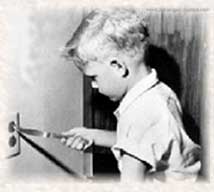
captlarryelectricitygraphicArchiving an educational post on lightning and boating. Although there may not be one perfect way to protect yourself or your boat when thunderstorms appear, putting the odds in your favor does make sense.
According to Boat U.S. “The feature reports that in any one year the odds of your boat being struck by lightning is about 1.2 in 1,000, with 33% of all lightning claims coming from the sunshine state, Florida. The second most struck area in the country was the Chesapeake Bay region (29%), while on the opposite side, 13 states had no lightning-related claims, including states such as Idaho and Nebraska.”

The odds are, of course, higher on a sailboat, and for some reason, higher still for a multihull sailboat.

Read Frugal-Mariner article for entire post

What follows is based on the recommendations for lightning protection provided by the American Boat & Yacht Council, Standard E4.

The primary purpose of a lightning protection system is to provide for the physical safety of all aboard your vessel. Prudent actions that should be taken during an electrical storm are:

1) If at all possible remain in the cabin of a closed boat.

2) No one should be in the water or have any part of their body immersed in the water.

3) Do not come into contact with any components connected to the lightning protection system of a properly protected vessel. Otherwise your body could act as a conductive bridge between any items connected to the lightning conductive system. For example, you should not be in simultaneous contact with a metal steering wheel and a metal stern pulpit.

A good lightning protective system ensures that all large masses of metal are electrically connected. This purpose should not be confused with that of the vessel’s basic bonding system. A properly installed and isolated bonding system is there to provide a low resistance electrical path to reduce electrolytic corrosion and as a measure of personal protection if there is an electrical fault in the boat’s AC/DC electrical systems.

If your sailboat is a vessel with an aluminum mast you have the starting point of a well-grounded lightning rod. This will provide a zone of protection for a radius around its base equal to the height of the lightning rod. Due to some vessels overall length, it may be necessary to install another lightning rod to encompass any areas that do not fall within the zone of protection. Don’t forget that the mast itself must be physically bonded or connected through to the common ground – one of the keel bolts or if a encapsulated keel, to the grounding plate, in order to provide optimum protection.

The apex of the rod should be a minimum of six inches above any masthead device. The end should be sharpened to a point. (NOTE: There is some disagreement on this point.  Captain Larry)The base of the mast or the mast step if metal, should be connected to a keel bolt on externally ballasted vessels. The preferred wire gauge is No. 6 or even better, #4 AWG stranded copper. In no case should such a connection be made to a vessel with internal ballast. The result could be a hole blown through the bottom of the hull. Boats with internal ballast should have a copper ground plate of at least one square foot in size installed externally on the hull bottom.* The grounding wire should then be connected to the ground plate.

All wire conductors should be kept as straight as possible. All large metal objects above and below decks should also be electrically tied into the lightning ground conductor. This is a precaution against side flashes. Large metal objects include shrouds, chainplates, toe rails, sail tracks, winches, steering wheels, and bow and stern pulpits. These items can be tied into the ground conductor wire by a minimum #8AWG stranded copper gauge wire, or connected directly to the hull ground terminus.

A thorough inspection of the lightning protection system should be conducted on an annual basis as part of normal maintenance procedure. All connections should be maintained tight and corrosion free. Any corrosion will impede the flow of electricity and promote side flashes. For that reason it is important that the lightning protection system receive the same attention as the rest of the systems aboard the vessel. This should be included as a part of the annual lay-up and maintenance procedure. For additional details regarding the lightning protection standards readers should refer toAmerican Boat and Yacht Standard E-4

Fifty years ago radio personally Paul Harvey saw the future

Posted By on August 29, 2015

paulharveyMaybe it didn’t take much imagination to see where society and our country was heading … but it does give me the chills to listen to radio personality Paul Harvey’s broadcast from 1965 when Democrats embraced their big government solutions and promoted President Johnson’s Great Society program. (and the answer from today’s Liberal Progressives is that government is not big enough and that we need to tax, spend and control even more to solve the problem.)

Cautious mariners use the Danger Rule when watching Erika

Posted By on August 28, 2015

Erika_Mariner123rule_150828

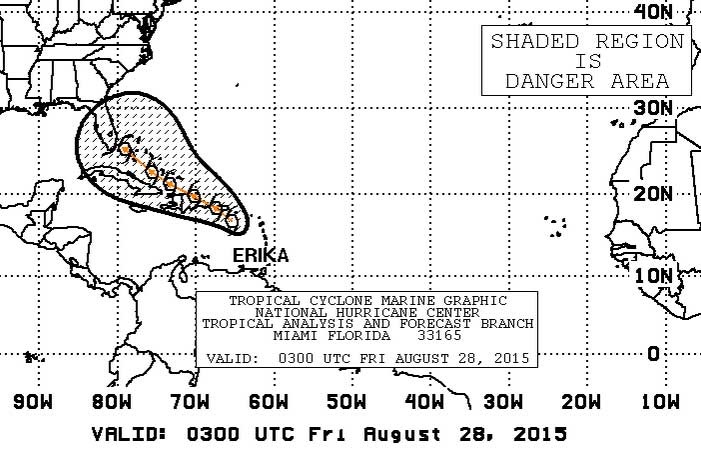
Most people watching tropical weather are focused on the eye of the storm … for good reason, but as a sail enthusiast, I tend to refer to the Mariner 1-2-3 rule when watching storm. This Danger Rule or Area applies the 34-knots of wind criteria as a way to keep boaters out of the worst weather. According to NOAA, 34 knots of wind was chosen because when winds reach this strength the sea state will change putting a vessel in more danger – see nhc.noaa.gov PDF.

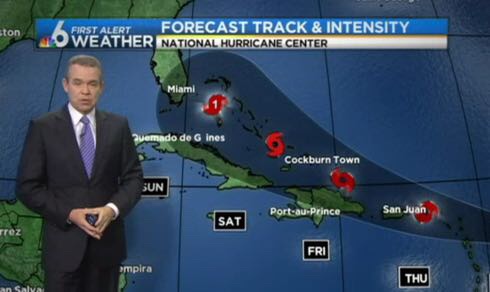
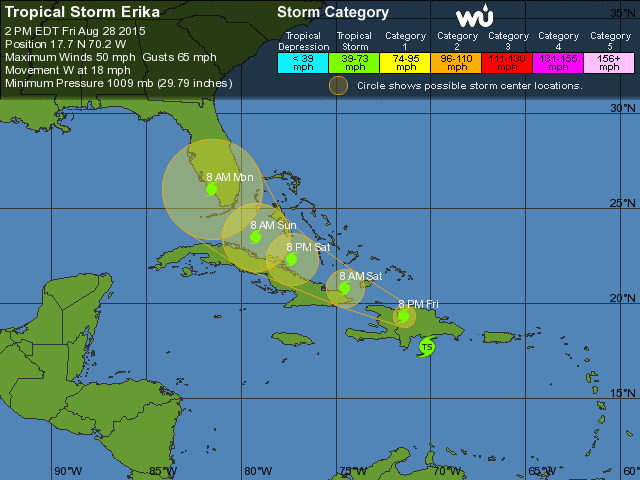
The current path and projections (as of Friday 8/28 afternoon) from most models have Erika centered on the west coast of Florida and are no long projected the strength to strengthen to hurricane intensity. From past rainfall levels though, the tropical storm will dump tons of rain over the entire southern part of the state, but hopefully will refrain from excessive wind and surge. This may not be comforting for those directly in the path, but with preparation it if far more survivable than a category level hurricane.

.SYNOPSIS…TROPICAL STORM ERIKA NEAR 17.7N 69.4W 1008 MB AT 11 AM  MOVING W-NW OR 280 DEG AT 16 KT. MAXIMUM SUSTAINED WINDS 45 KT  GUSTS 55 KT. ERIKA WILL CONTINUE W-NW AND ACROSS HISPANIOLA THIS  AFTERNOON REACHING 19.3N 71.4W THIS EVENING…THEN WILL MOVE N OF  HISPANIOLA TO 20.8N 74.5W SAT MORNING AND CONTINUE N OF CUBA TO 22.3N  77.3W SAT EVENING…23.5N 79.2W SUN MORNING…THEN OVER SOUTH  FLORIDA NEAR 26.0N 81.5W BY MON MORNING. ONLY MODEST FLUCTUATIONS  IN THE STRENGTH OF ERIKA ARE CURRENTLY EXPECTED THROUGH SUN.

at201505

TechFriday: What does it take to steal credit and debit cards?

Posted By on August 28, 2015

Most technology followers know the theory behind copying the swipe code from traditional magnetic credit cards, but few people swiping their cards at the gas pump realize that the “skimming device” is installed by criminals is installed out of site “inside” the gas pump.

  • Q: If you can’t see it, how do you know your card is stolen?
  • A: You don’t until it is too late. It’s a growing problem.

pbp_ccskimmer

The theft starts with a universal gasoline pump key that unlocks the majority of the nation’s dispensers. With a $111 credit card skimmer purchased on the Internet, a criminal can set up an enterprise to steal credit and debit card information from unsuspecting motorists fueling their cars.

First, the thief installs a skimming device as small as a matchbox inside the dispenser cabinet. The card data can be downloaded and sold on the Internet. Or, with a $359 card embosser and some blank magnetic cards, fraudulent cards can be made using the stolen numbers.

Either way, with their new “crowbars,” thieves are stealing millions of dollars. Some are using more expensive Bluetooth-equipped skimmers so they can do their dirty work without having to retrieve the skimmer.

The problem of criminals, many of them organized crime rings, placing skimming devices inside gas pumps has come to the forefront recently as Florida Department of Agriculture and Consumer Services inspectors uncovered 107 illegally placed devices in a statewide sweep.

Full story in PalmBeachPost.com

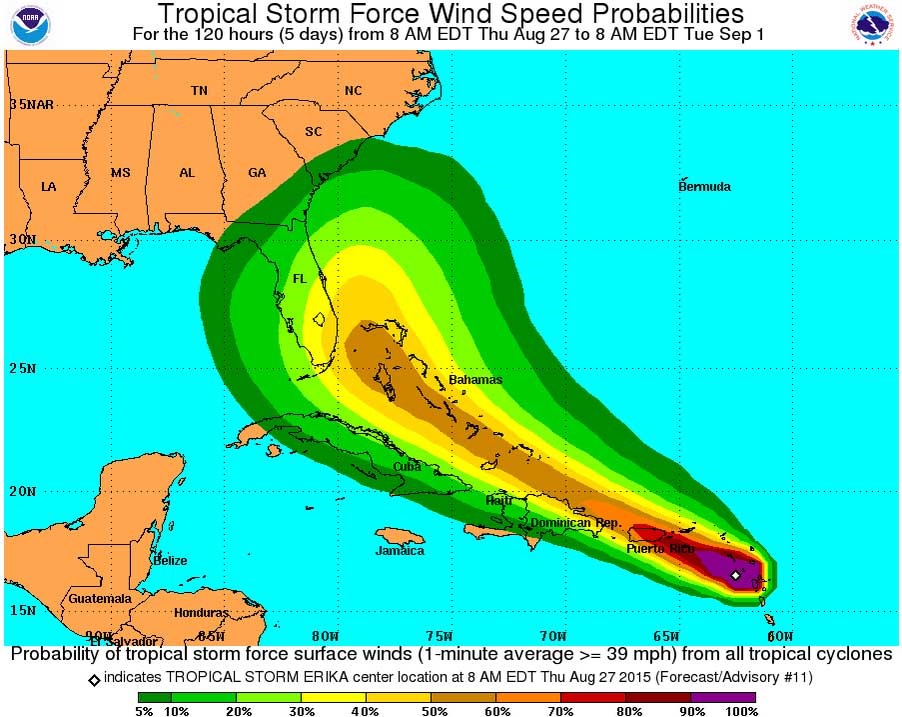
What’s the probability of a little wind in Florida from Erika?

Posted By on August 27, 2015

TSErika_windprob150827

Looks probable. Should have removed the Bimini on Encore this summer … thankfully the sails are down and stowed safely away. Lines are doubled, but no longer as new and stretchy as they once were. Hm … as my buddy Mark would say, “that why we pay for insurance.”

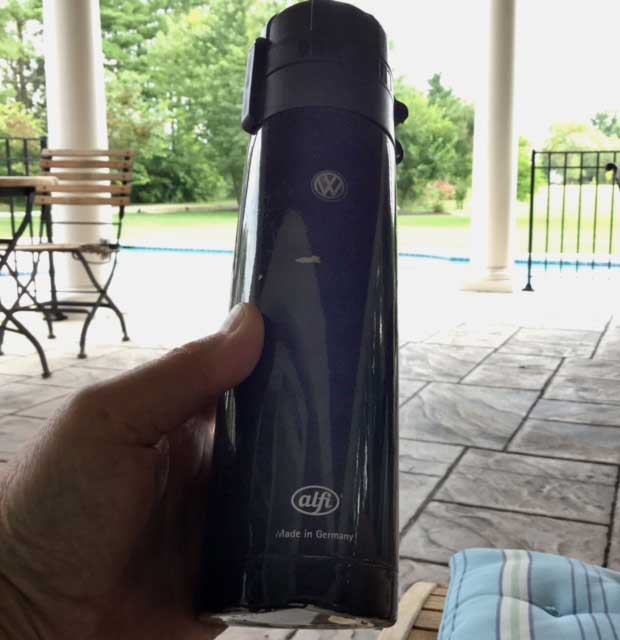
My favorite VW travel thermos needs to be replaced

Posted By on August 27, 2015

vwthermos150824In 2008 the TDIClub gifted me a VW travel thermos and I’ve used it everyday since then. I use it primarily an insulated  water bottle, but it does did a great job with coffee too. It doesn’t sweat when things are cold and with just 2 ice cubes this little stainless steel Alfi Vacuum Bottle would keep water cold all day … and fits in a cupholder!

Unfortunately I dropped it a couple months ago and it must have lost whatever inert gas or vacuum because it is no longer doing its job. Now … what do I replace it with???

Thoughts???

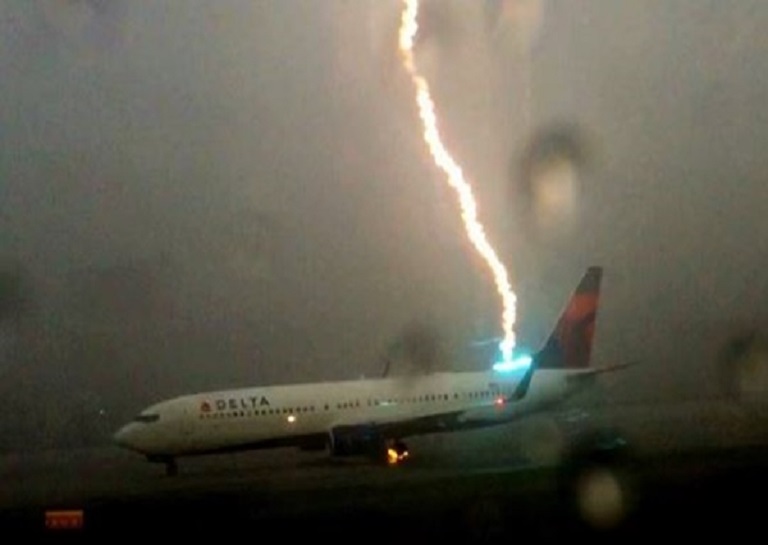
This Delta plane gets struck by lightning

Posted By on August 26, 2015

A passenger who was waiting for a storm to pass to board his flight caught the exact moment when a lightning bolt struck a Delta airliner.

Source: Watch this Delta airliner get struck by a lightning bolt!

Tropical Storm Erika is poised to grow by this weekend

Posted By on August 26, 2015

It is the time of year when the tropical weather in the Atlantic tracks across the Caribbean Sea and Leeward Islands. These tropical storms can grow into hurricanes and blast the US east coast or continue on into the warm waters of the Gulf of Mexico. The previous tropical storm turn hurricane for a very short while was Danny, but the new one called Erika east of the Leeward Islands may have a little more potential to grow. Time will tell what happens with this storm as currently Erika is confirmed to have only 40 mph winds and is moving west at 20 mph. Hurricane watchers have the current track and cone targeting the Bahama Islands and southeast coast of Florida and growing in intensity.

The Sony Mobile and ZMP Inc tests their new UAV

Posted By on August 25, 2015

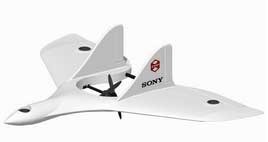
sonyaerosenseAfter getting a chance to play with a quad copter last week, I’ve been a little more intrigued with the advancements in “drones.” Who knows, this innovation may find its way into the first realistic personal transportation device someday?

Sony’s Aerosense drone that takes off and lands vertically but during flight gets most of its lift from wings for more efficient and faster flight. I like the concept. Check it out.

Desultory - des-uhl-tawr-ee, -tohr-ee

  1. lacking in consistency, constancy, or visible order, disconnected; fitful: desultory conversation.
  2. digressing from or unconnected with the main subject; random: a desultory remark.
My Desultory Blog