Greek Austerity Vote Seen Passing

Posted By on June 29, 2011

The euro edged higher on Wednesday, supported by expectations that the Greek parliament would vote in favor of an austerity package, though wariness that this would only be a short-term solution to the country’s debt problems limited gains.
News Headlines

Lubricheck gets a little more press

Posted By on June 28, 2011

Last month I posted on a new start-up project raising funds for an engine oil analizer gadget … Lubricheck … and heard the @wsjthismorning radio spot/podcast talking about it.

And you think your diesel or hybrid gets impressive fuel economy

Posted By on June 28, 2011

How about topping this hypermiling diesel concept vehicle developed UK’s Cambridge Design Partnership and driven by an eleven-year old kid – 1,325 mpg.

concept-car-kitty-foster-hypermile-diesel cdp1106

When I told my parents how far this car could go on a gallon of fuel they were absolutely amazed! It wasn’t too hard. The Go system helped me use as little fuel as possible. It monitored the car’s performance, which helped us know when to stop the engine and start coasting.

Check out the company’s press release below.

CDP technology powers eco car

Cambridge Design Partnership uses technology derived from innovative military technology in eco-driving challenge.
Cambridge Design Partnership announces that it has reused elements of its own Lightweight Oxygen Concentrator, as well as various other technologies developed in-house, to contribute to a specialist vehicle capable of travelling 1,325 miles on a single gallon of diesel for this year’s Mileage Marathon Challenge. The small proof-of-concept car was driven by an eleven year old Cambridgeshire girl in partnership with a local school.

The annual Mileage Marathon Challenge, which took place today at Mallory Park motor track near Leicester, is intended to promote engineering and technology to school and college students, as well as eco-friendly vehicle concepts.

As BBC TV reported earlier this year, Cambridge Design Partnership designed an oxygen-generator system to deliver oxygen to injured frontline soldiers. This system, powered by an innovative micro-diesel-engine, removed the need to take heavy and potentially explosive oxygen canisters onto the battlefield. This project involved Cambridge Design Partnership’s evaluation of a variety of miniature engines, one of which was selected to power this remarkable vehicle.

The vehicle also features low friction tyres to increase mileage, and was tracked using Cambridge Design Partnership’s ‘Go’ real-time tracking service. The Go technology allows live tracking to be integrated into products and services easier than ever before, and has previously been used to track the Tour of Britain cycle race and promotional vehicles for a novel marketing campaign around Paris. In this case, the live telemetry provided by Go allowed the team to optimise the race strategy for the eco-car, adding an impressive 150mpg to the specialist vehicle. It also made it more interesting for supporters, allowing them to see the live speed and location of the car using their Smartphone from wherever they happened to be.

The vehicle was driven by local schoolgirl Kitty Foster, 11, of Kings School, Ely. CDP extends its congratulations to Kitty and King’s School for such an impressive achievement.

"When I told my parents how far this car could go on a gallon of fuel they were absolutely amazed!" Kitty commented. "Actually, it wasn’t too hard. The Go system helped me use as little fuel as possible. It monitored the car’s performance which helped us know when to stop the engine and start coasting. The GPS information made a big difference and added 150 mpg. The whole car was great fun to drive. It’s good to see cars getting more environmentally friendly, and I’m really pleased we’ve done so well in the challenge’.

"This is about more than just an ultra-eco-friendly car," commented Stephen Lamb, the MoD project leader from CDP. "This supports what our technologies can achieve. We quickly realized that our R&D work for the MoD, creating an Oxygen generator, was highly applicable to the Mileage Marathon Challenge. Both required an extremely efficient system that used very low power and could run off diesel. Now I just need to figure out how to make my own car get the same kind of mileage!"

This project underlines the potential of the oxygen generator as a product for military and humanitarian applications. Where electricity is not readily available, for example on the battlefield, diesel can be a highly convenient form of power. The Oxygen generator is another example of how Cambridge Design Partnership focus on developing new products that use technology to meet genuine human needs.
Cambridge Design Partnership is available to apply its innovative research, design and development talents in a range of specialist fields, including consumer, healthcare, military, industrial and cleantech.

NYTimes: The Lawyer Surplus, State by State

Posted By on June 27, 2011

Probably don’t want to be mounting up too much law school debt?
===
The Lawyer Surplus, State by State

Researchers seek to quantify how many lawyers are being produced in each state, and how that compares with how many jobs for lawyers are being created. New York has the biggest legal oversupply.

http://economix.blogs.nytimes.com/2011/06/27/the-lawyer-surplus-state-by-state/

Posted via email from RichC’s posterous

Tax “credit” reform might change who pays taxes

Posted By on June 27, 2011

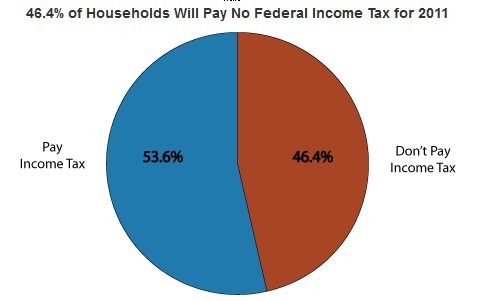
Why do only 53% of the citizenry of the United States of America pay federal income taxes? Something’s not quite right when nearly half of the people benefiting from from living in this country are voting for, but not funding, those who are elected to spend others peoples money.
WhoPaysTaxes

This could change if congress eliminates the majority of the “credits”  which keeps some families from paying federal income taxes … and once people have “skin in the game” they might think twice about how “their” money is being spent and redistributed in Washington DC.


Should everybody pay income taxes?

A broad swath of Americans don’t pay taxes. Do they have ‘skin in the game’ in America’s success?

By Elaine Maag, Guest blogger / June 26, 2011

David Walker, a former Government Accountability Office head, thinks it’s a problem that half of Americans don’t pay federal income taxes. At the June 22 IRS-Tax Policy Center Research Conference, he argued that more people ought to have “skin in the game” when it comes to paying these taxes so they will be invested in our country’s future. I happen to think almost all of those people he’s talking about do have skin in the game—more than he or I, in fact.

For starters, most people do pay taxes. As Walker recognizes, they pay payroll taxes, excise taxes, sales taxes, state income taxes–and more. Tax reform could easily involve some of these levies, so even people who don’t pay federal income taxes today could be affected by reform. And please don’t forget, while today’s credits and deductions do knock many low-income people off the tax rolls, those in the top brackets reap far greater benefits.

Also, as noted by my colleague Eric Toder, people don’t pay income taxes either because they have no taxable income (almost all of the elderly who don’t pay income tax, for instance), or because they qualify for credits that offset their tax liability. For the people in the second group, increases in tax rates could very well hit them in the wallet – either because they’ll owe net taxes or they’ll receive smaller refunds.

The Center on Budget and Policy Priorities recent analysis of those who don’t pay federal income taxes jibes with TPC’s. The conclusion? Most are elderly, poor, or unemployed (including people who are too disabled to work). Whom, I wonder, should the tax man put on the block? And how much money is there to be gained by doing so?

The Earned Income Tax Credit keeps many off the tax roles. But it’s not keeping wealthy people from paying income taxes. TPC estimates that in 2010, about 80 percent of its benefits went to households with income under $30,000.

Furthermore, people tend to receive the EITC for only a couple of years at a time. It might move people off the tax role in some years, but not all years. So even many people who temporarily aren’t paying income tax, likely will in the near future.

If the EITC were run as a spending program rather than a tax subsidy, government could separate its revenue and spending functions. This might diffuse some complaints about people who pay “no taxes.” But that sort of thinking overlooks the real advantages to delivering work incentives through the tax system. It is administratively efficient, is more accessible to workers than traditional spending programs, and has increased work, especially among single parents. Why fix something that isn’t broken?

Of course, as a spending program it would be targeted for cost cutting while as a tax subsidy it has—so far—remained immune.

At a time when we have a serious budget problem, tax breaks should face the same serious review as spending. But tax breaks for low-income families should not be at the top of anybody’s target list. No matter what happens with tax reform, I know where my next meal is coming from. At least some of those who avoid federal income tax thanks to programs such as the EITC don’t. Adding to their income tax burden will not help.

http://www.csmonitor.com/Business/Tax-VOX/2011/0626/Should-everybody-pay-income-taxes

The first day of the rest of your life …

Posted By on June 27, 2011

KsNewWhitecoat110625Stressful but exciting is what I remember upon leaving college and beginning to make my way in the world. I’m not sure that I would want to do it again, but it was great to believe that opportunities were there for those who worked hard for them. Now … I’m not as sure about the future … and question whether or not the United States I’ve grown up in will continue to reward the makers as much as the takers? Maybe I’m just tainted by knowing too much and watching our politician dig us into a deeper and deeper hole?

That though aside, it is great to see my daughter excitedly beginning her residency Nationwide Childrens Hospital. She forwarded me a few photos after receiving her new whitecoat, IDs and a positive teambuilding orientation day. What a difference it makes to be enjoying and looking forward working hard these next few years. I can only hope that the positives continue to dominate and that her years in Columbus are happy ones – so far, so good.

Internet privacy and security

Posted By on June 26, 2011

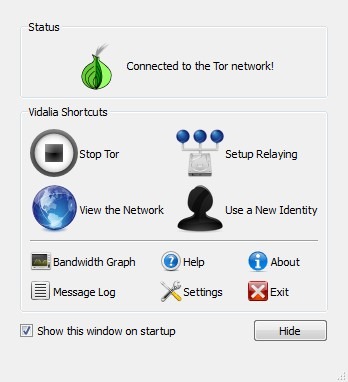
torwindowAlthough I’ve not been overly concerned with “my personal” Internet browsing and how my habits are being watched, I am conscious that more and more of online habits are being tracked and marketed to interested parties. It does seem a bit intrusive.

After reading a few more articles on the subject the use of https and proxy servers (along with eliminated cookies and using “private” features on browsers), I decided to give the Tor Project and Firefox HTTPS Everywhere extension a try this weekend. The install went surprisingly well and within minute I was up and browsing at a local hotspot in a relatively secure mode … although significantly slower. It seems the relaying of packets through servers around the world can really slow down speeds (duh). Anyway, I’m not sure this method is necessary for most of us, but for those working to get information and messages from a few less than friendly locations around the world, perhaps using packet encryption and rerouting can keep information flowing and users secure?

 What is Tor?

The name "Tor" can refer to several different components.

The Tor software is a program you can run on your computer that helps keep you safe on the Internet. Tor protects you by bouncing your communications around a distributed network of relays run by volunteers all around the world: it prevents somebody watching your Internet connection from learning what sites you visit, and it prevents the sites you visit from learning your physical location. This set of volunteer relays is called the Tor network. You can read more about how Tor works on the overview page.

The Tor Project is a non-profit (charity) organization that maintains and develops the Tor software.


How is Tor different from other proxies?

A typical proxy provider sets up a server somewhere on the Internet and allows you to use it to relay your traffic. This creates a simple, easy to maintain architecture. The users all enter and leave through the same server. The provider may charge for use of the proxy, or fund their costs through advertisements on the server. In the simplest configuration, you don’t have to install anything. You just have to point your browser at their proxy server. Simple proxy providers are fine solutions if you do not want protections for your privacy and anonymity online and you trust the provider from doing bad things. Some simple proxy providers use SSL to secure your connection to them. This may protect you against local eavesdroppers, such as those at a cafe with free wifi Internet.

Simple proxy providers also create a single point of failure. The provider knows who you are and where you browse on the Internet. They can see your traffic as it passes through their server. In some cases, they can even see inside your encrypted traffic as they relay it to your banking site or to ecommerce stores. You have to trust the provider isn’t doing any number of things, such as watching your traffic, injecting their own advertisements into your traffic stream, and recording your personal details.

Tor passes your traffic through at least 3 different servers before sending it on to the destination. Because there’s a separate layer of encryption for each of the three relays, Tor does not modify, or even know, what you are sending into it. It merely relays your traffic, completely encrypted through the Tor network and has it pop out somewhere else in the world, completely intact. The Tor client is required because we assume you trust your local computer. The Tor client manages the encryption and the path chosen through the network. The relays located all over the world merely pass encrypted packets between themselves.

Most interesting story of the week: Uncontacted tribes in Brazil

Posted By on June 25, 2011

On of the most interesting stories this week had little to do with politics, the economy or the wars and “not” wars involving US troops around the world – instead it has to do with a newly discovered and previously unknown indigenous tribe in the Western Amazon (Brazil). isolados2pThe group believed to be as many as 200 people has yet to be contacted by the outside and lives in the rugged folds of the Amazon River basin. Officials from Brazil’s Indian affairs agency, FUNAI, say they have confirmed the existence of a previously unknown indigenous group which was initially discovered through the examination of satellite images of rain forest clearings and confirmed by aerial reconnaissance flights earlier this year.

According to a blog post by writer, photographer and broadcast journalist Scott Wallace, “the overflights revealed three separate clearings and four large communal dwellings, known as malocas, clustered in the dense jungles of the Javari Valley Indigenous Reserve in far western Brazil. Specialists in matters pertaining to isolated Indians estimate the population of uncontacted tribes by examining the size and number of dwellings, as well as any gardens the inhabitants might have under cultivation. The recently discovered tribe is reported to have planted tracts of corn, banana, and low-to-the-ground bushes that might be peanuts or cassava.”

Into the Jungle
The Javari — a sprawling rain forest reserve half the size of Florida — is home to the largest concentration of uncontacted tribes in the entire world. There are at least eight uncontacted indigenous communities, and perhaps as many as fourteen, inhabiting the upland forests in the headwaters of the rivers that drain the Vale do Javari Indigenous Land. It’s an area with which I have more than a passing familiarity. In 2002, I accompanied a team from FUNAI’s elite unit, the Department of Isolated Indians, on a three-month expedition through the reserve’s primeval forest to track a mysterious indigenous tribe known as the flecheiros — the Arrow People.

If true, the news would amount to a strong vindication of Brazil’s policy to locate and protect its isolated tribes. Such groups are highly susceptible to communicable diseases and to cultural dislocation unleashed by contact with the outside world. The Javari reserve is especially well protected from intrusions. The territory is overseen by the Javari Valley Ethno-Environmental Protection Front — administratively part of the Department of Isolated Indians. The Front’s director Fabricio Amorim told the Estado de São Paulo newspaper that the settlement appears to have been built within the past year. The Front operates three control posts along major rivers leading into the depths of the reserve, and the Javari Valley remains a bastion of tribal vitality and a rich repository of biodiversity.

Not the Only Ones
FUNAI has now confirmed the existence of more than two dozen uncontacted tribes within Brazil’s national territory, more than any other country in the world. The Department of Isolated Indians has received reports of dozens of others, but they have yet to be confirmed. Peru comes second, with fourteen or fifteen such groups roaming its Amazonian regions. They are under mounting threat from loggers, gold prospectors, and energy companies exploring for oil in the deep jungle. Peru recently announced new measures to protect its isolated tribes.

http://scottwallace.com/uncontacted-tribe-discovered-in-brazilian-amazon/

Tech Friday: Mozilla rapid fire update to Firefox 5

Posted By on June 24, 2011

Firefox 4 has only been around for a few months, but Mozilla’s Firefox 5 is already being push to users (beta out about a month). According to reviews, the version 5 of Firefox has "more than 1,000firefoxlogo improvements," which include the "Do Not Track" privacy feature and support for the CSS Animations standard, among other things. So far for me it is stable and relatively fast … but the Google for Firefox Toolbar extension is not compatible … probably a good thing?

In its rush to make the Web better, however, Mozilla is taking criticism for not making it especially clear to users that it would stop issuing vulnerability patches for Firefox 4.

"Firefox 5 is the security update for Firefox 4, and we do not plan to release a Firefox 4.0.2," Johnathan Nightingale, the Mozilla Foundation’s director of Firefox engineering, told TechNewsWorld.

Firefox5Update

Although I’ve been a loyal Firefox user and relatively up on tech changes, the rather quick 4 to 5 update has me concerned that many will be concerned regarding what version is stable and quick. Frankly I’ve noticed a decline in speed and usability in recent updates to the widely used browser AND have found myself using Google’s Chrome more often due to the sluggish and less stable Firefox 4.2 – I’m hoping the version 5 sees some improvements.

Netflix quality setting helps users control data use

Posted By on June 24, 2011

netflixlogoThe online streaming component of Netflix is tweaking their user preferences that should help with both ‘paused’ streaming delays and data caps many users are facing. The Good, Better, Best quality adjustment will be a netflixgoodbetterbestwelcomed addition for heavier bandwidth users and helpful for those struggling with inconsistent provider speeds. One sacrifice to setting quality to less than ‘best’ is that you won’t necessarily be receiving HD either.

Desultory - des-uhl-tawr-ee, -tohr-ee

  1. lacking in consistency, constancy, or visible order, disconnected; fitful: desultory conversation.
  2. digressing from or unconnected with the main subject; random: a desultory remark.
My Desultory Blog