Voice of America Freedom Rally in West Chester, Ohio Sept 5th

Posted By on September 4, 2009

Labor Day weekend promises to be a busy one in and around Cincinnati with events from political tea parties to the annual spectacular Riverfest  fFreedom Rallyireworks. I’ll be prepping for the Fly In, Airshow and Pancake breakfast at Red Stewart Airfield in Waynesville Ohio (great small airshow about 6PM Saturday) while the Cincinnati Tea Party will be holding a big rally at Voice of America Park in West Chester (press release below). I won’t be there, but hope the voices from SW Oho are heard nationwide … and particularly in Washington DC.

The Cincinnati Tea Party is proud to present the Voice of America Freedom Rally, September 5 from 1:00 p.m. to 6:20 p.m. at the Voice of America Park Museum in West Chester. The rally will feature America’s voice, along with the voices of average citizens who are becoming engaged in the political process and holding their representatives accountable. Following are details and the schedule of events:

12:00 p.m. Onsite Parking Available

1:00 p.m. Music, Entertainment, Merchandise and Food Booths

Dan Rivers, music

Anntones, music

Jim Klosterman, reprising his role as Uncle Sam from the March 15 Tea Party

2:30 p.m. Speakers

Jason Rink, Director of Education and Outreach for the Ohio Freedom Alliance, member of the Ohio Liberty Council – Speaking about the connection between faith and health care

Greg McAfee, Small business owner – Speaking about “America’s Scoreboard: We’re in the Fourth Quarter – What It’s Gonna Take to Win”

Shannon Hartkemeyer, Mother, member of the Cincinnati Tea Party, first-time candidate for Fairfield Township Trustee – Speaking about why she’s running for office

Rob Scott, Founder and president of the Dayton Tea Party – Introduction of patriotism

3:00 p.m. Patriotism

Pledge of Allegiance

Star-Spangled Banner

3:10 p.m. Speakers

Harald Zieger, East German immigrant, small business owner – Speaking about “The Voice of America Heard Around the Globe”

Tracy Miller, Cancer survivor, member of the Houston Tea Party – Speaking about “The Bastardization of the Constitution”

Harlene Holland, Honduran immigrant, mother – Speaking about “Taking Back Our America and Our Constitution”

Mike Wilson, Founder and president of the Cincinnati Tea Party, first-time candidate for state legislature (Eighth District of Ohio) – Speaking about citizen involvement in politics

DakLak Do, Vietnamese immigrant, small business owner – Speaking about his journey to freedom in America

Todd Young, Attorney, first-time candidate for U.S. Congress (Ninth District of Indiana), founder of the grassroots group called NO PIGS – Speaking about issues facing America

Chris Orecchio, Small business owner, member of the Ohio Liberty Council – Speaking about health care

Rich Apuzzo, Consulting meteorologist – Speaking about global warming, and cap and trade

Thomas Tabback, Author, inspirational speaker – Speaking about “We the People Health”

5:00 p.m. Town Hall Program

Representative Michael Turner

Representative Jean Schmidt

Ohio gubernatorial candidate John Kasich

House Minority Leader John Boehner

6:20 p.m. Conclusion

God Bless America

America’s voice will be heard on September 5, as it was during World War II, from the historical site of wartime broadcasts that were heard around the world. The very first VOA program in 1944 began, “We shall speak to you about America and the war. The news may be good or it may be bad, but we will tell you the truth. (Source: Ohio History Central, An Online Encyclopedia of Ohio History)

Rally Location and Logistics

Front lawn of the Voice of America Park Museum

8070 Tylersville Rd. West Chester, Ohio 45069

Onsite Parking

The grassy area south of the Voice of America Park Museum building on the east side of the driveway. Must have VIP parking pass.

VOA MetroParks lot; entrance off of Cox Rd.; $5 for a pass (if you don’t already have one)

Offsite Parking Within Walking Distance

UC Physicians at University Pointe, 7700 University Ct., West Chester, OH 45069

Offsite Parking With Shuttle Buses – $2 Donation

Hope Church, 4934 Western Row Rd. Mason, OH 45040

Lakota West High School, 8940 Union Centre Blvd., West Chester, OH 45069

Lakota East High School, 6840 Lakota Lane, Liberty Twp., OH 45044

For more information: http://cincinnatiteaparty.org/Events/voarally2009.htm

National and Regional Involvement

September 5 marks the first round of national Stand Up for Liberty events. The Voice of America will be in the community of West Chester, Ohio, and is presented by the Cincinnati Tea Party in partnership with the Cincinnati 9/12 Project, the Dayton Tea Party, the Indiana Tea Party, and the Ohio Liberty Council. The Stand Up for Texas event in Austin is presented by Texas liberty groups, including the Tea Parties from Austin, Baytown, Beaumont, Dallas, Houston, Katy, Lufkin, McAllen, Mount Pleasant, San Antonio, Sugar Land, and Wichita Falls.

Upcoming Events

9/12 National March on Washington, DC Saturday, September 12, 2009 9:00 a.m. music and speakers, 11:30 a.m. march, 1:00 p.m. rally More information: http://912dc.org/

Glenn Beck Viewing Party Saturday, September 12, 2009 1:00 p.m. to 3:00 p.m. (doors open at 12:00 Noon) Crowne Plaza Hotel-Blue Ash 5901 Pfeiffer and Blue Ash Roads Cincinnati, OH 45242 (513) 793-4500 RSVP: http://www.cincinnati912project.com/?page_id=393

About the Cincinnati Tea Party

The Cincinnati Tea Party is a grassroots, nonpartisan group opposed to wasteful government spending. Our core values are fiscal responsibility, limited government, and free markets. Our goals include influencing elections for the betterment of America, promoting state sovereignty (Federalism), and compelling our elected officials to comply with the Constitution as written by our Founders. The Cincinnati Tea Party was founded by a group of lifelong Cincinnatians in February 2009. In April 2009, Community Tea Parties were launched to allow local leaders to spread the core values at the neighborhood level.

For Additional Information

Cincinnati Tea Party: http://www.cincinnatiteaparty.org

Cincinnati 9/12 Project http://www.Cincinnati912Project.com

Dayton Tea Party http://www.daytonohioteaparty.com

Houston Tea Party http://www.houstontps.org

Indiana Tea Party http://www.inteaparty.com

Ohio Liberty Council http://www.ohiolibertycouncil.org

World War II POW and B-17 Pilot Howard Claflin

Posted By on September 3, 2009

While talking with a long time client and friend Bruce Claflin about  the business climate, our conversation turned from that sour subject to our  families.  We both have close ties to living World War II USAF veterans and  have sons heading in a similar direction — AF ROTC. HHoward Clafflinis son being older and finishing up his university program recently and talking with Bruce  seemed like a good place to gain some insight … so father-to-father I picked his thoughts on how to help my son navigate the politics and challenges.

As the conversation progress, we ended talking more about his dad’s experience (Howard Claflin)  as a B-17 pilot than ROTC.  Eighty-eight year old Mr. Claflin was recently interviewed by  Brian Albrecht of the Cleveland Plain Dealer and I found the article interesting enough to pass on to my father-in-law. The interview and video footage below, was done at the  MAPS Museum at the Akron-Canton airport last month, the same place our family visited  a few years ago. Reading and listening to this generations stories leave little doubt in my mind that,  as coined by Tom Brokaw, they were and areThe Greatest Generation.

B-17s over Berlin

A WORLD AT WAR cleveland.com/news Bomber pilot Howard Claflin recalls his first mission of World War II and the day he got shot down.

As the vintage B-17 bomber landed with a roar of remembrance at Akron-Canton Airport last month, nearly 100 World War II veterans watched and took a slow, heartfelt breath of the past.

An icon of their youth, these bombers once filled the skies from Europe to the Pacific during the war. Bristling with machine guns — top, bottom, front, back and both sides — it was aptly named the Flying Fortress.

The vets would get a chance to get up close and nostalgic in tours of the old “Fort,” plus a B-24 Liberator bomber and P-51 Mustang fighter that also had flown in as part of the Collings Foundation’s Wings of Freedom Tour, barnstorming across the country.

One of those vets just watched with a knowing smile as the others lined up for their chance to soar over the horizon of history.

Howard Claflin, 88, of Silver Lake in Summit County, had already been there — flying B-17s with the 8th Air Force on 16 missions before being shot down on a flight over Hamm, Germany, and spending 53 weeks as a POW.

The restored plane carried a bomb-bay full of memories for Claflin. “It was a good aircraft to fly, one of the best,” he mused, watching as the B-17 taxied to a halt.

Claflin had wanted to be up in the clouds ever since a German zeppelin cruised over his childhood home in Akron. “That’s when I said I want to fly someday,” he said.

When war broke out, the Cuyahoga Falls High School grad enlisted in the Army Air Forces, got his pilot’s training and flew straight into the meat grinder in the skies over Europe. The 8th Air Force’s 47,000 casualties (including 26,000 deaths) represented about half of all Army Air Force losses during the war.

Claflin got an appreciation for the risks on his very first mission — a bombing run to Berlin, the first such raid by the 8th Air Force, that took three flights to complete. After bad weather scuttled their first attempt, the formation had to turn back a second time due to heavy losses from enemy anti-aircraft fire when the sky, as the former pilot recalled, turned black from exploding flak.

“You were just lucky,” Claflin said of what became a routine of running a gantlet of fighters and flak. Once safely back, “all you thought about is, I’ve got another day,” he said.

His biggest worry was his plane being damaged and forced from the protective cover of the bomber formation. Instant fighter bait. “The worst thing that could happen is to get out by yourself,” he said. “Then you’re in real trouble. Then they’d come and get you.”

Yet he remained optimistic. “I was always wondering how it could get better,” Claflin said.

He’d need all the optimism he could muster after flak hit his plane just as it dropped its bombs over Hamm. Claflin and two other crewmen parachuted to safety but were immediately captured.

One of the POW camps where he was imprisoned was Stalag Luft III. Claflin arrived a month after 76 Allied airmen broke out of the camp through tunnels (as popularized in the movie “The Great Escape”). Only three made it to freedom, and 50 of those recaptured were executed.

Claflin said the Germans posted signs at the camp: “Escape is not a sport. You will die. We will shoot.”

But the POWs persisted. Claflin said he was assigned to scraping lead solder from food cans to be reused for splicing electrical wiring to light other escape tunnels.

One of his most harrowing experiences came at another camp near Hammelburg when British bombers hit a nearby target at night.

As Claflin and other POWs stood outside to watch the fireworks, one of the bombers was hit and dropped like a fiery comet straight for the camp. “I thought Boy, it’s going to hit right on us. This may be the end,’ ” Claflin said.

Suddenly, he saw a vision of Christ, clear as day, spread across the sky. The stricken plane roared overhead, just clearing the camp, then exploded.

Claflin said nothing of the vision. Nor has he ever tried to explain it. “I usually don’t tell people about that,” he said. “But it happened. That’s all I can say.”

Otherwise, life as a POW involved long weeks of cold and deprivation. As the number of Red Cross parcels shipped to the prisoners dwindled, food shortages became a major issue.

Claflin recalled that one time a rabbit made the mistake of hopping into camp. It was immediately surrounded by 600 hungry POWs who formed a circle, linking arms, foot-to-foot, so somebody’s dinner wouldn’t escape. It didn’t, nor did Claflin ever get a taste of that German hossenfeffer.

But there were also moments of kindness and understanding from his captors, according to Claflin.

While traveling on a train to be interrogated shortly after his capture, Claflin said he was spit on by an enraged German civilian. Understandable. He shrugged it off. But when his guard momentarily left, an elderly woman sitting across from him gave Claflin a sly smile and slipped him a roll of hard butterscotch candy.

“That was something I’ll never forget,” he said.

As the war neared an end and POWs were marched away from the advancing Allied forces, Claflin said the prisoners helped carry the rifles of their guards — mostly old men in their 60s, the last dregs of Germany’s former military might.

“They all told us the German people would kill us if they could,” he said. “One guard told me, One day when this war ends, I’ll go home to nothing. My home is gone. My family is gone. Everything is gone. I hope you fellows get a better deal than we did. You deserve it.’ ”

Claflin returned home to a career in sales, a marriage to his wife, Margaret, a Cleveland girl (now deceased), and raising four sons.

When he looks back on the war, it’s with a sad sense of the tremendous loss of life but a firm belief in the necessity for military preparedness.

The war also taught him a lifelong lesson, Claflin said. Even when others around are being blown from the sky, even as your own crippled plane spirals toward certain doom, even as your life drains away in the slow starvation of a POW camp . . .

“There’s always a chance,” Claflin said. “Never give up.”

UPDATE: A book that details one of the return B-17 missions that his father talked about — although pricey enough that I’d like to find it in a library: Night of the Intruder: First-Hand Accounts Chronicling the Slauhter of Homeward Bound USAAF Mission 311

Canton Ohio judge finds creative use for duct tape

Posted By on September 2, 2009

Stephen F. Belden (ex-teacher … just kidding), a Canton Ohio Municipal Court judge, silenced argumentative defendant Duct TapeHarry Brown with duct tape in his courtroom last week. After listening to the audio of the exchange between the judge and Mr. Brown, it sounded as if Belden’s patience ran short after listening to the defendant expressed displeasure with the court assigned attorney. Judge Belden explained that if Brown didn’t want the public defender, he could represent himself, although he would be a fool to do so. After warning Brown not to continue his argument, the judge ordered the defendants mouth to be duct taped shut and after removing it only to hear arguments again, added another 30 days to whatever sentence Mr. Brown received.

Something tells me that the ACLU might take a look at this case … and if not, perhaps judges in other municipalities will adopt the practice? (certainly CIA operatives would never be permitted use of duct tape in this way as an “enhanced interrogation technique?” [/sarcasm])
🙄

It is disappointing to see nice vehicles as Clunkers

Posted By on September 1, 2009

Sure are some nice cars sitting in 'clunker' row. on TwitpicWhile have some service done on my Honda Pilot today, I went around the back of the dealership to see the rows and rows of ‘Clunkers.’  No doubt the government money  —  MY tax dollars  — being used for this program has encouraged some new vehicle shopping, but it has also retired some nice looking vehicles. I was particularly sad to see this nearly spotless Volkswagen Passat 4-Motion sitting in the row; although it wasn’t a TDI diesel, it was a very attractive car. Too bad it ‘s headed for the crusher.

Thinking about New Orleans 4 years after Katrina

Posted By on August 31, 2009

New Orleans Now and Then

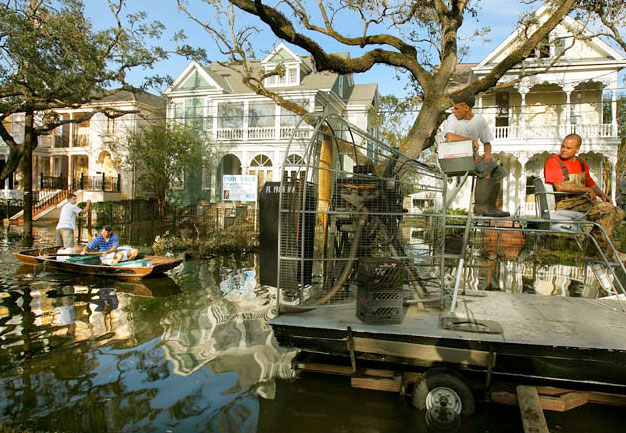
Watching the tropical storms and hurricane firing up this season in both Pacific and Atlantic, I noticed that my posts 4 years ago reflected on Hurricane Katrina as it first came ashore on the east coast of Florida and then returned to power its way into New Orleans (my blog posts 1, 2, 3, 4 from 2005). Since reflecting I also noticed several news outlets doing the same and publishing 4th anniversary articles on the substantial rebuilding of this historic city. Let’s hope the efforts are not in vain since sea levels are still rising and powerful storms still brew — currently Hurricane Jimena.

Street scene 2005 Street scene 2009

_

Are these bite marks from a snapping turtle?

Posted By on August 30, 2009

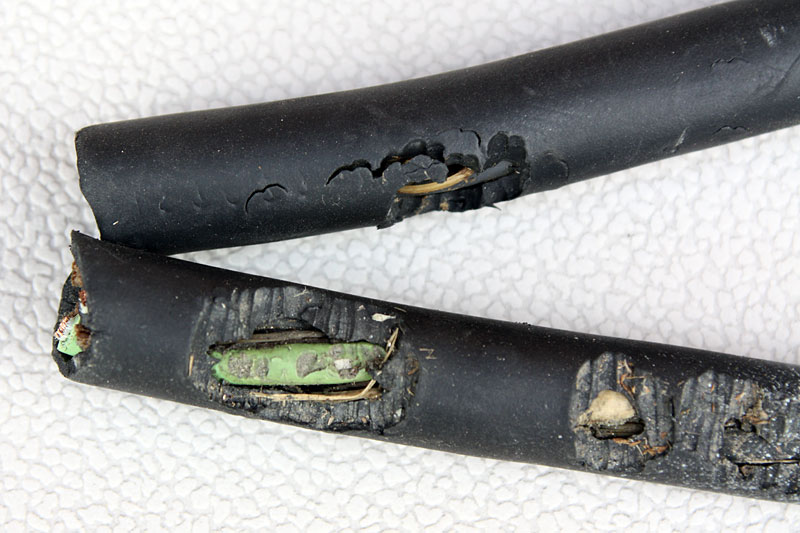
EFE Cable bitten

Some kind of  hungry varmint has been biting through an aerator cable in the lake in front of my house. We dredged it up today and replace it with a new cable, but a second thought has me thinking we need to invest in about 200 feet of conduit? The electrician believes the damage is from a snapping turtle due to the depth of the cable in the smelly muck, but I’m still suspecting muskrats. Any experts?

Aerator Cabling

EAA284 TailDragger Fly-In September 6, 2009

Posted By on August 28, 2009

Banner from EAA284.org

Be sure to fly — or drive — in for breakfast on Sunday morning September 6th for our Experimental Aircraft Association Chapter 284’s Annual Taildragger Fly-In Pancake Breakfast. Better yet, spend the night camping under your plane at Red Stewart Field on Saturday and enjoy the late afternoon/evening airshow. It is a good time for all who enjoy vintage aviation and friendly people.

Click for PDF -- post at your field

Click for PDF -- post at your field

Server and database are working again

Posted By on August 28, 2009

For those of you who occasionally check My Desultory Blog, the database server for this WordPress install was is suffering significant slowdowns. I’m unsure if it was is load related or something else, but my complaint was finally heard and addressed … although ever so slowly. The discount host that I use for this personal blog finally agreed to move the database to a lower traffic server and all seems well as of this morning. UPDATED: That was this morning … now is now. Stand by again.
🙁

Lesson: Most of the time in technology you pay for what you get, both in product and customer service. Besides my personal blog account, I also work with clients accounts and can tell you first hand that those we have assisted or are currently serving on low cost shared servers have far more problems than those we serve on our dedicated leased servers. Last year we upgraded a couple older dedicated servers to new hardware and realized that one robust machine had been chugging since the late 90s … nearly ten years of service with hardly a hiccup. What I do know is that dedicated servers in 24/7 data centers can be a bit more expensive, but I have found that the hardware and technical assistance exceeds what can be found where your account is one of many random accounts by those selling discount hosting packages.

My advice: For those needing light web hosting and email, consider working with a company who intimately knows the client base they serve and splits the cost of dedicated server boxes between such customers. They will know the traffic and use on both the connection and load on the server. Use a company you can call directly, even if they do not have 24/7 service. Many with the latter are outsourcing their customer service anyway and I have found this many times leads to more frustration than waiting to talk to the person who can correct the issue.

If you data is mission critical, opt for a dedicated server with good customer service and solid backup — off-site preferable. Monthly cost is generally 10x that of a discount virtual host, but for most businesses who want only their traffic on a server, expect quick response to problems and solid security of they data, it is a worthwhile expense.

_

The state of the biofuel industry in the U.S.

Posted By on August 27, 2009

When oil prices doubled not too long ago, many along with our government saw expanding clean, renewable and domestic biofuels as one component that could help our nation become more self sufficient. Just as many pointed out that an agricultural based source would not provide real solutions to the problem in part due to the energy input needed to produce these biofuels compared to just pumping crude out of the ground. We were left with the debate between blaming the rise in crude oil prices on peak oil, significant increases in world wide demand, greedy oil companies or oil speculators.

Biofuel pump 8/25/2008
August 2008 diesel and biofuel prices in Ohio

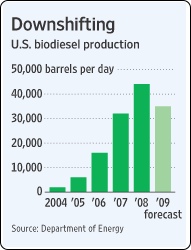
In hindsight, we can pretty much discount the “peak oil” as the cause (at least  for a few more years), but can comfortably split the blame for $140/barrel oil on increases between worldwide demand, downshiftingexcessive profiteering by oil companies and run away speculation in the oil trading circles, not all that unlike tulip mania. Unfortunately for businessmen and investors in ‘green’ energy  not recognizing risk that fuel prices could fall as quick as they rose are having a difficult time staying in business — even with tax credit incentives.

In the long run the idea of creating a renewable fuel is good, unfortunately one needs a long view and business model less dependent on both the oil crops currently being converted to fuels. I still see biodiesel from sources other than food based crops as a strong competitor to other alternatives. Using recycled oils and algae based oil crops provides an excellent addition to petroleum crude oil when producing, and reproducing, fuels for vehicles … and more of our own domestic energy.

That said, an article on the front page of today’s Wall Street Journal shows just how challenging the alternative fuel business is … particularly in a deep recession.

AUGUST 27, 2009

By ANN DAVIS and RUSSELL GOLD

The move towa The biofuels revolution that promised to reduce America’s dependence on foreign oil is fizzling out. Two-thirds of U.S. biodiesel production capacity now sits unused, reports the National Biodiesel Board. Biodiesel, a crucial part of government efforts to develop alternative fuels for trucks and factories, has been hit hard by the recession and falling oil prices. The global credit crisis, a glut of capacity, lower oil prices and delayed government rules changes on fuel mixes are threatening the viability of two of the three main biofuel sectors — biodiesel and next-generation fuels derived from feedstocks other than food. Ethanol, the largest biofuel sector, is also in financial trouble, although longstanding government support will likely protect it.

Earlier this year, GreenHunter Energy Inc., operator of the nation’s largest biodiesel refinery, stopped production and in June said it may have to sell its Houston plant, only a year after politicians presided over its opening. Dozens of other new biodiesel plants, which make a diesel substitute from vegetable oils and animal fats, have stopped operating because biodiesel production is no longer economical.

Producers of next-generation biofuels — those using nonfood renewable materials such as grasses, cornstalks and sugarcane stalks — are finding it tough to attract investment and ramp up production to an industrial scale. The sector suffered a major setback this summer after a federal jury ruled that Cello Energy of Alabama, a plant-fiber-based biofuel producer, had defrauded investors. Backed by venture capitalist Vinod Khosla, Cello was expected to supply 70% of the 100.7 million gallons of cellulosic biofuels that the Environmental Protection Agency planned to blend into the U.S. fuel supply next year. The alleged fraud will almost certainly prevent the EPA from meeting its targets next year, energy analysts say.

The wave of biodiesel failures and Cello’s inability to produce even a fraction of what it expected have spooked private investors, which could further delay technology breakthroughs and derail the government’s green energy objectives.
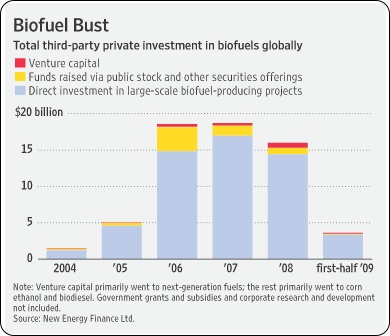
bust

“If your investors are losing money in first-generation biofuels, I guarantee you they’ll be more reluctant to put money into more biofuels, including next-generation fuels,” says Tom Murray, global head of energy for German bank WestLB, one of the leading lenders to ethanol and biodiesel makers.

Domestically produced biofuels were supposed to be an answer to reducing America’s reliance on foreign oil. In 2007, Congress set targets for the U.S. to blend 36 billion gallons of biofuels a year into the U.S. fuel supply in 2022, from 11.1 billion gallons in 2009. That would increase biofuels’ share of the liquid-fuel mix to roughly 16% from 5%, based on U.S. Energy Information Administration fuel-demand projections.

Corn ethanol, which has been supported by government blending mandates and other subsidies for years, has come under fire for driving up the price of corn and other basic foodstuffs. While it will continue to be produced, corn ethanol’s dominant role in filling the biofuels’ blending mandate was set to shrink through 2022. Cellulosic ethanol, derived from the inedible portions of plants, and other advanced fuels were expected to surpass corn ethanol to fill close to half of all biofuel mandates in that time.

But the industry is already falling behind the targets. The EPA, which implements the congressional blending mandates, still hasn’t issued any regulations to allow biodiesel blending, though they were supposed to start in January. The mandate to blend next-generation fuels, which kicks in next year, is unlikely to be met because of a lack of enough viable production.

“I don’t believe there’s a man, woman or child who believes the industry can hit” the EPA’s 2010 biofuel blending targets, says Bill Wicker, spokesman for Sen. Jeff Bingaman of New Mexico, chairman of the Senate Energy Committee.

The business models for most biofuel companies were predicated on a much higher price of crude oil, making biofuels more attractive. A government-guaranteed market was also central to business plans.

But once blending mandates were postponed, oil prices plunged and the recession crushed fuel demand, many biodiesel companies started operating in the red. Even ethanol producers, which have enjoyed government subsidies and growing federal requirements to blend it into gasoline, have been operating at a loss over the past year. Numerous established producers have filed for Chapter 11 bankruptcy-court protection.

Critics of the biofuels boom say government support helped create the mess in the first place. In 2007, biofuels including ethanol received $3.25 billion in subsidies and support — more than nuclear, solar or any other energy source, according to the Energy Information Administration. With new stimulus funding, this figure is expected to jump. New Energy Finance Ltd., an alternative-energy research firm, estimates that blending mandates alone would provide over $33 billion in tax credits to the biofuels industry from 2009 through 2013.

Not all biofuels may be worth the investment because they divert land from food crops, are expensive to produce and may be eclipsed by the electric car. One fact cited against biofuels: If the entire U.S. supply of vegetable oils and animal fats were diverted to make biodiesel, production still would amount to at most 7% of U.S. diesel demand.

Producers and investors now are pushing for swift and aggressive government help. Biodiesel makers are lobbying to kick-start the delayed blending mandates immediately and extend biodiesel tax credits, which expire in December.

On Aug. 7 more than two dozen U.S. senators wrote to President Barack Obama to warn that “numerous bankruptcies loom” in the biodiesel sector. “If this situation is not addressed immediately, the domestic biodiesel industry expects to lose 29,000 jobs in 2009 alone,” the senators wrote, using estimates by the National Biodiesel Board.

Mr. Obama, who supported biofuels throughout his campaign, is working to roll out grants and loan guarantees for bio-refineries and green fuel projects, said Heather Zichal, a White House energy adviser. The pace of the disbursements should speed up this fall, administration officials say.

Obama officials defended the delay in biodiesel mandates. The EPA in May proposed rules that penalize soy-based diesel under the blending mandates, because deforestation from soybean cultivation is thought to offset the fuel’s environmental benefits. Obama officials say the EPA must perform a thorough environmental review before it can issue rules. The amount of biodiesel that was to have been blended in 2009 will be added to the amount required for 2010, so that no volume is lost, they add.

Any state help might be too late for GreenHunter Energy. In 2007, the company, led by energy exploration executive Gary Evans, acquired a Houston refinery that processed used motor oil and chemicals and retrofit it to make 105 million gallons of biodiesel a year from all manner of feedstocks, from soybean oil and beef tallow to, potentially, inedible plant matter. GreenHunter’s business model hinged on selling to a government-guaranteed buyer: GreenHunter has the capacity to make 20% of the 500 million gallons of biodiesel that Congress wanted to be blended into the 2009 fuel supply.

Until the mandate kicked in, GreenHunter and other biodiesel makers counted on exporting their output to Europe, a much bigger user of diesel.

GreenHunter opened in June 2008 as oil prices skyrocketed. By then, soybean oil prices were soaring, too, pinching refiners that had banked on using soy. Mr. Evans switched to inedible animal fats.

For about a month, when oil hovered above $120 a barrel and traditional diesel ran over $4 a gallon, GreenHunter says profit margins on turning animal fat into diesel rose as high as $1.25 a gallon. It wasn’t sustainable. The price of animal fat soared too, cutting margins again.

As the EPA continued to delay the blending mandates, the global downturn obliterated demand for regular diesel. Prices cratered. GreenHunter’s plant took a direct hit from Hurricane Ike in September. By the time the plant reopened in late November, the price of diesel had dropped by more than half, and GreenHunter was losing money on every gallon of fuel.

The European Union dealt the final blow this spring when it slapped a tariff on U.S. biodiesel, killing what had been the industry’s main sales outlet.

GreenHunter has since stopped producing biodiesel. The American Stock Exchange informed GreenHunter in May that the company was out of compliance with some listing requirements; the firm has submitted a plan to remain listed. Its stock has sunk to about $2 a share from a high of $24.75 in May 2008.

Bio-refinery carcasses are everywhere. GreenHunter’s lender, West LB, arranged $2 billion in ethanol and biodiesel loans, selling them to various investors beginning around 2006. Today, half of the $2 billion in loans have defaulted or are being restructured, according to people familiar with the portfolio. Publicly traded Nova Biosource Fuels Inc. filed for Chapter 11 bankruptcy reorganization in March.

Imperium Renewables, a biodiesel maker in Washington, is trying to hang on as a storage depot, its founder says. Evolution Fuels, an outfit that used to sell a biodiesel brand licensed by country singer Willie Nelson, has stopped production and said in a securities filing it may not be able to continue as a going concern. The company didn’t return calls for comment.

Some senators have introduced a bill to extend biodiesel tax credits. A provision passed in the House grandfathers soy-based biodiesel into the blending mandates for five years.

Second-generation biofuels have had their own setbacks.

When seeking investors for Cello Energy in 2007, Jack Boykin, an entrepreneur with a background in biochemistry, said Cello had made diesel economically in a four-million-gallon-a-year pilot plant from grass, hay and used tires. What’s more, he told investors he had successfully used the fuel in trucks, according to testimony in a federal court case in Mobile, Ala. He said he had invested $25 million of his own money. An Auburn University agronomy professor advising the Bush administration on green energy endorsed his technology.

Alabama paper-and-pulp executive George Landegger and Mr. Khosla, the venture capitalist, separately invested millions in seed money into Cello and had plans to invest or lend more.

A lawsuit disputing the ownership stakes of investors produced Mr. Boykin’s revelation, in a 2008 deposition, that he had never used inedible plant material such as wood chips or grass in his pilot plant, despite claims otherwise. Construction of his full-scale facility in rural Alabama moved forward anyway.

This year, Khosla representatives took samples of diesel produced at the new Cello plant and sent them off for testing. The results showed no evidence of plant-based fuel: Carbon in the diesel was at least 50,000 years old, marking it as traditional fossil fuel.

The EPA wasn’t told about the test, and continued to rely on Mr. Boykin’s original claims when it asserted in the Federal Register in May that Cello could produce 70% of the cellulosic fuel targets set by Congress that are due to take effect next year.

The jury returned a $10.4 million civil fraud and breach-of-contract verdict against the Alabama entrepreneur in favor of Mr. Landegger, one of the investors. Work on the plant has been suspended. Several weeks after the verdict was delivered, Mr. Boykin presented evidence that he had tested fuel from the plant and it did contain cellulosic material. He is seeking a new trial.

Mr. Boykin declined to comment, but his lawyer, Forest Latta, said his client denies committing fraud. The carbon testing, he said, reflected only an early stage quality-control test during startup trials. It would be premature to conclude, Mr. Latta said in an email, that Cello’s fuel-making process is a failure. “This is a first-of-its-kind plant in which there remain some mechanical issues still being ironed out,” he wrote.

Margo Oge, director of the EPA’s office on transportation and air quality, says the agency is “looking into the whole case of Cello.” Mr. Khosla declined to discuss Cello, but said he doubts the 2010 cellulosic fuel mandates can be met. “All projects, even traditional well-established technologies, are being delayed because of the financial crisis,” he said in an interview.

Senator Ted Kennedy succumbs to brain cancer at age 77

Posted By on August 26, 2009

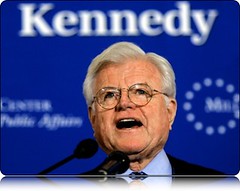
Sen Ted KennedySenator Ted Kennedy, the “liberal lion” of the Senate as he has been described, passed away at the age of 77 after a a battle with brain cancer in his home. He was an icon for many favoring liberal politics in the U.S. and served the state of Massachusetts for 9 terms after being elected in 1962 to fill the seat of his brother President John F. Kennedy. His tenure in the Senate placed him as the second in seniority behind West Virginia’s Senator Robert Byrd.

Although I did not admire Kennedy’s personal life or his politics, my respects go out to his family and many years of service to our country. His stature and strong voice will leave a void for many that see his accomplishments out weighing his flaws. RIP Senator Ted Kennedy (February 22, 1932 – August 25, 2009).

Desultory - des-uhl-tawr-ee, -tohr-ee

  1. lacking in consistency, constancy, or visible order, disconnected; fitful: desultory conversation.
  2. digressing from or unconnected with the main subject; random: a desultory remark.
My Desultory Blog