Amazon’s TextBuyIt shopping service

Posted By on April 11, 2008

I’m on a text messaging roll … three posts in a row … but this one is a good one — très cool. Amazon.com launched a new service this week which allows looking up pricing from their site from your text messaging enabled cell phone — TextBuyIt.
text buy itPicture this … you head into you local office supply store to purchase a $60 toner cartridge for your old printer and happen to notice that a new printer is on sale … and wow its a color laser! The mood strikes and you start thinking … hmm, maybe a I’ll get the new printer … but are you getting a good price? You flip out your cell phone and text the UPC, ISBN or the product name or description to Amazon’s TextBuyIt — 262966. Within seconds a message comes to your phone with two prices prices and the ability to get additional information … or in Amazon’s case, a decision to purchase from them. (either on the cell phone or back home on your computer) If you want to buy, you text back “1” or “2” for the listed items. If you want more information, you text back “1d” or “2d” for details. If you want more options, text “m.” All the options available by text message can be retrieve by sending back the letter “h.”

I’m not so sure you’ll find me buying products by text message from Amazon, but I be checking prices. Hmm … lets go look at 42″ Plasma and LCD HDTVs.
🙂

Nationwide text messaging alert system

Posted By on April 11, 2008

In keeping with the text messaging theme, the Federal Communication Commission (FCC) by 2010 is preparing a nationwide text messaging alert system that will be used for three primary purposes.
alert iconFirst it would be a message from the President of the United States to warn of a terrorist attack or natural disaster. The second would involve “imminent threats,” which could include natural disasters like hurricanes or tornadoes or even university shootings. The third would be reserved for child abduction emergencies, or so-called Amber Alerts. These will be ‘special’ text messages and be delivered with a unique audio signature or “vibration cadence.” The FCC press release follows.

Washington, DC – The Federal Communications Commission (FCC) today adopted a First Report and Order (Order) that will support the ability of the nation’s wireless carriers to transmit timely and accurate alerts, warnings and critical information to the cell phones and other mobile devices of consumers during disasters or other emergencies.

In compliance with the Warning, Alert and Response Network Act (WARN Act), today’s Order adopts relevant technical requirements based on the recommendations of the Commercial Mobile Service Alert Advisory Committee (CMSAAC) for the transmission of such emergency messages to the public.

During emergencies, Americans increasingly rely on wireless telecommunications services and devices to receive critical, time-sensitive information anywhere, anytime. Once fully implemented, the Commercial Mobile Alert System (CMAS) will help ensure that Americans who subscribe to participating wireless services receive emergency alerts when there is a disaster or emergency that may impact their lives or well-being.

Wireless carriers that choose to participate in the CMAS will transmit text-based alerts to their subscribers. As technology evolves, the CMAS may eventually include audio and video services to transmit emergency alerts to the public. To ensure that people with disabilities who subscribe to wireless services receive these emergency alerts, the FCC adopted rules that will require wireless carriers who participate in the CMAS to transmit messages with both vibration cadence and audio attention signals.

Consumers can expect to receive three types of messages via their cell phones and other mobile devices from participating wireless carriers, including:

– Presidential Alerts – national emergency-related alerts delivered to the American public that would preempt any other pending alerts;
– Imminent Threat Alerts – alerts with information on emergencies that may pose an imminent risk to people’s lives or well-being; and
– Child Abduction Emergency/AMBER Alerts – alerts related to missing or endangered children due to an abduction or runaway situation.

Under the CMAS, subscribers to wireless services with roaming agreements will receive timely alerts, provided the subscriber’s mobile device is configured for, and technically capable of, receiving such emergency alerts from the network they are roaming on.

Participating wireless carriers will be required to comply with the rules adopted in the Order today within 10 months from the date of announcement that a Federal agency has been designated to collect and transmit the alerts to the wireless carriers.

Action by the Commission, April 9, 2008, by Commercial Mobile Alert Service First Report and Order (FCC 08-99). Chairman Martin, and Commissioners Copps, Adelstein, Tate and McDowell. Separate Statements issued by Chairman Martin, and Commissioners Copps, Adelstein, Tate and McDowell. PS Docket No. 07-287.

Public Safety & Homeland Security Bureau (PSHSB) contact is Lisa Fowlkes, Deputy Bureau Chief, at (202) 418-7452.

News and other information about the Federal Communications Commission
is available at www.fcc.gov.

SMS SPAM text messages are increasing

Posted By on April 10, 2008

Spam canEven though sending unsolicited commercial text messages on cell phones is illegal, SMS spam is increasingly finding its way to your cell phone. I have been ignoring the occasional beep during the day and just delete them as is so common with computer based email. Unfortunately the problem is growing just as they did on fax machines in the 90s and computer based email the last couple of decades. The problem should have improved when the Federal Communications Commission made “spamming” illegal in 2005, but if my email box (and now cell phone) is to be the judge, the problem is growing and spammers are not being deterred.

spam on phone
In fact, according to Farris Research, we’ll receive 1.5 billion spam oriented text messages this year, which is up 800 million since 2006. The unsolicited messages are not only a nuisance, but can be costly (a la carte text cell phone plans). In my case, I’ve recently added a cell phone to my account for my mom and dad. They barely understand caller id, voice mail and one touch dialing … let alone text messages. Mom nearly had a coronary when the phone beeped and sent her a text message offering “sexual enhancement medication” the other day. I told her just ignore the nuisance, but I think she’s ready to get rid of the phone?

Besides offering unsolicited products, customers with limits to their text messaging are often charged up to 20 cents to receive these emails. Most carriers do their best to block spam, in fact Verizon Wireless claims to block 200 million spam text messages per month. My question, if there is a law making it illegal to send spam, wouldn’t you think at least at least a few senders of those 200 million messages would be prosecuted? Perhaps a crackdown and a three strike rule would be helpful since the current law doesn’t seem to be making an impact.

do not callThe current trend in sending spam text messages that really is starting to annoy me, is that they are often sent at night. Most of us have our phones on in case of an emergency or even as an alarm clock — especially those of us who travel. Unfortunately a spam text will trigger the phone to send whatever ring-tone might be set. Last night was a good example … B-E-E-P … about 4:30AM I was offered a great deal on a cruise. Grrr. Interestingly the advice of experts is to add your phone to the National Do Not Call List … which mine has been on (along with our home phone) for over a year. Both numbers still receive phone calls and obviously I’m still receiving spam text messages. I’ve reported phone numbers as they occur, but don’t notice a way to report unsolicited SMS messages?

Other advice is not to give out your cell phone number as phone lists from sign up logs, etc. are often harvested by telemarketing companies and spammers. Some of these sign up lists often have you agree to approving text message advertising or phone calls. (legal under the 2005 law)

One of the challenges of filing a complaint with the FCC and with the cell-phone company is that consumers needto help identify spammers so they can be stopped. This is nearly an impossible task for all but the most sophisticated geek. I’m all ears for suggestions, especially from someone who has successfully made an impact against companies sending unsolicited text messages.
On the other hand, here’s some positive news … 🙂

“Spam King” Robert Alan Soloway, who owns Newport Internet Marketing Corporation, pleaded guilty on Friday in Seattle’s U.S. District Court to mail and e-mail fraud and willful failure to file a tax return.

Soloway could receive up to 20 years in prison and over half a million dollars in fines when he is sentenced on June 20 by U.S. District Judge Marsha J. Pechman. The bulk of Soloway’s sentence is likely to come from the mail fraud offense, which is punishable by up to 20 years in prison. E-mail fraud is punishable by up to 5 years in prison. Willful failure to file a tax return is punishable by up to a year in prison.

Assistant United States Attorney Kathryn Warma said she hopes that Soloway’s fate will deter further spamming. “We’ve only just begun,” she said. “Spamming is of high interest to the federal law enforcement community and we’re going to be doing more cases. Hopefully, they’re going to get the message now.”

LINK

Flickr now does ‘short’ video too

Posted By on April 9, 2008

Flickr video
Besides photo sharing, Flickr now offers ‘pro’ users (paying) the ability to upload short video clips limited to 90 seconds. While this limit is hardly competitive to other video sites, it does offer a place to offload those short cellphone video clips. In a quick test, I uploaded a one minute clip of my son’s science experiment we film last year and it worked flawlessly. (I’ll test embed below) Although the short and small — 320×240 H.264 encoded .mov wrapped movie — isn’t of the highest quality, it still worked well. I’ll probably try one of higher quality in the future. My initial reaction is that limiting clips to only 90 seconds, and requiring users to be “pro”, will not make Flickr the preferred video sharing site.
See Flickr’s blog: “Video on Flickr!”

DELETED

Gasoline prices are rising again

Posted By on April 9, 2008

gas diesel
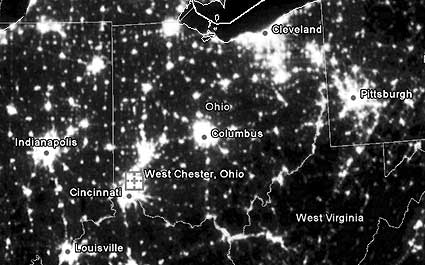
Like clockwork, the gas station in our my area (Cincinnati, OH) moved the gas price up in concert again. The $3.13 per gallon that “I should have filled up with” on Monday was back up to $3.35 by Tuesday afternoon. It will probably go even higher according to the U.S. Government Energy Department. Estimates suggest that Americans could see retail gasoline prices climb to $4.00 per gallon this summer, although the Energy Information Administration believes it will peak at $3.60 … which is up ten cents from its previous $3.50 estimate earlier this year. With prices at these record levels, they also expect a drop in demand, at least in the U.S. (world demand remains high) Our weak economy coupled with high prices during the summer will likely keep drivers off the road and this reduce travel could drop petroleum usage by 90,000 barrels per day and possibly moderate the expected peak prices.

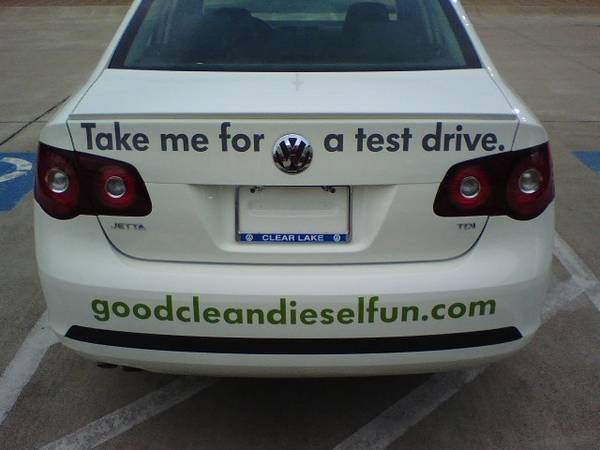
The biggest concern is that diesel prices have seen the largest change this past year. With an increase of .74 cents per gallon since 2007, those growing and transporting foods to market, running heavy equipment or shipping goods need to pass this cost onto consumers. Can you say I-N-F-L-A-T-I-O-N?

According the EIA, the price of crude oil is the primary reason that gasoline and diesel prices are going up. As oil settles over $100 a barrel up significantly from last year, people are just going to have to adjust to paying more for fuel — and the goods made and transported by it. The primary reason for the high prices is that the world demand is high; countries like China, India, Russia and the Middle East are continuing to increase their consumption. The EIA acknowledged “significant uncertainty” in its oil price projections, noting that unexpected supply disruptions due to conflict in oil-producing nations, unusual weather or refinery outages could send prices spiraling sharply higher. There is also potential for the opposite … if the U.S. economy continues to weaken even more and this spreads to other countries demand for oil will drop.

Porch project gets some redwood trim

Posted By on April 8, 2008

new redwood
In a test to see if the Palm Treo photo to blog still works, I’ll post the last addition to the new porch … a redwood surround fit for the hot tub. So far it looks nice but we will need to come up with a finish for redwood. Any expert suggestions?
EDIT: Didn’t post direct from phone. 🙁

Charlton Heston; Alzheimer’s blood test

Posted By on April 7, 2008

charltonhestonI was sad to hear of the passing of Charlton Heston (84) this past weekend, but the last few years of his life did bring to light (as it did with President Reagan) the struggle nearly 5 million Americans face — Alzheimer’s Disease. Heston, due to his notoriety, drew attention to the disease (2002 article) which helps keep research for a cure on the front burner.
Dr. Steven Lamm of NYU School of Medicine mentioned in a news brief on Monday that we now have a early stage blood test to help with detection of Alzheimer’s Disease. This can help doctors and patients facing the debilitating symptoms better prepare for and possibility stall the onset of severe memory loss. It is hoped that by recognizing what these test detect that we will eventually find a cure. For now, treatment is to help improve diet and mental stimulation; it is thought that the foods of the Mediterranean Diet can reduce the risk or minimize the disease. One of the interesting comments from the Fox News interview was at the tail end … Dr. Lamm mentioned “I start of my day with Omega 3s.”

(short news video clip below — I’m trying a few new encoding setting for better YouTube quality. Any better?)

Rugby season 2008 begins with a win

Posted By on April 6, 2008

Taylor RugbyPosting a day late, but I told my son I would get photos of his Sunday afternoon Rugby match posted over lunch today. What a beautiful weekend in Cincinnati … and a great facility at Moeller High School! (I was told it was only the second game on their new turf) Besides the ‘rug burns,’ the Jets were able to celebrate a come from behind victory (17-12) over the established Eastside team. The enjoyable game kicks their season off with a win, unlike in previous years. Thankfully the game was played, coached and refereed well … we’ve had our share of ‘foul’ play. (photo slideshow below)

Will Hybrid cars become the norm?

Posted By on April 5, 2008

hybrid badgeOver the next few years, there will be an increase in ‘light’ hybrid vehicles similar to the Saturn Vue Green Line Hybrid, especially from General Motors (see Chevrolet Fuel Solutions). From what is in the press, GM in particular intends on meeting new economy standards with smaller engines and a small electric motor and battery. The new drivetrains will add between $1500-$3000 to many vehicles in their line-up (about the price of a GPS/DVD navigation and entertainment option). I will not be surprise if in a few years light hybrid systems will be commonplace; in fact having a passenger car without hybrid technology might be the oddity? As I recall, not too many years ago power windows and air conditioning were seen as expensive options … not to mention power steering!

Unlike the popular Toyota Prius, the ‘light’ hybrid uses battery assisted electric motor for boost — starts, climbing hills and heavy acceleration. The low capacity battery pack will keep the weight and price down making the improved efficiency affordable. This ‘strap on’ system even uses current ‘gear shifting’ transmissions and although is probably not the automotive change many expect, is probably the most cost effective way to gain a few miles per gallon.
Saturn Vue Hybrid
The PBS automotive program Motorweek reviewed the 2008 Saturn Vue Green Line Hybrid this past weekend and offers a look at what I think many American cars will be like in the coming years. From a dollar and sense perspective, these ‘light’ hybrids offer the improvement in fuel economy required and won’t break the bank.

Boeing tests small hydrogen fuel cell airplane

Posted By on April 4, 2008

There is an interesting article in MSNBC’s online Environment section where Boeing’s experimental aircraft researchers have flown a manned hydrogen fuel cell powered airplane. According to the article, Boeing Chief Technology Officer John Tracy told reporters that the fuel cell breakthrough is “full of promises for a greener future. Boeing recognizes that pollution represents a serious environmental challenge.”

Boeing Fuel Cell airplane
Boeing’s experimental aircraft powered by hydrogen fuel cells
at airfield in Ocana, Spain.

The single engine land experimental plane seats two and uses an electric motor which drives a propeller. During climb-out the airplane uses lithium batteries which holds reserve of power generated by the hydrogen fuel cells, but after reaching cruise altitude, the fuel cells generate enough electricity on their own to maintain straight and level flight at 60 miles per hour.

The successful tests consisted of three flights in February and March at an airfield in Ocana, Spain and were seen as successful in every way. Boeing indicated that although the cost and infrastructure for hydrogen is high, that “fuel cells are two to three times more efficient in converting energy than today’s internal combustion engines.” They don’t expect fuel cells to power large aircraft, but believe this type of power will be ideal for small manned and particularly unmanned aircraft. “Over the longer term,” Boeing indicated that “solid oxide fuel cells could be applied to secondary power-generating systems, such as auxiliary power units for large commercial airplanes.”

Desultory - des-uhl-tawr-ee, -tohr-ee

  1. lacking in consistency, constancy, or visible order, disconnected; fitful: desultory conversation.
  2. digressing from or unconnected with the main subject; random: a desultory remark.
My Desultory Blog