Shortly after the school year began, Lakota East High School in Liberty Township, Ohio (our local HS) started prepping for a late fall production of an Agatha Christie novel made into theater production they called “Ten Little Indians.” After a complaint was filed from a local member of the NAACP due to the racial history, the play was cancel. (threats of protests were rumored) The national news media picked up on this story and eventually the administration decided to reschedule the production with a few tweaks and the officially licensed name — “And Then There Were None.”
A little history: The Agatha Christie mystery was originally titled “Ten Little Niggers” when released in 1939 in England. The Americanized version was published in the U.S. in 1940 as “And Then There Were None.” Since that time, the novel was adopted to play, re-published book and film and usually titled “Ten Little Indians” in the U.S., although it maintained the original title in the U.K until the 1980s.
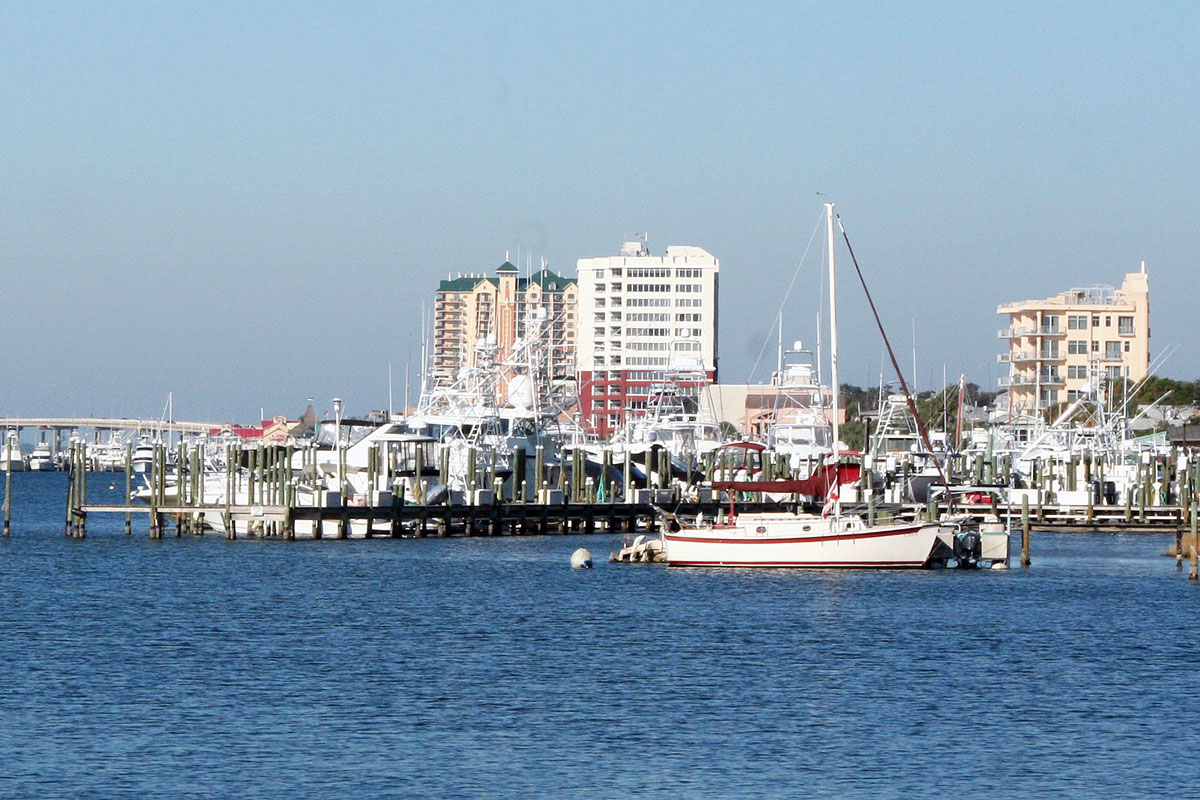
It is sort of a tradition in our family to add a few odds and ends to the Christmas tree — this year we’ll add some ‘cotton’ I picked up on my way back through Alabama on this past week’s trip. I’ll also include two quick photos as I spent a morning in Destin and Fort Walton Beach Florida getting my fall ‘saltwater’ fix.
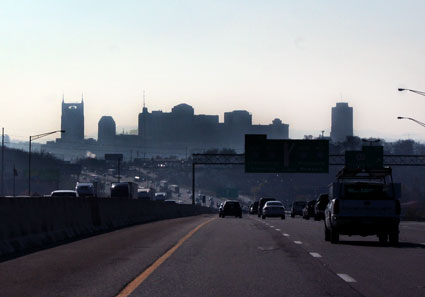
Also, I had to repost my quick cellphone to flickr.com to blog post from earlier in the week … there was a question about a ‘city skyline?’
😉
RC looking — but it does fit a pilot — twin engine airplane. I’ll try to remember not to complain about legroom when flying commercial coach anymore.
🙂
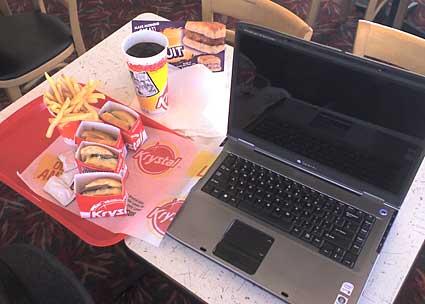
Entering a quick post from the road while stopping on I-65 in southern Alabama (Greenville) a trip down memory lane … Krystals and Rolaids. I suspect that only one reader will understand this entry, nevertheless I’m including a cellphone photo to see if the site is still working. (I’ve been in Crestview Florida visiting with another Sonex experimental airplane builder and picking up a few more components for my project)
If you have tried to access My Desultory Blog recently, you are no doubt experiencing slow — or “NO” response on my website — Grrr. I’ve been frustrated with my current host for some time now and go round and round with the hope that a ‘cure’ is just around the bend. So far they have not come through.
The issue is a MySQL database problem and although the company I host with has attempted to upgrade the 15 or so servers from MySQL 4.1 to MySQL 5 and have improved their hard drives, the machine my data is on is not running smoothly. (nor has it been for a while)
As a reminder, we had previously attempted to upgrade mysql15.powweb.com to MySQL 5, but the server did not perform quite as we expected. We had temporarily moved it back to running on MySQL 4.1 while we explored the issue further.
I’m looking into moving my account to a server at my office or to one of the other providers that I’ve use and have little problem with. (see Cirtexhosting)
Since I’m on the Fuel Cell topic (yesterday’s post), I’ll include a news brief below from the weekly PBS program Motorweek in regards to General Motors “Project Driveway.” This large scale test of GM’s Equinox Fuel Cell technologyannounced in September will proved over 100 free Chevrolet Equinox Fuel Cell vehicles to gain from real customer experiences. The variety of drivers in differing driving environments will operate these vehicles and refuel with hydrogen in three geographic areas: California, the New York metropolitan area and Washington D.C. and provide data back to General Motors. Larry Burns, GM vice president, research and development and strategic planning commented that “The Equinox Fuel Cell is powered by GM’s most advanced fuel cell propulsion system to date, and demonstrates an important milestone on our pathway to automotive-competitive fuel cell propulsion technology development.” Personally I would like to see an American automotive company at least take a leadership position in getting at least ‘one’ good alternative energy vehicle to market. So far I see hybrid technology leadership in Japan and diesel from Europe … can U.S. manufacturers take a leadership position with fuel cells?
While gasoline hybrid vehicles continue to gain popular, another electrically powered car being introduced by Honda is being test marketed in three California cities. Its the hydrogen fuel cell/lithium battery powered Honda FCX Clarity. Current hybrid vehicles are criticized because they require two propulsion systems making them mechanically complex with batteries yet they still require fossil fuels in comparison to all electric vehicles.
Unfortunately electric cars powered entirely by rechargeable batteries are saddled with very expensive and heavy battery packs that degrade over time and have a limited range; it will be a long time until they can replace an ICE for anything but commuting. Fuel cells, although their current efficiency is a problem, can deliver clean hydrogen powered electricity to an electric motor as long as the vehicles has a tank of fuel. If hydrogen is generated from renewable sources, it is the cleanest of portable fuels and if used in a vehicle along with batteries could be an improvement on all-electric or gasoline hybrid electric vehicles. The Honda FCX Clarity will be an interesting test. How It Works
A hydrogen fuel cell produces electricity for the vehicle. The fuel cell combines hydrogen, which is stored in a fuel tank onboard the vehicle, with oxygen from the air to make electricity. The electricity then powers the electric motor, which in turn drives the front wheels. Water vapor and heat are the only byproducts.
A fuel cell is made up of a thin electrolyte film wedged between two electrode layers in between two separators. Several hundred layers of these cells are connected in a series.
1. Hydrogen fuel is fed into the anode of the fuel cell. Helped by a catalyst, hydrogen atoms are split into electrons and protons.
2. Electrons are channeled through a circuit to produce electricity.
3. Protons pass through the polymer electrolyte membrane.
4. Oxygen (from the air) enters the cathode and combines with the electrons and protons to form water.
5. Water vapor and heat are released as byproducts of this reaction.
According to a post at AutoblogGreen, the new Volkswagen Touareg V6 TDI diesel has been improved to reduce fuel consumption. (eventually we’ll see the V6 TDI Touareg in North America, although as far as I know there isn’t a price or date.)
The V6 now averages 9.6 liters of diesel per 100 km (24.5 mpg) while putting out increased torque and power (550 Nm or 405 lb/ft and 240 HP respectively). Despite the power and torque increase, which, according to VW accounts for 0.8 liters less on the highway and even 1.4 liters to 100 km during the Euro urban cycle, the Touareg can make the jump form 0 to 100 km/h in 8 seconds, one second quicker than before.
I’ve posted previously that I’ve ogled the limited edition Volkswagen R32, but haven’t had a chance to compare it to other small performance hatchbacks … including its close cousin the GTI. The gang over at the long running PBS automotive program Motorweek did, and they ran the R32 it through their consistent battery of road testing. Although the VW R32 is probably the most fun of the little VeeDubs to drive, it still doesn’t have the ‘stock’ performance that can be found in pricey European sports cars or their lower priced (and less respected) Asian rivals. The R32 seemed a bit slow (if you call a 0-60 six second time slow) in the straight line testing and stopped a few feet longer than what I would have expected. Although I do envy the all-wheel drive pocket rocket from VW, I’m just as happy zipping around in a chipped-TDI or our stock GTI. (11/17/2007 Motorweek Episode clip below)
 Shortly after the school year began, Lakota East High School in Liberty Township, Ohio (our local HS) started prepping for a late fall production of an Agatha Christie novel made into theater production they called “Ten Little Indians.” After a complaint was filed from a local member of the NAACP due to the racial history, the play was cancel. (threats of protests were rumored) The national news media picked up on this story and eventually the administration decided to reschedule the production with a few tweaks and the officially licensed name — “And Then There Were None.”

 If you have tried to access
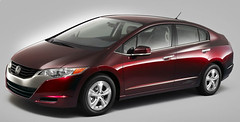 While gasoline hybrid vehicles continue to gain popular, another electrically powered car being introduced by Honda is being test marketed in three California cities. Its the hydrogen fuel cell/lithium battery powered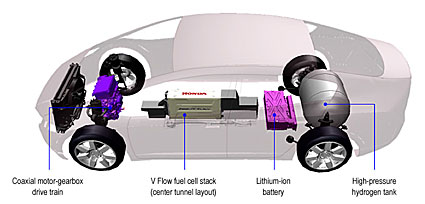
 According to a
  I’ve
I’ve