EAA Chapter 284 at Hammond Airdrome
Posted By RichC on October 16, 2006
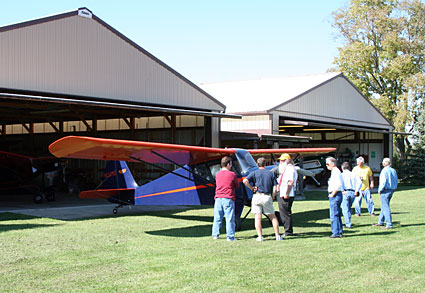
Our Experimental Airplane Association (EAA) Chapter 284 had the October meeting at Jim Hammond’s “Airdrome” located just east of Dayton, Ohio; its home to some very interesting projects and restored airplanes. Jim welcomed our members to his personal hanger(s) which to me looked like an airplane hobby on steroids. (Jim did admit that his hobby got away from him) His passion for aviation over the past several decades have obviously consumed his time and extra dollars, as both his personal grass strip, his well lit and organized workshop and multiple hangers are a great home for ‘his collection of personally’ restored classic airplanes.
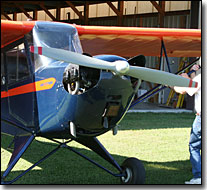 As for ambition, Jim doesn’t let much holds him back; neither his work as an engineer in a family business or being a husband and father of two daughters have kept him away. Notable in his collection was his everyday flyer, his”truck” as he calls it, an attractive Aeronca Champ. (Aeronca has a rich local SE Ohio history as do many early airplane companies)
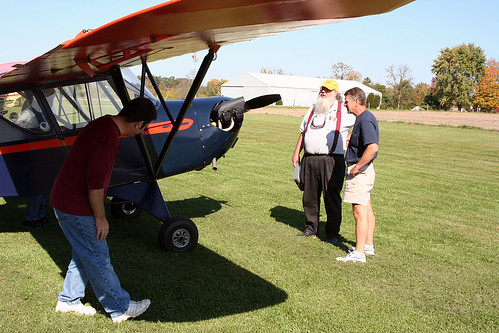
As we meandered our way slowly around Jim’s collection of airplanes, most of us were amazed that someone this young could have the expertise and ambition to have restored this many airplanes. After checking out the familiar Aeronca Champ, most of us were drawn to his ‘flying bathtub‘ parked in the hanger just behind the Champ. Those familiar with that nickname know we’re talkng about an early Aerona; Jim’s was a C-3 from the 30s with an interesting history. In its day, it held the altitude record for a pilot and passenger (2 place) at 15,000 feet. (jokingly Jim mentioned the pilot and passenger were ‘small’ women)
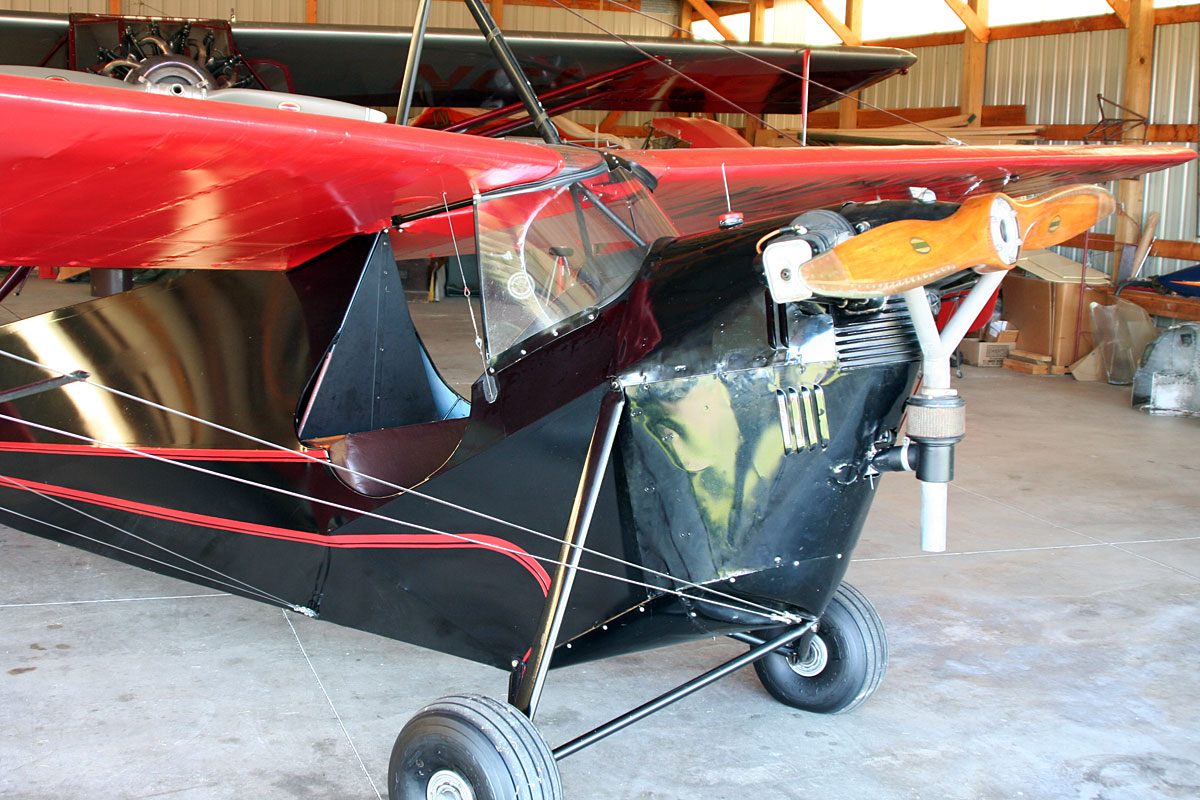
Hammond’s C-3 doesn’t just sit around collecting dust either, as he has toured part of the country including a 1600 mile round trip to Oshkosh and Iowa with it … and considering it is original and has
 received only one overhaul since its manufacture in the early 1930s, that’s amazing!
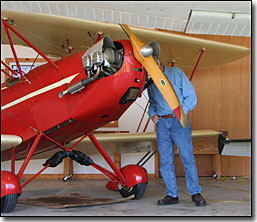
He also has a great little Piper ‘Cub’ similar biplane, call a Hatz that is an attractive biplane with avid builders and flyers. Jim’s little two place biplane looks as if it would be one of the most enjoyable taildraggers to fly around the patch.
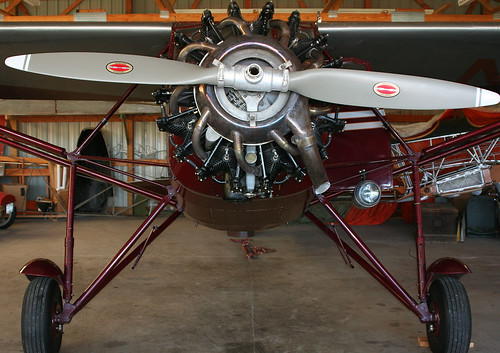
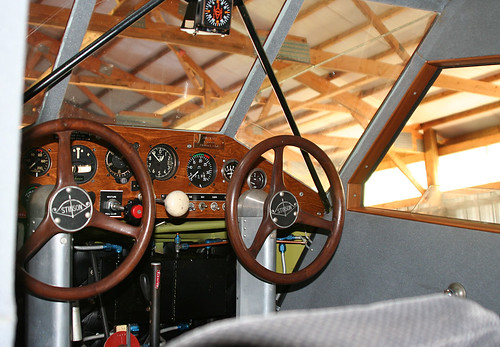
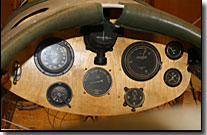
Another beautiful vintage airplane is the Stinson (mid 1930s) radial powered monoplane (above), which beginnings stem from the local Dayton area too. Jim’s is model which was restored by Morton Clark was called a Reliant (?). He recently used the Stinson as the “luggage hauler” when touring with others to Oshkosh and the airshow circuit around the mid-west. It’s a pretty big airplane with significant space and cargo hauling ability as it was designed to carry up to 4 passengers plus pilot in comfort. According to the US Centennial of Flight Commission’s website, the company founder Edward “Eddie†Stinson was a proficient test pilot as well as ‘stunt’ pilot and had logged the most flight time to date, 16,000 hours, at the time of his death at the age of 38. He died in an air crash in Chicago on January 26, 1932, while on a sales trip. (Cockpit below)
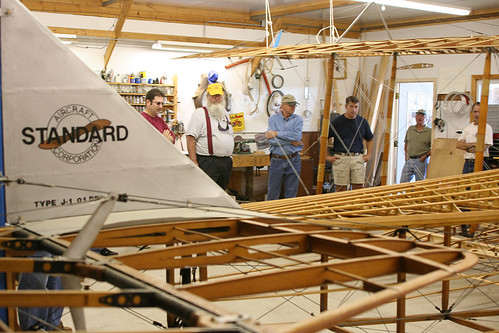
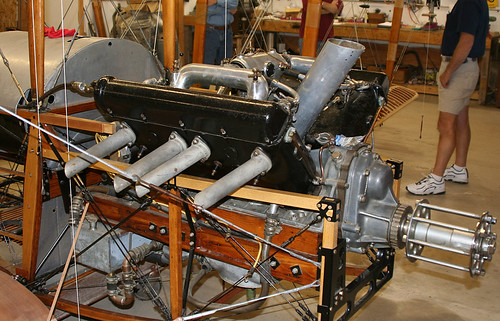
Although Jim Hammond had a few other items around, perhaps the most interesting was the 1917 Standard J-1. Their are only a handful left and very few flying. They were built to supplement the much more popular Curtis Jenny during World War I. This particular
 plane was used for barnstorming during the 1920s and has a rich history including the common retrofit which added a more powerful French built 150 HP Hisso engine. The barnstorming pilot that once flew this airplane in the 1920s even paid Jim a visit and shared some memories. (Yes … he is a little older than most of us, 100 I believe!)
 As we wrapped up our day touring Jim’s shop and hangers, were bunches of photos and personal memorabilia that I would have enjoyed looking at too … some that would make aviation museum people drool. He pulled out several photos showing his airplanes and their history with previous owners a lifetime ago and although I enjoy my Sonex project, I also envy the idea of restoring a piece of disappearing history. I picked out a more recent hand scribbled note thumb-tacked to the door post that might offer some 2006 history for anyone familiar with antique airplane restoration.


 President Bush and Secretary of Defense Donald Rumsfeld were on hand today to dedicate the new
 Late to the
  The issue of ‘gun control’ and ‘conceal carry’ came up while talking with a friend since she was planning to take a handgun class and wanted to be able to carry a handgun in her purse. As a supporter of a civilians right to bear arms, I was still somewhat concerned and hadn’t fully thought out the ‘conceal carry’ issue in my own mind. (I’m probably not alone?) My concern is ‘who’ around me is eventually is going to be carrying a concealed weapon on a daily basis? Its quite the responsibility and I was on the fence until I listened and thought it though.
 I ‘m saddened by the loss Cory Lidle (and his flight instructor, Tyler Stanger – see
 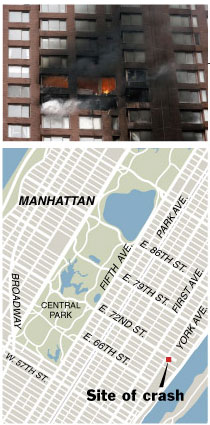 Lidle’s plane left Teterboro Airport in New Jersey at about 2:30 pm, and that radar indicated it circled the Statute of Liberty before heading up the narrow uncontrolled airspace corridor of the East River. Radar tracks show the small private plane as it flew near the 59th Street Bridge, but then at 2:42 pm a 911 call came in indicating a plane had crashed into a building on 72nd Street. The single engine Cirrus struck at about the 40th or 41st floors of the Belaire apartment high-rise. Flames shot out of the building and smoke streamed up into the sky with what was a visible reminder of what happened in New York City 5 years and one month to the day. Thankfully this wasn’t terrorism and all emergency personal responded professionally to evacuate people were evacuated and the fire was put out. Early thoughts from some suspect that the noticeable lack of fuel or fuel smell could indicate that the airplane ran out of fuel; the NTSB will immediately be investigating those records as well as all other possibilities.
 Traveling north and south on Interstate 71 in Ohio, I’ve been planning to mention a ‘fuel’ sign along the highway that indicates the renewable fuel Sunoco station at exit 151. (
 A
A
 Soy biodiesel is an alternative, clean and renewable fuel which can be using in diesel engines from trucks and buses to farm implements and industrial equipment. Using biodiesel directly impacts Ohio’s economy by keeping Ohio dollars in Ohio. The soybean is an important crop to Ohio farmers and it can be processed in several locations throughout the state. The final product is then used most often in combination with petroleum diesel as an alternative fuel throughout Ohio. Two Ohio cities are notable biodiesel users — Columbus and Cincinnati. (see