A few handy workshop tips I’ll forget when they are needed

Posted By on April 18, 2025

When scanning my X.com social media feed, the handy short video tips often catch my eye. Most I’ll never need, but there are a few I wish I could remember when I need them. Saving them here likely won’t help, but who knows? 

Book (audiobook): “Go Woke, Go Broke” by Charles Gasparino

Posted By on April 17, 2025

​In “Go Woke, Go Broke: The Inside Story of the Radicalization of Corporate America,” veteran financial journalist Charles Gasparino offers a critical examination of the increasing influence of progressive ideologies within major U.S. corporations. Go Woke Go Broke AudiobookDrawing on insider interviews and extensive reporting, Gasparino argues that corporate leaders have shifted focus from traditional business objectives to embracing social justice initiatives, such as Diversity, Equity, and Inclusion (DEI) and Environmental, Social, and Governance (ESG) principles. He suggests that this shift has led to significant financial and reputational challenges for companies like Disney, Anheuser-Busch, and Target, as consumers push back against perceived political activism in the corporate sphere. ​

Gasparino traces the origins of this corporate transformation to events like the annual World Economic Forum meetings in Davos and the societal upheaval following George Floyd’s death in 2020. He contends that these developments spurred a wave of progressive activism that permeated corporate boardrooms, often at the expense of shareholder interests and financial performance. The book delves into specific instances where companies’ alignment with progressive causes led to consumer boycotts and declining revenues, highlighting the potential risks of prioritizing political agendas over business fundamentals. ​

While “Go Woke, Go Broke” has critics noting that the book’s tone may be confrontational. Nonetheless, Gasparino’s work contributes to the ongoing discourse on the role of corporations in societal issues and serves as a cautionary tale for business leaders navigating the complexities of modern corporate governance. 

REAL ID Deadline Approaches: What You Need to Know

Posted By on April 15, 2025

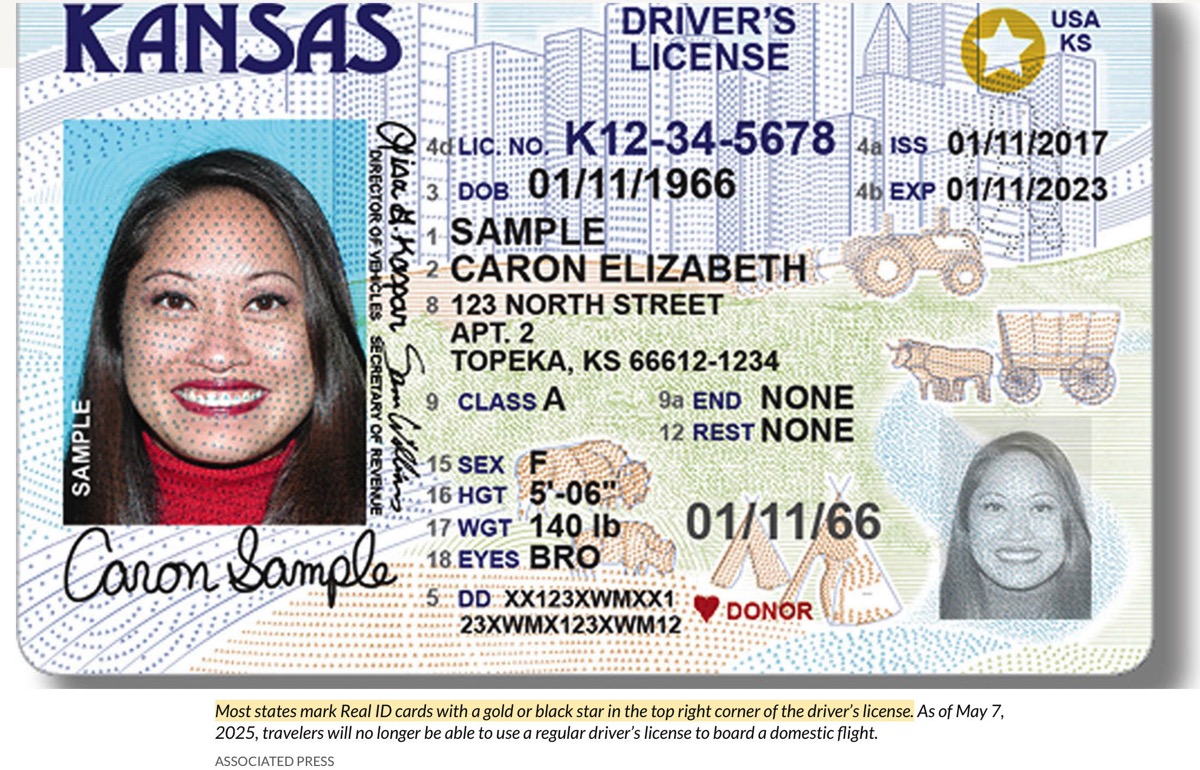
Although this was mentioned in 2019 and 2020, the U.S. Department of Homeland Security (DHS) will begin enforcing the REAL ID Act on May 7, 2025. After this date, standard state-issued driver’s licenses will no longer be accepted as valid identification for boarding domestic flights or accessing certain federal facilities, such as military bases (graphic below from AARP post).

Real ID Example

What Is REAL ID?

Enacted in the aftermath of the 9/11 attacks, the REAL ID Act establishes enhanced security standards for state-issued identification. The new ID format—often marked with a gold or black star in the top right corner—is also called a “Star Card” and includes a machine-readable zone similar to that of a passport.

To obtain a REAL ID, individuals must visit their state’s motor vehicle department with documents proving:

  • Legal name and date of birth (e.g., birth certificate or passport)
  • Social Security number (e.g., SS card or W-2)
  • Two proofs of residency
  • Legal name change documentation, if applicable (e.g., marriage certificate)

While the REAL ID also may double as a driver’s license, your current license remains valid for driving purposes. Some states, like New Jersey, still issue non-compliant licenses that are not valid for federal identification purposes.

Alternative Forms of ID for Travel

If you don’t plan to get a REAL ID, you’ll still be able to fly domestically using one of the following:

  • U.S. passport or passport card
  • Military ID
  • Global Entry or other Trusted Traveler Program cards
  • Enhanced Driver’s Licenses (available in MI, MN, NY, VT, and WA)
  • REAL ID-compliant mobile driver’s licenses

Important: A REAL ID is not valid for international travel or for proving citizenship. For example, it won’t be sufficient for a closed-loop cruise (starting and ending at the same U.S. port). In such cases, a passport or EDL is still required.

(more…)

Palm Sunday afternoon, taxes and KDAE at Legoland in Florida

Posted By on April 14, 2025

Our granddaughters at LegolandLet’s start with yesterday’s Palm Sunday word of the day … or at least one that I learned from today’s TFL devotional “God’s Plan All Along” and the Hebrew word: Tetelestai!”  

The Hebrew word that Τετέλεσται (it is finished) best translates is שָׁלֵם, which is how the Syriac Peshitta* and modern Hebrew** translations translate Τετέλεσται in John 19:30.

And besides the “it is finished” reference to the last words from Jesus on the Cross, it is also appropriate for my finishing taxes, although perhaps a sacrilegious use of the word??? Nevertheless, “it is done” I did it again.

We also received an update from the Oostra family after they arrived safe and sound at Legoland resort on Saturday afternoon in the aging 2002 Honda Odyssey minivan. The Goobermobile #2 has been handing for the occasional back and forth trips from Ohio to Florida … and is the perfect beach vehicle to keep at the condo (so thankful to have purchased it from my Dad in 2014).

Arriving at hotel on Saturday afternoon

(more…)

We are closing in on that time of the year: Tax Day

Posted By on April 13, 2025

I’ve been known to grumble and complain about big government and taxes most of my life, but I’m not alone. In fact, before I was even born there were versions of this poem being published in newspapers. So as April 15th nears (tax day in the U.S.), it seems like it should be added to MyDesultoryBlog.

Tax his land,
Tax his bed,
Tax the table,
At which he’s fed.
Tax his tractor,
Tax his mule,
Teach him taxes
Are the rule.
Tax his work,
Tax his pay,
He works for peanuts anyway!
Tax his cow,
Tax his goat,
Tax his pants,
Tax his coat.
Tax his ties,
Tax his shirt,
Tax his work,
Tax his dirt.
Tax his tobacco,
Tax his drink,
Tax him if he
Tries to think.
Tax his cigars,
Tax his beers,
If he cries
Tax his tears.
Tax his car,
Tax his gas,
Find other ways
To tax his ass.
Tax all he has
Then let him know
That you won’t be done
Till he has no dough. (more…)

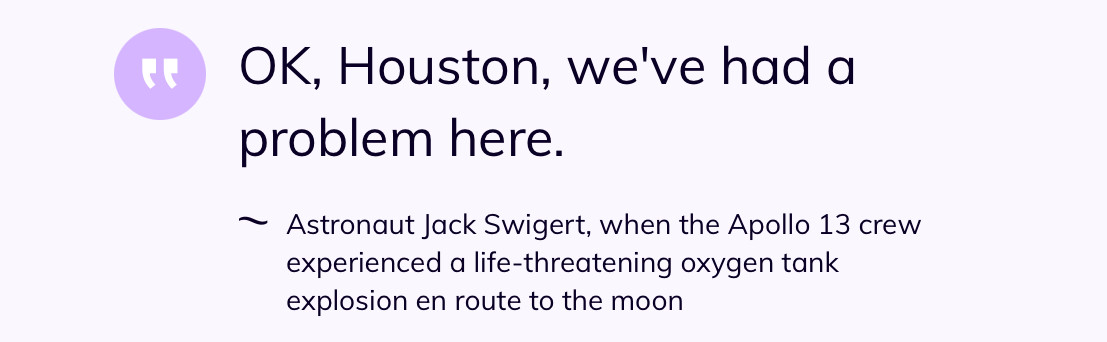
“OK, Houston, we’ve had a problem here,” Jack Swigert, Apollo 13

Posted By on April 12, 2025

Hm … I never realized the original quote was “had” vs the often quoted “have” from Apollo 13 and astronaut Jack Swigert 55 years ago – April 11-17, 1970

Jack Swigert quote

“Houston, we have a problem” is a popular phrase that originated during the Apollo 13 mission in 1970. The actual quote was “Okay, Houston, we’ve had a problem here,” spoken by Jack Swigert, the command module pilot, after an oxygen tank exploded on board the spacecraft.

 This phrase was later simplified to “Houston, we have a problem” in the 1995 film Apollo 13, as it was considered more dramatic for the movie’s suspense.

Apollo 13

Tech Friday: Replaced the “fairly new” television in the condo

Posted By on April 11, 2025

Just a bummer of a Tech Friday and shopping post after our “fairly new” 65” TCL Smart TV failed to light up the screen when we were at the condo in Florida. It was a great buy and the image quality was excellent … New Samsung 65but it didn’t last. After looking around on the Internet, it does seem that this isn’t a “one off” problem. From what I could surmise, the power supply board may have prematurely failed. 

At first I contemplated ordering a new power supply board (about $45 and a month to arrive), but “we” decided to just go to Costco and buy a new TV — a pre-tariff Samsung this time for $349. The couple of Samsung TVs we do use have been flawless and we haven’t had any problems. 

That said, I’ve wrapped up the TCL Roku TV, stuck it under the bed and “might” haul it back with me the next time we drive home. Brenda frowned … until I told her if I fix it that we can put it in the exercise room where she works out (her frown turned into a smile). We’ll see.

Personal recommendation: Don’t try to save a couple dollars by buying a TCL TV. 

Where did “keep it under your hat” come from?

Posted By on April 10, 2025

There’s always something interesting to learn about our history and unique phrases.

The stovepipe hat was one of Lincoln’s signature accessories, and the final hat he ever wore is now kept at the Smithsonian’s National Museum of American History. The top hat helped the 6-foot-4 president tower over crowds even more than he naturally did, but the adornment wasn’t just used for looks: The president actually kept documents in the hat while he was wearing it. Lincoln would often remove papers (letters from friends, as well as speeches), from his hat while addressing constituents, and he was also known to take documents from atop his head and throw them down in front of generals in anger. According to some historians, the phrase “keep it under your hat” — meaning to keep something secret — comes from Lincoln’s habit.

LINK

Tariff talks between the U.S. and 75 countries gets a 90 day pause

Posted By on April 9, 2025

Stock Market Indices 4/9/2025

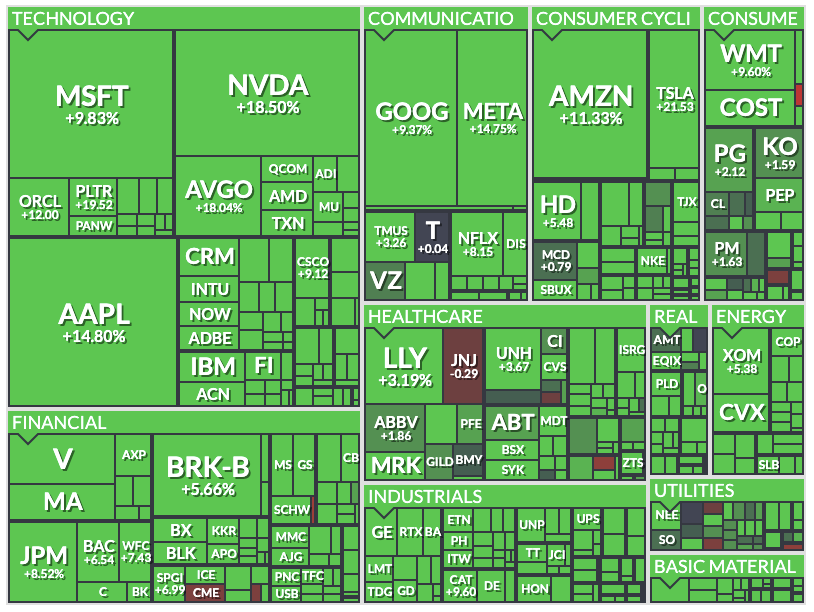
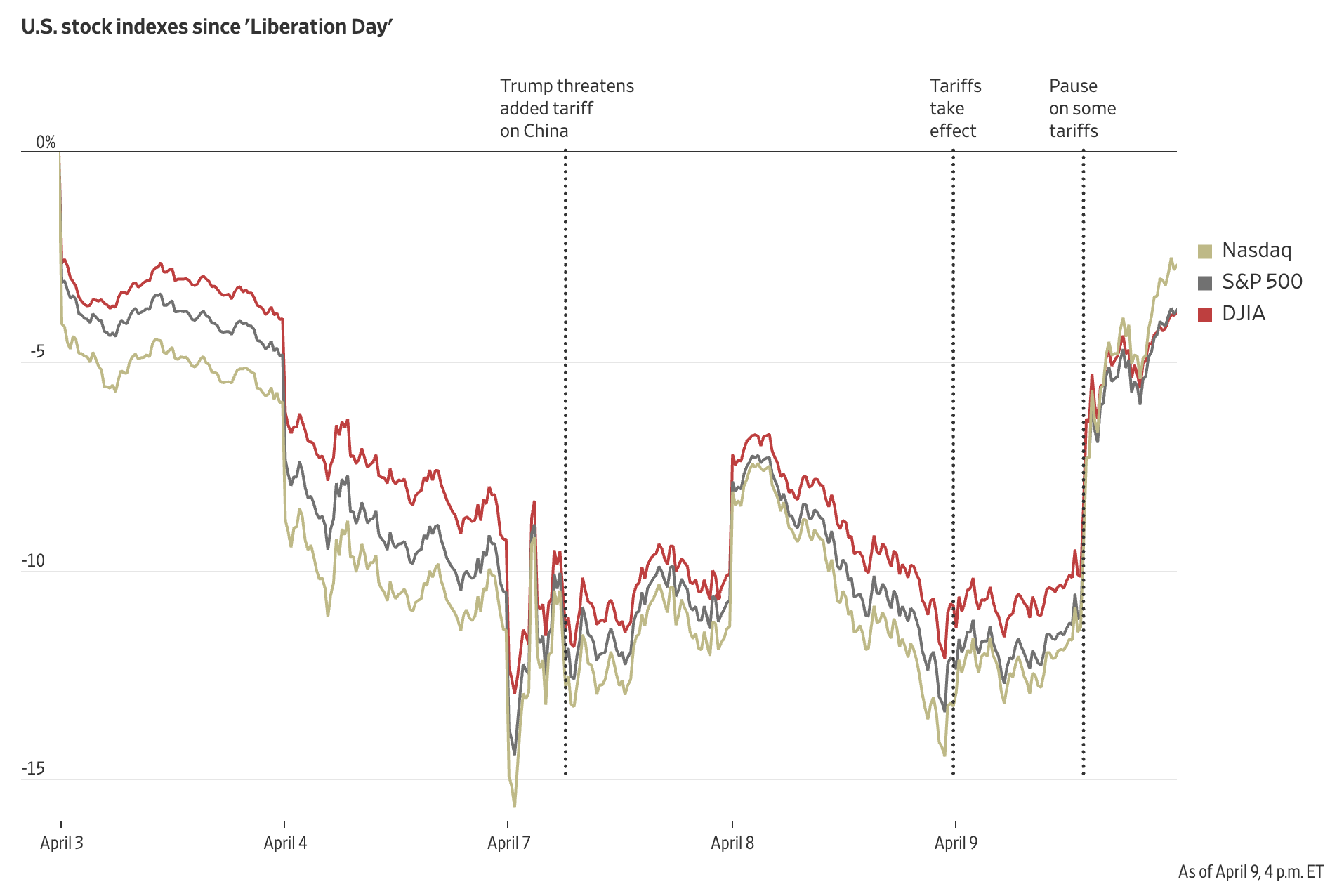
Posting a late afternoon blog addition since I would be remiss to not mention the stock market rocketing after the Trump administration announced a “pause” with 75 countries wanting to negotiate tariffs and non-tariff barriers with the U.S. The notable holdout at this point is China … but the financial markets took all of this as good news after serious pain this past week.

Heat Map 4/9/2025

Investors can now breath a sigh of relief after watching their 401Ks and retirement accounts taking significant daily dives recently. Personally, I’m hopeful that Congress locks in the 2017 tax cuts and offers tax relief to low and middle-class families who have been feeling as if the American dream is increasingly out of reach — even if I consider myself a fiscal hawk. It would be great to see President Trump’s “no tax on tips” promise and “no tax on Social Security” get passed too … but that’s not to say the growing nation debt and deficit spending doesn’t worry me.

The WSJ posted a graph of the markets since Liberation Day – 4/2/2025 – and noted that the indices are still down .. but significantly less after today.

Markets since Liberation Day

Tariffs: Rethinking my long-held views regarding global trade

Posted By on April 9, 2025

Tariffs have long been a divisive topic in economics. For decades, mainstream economists have championed free trade, arguing that tariffs—essentially a tax on imports ultimately paid by consumers—hinder economic growth by disrupting the free flow of goods across borders.

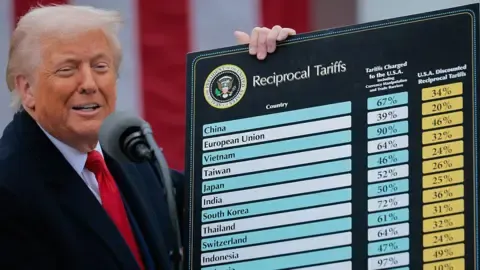
For most of my life, I’ve been a proponent of free—but fair—trade. I believed in the principle that “a rising tide lifts all boats,” and that Trump with Tariff Chart - April 2, 2025less government intervention and lower taxes were the best ways to empower consumers. Free trade not only fosters economic efficiency but also reduces the likelihood of conflict by creating mutual interdependence among nations. In contrast, tariffs—as a form of taxation—distort markets by placing a thumb on the scale.
Yet, not everyone agrees that tariffs are the villain they’re often made out to be. Some see them as a legitimate tool to address the downsides of globalization, unfair trade practices, and the protectionist barriers used by other countries.

Let’s begin with the conventional wisdom. Economists have traditionally viewed tariffs as a net negative. When a country imposes tariffs on imported goods, it drives up prices for its own consumers. The result? Less competition, higher costs, and a drag on efficiency. Free trade, on the other hand, encourages specialization—countries focus on producing what they do best, and consumers benefit from cheaper, higher-quality products. This logic has driven decades of trade liberalization, from the creation of the World Trade Organization to sweeping agreements like NAFTA.

The data supports this view: global economic growth has surged under freer trade. However, for many Americans, the benefits of globalization have come with a bitter aftertaste—lost jobs, shuttered factories, and the growing perception that the system no longer works in their favor. This is where tariffs reenter the conversation.

Rust Belt Cleveland OH

When manufacturing jobs vanish in regions like the Rust Belt, the promised retraining programs and new opportunities often fail to materialize. Meanwhile, foreign competitors sometimes enjoy advantages such as lax labor standards, government subsidies, or currency manipulation—conditions that feel less like fair competition and more like exploitation.

From this perspective, tariffs become a counterpunch. The United States, with its vast consumer market, has leverage—why not use it? Under President Trump’s “Liberation Day” declaration, tariffs were used as a tool to protect American workers and to pressure trading partners into fairer deals. Consider the trade war with China: tariffs on hundreds of billions of dollars’ worth of goods were intended to address long-standing issues like intellectual property theft and trade imbalances. Whether they succeeded fully remains a matter of debate.

Beyond the economic implications, tariffs carry political weight. They convey strength—a willingness to stand up for the “little guy” against the impersonal forces of globalization. This has made them particularly appealing in current U.S. policy, especially in sectors such as steel and aluminum, which have strong constituencies in politically significant states. Tariffs are now seen not only as an economic tool but also as a matter of national security—critical to ensuring the country’s industrial capacity in the event of another global conflict.
iPhone breakdown WSJ

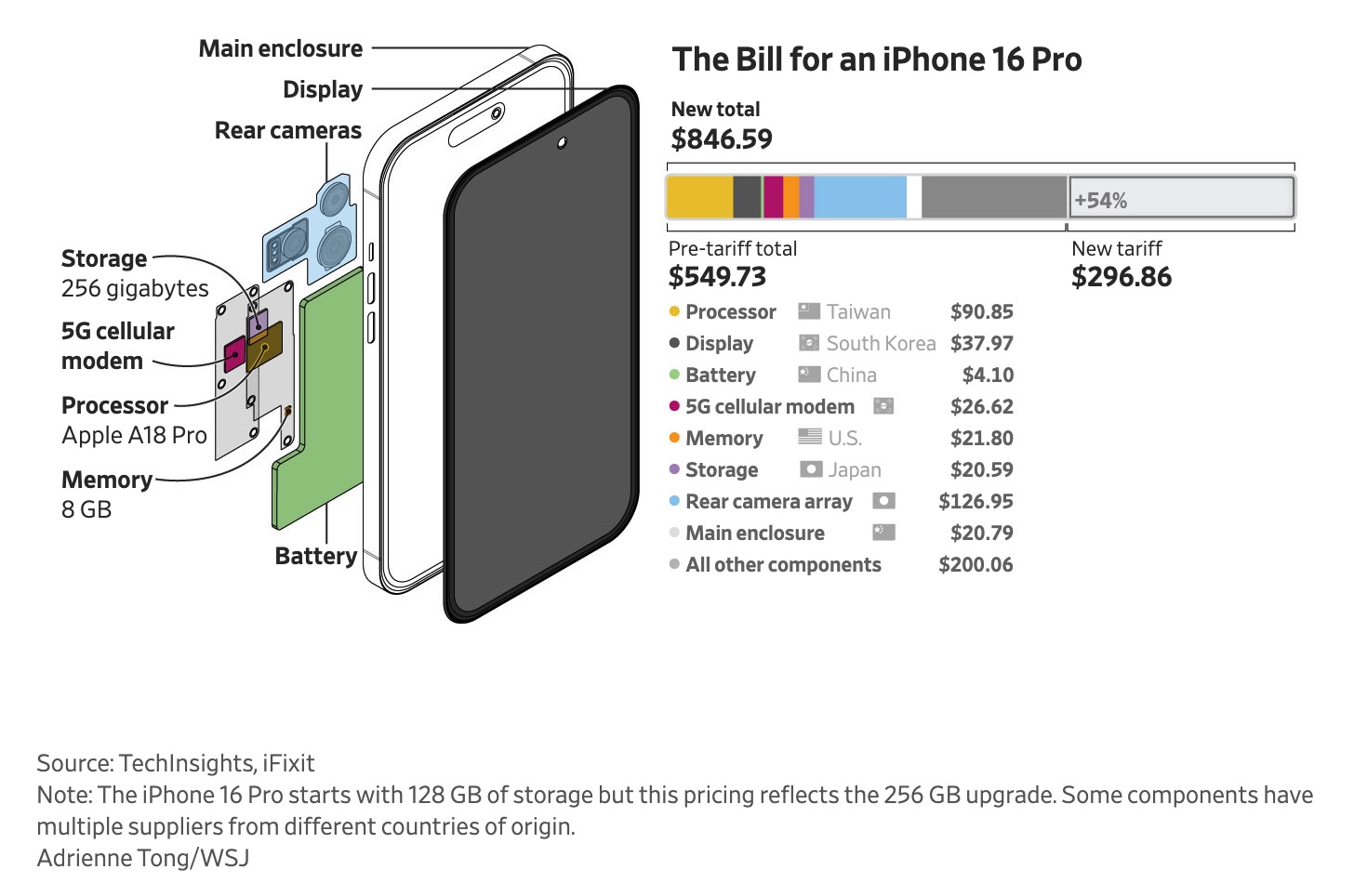
Still, tariffs carry broad economic costs. They raise input prices for businesses and ultimately increase costs for consumers. Retaliation is another risk—as seen when American soybean farmers lost export markets during recent trade disputes. The tension is inescapable: tariffs are a high-stakes gamble, not a silver bullet.

To free-trade purists, tariffs are an outdated and blunt instrument. To others, they represent a means of reclaiming control in a global economy that has left too many behind. As international trade continues to evolve, the debate over tariffs isn’t going away. In fact, they remain a fixture in global economic policy—whether the United States embraces them or not.

Whether viewed as a strategic lever or a flawed relic, tariffs force us to confront the trade-offs in today’s deeply interconnected world.

Desultory - des-uhl-tawr-ee, -tohr-ee

  1. lacking in consistency, constancy, or visible order, disconnected; fitful: desultory conversation.
  2. digressing from or unconnected with the main subject; random: a desultory remark.
My Desultory Blog