Posted By RichC on April 22, 2017
My favorite news network shared 20 excellent tips for saving money (by Daniel Kline, who writes for the Motley Fool). I highlight a favorite below.

Saving money takes discipline
It means forgoing things you want and making tough choices, which can be tough in our consumption-focused society. However, saving money can make it easier to get what you really want, whether it’s buying your dream house, starting a business, or retiring early. Whatever it may be, having cash in the bank (or invested wisely) brings you closer to that goal.
To that end, below is a list of 20 ways to boost your savings in a big way. Some are tougher to achieve than others, and you’ll need to weigh the necessary sacrifice against the return. For example, if your morning latte brings you joy (or keeps you sane), then it may be worth the $5 it costs.The same is true of anything on this list.
1. Pay off your credit card debt
For every $1,000 you have in credit card debt at an annual percentage rate (APR) of 15%, you pay $12.50 per month. If you carry $7,000 in credit card debt over the course of the year, you will spend $1,050 on interest payments. That’s money being burned. It does not lower your debt; it’s simply the cost of borrowing on a credit card. If you pay a higher APR, the picture gets even worse, and the value of paying off the debt becomes even higher.
2. Trade your latte for coffee
While making coffee at home by the pot saves the most money, it also involves a bit of hassle, and perhaps you enjoy the experience of visiting a coffee house as much as the coffee itself. But if you substitute a $5 latte for a $2 cup of coffee five days a week, you’ll save $780 a year. If you’re a seven-day-a week coffee buyer, you will save $1,092.
3. Keep your car longer
Most car payments are over $100 a month, so not having to make that payment would save you at least $1,200 a year. In general, people take a car loan over three, four, five, or maybe even six years. In many cases, when the loan has been paid off,  the car remains in good condition. If that’s the case, even if you want a new car, it’s sensible not to get one. The challenge is holding on to your car as long as it’s in good shape but selling it before it begins to need expensive repairs.A trusted mechanic can help you make this decision.
4. Put $3 a day in the bank
It may sound silly, but if you save $3 a day, 365 days a year, you will end up with $1,095 in the bank. Most people won’t actually set three physical dollars aside each day, but breaking down a larger goal into small pieces can make it more manageable. In this case, saving $1,000 may seem a bit daunting, but most people can picture putting $3 aside each day.
5. Take in a roommate
While this won’t work for everyone, if you have a home with an extra bedroom, it’s possible to put that space to work by taking in a roommate. The going rate for a part of your house, condo, or apartment will vary depending upon where you live, but the money earned will likely be well in excess of $1,000. Of course, sharing your home with someone else is not always easy, so make sure you do a background check and call some references if the potential renter is not someone you already know well.
6. Buy a used car
When it’s time to buy a car, many people make the mistake of paying the extra money for a new one. That’s a mistake because of something called depreciation. According to Edmunds , a typical midsize sedan loses the most value in the first year it’s driven–more than it loses over the next three years combined. Buying a one-year-old car puts you on the favorable side of the depreciation curve, as the price you will pay will be based on the current, lower value, rather than the original sticker price. The savings will be immediate if you pay cash, but regardless, the money you save will likely be well over $1,000.
7. Cut the cord with cable
With the average cable bill coming in at $99 per month in 2016, cutting the cord will save most people about $1,200 a year. In many cases, dropping cable will mean losing any bundling discounts offered by your internet provider if you had both services from the same company. That may lower your savings by $5 or $10 each month, and adding a video streaming service could cost you another $10 each month. But even with both of those costs, you could still save around $1,000 a year.
8. Skip one restaurant meal a week
A family of three eating out at even a casual sit-down restaurant will have hard time spending less than $50. If you eat at home instead of going out, you can cut $2,600 a year in expenses. Of course, you’ll still have to eat, but a fun home option like taco night or make-your-own-pizza night can easily be done for less than $20, keeping your savings well above $1,000.
9. Rent out your house while traveling
There are a number of popular websites and apps that facilitate renting out your home when you’re not using it. The per-night price you can charge your guests will depend on the local demand for short-term lodging, but if you live in an area where a lot of people visit for work or business, this can be quite lucrative. In many cases, the best times to rent out your home are holidays and school vacations — times when you may be traveling yourself, freeing up your house for short-term rentals.
If you live in a suburb where $75 a night is the going rate for a home like yours, then you could rake in $1,000 by renting out your home for two weeks out of the year. If you live in a popular tourist destination — say, Manhattan — then you could make that amount in a few days.
10. Have one or no cars
Even in markets with high-quality public transportation, many people hold on to a car for the rare occasions when they may need it. Meanwhile, some families in less metropolitan areas keep two vehicles, even though they may only need one. Between car payments, gas, insurance, maintenance, and parking for city dwellers, a single car can cost you several thousand dollars a year .
The prevalence of car-sharing companies like Zipcar and the growth of ride-share services including Lyft and Uber make it practical for more people to have one car or no car at all.
11. Don’t buy bottled water
Bottled water is undeniably a luxury in a country where nearly everyone has drinkable tap water. The real expense in this area, though, isn’t buying cases of water and bringing them home. A case at the supermarket can cost as little as $4, and even a case a week at an average of $5 each will set you back just $260 per year. What breaks many budgets is the habitual buying of water at restaurants and convenience stores, and even movie theaters or sporting events. In those scenarios, a single bottle can cost anywhere from $2 to double or even triple that.
Opting for drinking fountains or cups of tap water can save a potentially shocking amount of money for people who regularly pay high markups for bottled water.
12. Give up a bad habit
Smoking and drinking are expensive. Cigarettes cost an average of $5.51 per pack in 2015, according to Fair Reporters , and even a semi-decent bottle of wine will run at least $10. If you smoke a pack a day, that’s over $2,000 a year. If you drink three cheap bottles of wine a week, you will have spent more than $1,500. Of course, for many, giving up those habits won’t be easy, but the benefits are great for more than just your wallet.
13. Drive instead of fly on vacation
For many people, taking a vacation means flying. The problem is that for a family of three or four, even a carefully purchased round-trip flight can add over $1,000 to the cost of a trip. If you instead pack up the car and drive somewhere, you will save the cash, and there are very few places in the U.S. where an attractive vacation option is not within a three-hour drive. If you make that change, you’ll only pay for two or three tanks of gas, and you’ll have about $1,000 more in the bank.
14. Keep your phone longer
The latest Apple smartphone, the iPhone 7, costs $649 for the cheapest model. While most people don’t pay the full amount up front, they typically pay that much or more in installments. If a two-person household upgrades their phones every year, that’s a minimum of just under $1,300. For every year you hold on to those phones, you’re keeping your debt down and the money in your pocket. The numbers vary depending on the model of phone you buy, but now that carriers no longer subsidize these purchases, it makes even more sense to hold on to your phone for as long as possible.
15. Downsize your fitness membership
We’re not telling you not to exercise — just to think about what you’re spending to do it. The average fitness club membership costs $55, according to data from the International Health, Racquet & Sportsclub Association. That’s $110 a month for a family of two adults. But cheaper options exist. There are numerous gyms offering memberships at $10 a month, and while they may not be as nice as the pricier ones, they have much of the same equipment, if not all the perks (like fancy locker rooms or towel service).
In addition, people who take high-end classes like Soul Cycle, barre, or yoga can often find similar programs at cheaper gyms. Many $10- or $20-a-month fitness centers have spinning, yoga, pilates, and barre classes, sometimes at no extra fee. In some cases, even local libraries offer yoga classes, usually for a donation but not for any set fee.
16. Get a family phone plan
While many people already have cost-efficient smartphone plans for their immediate families, it’s possible to save even more by bundling your savings with relatives who are a little farther afield. The deals vary, but low-cost carriers Sprint andT-Mobile have at various times offered a free third or fourth line. In addition, both of those companies have plans in which additional lines (up to a limit) cost less.
In a broad example, if two adult children paying $75 a month for their unlimited data plans on their own joined up with their parents on a shared plan where the the third and fourth lines were free, the collective savings would be $1,800 a year. Even if the cost drops from $75 to $35, the family has still saved $960. This is an area where timing is key, but even if it does not get you to $1,000 a year in savings, going big with more people on one plan generally lowers prices when it comes to smartphone service plans.
17. Take your company’s 401(k) match
Not taking a 401(k) match because you don’t want to put money into a retirement account is literally leaving money on the table. If you make $50,000 a year and your company matches up to a 4% contribution, then failing to contribute at least 4% of your salary literally costs you $2,000 per year. Yes, you may feel like you need the money now more than you will in the future, but any investment that guarantees a 100% return is a good one (and you will also get to watch the money grow as an actual investment over time).
18. Refinance your mortgage
While mortgage rates have inched up above historic lows, they are still very low. That means people who are above the current 30-year mortgage rate of roughly 3.75% should consider refinancing. The challenge is calculating how long it will take you to recoup any closing costs with a lower monthly payment. In addition, you must have the money for closing costs in the first place, though there are all sorts of refinancing options out there that can, for some people, minimize up-front costs.
There’s no simple formula for how much a refinance might save you, but if your mortgage rate is in the mid-4% range or higher, you should certainly consider refinancing unless you plan to move soon.
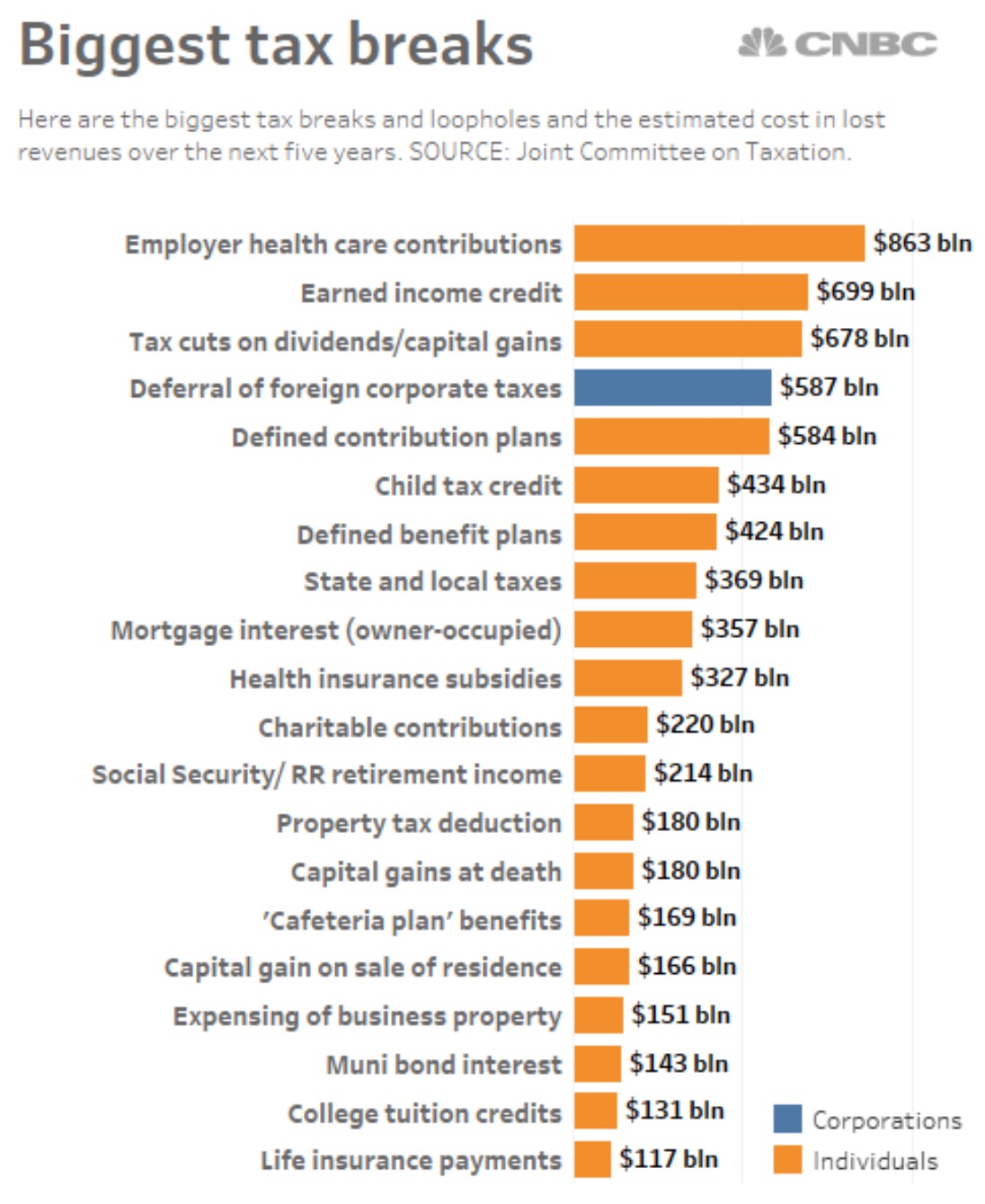
19. Pay as little in taxes as you legally can
When the time comes to file their tax returns, some people don’t know about all of the deductions they can take. Others get too nervous to claim them, because there’s an impression that some deductions — like the home office deduction or work-related mileage deduction — may trigger an IRS audit. However, you should absolutely clam every deduction you can, so long as you qualify and have the documentation to back it up.
In some cases, especially for people making income that’s not from a traditional job, it’s actually worth having someone else do your taxes or using tax preparation software. Both of those will cost you, but they can also identify deductions you may not know about, and the savings could well exceed the money spent — possibly adding up to $1,000 or more.
It’s important to remember that most audits are just requests for documents or justification for a claim. Even an in-person audit is nothing to fear if you play by the rules and have the paperwork to prove everything.
20. Make a lot of little changes
Cutting a pay cable channel or getting your hair cut at a less expensive salon probably won’t save you $1,000 a year, but making lots of little changes may. Go through what you spend in a month and examine areas where you can spend a little less without feeling much pain. That might mean taking other tips on this list and using them to a minimal degree. Perhaps you switch from a $60-a-month gym to a $20-a-month gym, and maybe you stop drinking that latte just one or two days a week. If you comb through your budget with a fine-tooth comb, you’re guaranteed to find lots of areas where you can make small cuts in your spending.
The $16,122 Social Security bonus most retirees completely overlook
If you’re like most Americans, you’re a few years (or more) behind on your retirement savings. But a handful of little-known "Social Security secrets" could help ensure a boost in your retirement income. For example: One easy trick could pay you as much as $16,122 more … each year! Once you learn how to maximize your Social Security benefits, we think you could retire confidently with the peace of mind we’re all after.
Simply click here to discover how to learn more about these strategies.
Category: Advice, Financial, Tidbits |
No Comments »
Tags: budget, finances, foxbusiness, money, motley fool, saving
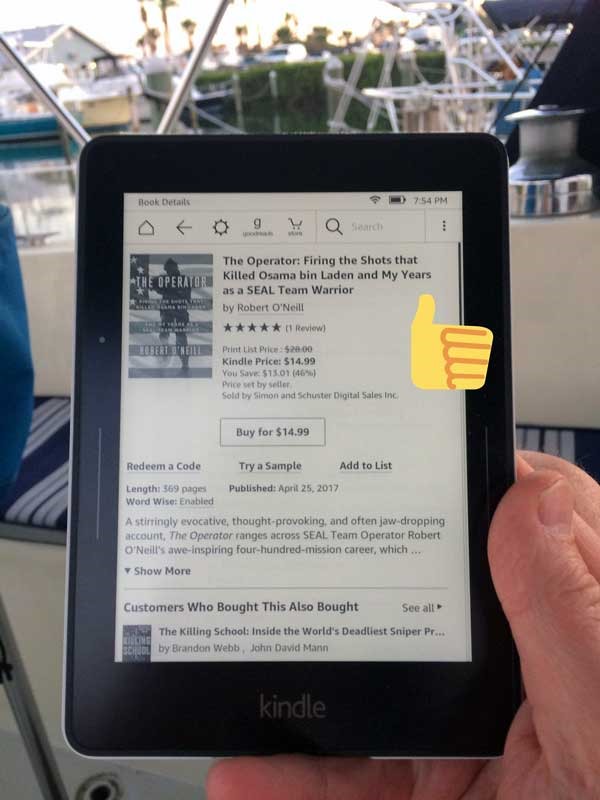 After borrowing my daughter’s Nook, and my friends Kindle, I finally have my own ereader — thanks to MyDesultoryBlog readers and discreet Google Ad clickers. I now can travel and read comfortably without disassembling the keyboard off my iPad Air2 and "hefting" the much heavier and larger tablet in front of my face. My second-hand Kindle Voyage is just about perfect … not to heavy and not too large. As Goldilocks would say, "just right." The 6" paperwhite screen is high resolution at 300ppi and always bright enough with the LED backlighting. I don’t think even Amazon’s next model up, the Oasis, could be much better?
attempts to rescue “Lone Survivor” Marcus Luttrell and abducted-by-Somali-pirates Captain Richard Phillips and which culminated in those famous three shots that dispatched the world’s most wanted terrorist, Osama bin Laden.