Music Monday: A lesser heard Israel Kamakawiwoʻole recording
Posted By RichC on April 3, 2017
This content is restricted.
Posted By RichC on April 3, 2017
This content is restricted.
Posted By RichC on April 2, 2017
 The beginning of April is one of my least favorite times of the year … tax time … but for a couple reasons, next year should be better.
Posted By RichC on April 1, 2017
The “Trump Rally” as many have dubbed it, provided investors with solid quarterly gains as a brighter economic outlook offset the lackluster Washington DC agenda which has become bogged down in politics. Investors still believe job growth, better corporate financial returns and tax cuts will over shadow the Fed “applying the brakes” in the form of higher interest rates.
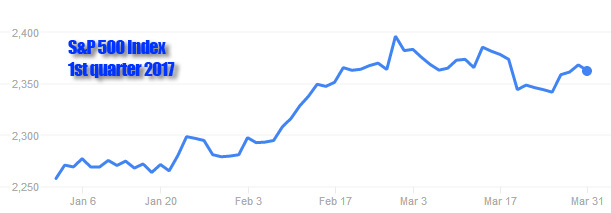
The S&P 500 index’s 5.5% rise in the first three months of the year extended the post-election gains sent major U.S. indexes to records, but in March were dialed back a little. The big mover in the first quarter was the tech sector. The S&P 500 jumped 12% in the first three months of the year and was best performer out of the 11 sectors in the index. The Nasdaq Composite Index ended the quarter up 9.8% to record its best quarter since 2013.
The WSJ round up of the first quarter pointed out some recent hesitancy after the Republicans failed to replace Obamacare … and that fear is creeping into concerns that the much needed corporate and personal tax-cut could face a long slow trod.
The Dow Jones Industrial Average, which has a hearty weighting of industrial companies and big banks, posted a 4.6% gain, a slowdown from the previous quarter. On Friday, the Dow industrials fell 65.27 points, or 0.3%, to 20663.22. The blue-chip index dropped 0.7% in March, its biggest monthly decline since October. The S&P 500 fell 5.34 points, or 0.2%, to 2362.72. The Nasdaq Composite dropped 2.61 points, or less than 0.1%, to 5911.74.
…
The failure of Republicans’ health-care bill, intended to replace the Affordable Care Act, has led investors to question the Trump administration’s ability to implement other agenda items like a corporate tax overhaul, looser regulations and fiscal spending.
Posted By RichC on March 31, 2017
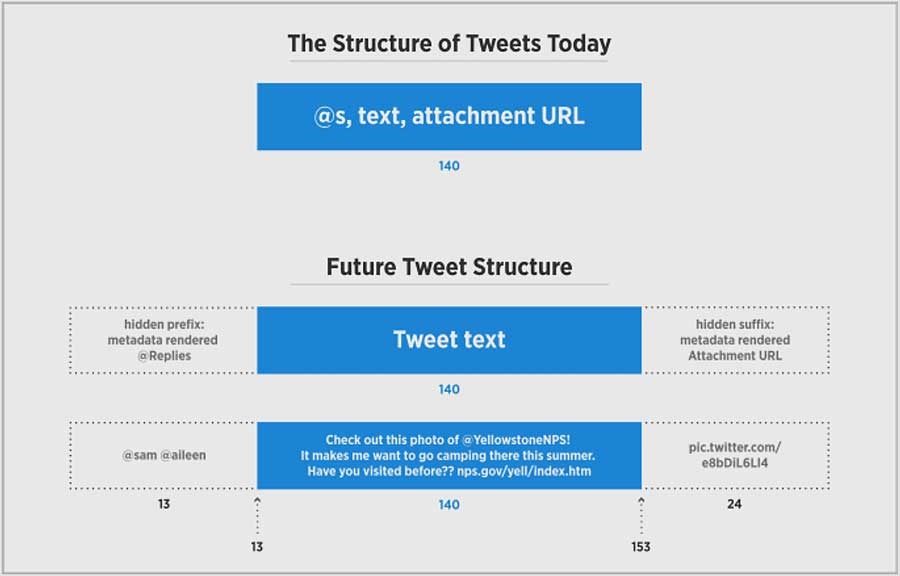
Last year, the social networking company Twitter announced it would begin changing the requirement that all  tweets could only contain 140 characters. They started with not counting characters of the media attachments or @ replies.
Some users are concerned that Twitter will stray too far from its roots as a public text messaging service tool. SMS messages are limited to 160 characters, so Twitter use a limit of 140, thinking to leave room for a username ahead of the tweet. As user names grew, attachments bit into character count and @replies became common for exchanges, very few characters were left for the actual thought. Users became inventive and sent multi-part thoughts, graphic images of text just to get their point across. The once short and poignant statement started to disappear even though "most" users were not supportive of the "tweetstorm" practice.
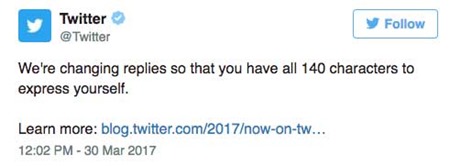
In looking for a compromise, Twitter is attempting to be true to the purist and base who prefer living with 140 characters, but has freed up the characters when it comes to replying to others. You can now tap on the “Replying To” field to see who’s in the conversation and make changes to the reply list, when responding and no longer be limited to just a couple characters for the reply without deleting listed users. This is done by unchecking the checkboxes in the small pop-up that appears on the screen after tapping this field.
TechCrunch mentioned that "the change also aims to make reading longer conversation threads easier, because this “Replying To” field is much smaller and not in the tweets themselves. That way, you can focus on reading the actual posts, without having to first note the usernames."
Be careful though, “Replying To” field is fairly small. It is easy to think you are starting a new tweet when you are really replying. Why is this important? "Because replies are a second class kind of tweet. Not everyone sees your reply appear in their Timeline, even if they follow you. Instead, they only see the reply if they follow both you and the recipient."
Replies are also tucked away in a secondary tab in users’ Twitter Profile page, “Tweets & Replies.” (Twitter earlier this month updated users’ profiles on mobile to display replies in the separate tab, like they are on the web.)
Because of the lower visibility for replies, users started putting a period (“.”) ahead of any reply they want all their followers to see, where they were referencing someone else’s tweet. This, too, has become something of a Twitter convention.
…
The change to replies marks an end of an era for Twitter. The company helped to popularize this format and bring it into the mainstream. Today, using the “@” symbol to mention someone is supported across a range of services, including Facebook, Instagram, Tumblr, LinkedIn, Slack, and even Outlook, among others.
While Twitter is making these changes as a means of trying to simplify its service for users, it’s really just swapping out one set of rules for another.
Posted By RichC on March 30, 2017
This content is restricted.
Posted By RichC on March 29, 2017
Posted By RichC on March 29, 2017
We all struggle with ease of use and security when using a computer and online services … what’s the best way?
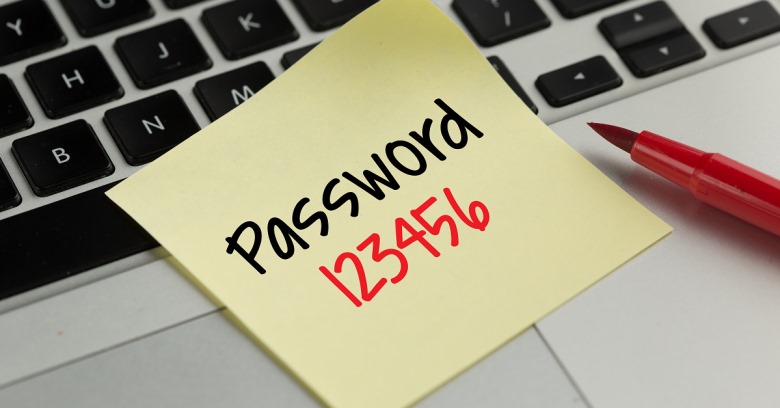
That’s likely a debatable question since we want easy access, but don’t want our data compromised – "how easy is too easy?" What we do know is that a simple or "no" password is a prescription for trouble. In the early days, when computers were not connected to the Internet, having a relatively simple 6 digit password that accessed your computer on "boot up" was sufficient for most users. Nowadays, computers and devices are online all the time, networks are interconnected an open to attack even though we don’t know the attempts are happening. Apps, software downloads, thumb drives, SD cards, etc can have malware designed to log keystrokes or open ports to malicious users from halfway around the world … and to add to that, the "Internet of Things" (IoT) trend has 100s of devices now all wanted access to the same network we use everyday.
So the least we can do is adopt safe practices to secure each device … and that starts with multiple secure passwords for each device and sites that are changed once in a while.
Maybe a few "don’t do" thoughts (below) and consider a password keeper IF you think how you manage your own passwords is questionable when it comes to secure practices.
These passwords will get you hacked
…
Earlier this year, security firm Keeper found that the most common password across the globe was 123456. The firm analyzed millions of leaked passwords. Other top-ranked secret codes were hardly more secure. They included 12345678, 123456789 and 1234567890.
The third most popular password was “qwerty,” which is the first six keys on the top left row of the computer keyboard. Far too many people use the remarkably unimaginative password 111111. And many others can unlock their accounts by just punching in seven 7s in a row.
This is not an isolated issue. The top 25 passwords last year accounted for more than half of the 10 million passwords Keeper analyzed.
The firm says that any of the passwords on its list can be compromised in seconds by dictionary-based cracking tools.
This is part of a larger trend of people not taking the threats to their information and accounts seriously.
Ohioans need to set passcodes on their mobile devices and should avoid easy-to-guess words or numerical sequences, like 1-2-3-4, said Ohio Attorney General Mike DeWine.
Each online account needs its own password so that if one becomes compromised, hackers cannot access a person’s other accounts, which commonly happens, experts said.
And variations of easy-to-guess passwords also are far too popular.
Posted By RichC on March 28, 2017
The kitchen remodeling hit a snag today as the custom cabinet that was suppose to fit the new Bosch double-oven was way off.  I’m not sure why it was off because the specifications sheet for the oven was sent to the manufacture, but it wasn’t even close. The "fix" is that the installer will butcher (my term) the new cabinet instead of having the shop factory build an entirely new "box" built. Supposedly this is "normal" ???
Unfortunately the size miscalculation has also impacted the electrical switch for the disposal and existing drain under the sink (probably fixable). Hopefully with some trimming of fillers, we might be able to make it all work?
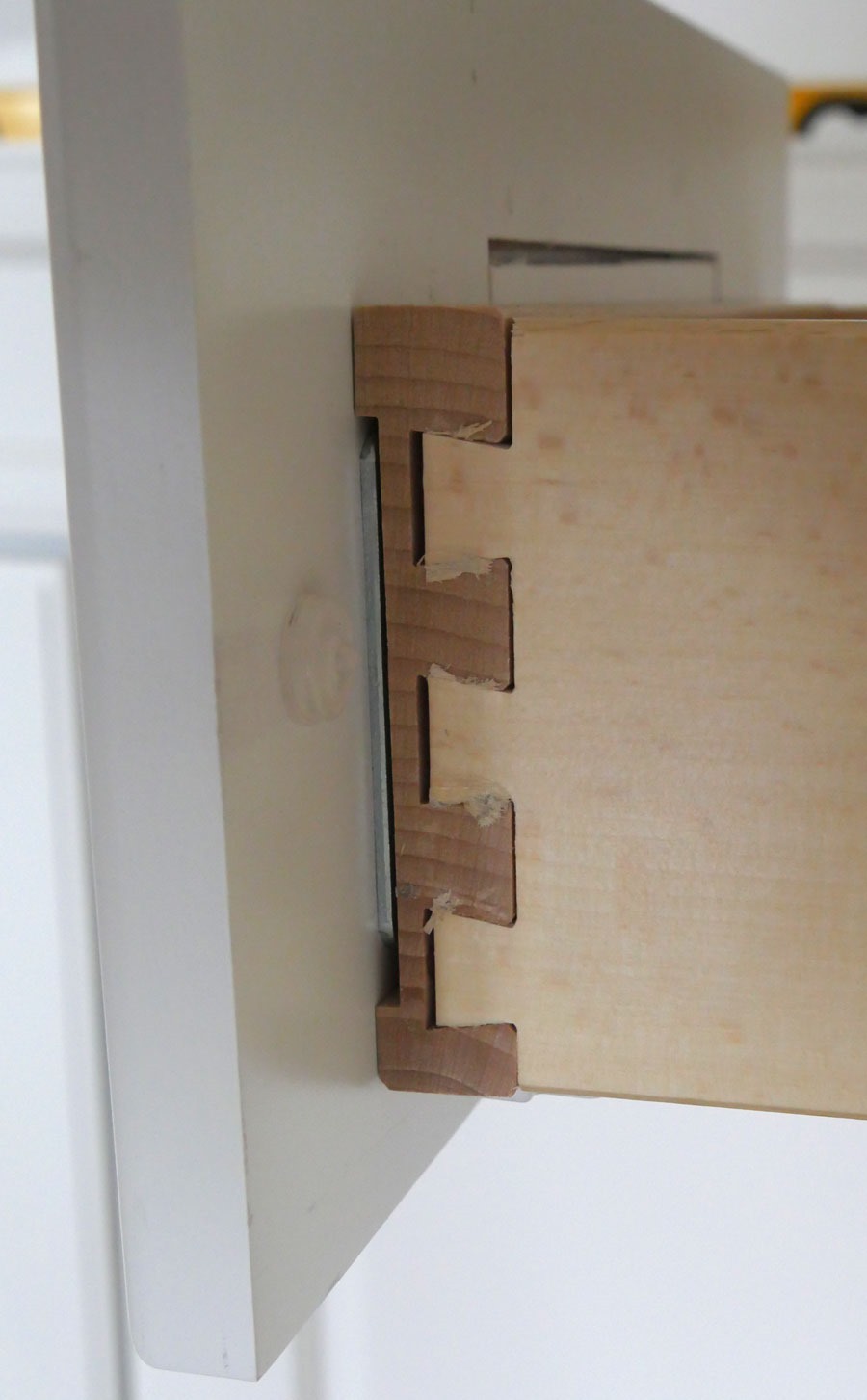
My final "nit" is that a couple of the doors and draws have some imperfections. Again, they say this is normal, but I would have preferred a little bit of quality control before shipping dovetails that look like this (left). A black-eye for the company … although before naming the company, I’ll see how they handle my complaint (archiving initial alignment below, which I’m sure will be adjusted).

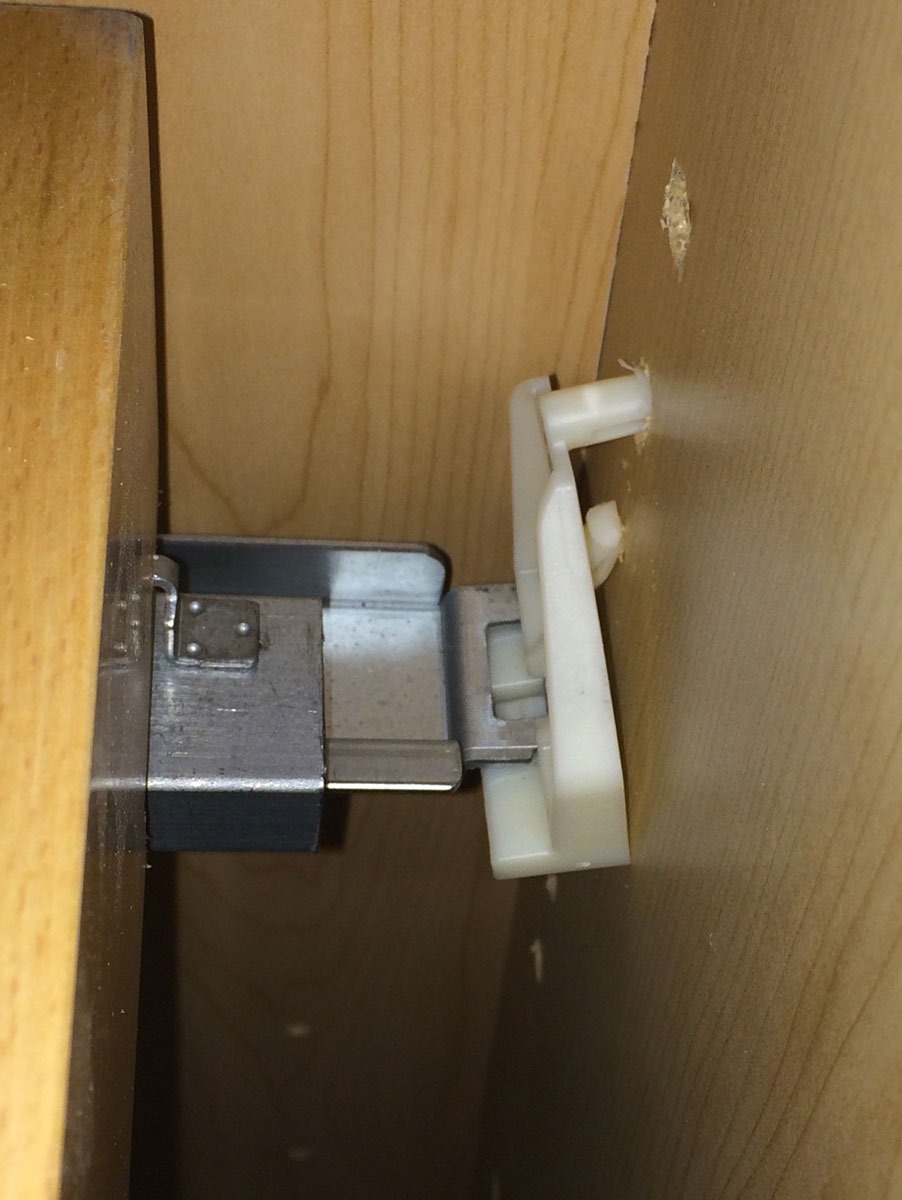
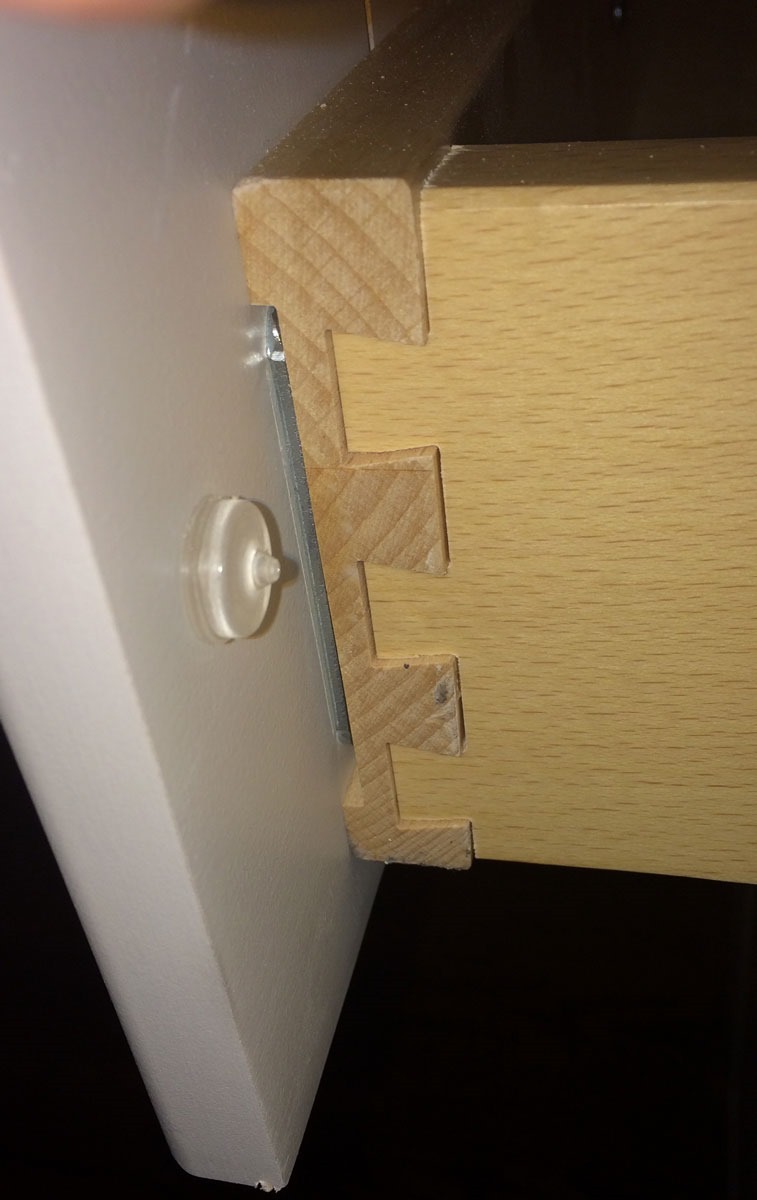
EDIT: Adding a couple more photos to be addressed (broken door slide and another poorly fitted dovetail drawer).
Posted By RichC on March 27, 2017
This content is restricted.
Posted By RichC on March 27, 2017
What do you get when you mix 1960s space history, some classic 1972 Elton John music and a twist of Bluegrass flair? Rocket Man with banjos and country harmony! Good stuff.