Volkswagen is Not Planning to Sell a Passat Wagon in the U.S

Posted By on July 18, 2011

I was really hoping to see a new TDI Passat wagon in North America. Maybe I’ll just keep waiting for the crossover?

Passat wagon

Despite the unabashed public appearance of a camo-draped Volkswagen Passat wagon on American soil, the company is not planning to offer such a vehicle for sale here, we’ve learned from company sources. The car seen in testing is headed for the European market, and is just undergoing some development in the States, as is common practice among automakers. With an abundance of engineering firms, suppliers, and rain-free and hot climes here, the U.S. frequently attracts cars that will never reach our dealerships. This is the case with the Passat wagon.

Other than Subaru’s offerings, wagons in the family segment have become deeply unpopular, and Volkswagen discontinued the Passat wagon after it repositioned the sedan in the U.S., dropping the base price by nearly $8000 and going after the mid-size market’s biggest players. With a renewed focus on achieving big sales numbers, Volkswagen doesn’t see a new Passat wagon as an effective use of resources.

With all of this said, we already know that aVolkswagen is working on a three-row crossover, priced like a Honda Pilot or Ford Explorer at or near $30,000. Since that is precisely the category to which former wagon buyers have shifted in the U.S., it’s the right product for VW and makes way more business sense than does a Passat wagon.


Posted via email from RichC’s posterous

Stocks Slump on Debt Fears

Posted By on July 18, 2011

Don’t look at your IRAs or 401K plans today — actually don’t look at them until the powers that be in Washington DC can figure out how to rein in our “Governement Gone Wild.” (I’ve already given up on Europe)

Stocks fell as the combination of anxieties about debt in the bloc of euro-using nations and a lack of progress in U.S. debt-ceiling negotiations sparked an early selloff.

The Dow Jones Industrial Average shed 146 points, or 1.2%, to 12334, led lower by Boeing, which shed 2.5%, and Bank of America, which fell 2.4%. The Standard & Poor’s 500 stock index fell 14 points, or 1.1%, to 1302, led lower by financial stocks, which were hit by the debt worries. The Nasdaq Composite INdex slid 28 points, or 1%, to 2762.

Posted via email from RichC’s posterous

When talking taxes what is a wealthy American “fair share”

Posted By on July 18, 2011

Far be it from me to defend the “corporate jet” crowd, but am I the only one who wonders what numbers President Obama is talking about when they advocate that wealthy in America “pay their fair share.” I’ve looked at most of the numbers and no matter how you slice the pie, those earning over $200,000 (a minority of Americans) are paying over 60% of U.S. taxes. Personally I think Democrats are just playing politics and using this debt ceiling debate as an excuse to continue growing the Federal government and raising taxes?

wealthypayingtheirfairshare

From President Obama’s Weekly address:

“[you] can’t solve it without asking the wealthiest Americans to pay their fair share …”

Unfortunately I’m also concerned that those who are playing chicken in Washington DC are also putting all of us at risk because they only know how to spend money. What really needs to get done is to simplify the “special interest” oriented tax code – something both sides of the congress talks about … as does President Obama.

What is missing from this debate is the focus on job creation and the broadening of the tax base. If our central government was smaller and the red tape in order to operate a small or large business was less, it would be far easier to hire and expand. I can’t see a reason at the moment that an investor or business entrepreneur would risk capital to hire new employees while there is the threat of higher taxes and the unknown cost associated with the “Affordable Care Act” – aka: Obamacare.

It doesn’t surprise me that wealthy Americans pay the most taxes, but it does surprise me that the majority of American citizens (earning $100,000 and below) cover only 15% of the taxes collected – of course we’re also borrowing another 40% on top of what we collect to cover Washington DCs’ spenders.

Smartphone paperless E-Boarding went smoothly this week

Posted By on July 17, 2011

deltaeboardingpassThis was the first air travel that I opted to go fully paperless using Delta’s E-Boarding barcode utilizing my Palm Pre.

The process from check-in online to bag checking and the TSA and boarding went well and although I questioned losing the barcode webos card (and Internet connection!) between the ticketing counter and TSA, it probably wouldn’t have been an issue. Actually during the first flight earlier last week I even opted to save a screen capture of the barcode on my Pre in fear of losing the card.
Smile

Encore is stripped of canvas and rigged with a couple extra lines

Posted By on July 17, 2011

gEncoreatslip102_0076 

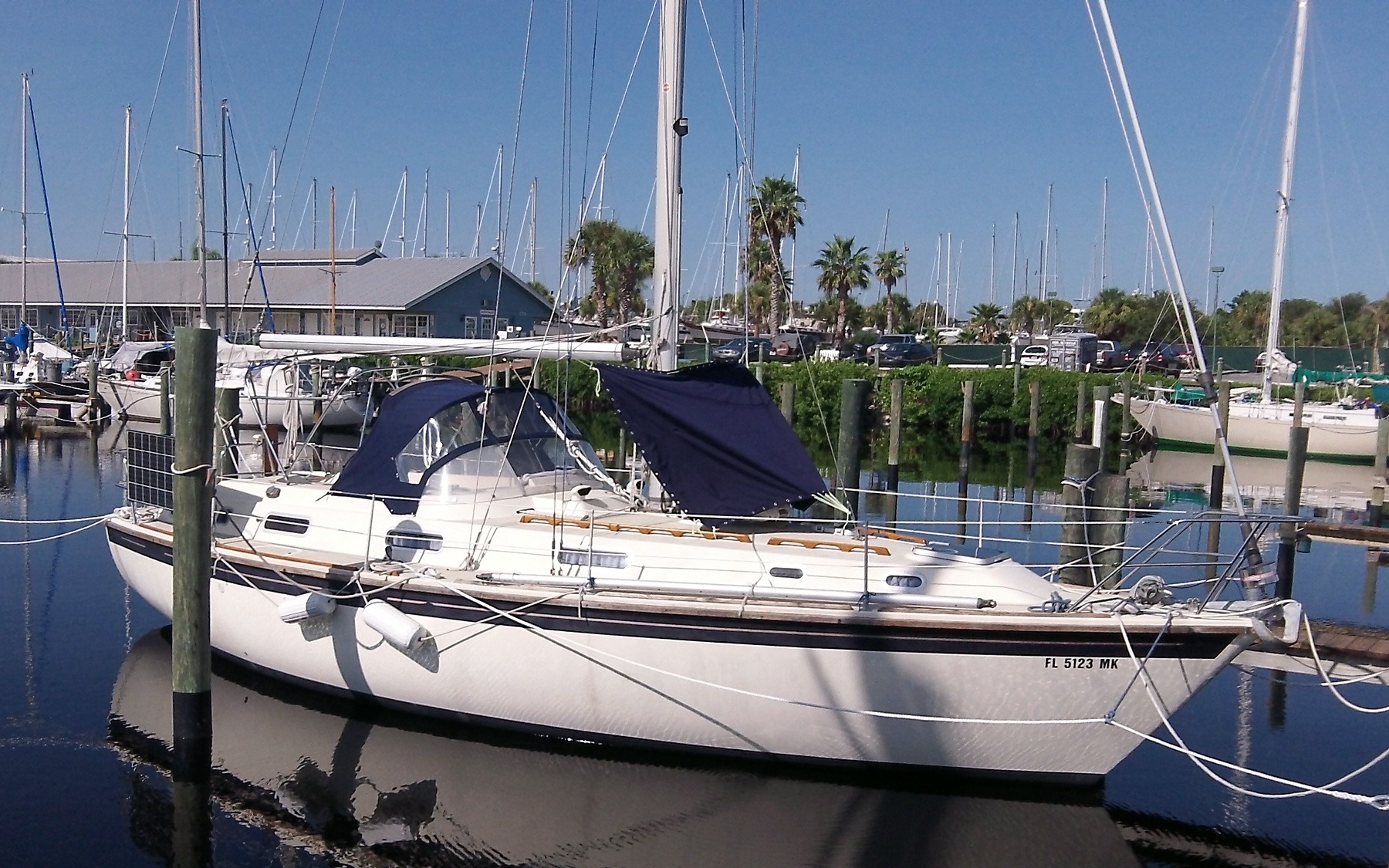
Although the photo doesn’t show the dodger and ac awning down just yet, all the canvas that should be put below has been stripped. I’ve rigged the extra dock lines, but have left the solar panel up (but tied to the lifelines). Besides prepping Encore for the potential of a storm, I was able to remove some of the rust stains that “stainless” steel makes – plenty more to work on. I did want to work on a bit more of the brightwork, but the sun was just too unbearable and would have made it difficult to get a decent finish.

As enjoyable as it was to be spending the last few days working on the boat, I do miss not having Brenda here with me; unfortunately she doesn’t have the spare vacation days to come down just to do work. Back to the work-a-day grind for now.

DoubleDockline102_0086 gEncoreatslip102_0071
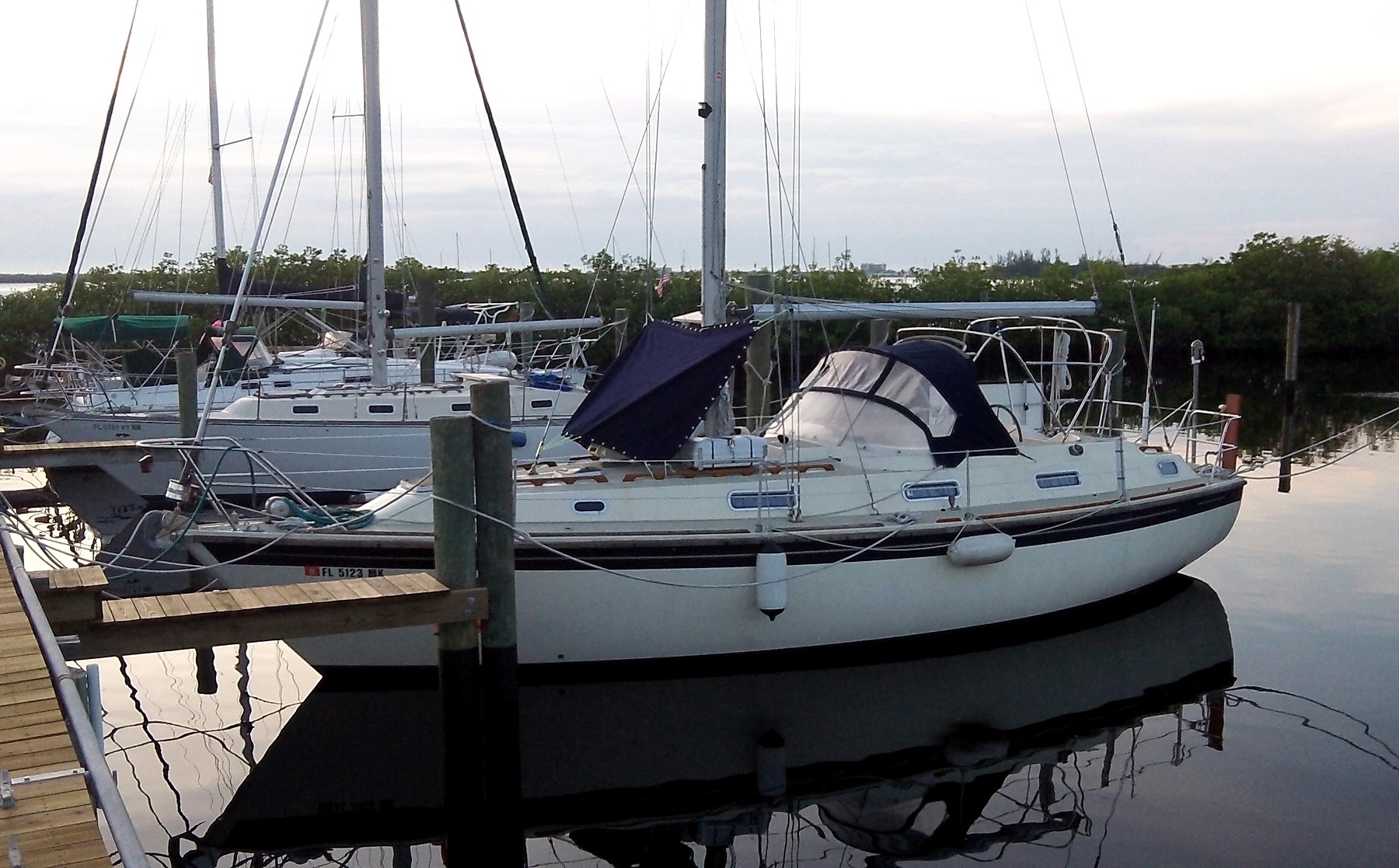
Left: An extra set of new lines (with chain) | Right: Encore at sunrise

Spotify.com comes to America after winning over Europe

Posted By on July 16, 2011

This content is restricted.

Continuing to prepare Encore for the hurricane season

Posted By on July 16, 2011

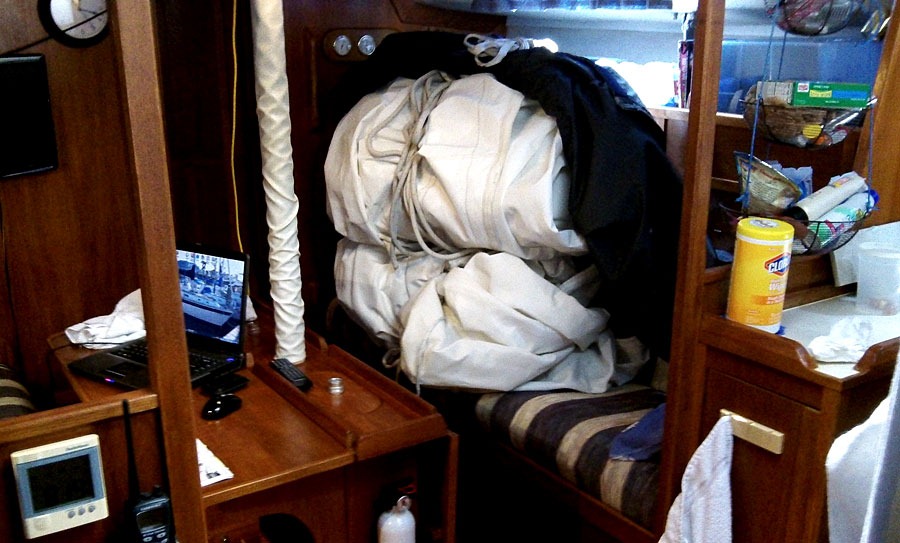
I busied myself on Friday enough that I’m almost too tired to update the blog. As I sit yawning and pondering the “to-do” list for Saturday, I’ll at least post a few photos from the day. I spent the morning stripping the sails and putting them below on the settee below (top left photo in collage). My live-aboard neighbor, Mark Jones of SV Zola, commented that our boat looked “naked.” Somewhat true.

rich_encore_mirror110715sails110715splicing1101715

Besides working to remove any canvas for the hurricane season, I also made four additional stretchy 30 foot docklines. I spliced in a couple of thimbles (bottom left photo) so that I could attach them to a couple short lengths of chain that I wrapped around the pilings – cleats could end up pulling from the dock or even the dock boards could be “bucked” from their stringers. Finally, I included an “in the mirror” photo with the new Kodak Playsport Zx5 just to prove I was here.
Smile

EDIT: adding a short “low light” video test with the Kodak Playsport Zx5.

Chemically storing solar energy

Posted By on July 15, 2011

While we continue to see slow but steady improvements in solar panels and batteries, most of us know that it is going to take a real break through to fill the appetite for longer term storage of electricity. Progress in being made through thermo-chemical storage and recent MIT research indicates that it is possible to use a more cost efficient medium as well.

While solar panels are very useful at converting the sun’s rays into electricity for immediate use, the storage of that energy for later use is … well, it’s still being figured out. The energy can be used to charge batteries, for instance, but that charge will wear off over time. Instead, scientists have been looking at thermo-chemical storage of solar energy. Last year, researchers from MIT discovered that the chemical fulvalene diruthenium was quite an effective storage medium. Unfortunately, the ruthenium element that it contains is rare and expensive. Now, however, one of those same scientists has created a new storage material that is cheaper, and is able to store much more energy.

The advantage of thermo-chemical storage in general is that the chemicals can be stored for long periods, without experiencing any energy loss. Suitable chemicals that don’t contain the pricey ruthenium, however, have tended to degrade within just a few storage cycles.

MIT associate professor Jeffrey Grossman, who led the research last year, has now developed something better. He and postdoc Alexie Kolpak combined carbon nanotubes with the compound azobenzene, the result being a chemical that is less expensive than fulvalene diruthenium, and that has about 10,000 times the volumetric energy density – in other words, it can store more energy in less space.

Kolpak claims that its energy density is similar to that of a lithium-ion battery. By utilizing different methods of nanofabrication, it is also possible to independently control both how much energy can be stored, and how long it can be stored for.


The system works thanks to the azobenzene-functionalized carbon nanotube molecules, that change in structure when exposed to sunlight, and are capable of staying in that state indefinitely. When a stimulus such as a catalyst substance or a temperature change is applied, however, they revert to their previous form, releasing their stored energy as heat. That heat can be used directly in heating systems, or can be used to generate electricity. The molecules, meanwhile, are ready to be charged again.

“You’ve got a material that both converts and stores energy,” said Grossman. “It’s robust, it doesn’t degrade, and it’s cheap.”

The MIT research was recently published in the journal Nano Letters.


Posted via email from RichC’s posterous

Sweating a bit more down in Florida, but enjoying it

Posted By on July 15, 2011

I’m reading my email and posting on another warm night  after a day that did not include any sailing …  but sailing wasn’t in the plans either. In between thunderstorms I MoonThurHatch110714Lwatched the full moon is beam thru the companionway hatch (note top right of photo) and ate some Chinese carry-out for dinner.

Besides spending the day working on a few projects(one would think  more would be getting done), I did get a chance to converse with a few of my live-aboard neighbors. The diver I use,  Roy Mahood, came by and did an in-water hull cleaning as well as bottom and zinc inspection – all good. I put in a couple of storm surge resistant chains so that instead of relying on the dock mounted cleats and lines, a chain around the pilings would keep the boat a bit more secure. If we were to have a high enough tide and surge to ‘buck’ under the dock boards and begin tearing apart the new boards and attached cleats, the lines attached to the pilings underneath would still be holding Encore between the piling in her slip … at least that is my theory?

Later in the day, I also met with a stainless steel and aluminum tubing fabricator hoping to “plan” for a dinghy davit and solar panel mount off the stern. Although our boat is somewhat self-reliant, it would be far better to have additional charging capacity in the form of additional panel and possibly even a wind generator – and arch that doubles as a dinghy lift would be a plus. I’m in no rush to make this improvement, but it would be convenient to be able to lower the dinghy and outboard motor from a set of davits rather than roll it out and inflate each time or leave it half sized and tied down on deck. We’ll see where the estimate comes in … I’m already thinking it is going to be high?

Fuel cap indicator: Why didn’t I know this before now?

Posted By on July 14, 2011

whichsidethegascapison

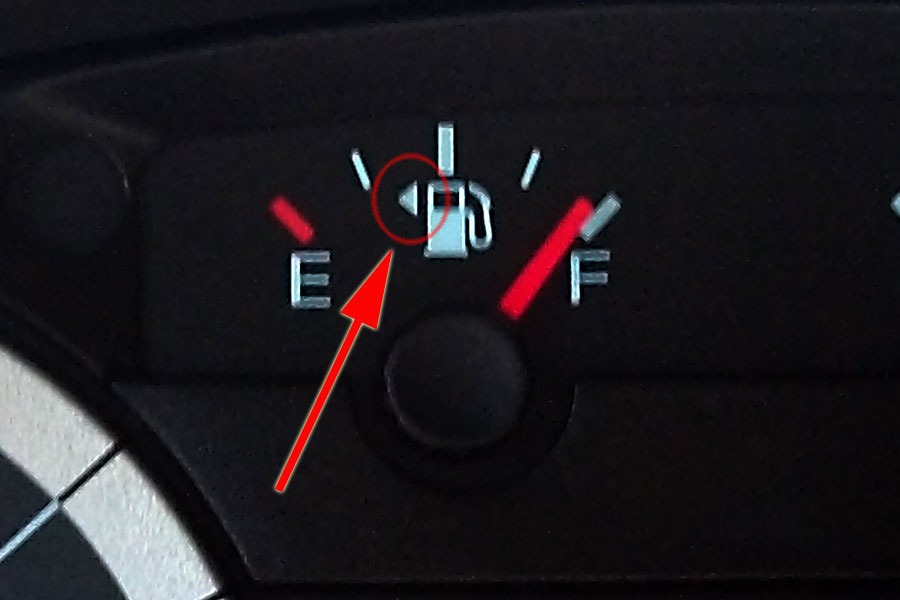
One would have thought that owning and renting cars for 30 years that I would have known that the little indicator arrow on the fuel gauge indicates which side the filler cap is located on. I don’t know how many times I’ve pulled into a gas station with a “new to me car” and guessed wrong. I think I’ll start looking at the gauge first! Am I the only one who didn’t know this?

Desultory - des-uhl-tawr-ee, -tohr-ee

  1. lacking in consistency, constancy, or visible order, disconnected; fitful: desultory conversation.
  2. digressing from or unconnected with the main subject; random: a desultory remark.
My Desultory Blog