The History of the Advent Wreath

Posted By on December 3, 2009

While doing a little research on the Advent Wreath for family devotions this past weekend, I came across an interesting article that I wanted to share adventwreathand archive. Although I’m not Catholic, one would have thought I would have known a bit more about the pre-Christian and pre-Protestant history.  I’ll include a couple paragraphs from the article about ‘symbolism’ below, but the entire article is posted here. (I’ll be anxious to see if this link makes it to a friends “Bookmarks I made today” list?)

😉

The actual origins are uncertain. There is evidence of pre-Christian Germanic peoples using wreathes with lit candles during the cold and dark December days as a sign of hope in the future warm and extended-sunlight days of Spring. In Scandinavia during Winter, lighted candles were placed around a wheel, and prayers were offered to the god of light to turn “the wheel of the earth” back toward the sun to lengthen the days and restore warmth.

The symbolism of the Advent wreath is beautiful. The wreath is made of various evergreens, signifying continuous life. Even these evergreens have a traditional meaning which can be adapted to our faith: The laurel signifies victory over persecution and suffering; pine, holly, and yew, immortality; and cedar, strength and healing. Holly also has a special Christian symbolism: The prickly leaves remind us of the crown of thorns, and one English legend tells of how the cross was made of holly. The circle of the wreath, which has no beginning or end, symbolizes the eternity of God, the immortality of the soul, and the everlasting life found in Christ. Any pine cones, nuts, or seedpods used to decorate the wreath also symbolize life and resurrection. All together, the wreath of evergreens depicts the immortality of our soul and the new, everlasting life promised to us through Christ, the eternal Word of the Father, who entered our world becoming true man and who was victorious over sin and death through His own passion, death, and resurrection.

The four candles represent the four weeks of Advent. A tradition is that each week represents one thousand years, to sum to the 4,000 years from Adam and Eve until the Birth of the Savior. Three candles are purple and one is rose. The purple candles in particular symbolize the prayer, penance, and preparatory sacrifices and goods works undertaken at this time. The rose candle is lit on the third Sunday, Gaudete Sunday, when the priest also wears rose vestments at Mass; Gaudete Sunday is the Sunday of rejoicing, because the faithful have arrived at the midpoint of Advent, when their preparation is now half over and they are close to Christmas. The progressive lighting of the candles symbolizes the expectation and hope surrounding our Lord’s first coming into the world and the anticipation of His second coming to judge the living and the dead.

The light again signifies Christ, the Light of the world. Some modern day adaptions include a white candle placed in the middle of the wreath, which represents Christ and is lit on Christmas Eve. Another tradition is to replace the three purple and one rose candles with four white candles, which will be lit throughout Christmas season.


ACKNOWLEDGEMENT

Saunders, Rev. William. “The History of the Advent Wreath.” Arlington Catholic Herald.

Reprinted with permission of the Arlington Catholic Herald.

THE AUTHOR

Father William Saunders is dean of the Notre Dame Graduate School of Christendom College and pastor of Our Lady of Hope Parish in Sterling, Virginia. The above article is a "Straight Answers" column he wrote for the Arlington Catholic Herald. Father Saunders is also the author of Straight Answers, a book based on 100 of his columns and published by Cathedral Press in Baltimore.

http://www.catholiceducation.org/articles/religion/re0132.html
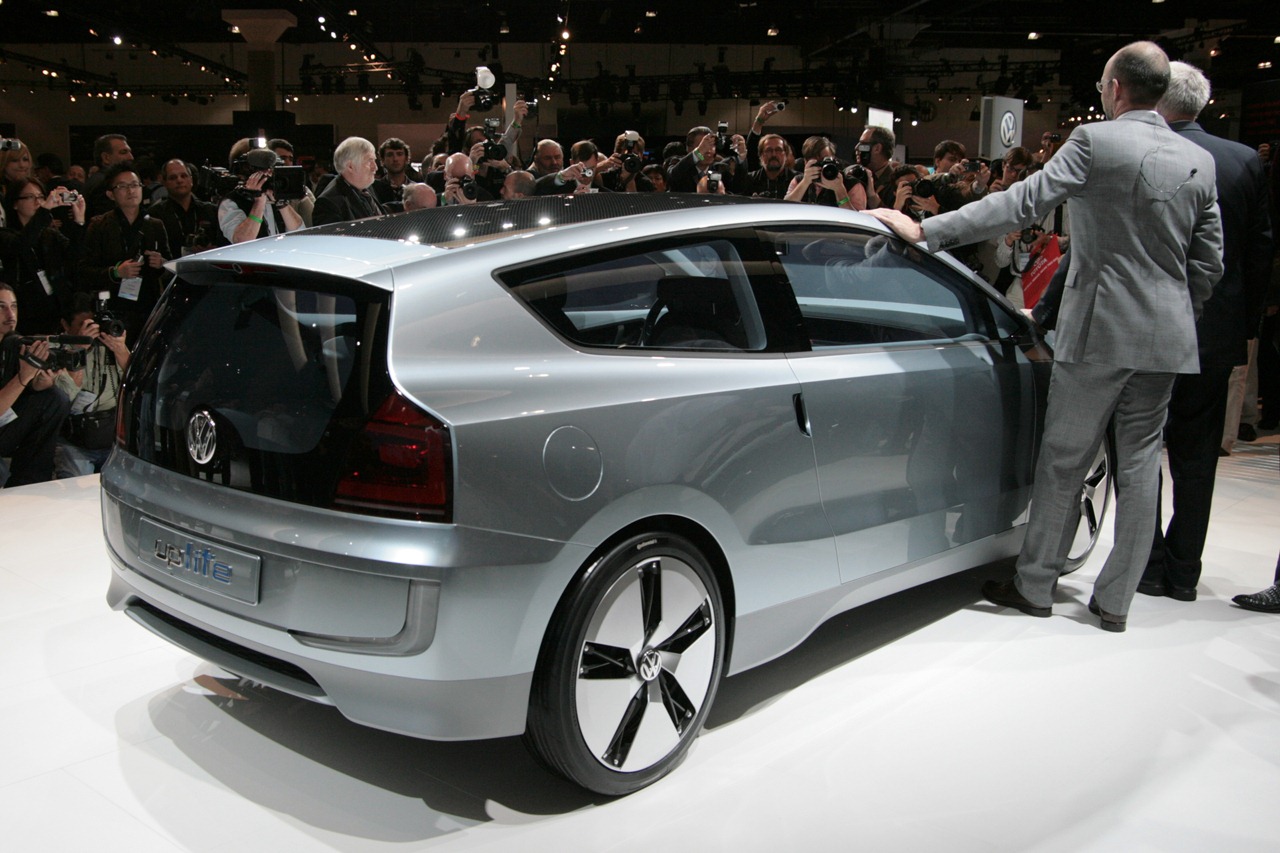
Volkswagen displays the UpLite, a 70mpg diesel hybrid in LA

Posted By on December 2, 2009

06-vw-up-lite-live

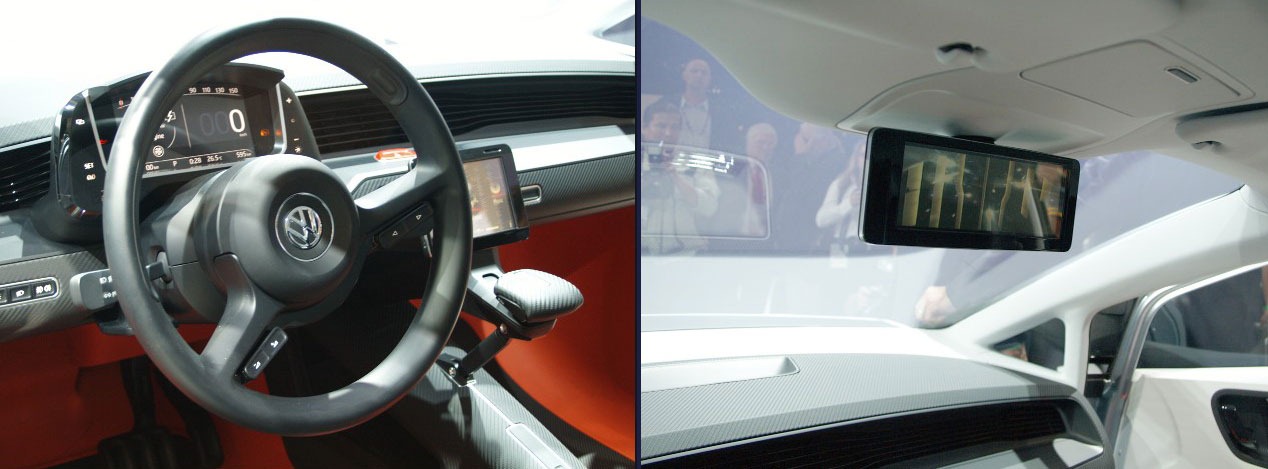
Volkswagen continues to entice those appreciating ‘green’ diesel vehicles with their UpLite concept at the LA Auto Show. The new design is said to use diesel electric combination to achieve 70mpg, while still offering a degree of comfort and styling. From the photos posted on Autoblog.com, the new VW also looks to be offering function for those wanting to bring along some luggage or the family pet. (Press release below)

vwupliteinterior

Wolfsburg, Germany / Los Angeles, CA — December 2, 2009 — Volkswagen – Europe’s strongest automotive brand – is setting standards worldwide when it comes to efficiency with its clean high-tech TDI and TSI engines. Now this is being followed up by latest coup at the Los Angeles Auto Show (December 4 to 13): the world premiere of the Up! Lite A progressive, fuel efficient and in all details cleverly designed four-seater with a hybrid drive. Combined fuel consumption: 2.44 l/100 km or 70 mpg/highway! No other car is more sustainable. With a drive concept consisting of a TDI (turbo-diesel), electric motor and 7-speed Direct Shift Gearbox (DSG) as well as top aerodynamics (Cd value: 0.237), Volkswagen is driving CO2 emissions down to a sensational 65 g/km. This makes the three-door concept the world’s most fuel efficient car – and from the perspective of its overall CO2 footprint the world’s most environmentally friendly four-seat car as well. Both technically and visually, the Up! Lite is a preview of the future. The image of the car body with its clean lines, as though sculpted from a block of aluminium, underscores just how fascinating a car tuned to aerodynamic perfection can look.

The ideal car for the daily commute to work

The technically challenging 2-Liter fuel consumption car might be launched globally. Many of the components of the 695 kilogram light Volkswagen are based on those of the future New Small Family, an entirely new model series that is already scheduled for market launch in initial countries at the end of 2011. The Up! Lite concept continues the Volkswagen strategy of offering high-tech and high-end quality in all of its vehicle classes, making progress affordable for every car driver. The Up! Lite was designed to be a versatile vehicle that makes trips into the city, commutes to work and naturally long trips as well significantly less expensive and more eco-friendly.

Hybrid drive enables electric driving

The centerpiece of the Up! Lite powertrain is the newly designed 0.8 TDI two-cylinder turbo-diesel engine with a power of 38 kW / 51 PS. Furthermore, the electric motor (10 kW) – designed as a pulse start module (starter, alternator and E-drive) – also reduces the load of the TDI, provides added propulsion (boosting) and works to recover kinetic energy (regenerative braking). During boost phases – e.g. in a quick passing maneuver – the TDI and E-motor combine for a total power of 48 kW / 65 PS. Incidentally, a version of the TDI used in the Up! Lite was also used aboard the L1 concept car that Volkswagen presented in September at the IAA Motor Show in Frankfurt.

In two of its operating phases, the hybrid drive of the Up! Lite was designed to operate without any TDI propulsion at all. First phase: In so-called coast-down, activated by the driver taking his or her foot off the gas pedal (car coasts, TDI engine is shut off). Second phase: Over shorter distances, e.g. in residential areas, the E-motor can power the Up! Lite all by itself. In this case, a lithium-ion battery supplies the energy. Since it is capable of pure electric driving, the configuration is classified as a full hybrid. Shifting work is handled by a 7-speed Direct Shift Gearbox (DSG) like the one used in the new Polo. Moreover, the Volkswagen is equipped with a Stop-Start system.

Comfort and safety without compromises

Naturally, on the Up! Lite there is nothing lacking in comfort or safety. ESP is on board, airbags are on board, ample space is on board, highly advanced information and control features are on board, and it is good to know that occupants are enclosed and protected by a highly innovative safety frame of aluminium, steel and carbon fiber. The Volkswagen concept has a top speed of 160 km/h (100 mph) and accelerates to 100 km/h in a respectable 12.5 seconds (0-60 mph in 12 seconds).

"Made in Germany"

Overall, the Up! Lite is a prime example of the art of innovative engineering with the "Made in Germany" seal. And indeed not only because of its efficient powertrain and lightweight body construction. Other examples include: The radiator grille that closes and opens automatically depending on the cooling needs of the engine ("active thermal management"); and instead of a classic rearview mirror, three cameras perform this job better and more aerodynamically; when the car is parked in the summer, hot air is vented to outside the vehicle ("passive park ventilation"); an "optimized Easy-Entry feature" enables extremely comfortable entry and exit from the rear seating area; longitudinal adjustments to the driver and front passenger seats automatically adjusts seat height as well; when folding the rear bench seat, the seatback is easily unlatched by folding the rear head restraints forward ("Easy Switch"); many vehicle features (including ventilation, Internet, telephone, MP3, video, telephone, trip computer, radio) are controlled centrally via an intuitive touchscreen with hand movement sensors.

Design of the world of tomorrow

Even the most innovative car must look good to really be fun. And the Up! Lite with its "Liquid Blue Metallic" exterior is fun. That is because the 3.84 meter long, 1.40 meter tall and 1.60 meter wide Up! Lite makes a futuristic, bold and – in its form – very independent appearance. It is a car that looks as though it were cast from a single mould. Compared to the E-Up! concept car presented at the 2009 International Motor Show (IAA) in Frankfurt, it is lower in profile and – to satisfy even more demanding aerodynamic requirements – it is longer, nearly reaching the length of the Polo (3.98 meters).

The styling itself portrays a compact vehicle that genuinely reflects its sustainable drive system and overall progressive concept. At the rear, the Up! Lite has the appearance of a distinctive hatchback sports car. As a result, the broad shoulder section is definitely reminiscent of the Scirocco. Furthermore, the look of the lower area is dominated by the large glass surface of the hatch, the LED rear lights and the rear fog lights (c-shaped) integrated in the bumper in typical Up! style. The counterparts of these lights are found in the front bumper as front fog lights. The car’s side profile has clean styling with markedly smooth surfaces. There are no edges except for the upper tornado line, the wheel wells and a connection line integrated there. The side cameras that replace the outside mirrors look like winglets on the wings of a cargo plane. A novel stylistic and technical feature: the 18-inch wheels are produced from a combination of aluminium and carbon fiber. That is because sports appeal and fuel economy do not need to be mutually exclusive.

Already thinking about tomorrow today

By the way: In Europe, Volkswagen is currently demonstrating that minimal fuel consumption can be realized in all segments today, in the latest versions of the Polo (3.3 l/100 km; 58 mpg/highway), Golf (3.8 l/100 km; 51 mpg/highway) and Passat (4.4 l/100 km; 48 mpg/highway).

Defective Christmas lights and the Lightkeeper Pro

Posted By on December 1, 2009

lightkeeperpro091201

I know that I’m not the only one ‘collecting’ tangles of miniature Christmas lights which grows each season as the decorations are packed and unpacked. I’ve vowed a number of times to either fix or dispose of the faulty and half lit strings. This year, knowing my repairman patience is nearing it limit, I’m giving one more heroic attempt at repairing them … this time armed with a new tool … the Lightkeeper Pro. Stay tuned to see if I’ve wasted $20.

Advice from shipwright and rigger Jerr Dunlap

Posted By on November 30, 2009

I’m archiving — and sharing — a good sailing advice blog and video series by shipwright and rigger Jerr Dunlap (@myboatworks) out in Marina del Rey, California — thanks Jerr. He has several great video “how-to” clips …  here are two on how to fit a Norseman Fitting.

The confusing world of Credit Scores

Posted By on November 29, 2009

I’ve blogged couple times on identity theft and credit reports and I thought was relatively up-to-date on on how credit reporting and ‘credit scoring’ works … but I was wrong.  I didn’t realize that the three major credit collecting and reporting companies all have their own “credit scoring system” on top of the relatively popular Fair Isaac Corporation’s “FICO” score (300-850) that most of us are familiar with. The fact that they do have their own ‘scoring’ systems which have different scales make it all the more confusing. (credit tracking) If that’s not enough, the three companies have also collaborated to create a VantageScore (501-990) which has a different scale as well.

vantageficoscores


This was particular interesting since when viewing a yearly annual credit report in order to monitor for identity theft. One of the optional choices available when ordering a ‘free’ credit report (for an added fee) is your credit score. These are the numbers most companies use in order to evaluate instant credit. Unfortunately unless you are requesting the FICO score (estimate your FICO score), you could be getting individual TransUnion, Experian or Equifax number … or the newly adopted VantageScore.  Although all give a picture of  credit health, the number doesn’t necessarily mean all that much if you’re not familiar with the scale.

transunioncreditscore

The FICO’s scale is a 300 to 850, while  the VantageScore goes from 501 to 990 and is graded A to F:

A: 901–990 | B: 801–900  | C: 701–800  | D: 601–700  | F: 501–600

More Information:

Escaping the Black Friday hoards

Posted By on November 27, 2009

Black Friday Lines at Target

My buddy and I have plotted our lunch driving today, and hopefully have MapQuest our route avoiding the day after Thanksgiving hoards … Black Friday. I think we’ve found a lunch spot and route free from retail stores …
🙂
Why is it called “Black Friday?”
It is the day retailers hope that they will move from red into the black, or begin turning a profit. It will be challenging this year … I wish them well.

Happy Thanksgiving and searching Internet TV with Clicker.com

Posted By on November 26, 2009

turkeygraphic Happy Thanksgiving and safe travel to my friends and family on the road.

We are enjoying a day of turkey and tasty food at my brother and sister-in-law’s house today, which is becoming a tradition.  Although I don’t say it often, I couldn’t ask for a better brother and if ask what I’m thankful for this year, it will be that “I have a brother like Ron.”

Thanksgiving in our house like many includes watching a little TV … particularly football … and although commenting on Clicker.com has little to do with football, it is a website suggesting for finding television programming clickerlogoon the Internet. So if you are searching for a particular show and can deal with watching it on the computer (I rarely do this), go to Clicker.com first to search for the program.

Ocean grown algae based biofuels

Posted By on November 25, 2009

The Discovery Channel is active in reviewing science research in alternative energy and can usually dice apart the ‘self-promotion’ of company researcher as well as combat the establish energy industry’s lobby efforts.  One industry that I advocate  is  ‘algae to biofuel fuel’ research. The benefit in using algae as a feedstock for biofuels is that it is not a food based product and generally can be produced in areas unproductive for food or grazing. algaeforfuelMost of the research I’ve read have proposed desert locations or high density vertical rigs. Still, we’re not all that much closer to producing anywhere near the millions of gallons inexpensively enough to to compete with comparable traditional biofuels, existing petroleum oil or the latest in grid-charged electric vehicles. The potential is huge considering the carbon-neutral nature of growing and using biofuels as well as using existing diesel technology and an algae-biodiesel to petroleum diesel blend. Although other technologies are focused primarily on personal transportation, a biodiesel fuel made from algae could be adopted with minimal infrastructure change and little to no change in diesel technology. That said, the challenges in finding an optimum strain of algae and growing medium to scale to the size of our energy appetite is challenging — so how about growing the algae we need for fuel in the ocean?

Could cheap algae oil power our energy future?
Production on land is expensive, but costs could go down if brought to sea
By Cristen Conger, Discovery Channel

Although algae is currently the most energy-dense biofuel source, the cost of producing algae oil is prohibitively expensive.

The U.S. Department of Energy estimates that the biofuel would cost around $8 per gallon at the pump. Other experts have even projected prices of more than $50 per gallon because of inefficient production and harvesting methods.

However, a team of engineers plans to investigate whether algae commercially grown in the ocean on specialized platforms could reduce the high costs of biofuel production, potentially bringing our energy economy one step closer to shifting from fossil fuels to renewable resources.

Kansas State University engineer Wenquiao Yuan and his colleague think that growing algae on floating, acre-sized platforms in the ocean could dramatically reduce expenses associated with algae oil production by providing free sources of sunlight, nutrients, controlled temperature and water.

"I think the major reason (to grow algae in the ocean) is cost," said Yuan. "Right now, on land, in ponds or photobioreactors, algae-based biofuel is just too costly."

To start, the engineers must find an oil-rich algae strain and the right type of surface material and texture to promote maximum growth.

"Algae naturally attach to some substrates; however, for cost-effective production, that’s not enough," Yuan told Discovery News.

Unless the platform can grow algae several millimeters thick, it would be too difficult to scrape off the biomass for processing into oil.

So far, the algae have responded well to dimpled stainless-steel. But the engineers still don’t know why algae grow differently, depending on the type of material and surface texture.

Understanding those "mechanisms of attachment" is the goal of the first portion of the research, which is funded by the National Academy of Sciences (NAS). From there, the engineers will likely test their platform system in a smaller pond environment and then take it offshore.

However, the ocean environment could present some unavoidable problems.

"As far as growing algae in the ocean — if they’re in a containment system — the biggest problem is going to be weather," said Richard Sayre, a leading expert on algae biofuels and the director of the Donald Danforth Plant Science Center in St. Louis.

"If you have a storm, how are you going to prevent that system from being destroyed, essentially?" Sayre asked. "There’s virtually no place in the world that’s free of storms."

Yuan said that storm-proofing the system is a problem he has yet to tackle. But considering that the algae biofuel industry is still 10 to 15 years away from offering high volumes of affordable biofuel, the Kansas State engineers should have ample time to work out the kinks.

"Given the state of where we are right now with very small pilot plants and demonstration facilities, the biggest hurdle we’ll have to get over is: Will a large-scale demonstration plant be able to hit its target of the $2 to $4 gallon of oil?" Sayre said. "If we can achieve that, I think it’ll take off in a very real way."
© 2009 Discovery Channel

Retail gasoline has risen nearly 40 percent this past year

Posted By on November 24, 2009

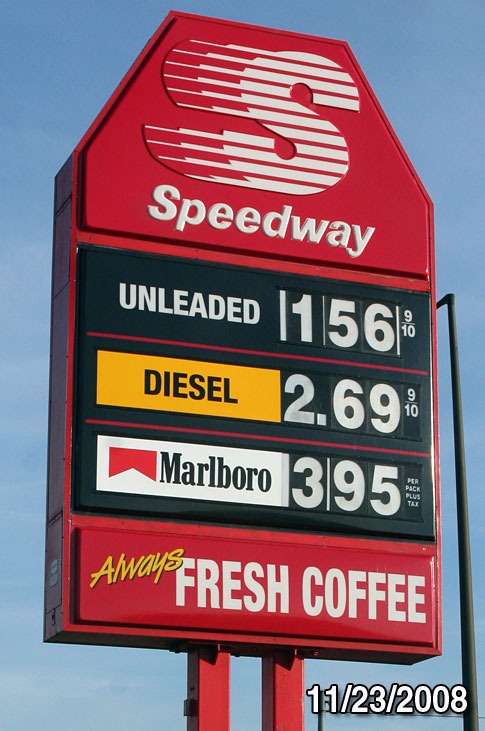
gasoline156_081123 Although I’m not complaining about fuel prices considering our weak dollar — especially as we roll into a week of heavy travel — I did find it shocking that regular unleaded gasoline prices are nearly 40% higher today than they were last year at this time. (photo left taken 11/23/2008 in Monroe, OH)

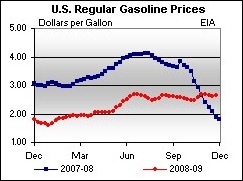
Of big concern is that the over $4.00/gallon gasoline highs (nearly $5.00/gallon for diesel) eiadoaretailgasprices2007-2009during the summer of 2008 triggered the current recession, is that we have done little to prevent a repeat. We can only hope that it’s petroleum again … it could be a different commodity … the U.S. dollar.

Interestingly the extreme fluctuation in commodities are excellent opportunities for those with high risk tolerance to make money, at the same time the commodity uncertainly can be challenging for those who are investing conservatively and have savings pinned to the value of the dollar.

2010 Volkswagen Jetta SportWagen TDI Road Trip

Posted By on November 23, 2009

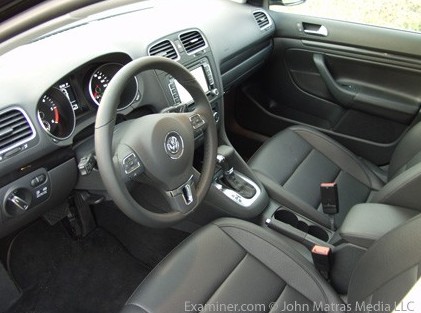
Interior VW Jetta SportWagen TDIJohn Matras, Auto Review Examiner, posted a great write up on his Road Test of a 2010 Volkswagen Jetta SportWagen TDI. It’s an enjoyable and informative read highlighting a few lessor known features on Volkswagen vehicles.

“The Jetta SportWagen’s front seats must be moved forward to lower the rear seats but then can be moved back into the regular driving position. The front seats, however, have an odd semi-power operation. The seats slide forward and aft manually but have power tilting seatbacks. It’s a theme reprised in the heating/air conditioning controls. Unlike fully automatic temperature controls which regulate temperature and fan speed, only the temperature can be maintained automatically on the Jetta’s HVAC system. The fan speed is set manually.

Related Articles

READ Full Article

Desultory - des-uhl-tawr-ee, -tohr-ee

  1. lacking in consistency, constancy, or visible order, disconnected; fitful: desultory conversation.
  2. digressing from or unconnected with the main subject; random: a desultory remark.
My Desultory Blog