 Sonex Aircraft, LLC and AeroConversions Unveil E-Flight Initiative for Sport Aircraft Alternative Energy Research & Development
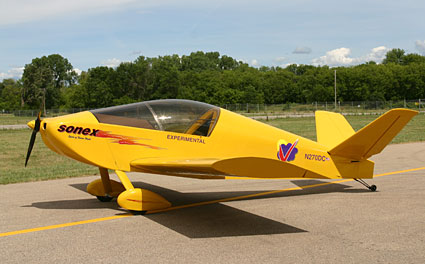
At a press conference held today on AeroShell Square at EAA AirVenture Oshkosh 2007, Sonex Aircraft, LLC and AeroConversions Products made the official unveiling of the E-Flight Initiative, pioneering alternative energy research & development for sport aircraft, with an informational forum to follow tomorrow, July 25 at 11:30 am in AirVenture forum building 11. The unveiling included a proof-of-concept prototype electric powerplant installed in a Waiex airframe and the event was kicked-off with opening remarks by EAA President Tom Poberezny.
In 2006 Sonex Aircraft, LLC’s research and development team began work on what is now called the “E-Flight Initiative.†E-Flight is a push to explore viable alternative energies for powering sport aircraft and improve the efficiency and performance of current products and technologies to keep aviation affordable for the average pilot, and to keep recreational aviation available to future generations of pilots.
The E-Flight Initiative has three major areas of focus, taking a diverse approach to the problems of rising energy costs and an ailing environment to provide near, intermediate and long-term green powerplant solutions:
• Electric Power: Development of a proof-of-concept electric motor powerplant, controller, battery pack and charging system with the goal of determining the feasibility of a marketable line of Sonex and AeroConversions products. This project represents the most significant portion of E-Flight, in terms of investment, risks, challenges, and possible gains.
• Ethanol Fuel: Investigation of converting the AeroConversions AeroVee 2.0 powerplant for use of ethanol-based fuels in order to accommodate ethanol-blend auto fuel and/or pure ethanol to both increase performance and efficiency and to ensure that Sonex and AeroConversions products are prepared for the possible discontinuation of 100LL or similar aviation fuels.
• Efficiency Enhancement: Development of other enhancements to the existing AeroVee 2.0 and other existing and future AeroConversions products to increase fuel efficiency and performance for the sport pilot. These enhancements will be built upon an already strong foundation, as an AeroCarb equipped AeroVee powered Sonex aircraft already boasts a fuel economy of over 42 miles per gallon when cruising at 150 mph TAS.
Although E-Flight has been shrouded in strict secrecy to ensure intellectual property protection of its more cutting-edge components, public unveiling of E-Flight at EAA AirVenture Oshkosh 2007 has been a vital key to the Initiative since it’s inception. E-Flight is not only intended as a “push†for the Sonex R&D team, but also to help push the rest of the recreational aviation industry toward similar goals in the interest of preserving the future of our sport. Additionally, the public AeroShell Square unveiling and subsequent forum are intended to attract potential sponsors to help secure Sonex Aircraft, LLC and AeroConversions’ ability to continue E-Flight Initiative research and development.
“Our Initiative will broaden and refine our vision of what efficient, low cost sport aviation will be for the generations to come. It should serve as a beacon to attract serious sponsors for this important effort,†remarked Sonex Aircraft, LLC founder and President John Monnett.
• Electric Power; project history: Conceptualization of an electric powerplant project actually pre-dates the 1997 founding of Sonex Aircraft. In 1994, John Monnett and Pete Buck devised the concept to design, build, and fly a small electric powered and manned aircraft that would be capable of a short duration flight in order to set or establish speed records for this new class of aircraft. Pete Buck prepared a detailed feasibility study for the project dubbed “Flash Flight”. Buck, who works full time as an engineer at Lockheed Advanced Development Company “Skunk Works” and is Sonex Aircraft’s Chief Engineer, also spent two semesters of his engineering degree analyzing and building the battery/power system for a Hybrid Electric Vehicle (HEV) sponsored by Ford Motor Company.
Buck’s study concluded that Flash Flight was feasible using many “off the shelf†components at relatively little risk. The aircraft would fulfill it’s record-attempt mission, however, it would only have an endurance of approximately 10 minutes. Other tasks associated with the founding of Sonex Aircraft, LLC took priority, and Flash Flight never came to fruition.
Since 1994 and Flash Flight’s feasibility study, the popularity of radio controlled electric powered toy vehicles, gas-electric hybrid cars, and the boom in wireless electronic devices such as cell phones and PDA’s have pushed the state-of-the-art in battery, electric motor and controller technology. Brushless DC cobalt motors are now lighter and more efficient. Advances in microprocessors have allowed motor controllers to be smaller, lighter and more efficient. Lithium Ion and Lithium Polymer battery technology has pushed the endurance, efficiency and power output of electronic devices, while shrinking in physical size and weight. The Sonex R&D team concluded that the time for this endeavor had arrived.
• Electric Power; a new mission: The contemporary E-Flight electric project will benefit greatly by the maturation of technology since our initial studies. Using a purpose-built AeroConversions brushless DC cobalt motor, controller, and highly efficient battery and charging system, the E-Flight electric systems will be able to power a larger aircraft to higher top speeds with greatly increased endurance. E-Flight’s proof-of-concept prototype will use the flight proven Waiex airframe, flown single pilot only, so that the emphasis can be placed solely on powerplant research and development. Initial top speeds will reach approximately 130 mph, and endurance is expected to range between 25-45 minutes or longer, depending upon power usage on each individual flight.
The initial emphasis for the E-Flight proof-of concept aircraft has been shifted away from immediate pursuit of FAI speed records, although the possibility remains that those records could be obtained in short-order after successful first flight. With the advanced state of the technologies concerned, the goal of the project is to develop and prove the application of the technology and pave the way for near-term electric powerplant Sonex and AeroConversions products for sale to the sport aviation marketplace and beyond.
The current state and growing popularity of electric powered model RC aircraft leads the layman to assume that an electric powered aircraft of this type is simply a matter of hooking a bigger battery to a bigger motor, charging it up in an hour or two and taking-off. While that is essentially true in raw principle, the reality of this project is that scaling-up these technologies in a viable manner presents significant challenges.
• Electric Power; AeroConversions Electric Motor: Brushless DC cobalt motor technology has advanced significantly since 1994’s Flash Flight study, allowing the design team to now consider their use, however, just like before, a suitable brushless DC cobalt motor of this level of power output with an acceptable size and weight does not exist and can not be built and provided by a third party vendor without incurring unacceptable costs. As a result, the design team, in collaboration with Bob Boucher of Astro Flight, Inc., has designed and built a completely new AeroConversions motor.
This motor is the most powerful, lightest-weight, and efficient unit of this type ever produced. It is a 3 phase, 270 volt, 200 amp motor that will be over 90 percent efficient. It uses elegantly designed CNC machined anodized aluminum and nickel-plated steel parts in combination with “off the shelf†bearings, races, snap rings, magnets, etc.
The prototype AeroConversions motor is slightly larger than a 35 ounce coffee can and weighs approximately 50 pounds. The motor is a modular, scalable unit. The motor core’s design has modular sections that can be reduced to a lower-output, smaller motor (shortened in length), or added upon to make a larger motor with a higher power output.
• Electric Power; AeroConversions Electronic Motor Controller: Electronic motor controllers for brushless electric motors are quite commonplace today, mostly used in the electric RC market. A suitable controller for a 270 volt, 200 amp motor does not exist. Running such high current requires much larger components. Although there are a handful of third party vendors who could design and build the appropriate controller for this project, it would take 6-7 months lead time and cost 20-50 Thousand Dollars. The time and cost associated with acquiring such a controller was deemed unacceptable and the research and development team, in cooperation with a key electronics expert, began designing a proprietary AeroConversions electronic motor controller.
The controller can commutate the motor in two different ways: using Hall effect sensors to determine the magnet core’s position in relation to the coils, or using the motor’s back-EMF to sense rotor position, eliminating the need for Hall sensors. The AeroConversions controller will initially employ a Hall effect sensor-equipped motor, but back-EMF controlling will also be explored to potentially further simplify the AeroConversions motor design. The AeroConversions controller will also provide in-cockpit monitoring of battery power levels to the pilot.
• Electric Power; AeroConversions Battery System: Most contemporary electric powerplants for gas-electric and pure electric cars and previous generations of RC electric vehicles utilize Lithium Ion battery technology. While much improved in power density and discharge rate over lead-acid and NiCad batteries, Li-Ion batteries still do not offer enough power discharge-to-weight ratio to support an electric powerplant for an aircraft that is based on battery power alone and has a market-viable endurance. Newer RC electric vehicles, cell phone, laptop computers and other mobile devices have been moving toward Lithium Polymer cells. Li-Poly battery cells can safely discharge at a rate of 25 times their capacity, or “25c.â€
With all the extra energy of a Li-Poly cell, however, comes extra volatility. The E-Flight design team has engineered and constructed 10 battery “safe boxes†intended to contain 8 Li-Poly battery packs per box and consolidate their charge/discharge and balancing wiring into two sets of multi-pin connectors. The Boxes will accommodate natural cell expansion and contraction while safely securing each cell pack and facilitating cell cooling with “cooling foam†padding. Cooling will further be aided by heat sink surfaces on each box that will have cooling inlet air directed over them. Additionally, the boxes are designed to contain and safely direct fire or explosion within the box through a “blow hole†in the box that will be connected to a small exhaust manifold.
For the proof-of-concept aircraft, the battery boxes will be removed from the aircraft and charged individually. The charging units need to be configured to safely keep all cells balanced during charging. Lessons learned from the proof-of-concept systems will lead to the design of more advanced charging and balancing systems allowing safer battery handling by consumers, including a single-plug charging system that may remain in the aircraft at all times, featuring easy exchange of battery boxes to enable consecutive back-to-back flights in a short period of time by pilots who wish to invest in spare batteries.
Future generations of safer, more powerful Li-Poly batteries show the near-term possibility of further extended flight duration while personal electronics and transportation will undoubtedly continue to push improvement of the technology in years to come.
“By developing a viable electric motor and controller system for this proof-of-concept aircraft, we will open a door to future flight that we have only been able to dream of,†comments Monnett. “Self-launching electric powered gliders already exist. The potential of electric power goes beyond that single use and relates directly to sport flying, aerobatics and high altitude flight in purpose-built airframes. It is essential that our proof-of-concept vehicle is a conventional aircraft that the majority of aviation enthusiasts can relate to.â€
One remarkable reality about the E-Flight electric aircraft project is that, by necessity, the entire R&D project for the proof-of-concept stage of the project will cost less than the price of the average ready-to-fly LSA aircraft available today. This project undeniably highlights the spirit of EAA in that it is truly a grass-roots effort to push technology for advancement of our sport and improvement of our planet’s ecosystem and it has been accomplished, not by a large aerospace firm or government agency, but by EAA members on an extraordinarily cost-effective budget.
• Ethanol Fuel: Ethanol Blended Fuels have become increasingly popular as most auto makers are now producing “Flex Fuel†cars and trucks. This has led to higher supplies of ethanol in the United States making this fuel easier to find at a rapidly expanding number of locations.
Sonex Aircraft has begun its own scientific testing to optimize the AeroConversions AeroVee 2.0 for the use of ethanol-based fuels to take advantage of the lower emissions, affordable cost, and greater horsepower. As part of the testing, Sonex Aircraft has partnered with Renew Fuel Stations, an Oshkosh-based company that markets and distributes ethanol-blended vehicle fuel such as E85 – a blend of up to 85% ethanol with 15% gasoline. Renew currently operates 11 fueling stations across Wisconsin that feature renewable-based fuels for all gasoline engines and is an industry leader in the expanding retail market for these fuels.
The AeroVee 2.0 is equipped with the versatile AeroCarb and an ignition system that allows the engine to be configured with higher compression ratios to optimize the performance potential of ethanol-based fuels. Testing has already begun with an AeroVee engine run at a higher compression ratio for E85 and other blends. This testing will be expanding as the Sonex research and development team explores a range of engine and fuel variables to determine the optimum combination to both maximize fuel economy and power output.
• Efficiency Enhancement: The Efficiency Enhancement component of the E-Flight Initiative represents the continuation of the Sonex and AeroConversions commitment to providing the Best Performance Per Dollar to the Sport Pilot. As fuel prices increase, performance and efficiency are becoming more critical in allowing average-income pilots to continue to afford flying. Driven by the E-Flight Initiative, consumers will see a new generation of exciting AeroConversions products targeted at optimizing performance and efficiency in a wide range of aircraft. More details about the progress of E-Flight Initiative projects will be released in the months and years ahead. Sonex Aircraft, LLC invites all interested potential sponsors to contact us with information about how your company or organization can help the E-Flight Initiative research & development team take a leadership role in pioneering technologies to secure the future of recreational aviation. All available project information and updates will be posted to the E-Flight Initiative home page: http://www.AeroConversions.com/E-Flight
Sonex Aircraft, LLC is a rising star in the experimental kit aircraft industry, providing a series of Sport Pilot eligible kit aircraft along with the AeroConversions line of products which include the AeroVee engine, AeroCarb and ancillary aviation products. Sonex Aircraft’s Sonex and Waiex sport planes, and the Xenos sport motorglider offer outstanding performance in an easy to build, easy to fly kit package that can be purchased and completed with full technical support at an unrivaled price. Sonex and AeroConversions continue to invest heavily in developing new products. Our team is committed to providing simple, elegant and low-cost solutions for sport flying. Simply put, Sonex Aircraft and AeroConversions products provide the best performance per dollar. Check us out at www.SonexAircraft.com


 Five of us went to the
  Jeff Dunham’s
  Those who know my daily routine see me nosing around in the stock market — sort of a hobby. Yes it is a relatively risky business, but if managed wisely one’s investments can mature at a significantly better rate than many ‘pay for’
 In January I
  The Ford Escape SUV has been a popular vehicle from the
  Along with the three Volkswagen V-10 Touareg diesels, Jon Hamilton and his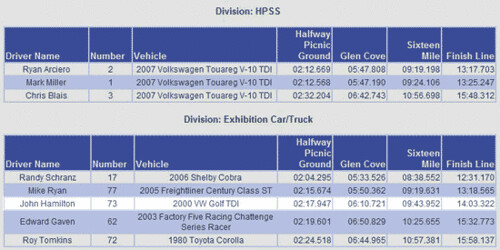
 About a decade and a half ago I remember