Part 2: Fuel Prices
Posted By RichC on April 26, 2006
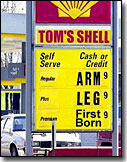 In part two of ‘Fuel Prices‘ adds a little more than just the ‘fear’ and ‘greed’ theory to why we’re seeing $3.00 gasoline. Its appropriate today since President Bush is talking and getting involved with a little pressure from his party no doubt. I suspect many Republicans are having election fears knowing citizens will blame the party in control for whatever happens. The more I listen and read, the more opinions I’m finding — what’s the average American to think? Is it ‘fear’ — concern over Iran — or ‘greed’ — those money grubbing oil companies? Perhaps trying to find a single something to blame is where we’re going wrong?
Editorials offer a few interesting opinions, but most seem to be attempting to over simplify the problem; the blame game. Bill O’Reilly is one that has been outspoken believing its the oil companies and their unpatriotic greed. I usually enjoy “The O’Reilly Factor,” but his finger pointing in my opinion is over simplifying the problem; solely blaming the oil companies is misleading his audience. Hopefully his faithful viewers will realize his opinions aren’t always 100% accurate and that occasionally even O’Reilly can go off the deep end.
Monday night Mr. O’Reilly had an interview segment with Mac Johnson, a columnist that wrote a piece ripping O’Reilly for his views that high gas prices were the result of a “cabal of Big Oil fat cats.†Mr. Johnson insinuated that Bill O’Reilly has adopted a conspiracy theory attitude that oil companies are gouging consumers and that’s what is responsible for high gasoline prices. Pointing at Big Oil isn’t all wrong, but doesn’t tell the whole story either. I’m not planning to stick up for oil companies, but Bill O’Reilly doesn’t seem to understand the purpose of futures trading in spreading risk when dealing with commodities such as crude oil.
One of the interesting tidbits that came from Mac Johnson is his explanation as to what effects the price of our gasoline. He illustrated this in a graph that charts the four major components that impact the price of gasoline. First there is the stable and relatively consistent ‘tax’ that is set by government — taxes on gasoline average a bit over 40 cents per gallon. Second is the distribution and marketing cost per gallon which is shockingly at nearly at a 3 year low at only 11 cents per gallon. Third is a very volatile component — refining, which has been up and down and was heavily affected by hurricanes this past year. It currently is down from its high of around 80 cents per gallon but still high. (see graph) Finally the fourth and large component in gasoline is the crude oil itself. Johnson stresses that over 3 years we have seen a 91% increase in crude oil, from 70 cents to a $1.34 per gallon. It is by far the large piece of the pie affecting the price we pay at the pump and a 91% move is significant. Note … the refiners are not making much more, the distributors are actually making less, and Uncle Sam is relatively steady with his taking of ‘taxes.’
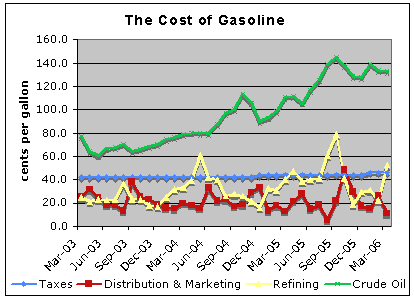
I believe most will agree with Mac Johnson’s summation that cost at the pump comes mostly from the crude oil price itself and that crude has created most of the rise in gasoline price. If that is true, why is crude so high?
O’Reilly falsely believes it is primarily some collusion on the part of the oil companies, but in reality the market pressures are causing prices to rise. The demand for oil in economically growing and populated countries like China and India are a big and increasing oil users. Here in the US, we’ve done our part to consume as well, although we always have. This demand is high enough to put a premium price on available crude oil at a time when political unrest around producing nations is high. Iraq, Iran and their surrounding oil producing neighbors are tenuous places as we are all aware, and the number five exporter in the world, Venezuela is not exactly governed by a friend to the US.
The climate in our own country for producing more oil isn’t exactly booming either. Old wells are running slow, new wells are environmentally challenging and both the cost and risk of exploration is relatively high for speculators. Speaking of speculators, that is exactly where the largest recent increases have come from even if supplies are currently adequate.
The futures market is designed to take the burden off the suppliers as well as the buyers by sharing the risk. A trader of contracts either guarantees or is guaranteed a future price, depending on the side of the trade he is on. If political ‘future’ looks unstable or risky, traders will bid prices up out of ‘fear.’ They fear crude oil supplies will be disrupted or short and that it will drive prices higher when it comes to fulfill contracts. Remember they have locked into the price they will sell or buy crude oil based on a future date … the better be close to the right price. Even the smallest price change either way on a single contract have huge leveraged repercussions either for a profit or loss. This unknown or unstable environment is in large part what is causing our current run up. I one is to point a finger, its currently the political unknown around what Iran and the US are going to do. (let’s hope this price spike doesn’t cause a stumble in the US economy in the mean time as that will add fuel to the fire … more ‘fear.’)
For the most part I’ve commented positively on Mac Johnson’s points as he does understand the oil business and futures markets. Unfortunately on the subject of alternatives to oil, he shows is bias told the petroleum industry. Alternatives, conservation and right-sized vehicles can play a big part in slimming down our oil appetite here in the US. I’m not sure we can ‘grow’ our way out of our petroleum addiction, but I do believe it will play a part. Being clean and renewable is and added bonus and is an appropriate domestic alternative to the finite supplies of petroleum. Ethanol from perennial crops other than corn and biodiesel from oil producing plants of all kinds will be able to offset a significant portion of our transportation fuels even though the agricultural industry is primarily supporting ‘corn’ and ‘soybeans.’ Technology will also play an important role as hybrid, plug-ins, fuel cells and hydrogen continue to advance and improve. Let’s not discount them in our nation’s long term planning.
In summary when placing blame, let’s not let the individual citizen off the hook either. We are a gas guzzling people. Take a look even with $3.00 gasoline at how many quick trips each of us make. Look at how many large vehicles (the SUV craze) are on the road commuting from suburbs with one person everyday. Many of us are not doing our part to pitch in and “save-a-gallon.”
 Two totally different topics … “
 I spotted a Volkswagen Jetta advertisement that reminds me of the Volvo ads … stressing safety.An accident can happen at anytime and that selecting a car that is light and fuel efficient might not always be the wisest choice. Realizing just how much I spend on insurance “just in case” … perhaps a few dollars toward a safer vehicle isn’t a bad idea either?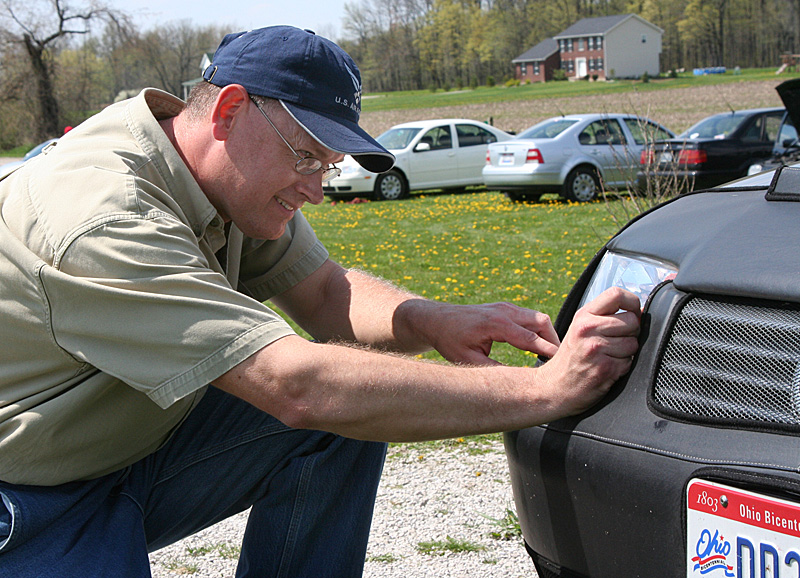


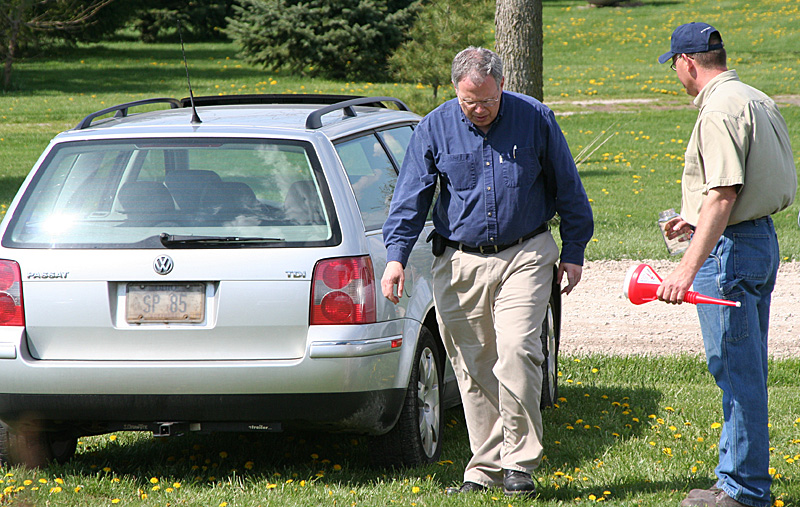


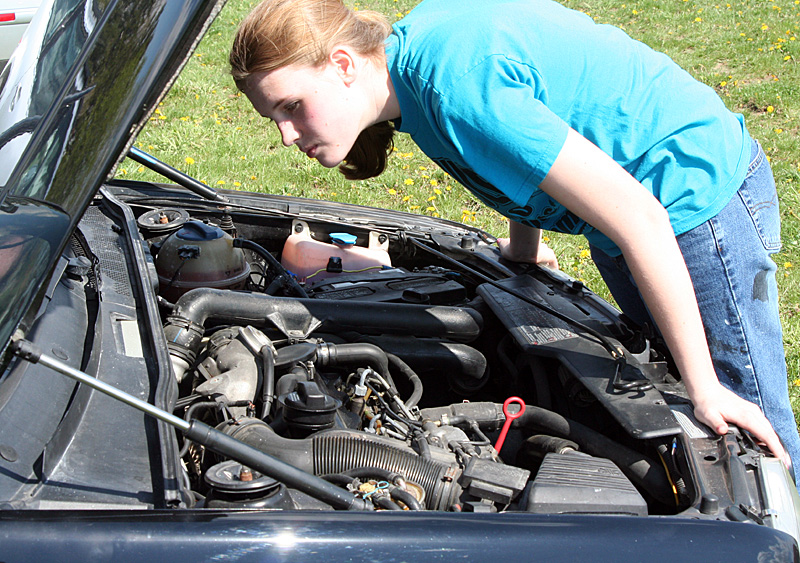
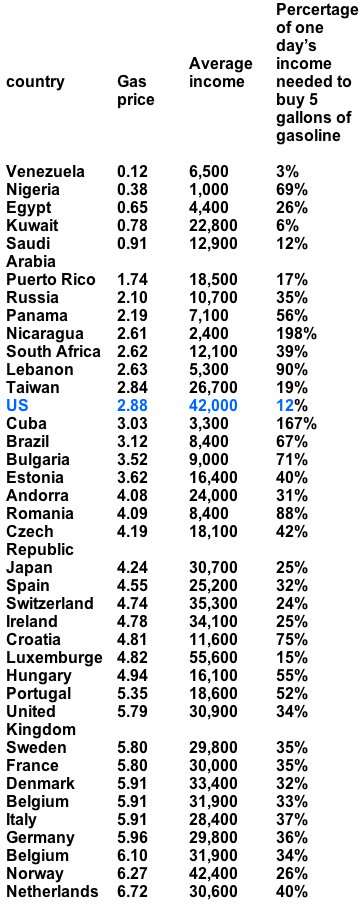
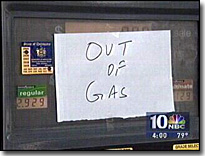 The subject is on everyone’s mind once again … Fuel prices. What are we doing about it and is it really a problem of our own making? As several east coast gas stations put the ‘Out of Gas’ signs back on their pumps, Americans are getting worked up once again over potential shortages and the higher price of oil. Crude has been hitting highs at over $70/barrel (over $75 today), but most analysts indicate our stockpiles and inventories are in good shape. “Its the uncertainly with Iran” one Future’s trader commented, “its not a matter of IF we go head to head with Iran over their nuclear program, its WHEN.” I suspect that fear in this case, mixed with a little greed, is what is triggering $3+ dollar gasoline and diesel.
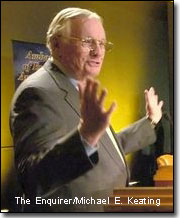 Local resident, retired University of Cincinnati Professor and astronaut Neil Armstrong made a rare appearance along with John Glenn,
 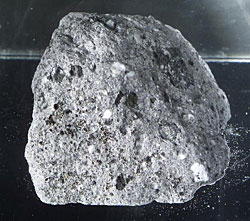 Armstong said, “I was the strange creature that kidnapped Bock from his homeland and brought him to this strange, new and still-changing planet. I can’t help feeling that I owe him an apology or at least an explanation.” That explanation, he said, would be that humans “want to know where they’ve been and to know better where we’re going.”
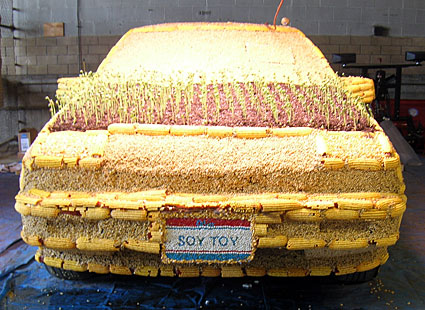
 Since taxes are finished, I finally had a few minutes to tinker with