Cheaper Biodiesel Catalyst
Posted By RichC on November 16, 2005
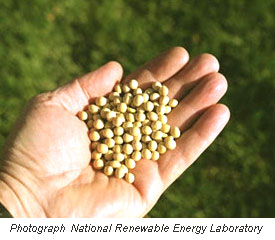 As noted in the journal Nature, Japanese scientists may have found a cheaper and more efficient way to produce “biodiesel.” This breakthrough could reduce the cost and improve the efficiency just as the demand for the cleaner, greener fuel is increasing. Any vegetable oil can become fuel, whether as ethanol or biodiesel, but for the more efficient diesel, the quality is not sufficient until its fatty acids are converted to chemical compounds known as esters. Currently the acids used to convert the fatty acids are on the expensive side when compared to petroleum diesel products. The paper is entitled:
Green chemistry – Biodiesel made with sugar catalyst
Masakazu Toda, Atsushi Takagaki, Mai Okamura, Junko N. Kondo, Shigenobu Hayashi, Kazunari Domen and Michikazu Hara
Although only 2 percent of automobiles in the US are currently diesel, there are many personal vehicles around the world are powered by the efficient diesel internal combustion engine including 40% of personal vehicles in Europe. Also trucks, trains, ships, farm and construction equipment are almost always powered by the durable and long running diesel engine, which by the way was design originally to run on vegetable oil. (Peanut Oil by Rudoph Diesel)
Michikazu Hara, of the Tokyo Institute of Technology in Yokohama, Japan, and his colleagues estimate the cost of the catalyst to be one-tenth to one-fiftieth that of conventional catalysts. This breakthrough could provide cost savings on a large scale because the technique could easily be adopted to current biodiesel refineries.
With current demand for fuel increasing, and biodiesel production on the rise (estimating 75 million gallons in 2006 or tripling 2005 production -National Biodiesel Board) any improvements in production efficiency and cost will be huge. Currently the cost to produce a gallon of biodiesel is higher than the petroleum counterpart, but many including congress and the Whitehouse have endorsed it as an alternative. Tax incentives for ‘blenders’ are given substantial credits to use biodiesel blends as a way to reduce dependency on foriegn imports and encourage continual improvements in the processing infrastructure as demand rises.
The advantages of biodiesel are many; it is renewable, domestic, clean and can be based on a variety of vegetable feed stocks. Some early fleet reviews have also indicated long term maintenance improvement, stay tune for more on this. The current US feed stock is primarily midwestern grown soybeans (and recyled cooking oils), Canada is promoting Canola and in Europe the standard is Rapeseed. Many biodiesel advocates promoting biofuels see the day when algae-based fuels will be a new industry and could out produce any other feedstock. (great for those concerned that traditional farm produce will be used for fuel?) An excellent PDF paper can be downloaded (right-click/save as) and is well worth reading through … it is enlightening for those questioning just how much petroleum that we can displace.
Environmental groups are also praising biofuels as a way to reduce carcinogentic emissions and polutants associated with petroleum diesel fuel. The Department of Energy’s Clean Cities program has been at the forefront in encouraging biofuels and just recently celebrated “Beyond a Billion” day – day in which the 88 Clean Cities mark displacing 1 Billion gallons of petroleum with alternatives. (see my post regarding our Cincinnati based event)
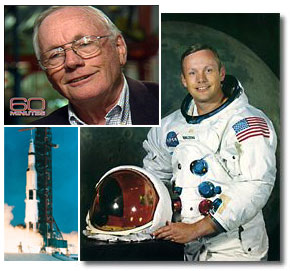 For many baby boomers, “
 What made this interview by Ed Bradley unique is that the first man to walk on the moon has been relatively camera shy about his celebrity status. Until this interview Armstrong has not not made many appearances, preferring to live quietly near Cincinnati, Ohio. A biography has recently (published 10/2005) been written by James R. Hanson, title “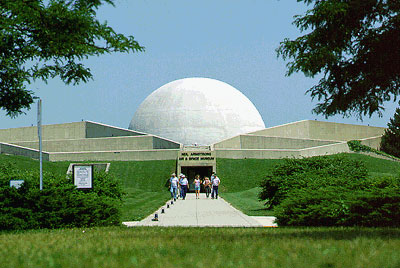

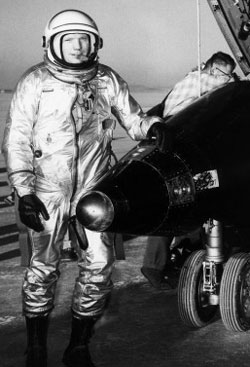 Armstrong received his degree after the war at Purdue in Aeronautical Engineering in 1955 and earned a masters degree from the University of Southern California a few years later. After school, Armstrong became a civilian test pilot for the NACA which was the predecessor to NASA and worked at Edwards Air Force Base, California. His work in high speed flight gave him seven flights in the North American X-15, reaching an altitude of 207,500 feet in the X-15-3 and a speed of Mach 5.74 (3,989 mph) in the X-15-1. He left the Flight Research Center with a total of 2,450 flying hours in more than 50 types of aircraft.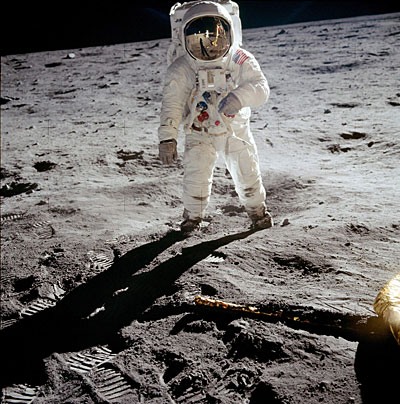
 First … I like Bill O’Reilly and the Fox News program “
 UPDATED 11/14/2005
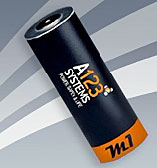 A123 is a “geek-name” that comes from a mathematical formula describing the interaction between nano-scale materials. It was then used to name a company based out of Watertown, MA founded by an MIT professor.
 Last night I watched the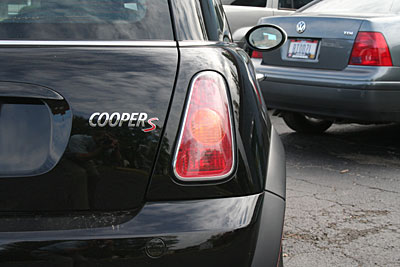
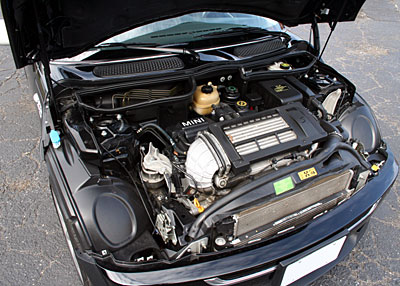
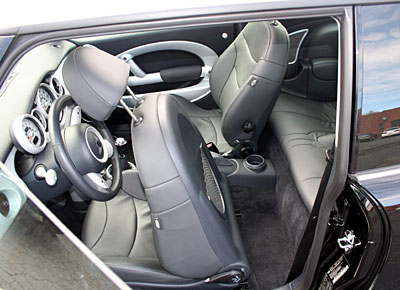
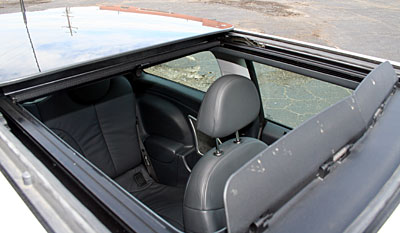
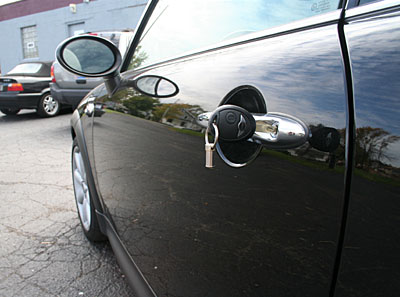
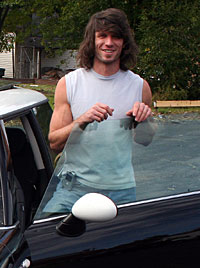 John was quick to toss me the keys and let me zip around some corners … and ‘zip’ is the optimum word.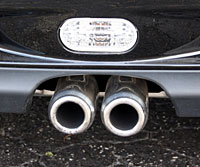




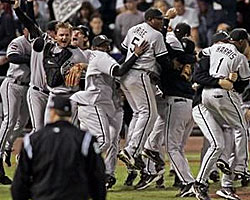 Jermaine Dye’s single was all that was needed for the White Sox to complete the sweep of the Houston Astros. Last night’s game was a defensive nailbiter with outstanding pitching and World Series defensive play by both teams. Dye’s 8th inning single put Chicago White Sox up 1 -0 and gave Sox fans their first World Series title in 88 years. (1917) The Astros became the 19th team to suffer a championship sweep while the White Sox made their first Series appearance since 1959 in convincing style.