A Political Lesson from the Master

Posted By on June 9, 2005

Greta Van SusterenPresident Clinton interview by Greta

Monday and Tuesday night of this past week, I watched pieces of the two part interview that Greta Van Susteren had with President Clinton. It was pretty much a ‘fluff’ interview, yet I appreciate the respect some reporters give to our presidents. All in all it was a lesson that Howard Dean and many democrats could use in how to grow and unite their party. (we would all benefit)

President Clinton did a masterful job of politely dancing around critical comments, as usual. He was able to communicate the failures and shortcomings in competing with Republicans in the past couple of elections. I saw some of what a respected biodieselnow forum poster, Mike Briggs, has communicated in regard to the Republicans only campaigning on ‘surface and image issues.’ It was exactly what President Clinton pointed to. (rarely do GOP candidates campaign with depth into issues; something many of us, if honest, recognized during the presidential debates.) Where Clinton differs from most of the democrats currently steering the party is that instead of denigrating voters, he was able place blame on his own party. (something few are doing in preference to placing the blame solely on the GOP, the weak-minded voters or lobbyist influencing decisions)

Clinton also recognized the mix of opinions within his party on vision and direction, and is obviously doing his part to credit popular Republican positions and complimenting, not done by many democrats. (probably to enhance Hilary or sell volume II of his book … or both!) He communicated respect for President Bush as a likable guy that he has good relationships with and even has even more gushing compliments for the senior President Bush. When asked if and why the two past presidents (Bush I and Clinton) seemed to get along so well, he politely said “it was all because his predecessor; President Bush (senior) took the initiative.” What a way to humble himself and continue to be likable; I is no wonder he remains so popular. He went on to communicate how even after he defeated Bush in ‘92, that there was a remarkable professionalism in the way the office was handed over and that he (Clinton) receive appreciated continuing support from George Bush senior throughout his term. He continued on with positive comments about our current President and how both men respected each other … even though their philosophy and ideas were different. He did very little to degrade our President (perhaps a courtesy all past presidents practice), but was able to pinpoint particular ‘dirty’ GOP attacks during last Fall’s election … all the while indicating that the GOP was “just better at campaigning.” He went on to comment that the tearing down of ones political positions was not dirty politics, but the tearing down of ones person was. (I had to agree) All in all, I found myself liking the man … not his politics, but the likable personal traits he has mastered so well. He would not comment on Hilary’s running in 2008, but was quick to point to her reaching out crossing the aisle and doing a great job as Senator. He is obviously going to be an asset if she decides to run.

After listening to the latest controversial comments by Howard Dean (DNC Chair), I can not understand why democrats continue to rally behind that kind of leadership. If he were demonstrated winner using derogatory statements it would be one thing, but he doesn’t even seem to win over many moderates in his own party let alone independents or Republicans? When will we see two parties that represent average Americans better … certainly neither party at the moment is doing a great job.

Only TDI drivers will appreciate this

Posted By on June 8, 2005

RallyVW Golf
* The photo above is a VW Golf TDI Rally car raced by Jon Hamilton of Marysville, Ohio. See team RallyVW.

I saw a forwarded email post to the CinciTDI.com group yesterday and want to share it … unfortunately only ‘rabid’ VW TDI owners and drivers will understand it.

1. When you meet a stranger in a TDI you start excitedly talking about mufflerectomies, ventectomies, and tire pressure and they look at you blankly, gather their kids and leave.

2. When you have your friends in your car and you make them look at the trip odometer when it shows 600 miles on the tank. (And you get a little mad when they just don’t really seem to care…)

3. You pretend to do the math on your tank when you’re filling up. As soon as you finish filling up, you excitedly proclaim.. “15.1 gallons.. 755 miles.. that’s 50 mpg!” just loud enough for everyone within 30 feet to hear.

4.You’ve ever gone to 5 places for motor oil and shake your head in disgust because the people there have never heard of the VW 505.00 specification, and then feel pretty good because you know what the 505 spec is– sort of…

5. You freak when someone tries to sound out TDI trying to figure out what it means.. “Turbo um… Diesel.. um.. something..” (NNnnoooo you idiot!!!– It’s Turbo Direct Injection) Even though you don’t know if there is a Turbo Indirect Injection or Turbo direct non-injection or whatever…) but you’re pretty sure there might be.

6. You find that for fun you drive aimlessly around for hours at a time.

7. Your 1 year old car has 37,000 miles on it— and that fact doesnt bother you.

8. When the light turns green you stomp the go pedal and leave everyone in your dust.. And when you get stopped at the next light and they all finally catch up, you rationalize it by thinking “Even though I did that… I STILL got better mileage than they did”

9. You’ve considered taking off necessary and legally required parts of your car just to get an 2 extra miles per gallon “hmm… Those mirrors… I don’t REALLY need them do I??? OR I wonder if the windshield comes out..”

10. You pull up behind another VW thinking at a distance that it’s a TDI and feel a bit sorry for the other driver when you don’t see TDI on the trunk. (sigh, maybe I can help them.. )

11. You’ve ever called your Vw dealer and asked when the Convertable Beetle TDI or Cabrio TDI is coming out.

12. You quickly follow up with “but it’s all about torque” after you tell someone that your car has 90 Hp. Even though you don’t know exactly what torque does.

13. You’re on a job interview and think it’s perfectly OK to work into the conversation that your car is a TDI, even though it has no relevence for the job.

14.. Cleaning your snow screen in the summer somehow makes perfect sense to you.

15. On long trips you actually get angry at yourself because YOU have to stop to go to the bathroom, 3 times before your car needs fuel.

16. You know when refueling that when the fuel pump shuts off, (the first time) that’s the signal that you should open all your doors and clean out your car. You understand the importance of Diesel Fuel Foam and know that it’s kind of like the sand in an hourglass. After 2 minutes it is once again time to resume pumping the last 2 gallons of diesel fuel into your tank.

17. You know Venting and Air Conditioning are two totally unrelated things.

18. You roll down your windows when you drive next to a wall, solid fence, or building just so you can hear the turbo whine.

19. You sometimes sing the theme song to “Convoy” just because you now stop at Truck stops for fuel. “Dark of the moon, on the 5th of June and a Kenworth pullin’ log, Cab-over Pete with a Reefer on and a Jimmy haulin’ hogs..” And scoff at people who aren’t “man enough” to use the high volume hose… (until you spill a half gallon of fuel on your shoes..)

20… The reason you know you’re obscessed with TDI’s is when you pull intoa gas station, you know 15 different ways to tell the attendant ” Yes.. I know it’s a Diesel pump” when they refuse to turn it on for you.

Time to Buy GM and Ford?

Posted By on June 7, 2005

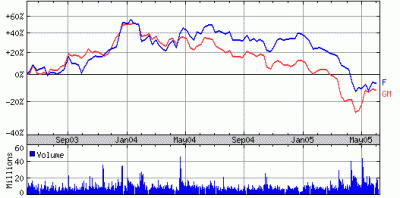
Domestic automakers have had a tough slog this past year, of that there is no doubt. Poor planning on the part of executives at GM and Ford deserve the majority of the blame, although internal costs be they union (Europeon or domestic), the US economy and the high cost of oil are understandable excuses.

Ford v. GM stock price
Chart comparing GM and Ford over 2 years

Nevertheless, the stock in both companies looks attractive to those desiring to generate better than average returns over the next few years in comparison to others in their industy. Rightsizing of companies is big talk but these changes will take time as the UAW contracts dictate pay even when plants are closed. The CEO of GM, Richard Wagoner Jr., although attempting to put a positive spin on management and labor working together, still see some large boulders to move. Healthcare cost is a major cost that is way out of balance. Negotiations have saddled automakers with some extremely large expenses in dealing with these healthcare costs.

Comparing Ford and GM, the inventory numbers are looking a bit better for Ford. They seem to be able to move cars without the extreme measures GM is attempting. Inventories at Ford are 11% higher than normal which isn’t good, but considering the predicament they are in might be considered ‘ok.’ Light truck inventory is a bit higher and a concern. (must be related to consumers concern over the high price of fuel?)

I believe that as both these companies ‘slowly’ grapple with operating in this sluggish economy and the higher fuel cost, most of the damage to stock prices has been done. The risk of these stocks moving lower is no longer the biggest concern; stagnation of price is highly probable. In talking to a couple automotive people, the consumer buying cycle for cars should be returning and IF Ford and GM can introduce some of their new models at an accellerated pace (this is the talk) they might be ready to attract these returning customers. I am investing ‘lightly’ in Ford with the anticipation of better 2 to 5 year returns than the S&P 500 over the same period.

Rich’s advice: Ford (F): Accumulate under $10 with 2 to 5 year outlook.

Energy Bill Politics

Posted By on June 6, 2005

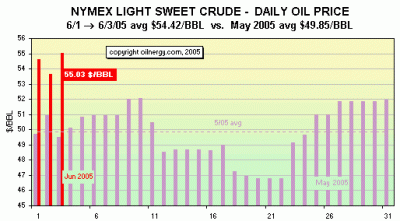
With crude oil once again closing above $55.00/barrel and the potential for gasoline to rise closers to $3.00/ gallon, the pressure is being felt by congress to actually get an energy bill passed and sent to President Bush.
Oil Closing over $55/barrel
An article in today’s WSJ (subscription required) details some fo the components that have derailed the the bill these past two years, but with heavy pressure from voters the elected representatives and senators may feel obligated to compromise and present a bill. Senator Pete Donmenici (R) may have summed up it up when he explained that that he “is not inclined to spend too much time in search of the ideal” but insteads suggests that Republicans who control the Senate must shape a bill “always with an eye for votes.”

Since I have been following the energy bills from the biodiesel perspective, it is interesting to see how the crafting of the current bills are not at all that focused on this small piece (it wasn’t even mentioned in the WSJ article). Ethanol take much more of the limelight and the debate is not whether to incentify using it, but where to dervive the ethanol from. Currently the majority of our ethanol comes from corn and lobby support is heavy in the midwestern farm belt. Many in congress are hoping to also encourage and federally subsidized ethanol made from farm ‘waste,’ rice hulls and barley straw too. The use of ethanol in part is how the Senator Landrieu’s (D) commitee version of the the energy bill wants to cut our 20 billion barrel per day consumption of petroleum by 5% over the next ten years, or 350 billion barrel per year by 2015. There are no specifics, but the automotive industry will probably object to these kinds of reductions.

Must of the debate around the energy bill is focused on the exploration of new natural gas and oil reserves. Some like Senator Mary Landrieu (D) argue that “people have a right to know what is out there.” Interestingly this ‘exploration’ is not a partisan issue, but one that is location based issue. For example, Jeb Bush the Republican governor of Florida and Arnold Schwarzenegger, governor of California, oppose offshore drilling and are expected to make their voices heard on an further coastline exploration. ANWR will continue to be a major hurdle in developing more domestic capacity and was the big 2002 energy bill killer. This year the Republican will move that component out of the energy bill in hopes to avoid a Democrat-led fillibuster and get a bill to the President’s desk.

Interestingly there is more common ground than areas of disagreement. Most will support incentives and insurance assistance for new nuclear power plants. Clean coal is supported as are incentives for coal-gasification plants. (this removes some pollutes before using it to create electricity) After last years blackout, a bill will support new rules and incentives for both utilities and their investors to upgrade the power grid. There will continue to be support for renewable energy such as wind, solar, geothermal and farm waste for electrical production although most see this as a very small contributor toward contributing toward our nation’s energy use.

As for biodiesel, it was not mention in the WSJ article, but there does seem to be widespread support considering the current tax incentive that is in place. I doubt much time is spent or that most representative are even familiar with algae based biodiesel as a future fuel option, but it was mentioned that there is widespread support for incentives that encourage hydrogen power in vehicles.

My personal thought is that congress has spent several years discussing a new approach to our energy problem and that it is time they work out the differences and pass some kind of vision/bill for the sake of our country. With the 2006 congressional elections and continued high energy cost, now is the time to get a bill to the President.

We respect your privacy … really?

Posted By on June 1, 2005

I’ve experienced my share of idenity theft and ‘thought’ I was savy to what information I was going to share again. Unfortunately when doing practically anything online, there is very little privacy.
privacy graphic

Most people believe that the first step is to only do business with established and reputable companies, but are surprised at what is shared by online retailers. For example, LLBean privacy policy reads like this:

“We contract with other companies to provide certain services, including credit card processing, shipping, email distribution, market research and promotions management. We provide these companies with only the information they need to perform their services and work closely with them to ensure that your privacy is respected and protected. — From time to time, we make our mailing list (names and addresses only) and general shopping activity available to carefully screened companies whose products we believe will be of interest to you and whose privacy practices meet the Direct Marketing Association’s privacy standards.”

Of course they are not alone in sharing information they collect from you. JCrew’s privacy policy protects you like this:

“J.Crew shares information about our customers with some of our affiliated companies and reputable third parties in order to help us provide better service to you. These third parties may be given access to some or all of the information you provide to us and may use cookies on our behalf.”


Travel sites are not exempt either; Orbitz for example protects your privacy so securely (tongue in cheek) that they openly state that they may:

“disclose your information to our affiliates and non-affiliated business partners for their use both on our behalf and for their own business purposes. For example, our affiliates and business partners may use such information to send you information about their products, services, other information, and materials that may be of interest to you.”


So next time you give up a ‘cookie‘ or share your personal information online … remember that just because a company has a “privacy policy,” that doesn’t mean that they are protecting your personal information. (and don’t even get me started on banks!)

New Hybrids and Diesels coming

Posted By on May 31, 2005

AUTOMOTIVE NEWS – Posted Date: 5/31/05
Volkswagen AG may introduce a hybrid-powered Jetta in the United States in two years according to a VW spokesman. They confirmed that VW is considering a so-called mild hybrid vehicle similar to the Honda Civic Hybrid.

VW did not forecast sales volumes or discuss the costs. The company said it has not decided which supplier would provide the technology.

Audi A6 Diesel

Audi on the other hand is planning to introduce their diesels to the US on an A6 platform in the 2008 Model Year with the 3.0TDI. They are currently undergoung US federalization while both BMW and Honda have previously announced their plans for US diesel cars.

Honda and BMW Diesels

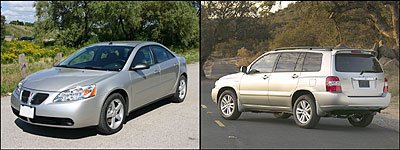
Of course these are not the only announcements that have been made, both GM and Ford have diesel vehicles and the Pontiac G6 could be the first to show up with diesel power here in America.

Pontiac G6 and Toyota Highlander

Toyota on the other hand is considering tying their leading hybrid technology to a diesel as well with one of the most likely platforms being the Highlander.

The 2007 and 2008 model years might prove to be exciting years for those wanting a few more choices in clean diesels power.

The great Flat Tax debate

Posted By on May 26, 2005

I’ve been a proponent of the Steve Forbes style “flat tax” since it was introduced durning his run for the presidency. Although I’m not comfortable with an over the board Flat Tax, I would like to see serious reform.

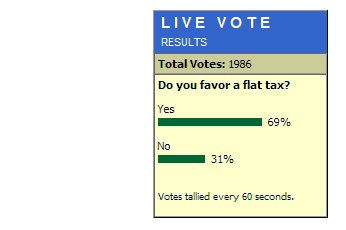
CNBC Flat Tax Poll
On a CNBC ‘unscientific’ poll of people watching Squawkbox or reading their website, other were of a similar mindset by a 2 to 1 margin.

Let’s start with the convoluted tax code of over 17,000 pages packed with special interest political kickbacks. Yes that is how many of the current credits and complications in the current tax code work. The average American has to sort through, or pay to have a professional sort through this maze of confusion just to file your taxes. Most of us give up on trying to keep up with long term changes and as a recognized financial host comments, “People just want a tax that is fair and simple.”

Simplicity and discouraging ‘cheats’ would be toward the top of my list of tax reform criteria. Fairness to all goes hand in hand as the simplicity discourages people from not paying their correct tax. The job of the IRS is made far easier as not having to check mega sized returns (many pages) they will be able to better assure us that each citizen is paying their fair share.

Many will argue that the poor will end up paying too much and they are the ones that can little afford paying additional taxes. There will still be room for a bottom limit (perhaps even higher than today) and larger exemptions for dependents. What’s wrong with that?

Next ‘tax related’ blog post will be on a self-named Petroleum Aquisition Adjustment. (PAA) This is a proposal being discussed occasionally on a forum I participate in. Check it out.

Local Fuel Retailers are getting pinched

Posted By on May 25, 2005

B20 above ground tank
Above ground portable B20 pumps and tanks – BioWillie [clickable link]

In the US, the mom and pop gas station is steadily being replaced by conglomerate ‘fast food’ stations, grocery/superstore fuel pumps or oil company owned convenient gas stations. Often times the old private stations are franchised or leased, and the renewals are no longer automatic as was the case with the Franklin, Ohio Sunoco store. I chatted briefly with the proprietor shortly before he closed up shop; he indicated that 20 years at the same location meant nothing and corporate policy was to upgrade their Sunoco stores to exclude service facilities. In this case, Sunoco opted to close his full service station (with maintenance bays) because it no longer fit their interstate Sunoco store image. I believe they will eventually have a convenient store facility at that location.

For most owners of gas stations it has always been a serious challenge to make money on gasoline sales, but this is even more the case today. The margins have thinned to 7.7 cents per gallon according to a Lunberg Survey reported in the WSJ. This number is down from 2004’s average of 9.1 cents per gallon even in the face of extraordinary profits buy most oil companies. The trend has been for less focus and profit on fuel sales and more on convenient items. This was fine for most of the convenient style stations because much of their profit came from the sales of other items carrying 5 times the profit margin, until the high price of fuel began to also reduce customers spending on softdrinks, coffee, lottery tickets and junk food. Now many of the convenient stores are feeling pinched at both ends and the only expansion in fuel retailing is with the grocery and superstores.

Local grocerers, Krogers and Meijers both sell fuel, some Walmart stores offer fuel as does Costco. These companies have seen their market share is growing at 20% per year according to Energy Analysis International while the majors (Exxon Mobil, ConocoPhillips and Royal Dutch Shell) have reduced their station count from 22,000 locations in 2001 to 16,000 today. Often the grocery and superstores are undercutting their stand alone competitors to sell fuel and are making it up in volume and in-store sales. But … those stores too are feeling the pinch of what high fuel prices do to the spending habits of their customers. No long do we have the extra few dollars to spend on non essential items in the grocery or superstore. Even Walmart admits that the disappointing first quarter is due to their customers needing to spend their extra dollars to fill there tank.

The final straw in the retailing of gasoline is how consumers pay for their purchases. Years ago it wasn’t uncommon for most consumers to pay for their purchase with cash. Now the credit card as replaced cash as the preferred method of payment. The cost to the station for this convenience is approximately 3 cents on every dollar or 3%. Considering the margins has just shrunk to 7.7 cents per gallon on their fuel, losing another 3 cent reduces the profit to under 5 cents per gallon. That’s not much margin no matter what retail business you are in.

Spam

Posted By on May 24, 2005

The information below is from Deb Shinder, MCSE, MVP (Security). She is a technology consultant that we have used to secure our servers and email. I found her information worthy of inclusion on my blog and hope it will help others.

Does spam threaten your network’s security?
Certainly if dozens of salespeople came to your door every day, strong-armed their way into your house or place of business (often using false names or fraudulent premises to talk you into letting them inside) and then deluged you with sales pitches or displayed offensive photos to you and your children, you would feel your security had been breached. That’s exactly what spam does to your computer.

Every access point into your network presents a potential threat to the security of your systems. Spam is no exception. In an effort to “stand out from the crowd,” spammers often send their messages as HTML mail, which can carry embedded malicious code. Other spam messages include attachments that can contain macro viruses. Spam mail may point recipients to Web sites that contain scripts to collect information, or include links that purport to take you off the spammer’s mailing list but in fact just verify that your e-mail address is a “live” or active one (and thus valuable for sale to other spammers). Spammers use “harvest attack” techniques to collect addresses from corporate email directories. Some spammers spoof the addresses of legitimate companies, banks, etc. and attempting to gather credit card and other personal information. Even when spam consists of “only” plain text messages advertising a product, the sheer volume can threaten the integrity of your network, causing an unintended denial of service.

Types of spam
We tend to think of spam as unwanted email, but it’s more than that. Spammers also send unwanted messages of other types, including newsgroup posts, instant messages, Web board postings, and even exploitation of services such as Windows messenger to get their advertising or obnoxious messages through.

Spam can also be categorized in other ways:

  • Junk mail – mass mailings from legitimate businesses that is unwanted.
  • Non-commercial spam – chain letters, urban legends, joke collections and other mass mailings of unsolicited messages without an apparent commercial motive.
  • Porno spam – mass mailings of “adult” advertisements or pornographic pictures
  • Spam scams – mass mailings of fraudulent messages or those designed to con people out of personal information for the purpose of identity theft and other criminal acts
  • Virus spam – mass mailings that contain viruses, Trojans, malicious scripts, etc.
  • Last year, Spamcop (www.spamcop.net), which runs a service that allows you to report spammers, received over 183 million spam reports.
    Anti-spam technologies: Which is the best?

    “Spam whackers” are some of the most popular software programs available, but not all are created equal. There are a number of different types of anti-spam technology, so it pays to examine your options before you invest, especially when considering a high dollar server-side solution.

    Some spam control techniques include:

  • Key word filtering: this is a type of application layer filtering (ALF) that lets you block all messages containing particular keywords or phrases (text strings) that commonly appear in spam (for instance, “Viagra” or “hot sexy babes”).
  • Address blocking: this is a filtering method that blocks mail from particular IP addresses, email addresses or domains of known spammers.
  • Black listing: maintaining a list of known spammers’ addresses that can be shared with others, so each user doesn’t have to develop the list from scratch.
  • White listing: filtering method that, instead of specifying which senders should be blocked, specifies which senders should be allowed.
  • Heuristic filtering: rules-based filtering that uses pattern matching to identify spam.
  • Bayesian filtering: “intelligent” software that can analyze spam messages and recognize other messages as spam based on the “learning” experience.
  • Challenge/Response filtering: replies to email from senders not on a “trusted senders” list with a challenge, usually involving solving a task that is easy for humans but difficult for automated bots or scripts.
  • Note: Tasks that can be easily done by humans but not by computers are sometimes called “captchas.” An example is the display of a distorted bit of text, with the requirement that you type in the word that it spells. For more about challenge/response filtering and captchas, see this About email link.

    No one method can ensure 100% effectiveness against spam. Spammers are constantly changing their addresses, updating their content and using “tricks of the trade” such as misspelling key words or using spaces or periods (e.g., “v.i.a.g.r.a.”) to circumvent the filtering systems.

    A particular problem with spam filtering software is the possibility of false positives – messages that are identified as spam and intercepted, but which are actually legitimate (and sometimes important) email messages. The only thing worse than spam getting through to the user’s inbox is for the user to miss a critical message because it was caught by the spam filters. Regardless of the methods used to identify spam, a good anti-spam program should include a white listing mechanism, by which users can specify that mail messages from certain addresses should be delivered regardless of what “spam triggers” they trip.
    Fighting spam effectively: a multi-layered approach

    Because no single spam control program can do it all, the most effective way to filter spam is by setting up a “defense in depth” plan. An application layer filtering firewall can be configured to stop the most egregious spam at the network perimeter. Then a good filtering program on the server can catch most of the rest of the spam there, so that it never reaches the end-user’s computer. Finally, the email client’s built in filters or a client-side add-on can redirect any remaining suspect email into a “junk mail” folder on the user’s system.
    Fighting spam at the firewall level

    ALF enabled firewalls (such as Microsoft’s ISA Server) can filter messages based on key words or character strings. At this level, you should be careful to only set filters for words or phrases that never will be expected to appear in legitimate email. IP addresses and domains can also be blocked at this level if they are known to belong to spammers.

    The big advantage of doing some of the spam filtering at the firewall is that it takes some of the processing load off the mail server. Spam filtering is a processor intensive activity, so spreading that load increases performance of your mail servers and saves local network bandwidth.
    Fighting spam at the server level

    There are many applications designed to block spam at the server level. Some of these are installed on the email server itself and others are installed on a separate server. The latter requires a greater initial expenditure for hardware but relieves the processing load on the mail server so it can do its primary job more efficiently.

    Server side tools are often fairly expensive, but have the advantage of blocking spam for large numbers of users in the organization. The more spam is blocked at the server level, the less time end-users will spend reading and deleting it, thus resulting in increased worker productivity. Server side spam blockers such as GFI’s Mail Essentials are designed to work with specific mail server software, such as Exchange, and may also contain additional email enhancement features such as monitoring, reporting and mail archiving capabilities.

    Exchange Server 2003 will be able to use Microsoft’s Intelligent Message Filter add-on, based on their SmartScreen spam filtering technology. SmartScreen is the same technology used for Web-based Hotmail and MSN mail and is integrated into Office 2003’s version of Outlook. For more information about SmartScreen, see Microsoft.

    Fighting spam at the client level

    Most popular email clients include some form of spam filtering built in. For example, Outlook and Outlook Express both include junk email filtering, as do Eudora, Netscape Mail and most other commonly used clients.

    Outlook 2003 has greatly improved its junk mail filtering, adding the ability to configure “safe senders” and “safe recipients” lists so you can whitelist individuals or mailing lists whose mail you want to get through even if it meets other spam criteria. It also lets you blacklist particular senders or domains using the “blocked senders” list.

    Note: In Outlook 2003, if you’re using an Exchange server account, you’ll need to work in Cached Exchange mode before you can set up the junk mail filters.

    Many third-party products are available for filtering email. These include POP3 filters, POP3 Proxy filters (that sit between the client and the POP3 mail server) and IMAP filters. There are programs that integrate with your email client and add rules to be used by its filtering mechanism. There are also Webmail spam filters for those who use Yahoo, MSN, AOL, Hotmail and similar services for their email.

    Click the following link for a list of client-side spam filtering programs.

    Summary

    Spam is a big problem for everyone from the individual home Internet user to the multi-national corporation that depends on email communications to conduct business. Not only is it a nuisance, it can also present a security threat to your network. There are hundreds of products designed to combat spam, but the most effective anti-spam plan utilizes a multi-layered, “defense in depth” approach. This means intercepting spam at the network perimeter (firewall filtering), at the mail server, and on the client side. In this article, we’ve provided an overview of how such a strategy can help you get a handle on the deluge of spam that threatens your network on a daily basis.

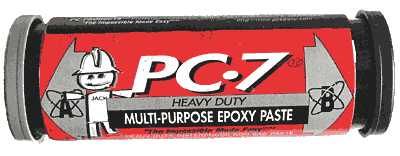
    PC 7 Paste Epoxy

    Posted By on May 24, 2005

    In keeping with “Desultory” … I’m posting something out of the blue.

    PC 7 Putty Epoxy

    This weekend I had a couple guys over working on my daughters VW Jetta TDI. We had the intake manifold off and realized after installing that one of the ‘non-essential’ bolt holes was oversize or stripped. (just holds the plastic noise cover in place) Not having a helicoil to fit, I decided to try some PC 7 Paste Epoxy.

    I’ve used many different brands of epoxy adhesives over the years preferring them for most repairs over any other adhesive type. From my sailing days (and aviation), I’m familiar with the West System products for large scale projects are hard to beat, but I have found I like keeping the tubes of JB Weld in my tool box. These work great for close fitting pieces and for parts you are not going to be reworking … especially the tube JB Weld liquid type epoxy.

    The PC 7 and I suppose the other brands of ‘paste’ and ‘putty’ epoxies are a bit different. First the container is a really nice sized for the ‘once in a while’ toolbox use. The part A and B products stay ‘paste-like’ for a long period of storage time and being in a durable all in one container makes it nice. The caps that seal the ends are just like 35mm film canisters and make resealing and popping off each end really easy. The paste is very firm and can be ‘mashed’ together with a screwdriver or stiff putty knife. (I prefer using an old screwdriver as you can dig the paste out of the containers easily) I thing that the product is a bit too stiff for tongue depressors, although if you were careful they would probably work fine.

    The beauty is that the paste fills any void and can be work and packed very slowly. The product (PC7) does not harden for a long while. It does start to stiffen after about an hour but will not turn machineable for at least 24 hours. The repair went perfect and the stud is as tight and firm as new.

    For a second test I thought I would try the stiff paste on something that I would normally used the liquid epoxy. I am adhering a rubber pad back on the bottom of a steel wedge. The only requrement is that the rubber pad stays in place even if wet. So far so good. The key is to spread the paste as best you can over the surface and then clamp with heavy pressure. In my case I used a vice to force the adhesive to bond with both faces. So far so good … but I did notice that the leftover I had on a piece of paper stuck very well.

    Give the PC7 Paste epoxy a try … it will stay in my tool box.

    Desultory - des-uhl-tawr-ee, -tohr-ee

    1. lacking in consistency, constancy, or visible order, disconnected; fitful: desultory conversation.
    2. digressing from or unconnected with the main subject; random: a desultory remark.
    My Desultory Blog