Wi-Fi Hot Spot security: Connect with Care
Posted By RichC on August 28, 2007
 As Wi-Fi becomes a way of life for many Internet connected notebook computer, PDAs and Smartphones users, there is a tendency to become too comfortable in ‘making the connection.’ I find it almost a necessity in my travel, but nevertheless, I do rethink the places I connect. Coffee shops, restaurants and hotels are pretty regular connections for me, but a conversation the other day with someone who mentioned that the Better Business Bureau is sending a clear warning to watch out for those free airport connections. The trend for hackers is to set up ‘fake Wi-Fi’ connections that emulate the many popular and heavily used hotspots.
When searching for connections, our computers see open network connections that are available and usually (depending on one your settings) require human intervention to initiate the connection. While one might be thinking it’s the free connection offered by the establishment, naive users may just accept the hackers fake connection and log on. Unfortunately, the network may actually be an “ad-hoc” network or a peer-to-peer connection. The user will still be able to surf the Internet, but they’re doing it through the hacker’s computer. According to an article by Steve Bernas of the BBB, “the hacker is stealing information such as passwords, credit card and bank account numbers and Social Security numbers. Beyond simply stealing keystroke information as the user enters various types of data, if the PC is set to share files, the hacker could even steal whole documents from the computer.” Mr. Bernas goes on to say that in a security review, “Chicago O’Hare had 20 ad-hoc networks present that were potentially designed with the intent of hacking into unsuspecting user’s computers and networks.”
The BBB offers the following advice
- Never connect to an unfamiliar ad-hoc network — even if the name sounds genuine. A hacker can change the name of his network to anything he wants, including the name of the legitimate Internet connection offered by the airport. Just because it has the same name as the Wi-Fi advertised in the airport, don’t believe it. For more information on how to distinguish between an ad-hoc network and a normal Wi-Fi network with Windows Vista or XP visit http://support.microsoft.com.
- Make sure that your computer is not set up to automatically connect to non-preferred networks. Otherwise your computer could automatically connect to the hacker’s network without your knowledge.
- Turn off file-sharing when you’re on the road to prevent hackers from stealing entire documents, files and unencrypted e-mail from your computer.
- Create a Virtual Private Network (VPN) for your business. A VPN establishes a private network across the public network by creating a tunnel between the two endpoints so that nobody in between can intercept the data. Many companies allow remote users to connect to corporate networks so long as they use VPN. This keeps the users’ communications just as secure as if they were sitting at a desk in the building.
 Have you changed your brake fluid lately? On most if not all TDIs, VW recommends that you change your brake fluid every 2 year regardless of mileage. So with that in mind, how about getting together on Saturday, September 22, 2007 with your fellow TDI owners and helping each other with a brake bleeding? (9AM until ???)
 Our good friend and rally racer Jon Hamilton is also planning to be here with his
 Raj Mosali of
 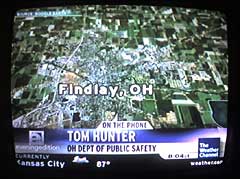 Traveling around the state of Ohio this week, it is amazing the difference a few hundred miles can make. In my home of Cincinnati, its relatively dry with rainfall for the month almost 3 inches below normal. In Cleveland the recent heavy rains have put them 6+inches over the monthly averages. The recent heavy rains passing through the state have even put entire towns under water like Findlay, Ohio in the northwestern part of Ohio. In fact, today the busy north – south Interstate 75 was even underwater and impassable north of Lima. Several other small towns and communities have suffered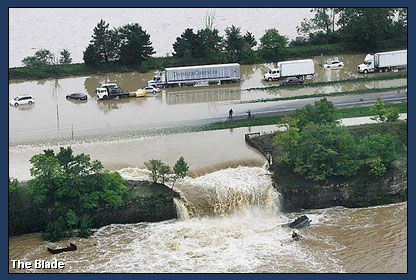
 I’m not sure how many reading this use the communication tool called
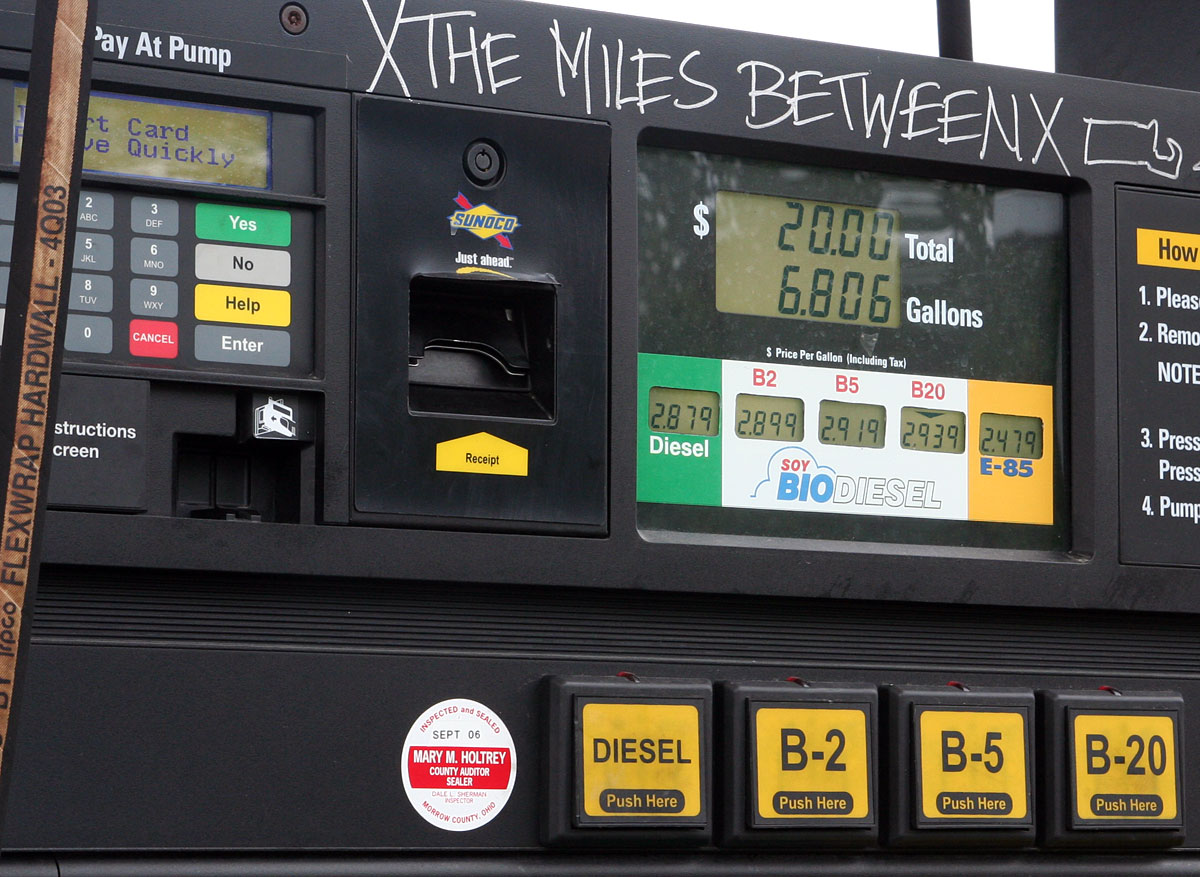
 Although clean diesel technology is my primarily preference for our spread out interstate nation, I’m interested in seeing advancements in most other alternatives too.
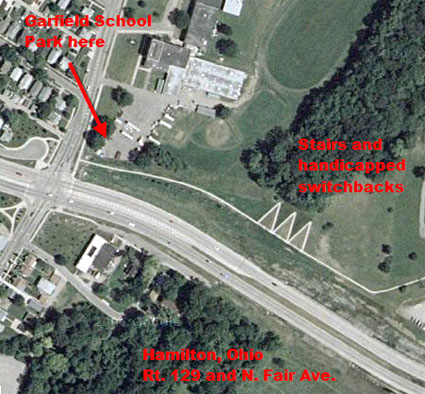
 Last year I mentioned an enjoyable program
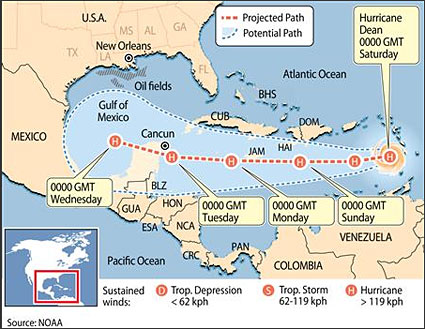
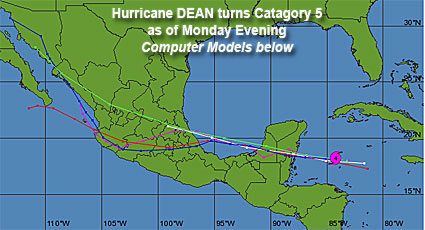
 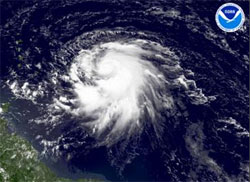 Hurricane season in North American has had seen a slower start than expected for the 2007 season, but Hurricane Dean could become a real killer. Currently, as of 1:45 p.m. EDT, Dean is west of Martinique slightly south of Puerto Rico. It has been upgraded to a more powerful Category 3 storm and will cross the Caribbean and has Jamaica in its sites. With peak sustained winds now at 125 mile per hour, it could still strengthen further be for its hits land. Dean is moving at 22 mph and according to the U.S. National Hurricane Center and is projected to possibly reach Category 4 before making landfall around the Texas-Mexico border. If that is the case, most of the offshore Texas oil production platforms should be fine, but the NHC was quick to point out that “one of their computer models” has the hurricane turning north and making landfall near the refining hub and population center of Houston. The NHC will issue its next advisory at 5 p.m.