The Thanksgiving Story
Posted By RichC on November 23, 2006
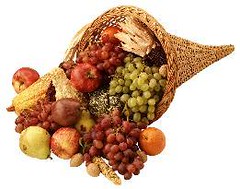 Happy Thanksgiving. Here’s a refresher story.
The Pilgrims who sailed to this country aboard the Mayflower were originally members of the English Separatist Church (a Puritan sect). They had earlier fled their home in England and sailed to Holland (The Netherlands) to escape religious persecution. There, they enjoyed more religious tolerance, but they eventually became disenchanted with the Dutch way of life, thinking it ungodly. Seeking a better life, the Separatists negotiated with a London stock company to finance a pilgrimage to America. Most of those making the trip aboard the Mayflower were non-Separatists, but were hired to protect the company’s interests. Only about one-third of the original colonists were Separatists.
The Pilgrims set ground at Plymouth Rock on December 11, 1620. Their first winter was devastating. At the beginning of the following fall, they had lost 46 of the original 102 who sailed on the Mayflower. But the harvest of 1621 was a bountiful one. And the remaining colonists decided to celebrate with a feast — including 91 Indians who had helped the Pilgrims survive their first year. It is believed that the Pilgrims would not have made it through the year without the help of the natives. The feast was more of a traditional English harvest festival than a true “thanksgiving” observance. It lasted three days.
Governor William Bradford sent “four men fowling” after wild ducks and geese. It is not certain that wild turkey was part of their feast. However, it is certain that they had venison. The term “turkey” was used by the Pilgrims to mean any sort of wild fowl.
Another modern staple at almost every Thanksgiving table is pumpkin pie. But it is unlikely that the first feast included that treat. The supply of flour had been long diminished, so there was no bread or pastries of any kind. However, they did eat boiled pumpkin, and they produced a type of fried bread from their corn crop. There was also no milk, cider, potatoes, or butter. There was no domestic cattle for dairy products, and the newly-discovered potato was still considered by many Europeans to be poisonous. But the feast did include fish, berries, watercress, lobster, dried fruit, clams, venison, and plums.
This “thanksgiving” feast was not repeated the following year. But in 1623, during a severe drought, the pilgrims gathered in a prayer service, praying for rain. When a long, steady rain followed the very next day, Governor Bradford proclaimed another day of Thanksgiving, again inviting their Indian friends. It wasn’t until June of 1676 that another Day of Thanksgiving was proclaimed.
On June 20, 1676, the governing council of Charlestown, Massachusetts, held a meeting to determine how best to express thanks for the good fortune that had seen their community securely established. By unanimous vote they instructed Edward Rawson, the clerk, to proclaim June 29 as a day of thanksgiving. It is notable that this thanksgiving celebration probably did not include the Indians, as the celebration was meant partly to be in recognition of the colonists’ recent victory over the “heathen natives,” (see the proclamation).
October of 1777 marked the first time that all 13 colonies joined in a thanksgiving celebration. It also commemorated the patriotic victory over the British at Saratoga. But it was a one-time affair.
George Washington proclaimed a National Day of Thanksgiving in 1789, although some were opposed to it. There was discord among the colonies, many feeling the hardships of a few Pilgrims did not warrant a national holiday. And later, President Thomas Jefferson scoffed at the idea of having a day of thanksgiving.
It was Sarah Josepha Hale, a magazine editor, whose efforts eventually led to what we recognize as Thanksgiving. Hale wrote many editorials championing her cause in her Boston Ladies’ Magazine, and later, in Godey’s Lady’s Book. Finally, after a 40-year campaign of writing editorials and letters to governors and presidents, Hale’s obsession became a reality when, in 1863, President Lincoln proclaimed the last Thursday in November as a national day of Thanksgiving.
Thanksgiving was proclaimed by every president after Lincoln. The date was changed a couple of times, most recently by Franklin Roosevelt, who set it up one week to the next-to-last Thursday in order to create a longer Christmas shopping season. Public uproar against this decision caused the president to move Thanksgiving back to its original date two years later. And in 1941, Thanksgiving was finally sanctioned by Congress as a legal holiday, as the fourth Thursday in November.
 I’m not endorsing the outgoing governor of Ohio, but its good to see my state onboard the
  habits as they relate to podcasts reviews a few
 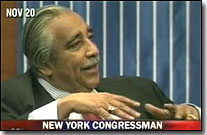 appreciate the freedom and privilege we have of living in the United States, but besides paying taxes, many haven’t really had to serve in any capacity. Although I realized that not everyone is qualified or desires to perform their service in the armed forces, there are other ways that service to country could be offered. Perhaps the a national service corp would benefit to those performing the service (reeling back selfish behavior … the “what’s in it for me” attitude) as much as it would the sharing of the duties with every citizen privileged to live in this country? What better place to start than on border security, be it unarmed surveillance patrols, fence building or national guard armed interdiction — I’m sure we could all come up with suitable service options besides the military. I found Laura Ingraham’s interview last night to be balance and thoughtful on this subject and will include it below.
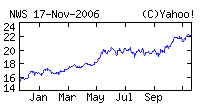 From a business perspective, the huge publishing and broadcasting company has performed well over past year, but had a slightly negative move even though the stock market has continued to move up. (see
 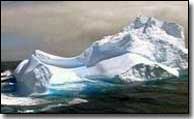 According to New Zealand news reports, an iceberg was spotted from shore yesterday for the first time in 75 years. Some of the giant blocks of Antarctic ice were visible from Dunedin on the South Island, but all have recently moved away being driven by wind and current. The 100 plus ‘bergs’ in New Zealand waters have become tourist attractions prompting entrepreneurs to market helicopter and airplane flights. The trips take passengers close to the beautiful blue and white ice … some even landing on the huge floating islands.
  Since I’m relatively new to my Series 2
  The Big Game you ask??? If you don’t know what I’m talking about, you just don’t know college football.
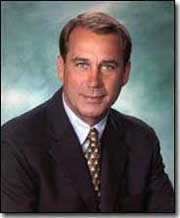 Our neighbor (West Chester, Ohio) and local representative John Boehner (R-OH) will continue to lead the Republicans in congress, although not as the Majority Leader – his