Introduction from Geoffrey Nunberg’s book
Signs and symbols, language, are the means of communication by which a fraternally shared experience is ushered in and sustained. But conversation has a vital import lacking in the fixed and frozen words of written speech. . . . That and only that gives reality to public opinion. —John Dewey, The Public and Its Problems, 1927
Are the Democrats simply tone deaf? That impression was hard to escape when the party floated a new slogan in the fall of 2005 that was aimed at the 2006 midterm elections: “Together, America can do better.” Or more accurately, a newly augmented slogan—in 2004, John Kerry had used “America can do better,” without the “together” part. According to the congressional newspaper The Hill, Democrats had chosen the slogan to address the party’s “messaging problems” after testing it in focus groups along with a number of alternatives. “We know the majority of people agree with us on the issues,” one Democrat was quoted as saying, “but this effort is an acknowledgment that we need to communicate better.”
The response to the slogan was, to put it mildly, tepid. The Washington Post reported that Democratic governors were scoffing at it, and the liberal commentators excoriated it. “Pathetic,” said Hendrik Hertzberg in the New Yorker. And the Los Angeles Times’s Rosa Brooks concurred: “‘You can do better’ is what you say to a dim child whose grades were even worse than expected. Is this really the Democrats’ message to the nation: that we don’t need to be quite as pathetic as we now are?” The blogger Wonkette was characteristically caustic: “Now we know where the Democrats stand,” she said. “They stand for betterness.” And indeed, the slogan seemed to epitomize Democrats’ inability to come up with an overarching theme other than “Listen, anybody would be an improvement over this bunch of bozos.” (Wonkette mused that the rejected slogans probably included “You Could Do Worse,” “It’s Not Like There’s a Third Party,” and “Sorry About That Kerry Thing.”)
Given the slogan’s resounding vacuity, it might seem like piling on to point out that it’s ungrammatical in the bargain, with the together sitting uncomfortably with the singular America. Saying “Together, America can do better” is a bit like saying “Together, the North won the Civil War”— you know what it’s supposed to mean, but you have to do a little mental stutter-step to get there. It’s clearly a sentence written by a committee: you can tell that one faction wanted to go with “America can do better” while another favored “Together, we can do better” to get the unity theme in there, so they decided to split the difference. Of course, faulty syntax by itself has never been an impediment to successful advertising. But the slogan could stand in, only a little unfairly, for the Democrats’ general failure to get their communicative act together, right down to an inability to get their adverbs and subjects to agree.
What makes the party’s choice of slogan ironic—or not to mince words, downright depressing—is that the Democrats have been struggling with their “messaging problem” for some time now. I first became involved in those efforts in the spring of 2003, when Senator Byron Dorgan invited three linguists, George Lakoff, Deborah Tannen, and me, to make a panel presentation to the Democratic Senate caucus on “Framing Policy Issues to Enhance Public Understanding,” with the aim of helping the Democrats counter the Republicans’ success in using language to advance and often obscure their agenda. We talked about “issue framing” and linguistic stereotyping, and the senators seemed receptive and clearly concerned about the problems. And despite that lame slogan, it’s clear the Democrats have been trying in their hugger-mugger fashion to respond to Republican rhetoric more assertively.
But as I was reflecting afterward on those discussions, it struck me that the Democrats haven’t fully grasped how deep their linguistic problems go, or how they directly reflect the Democrats’ inability to tell a coherent story about themselves (I mean over and above observing tautologically that they aren’t Republicans). This book shows how that failure has had consequences that go beyond anything that improved framing or better slogans could remedy. The right’s most notable linguistic achievement isn’t its skill in coining distracting catchphrases, but its success in capturing the language of everyday political discussion.
Talk to most people about “political language” and they’re likely to think of the language that politicians and pundits use when they’re trying to rouse public support for particular candidates and policies. Most of the books and articles on political rhetoric concentrate on the language of speeches and public pronouncements, rather than the language that ordinary people use when they are talking about political topics—not surprising, since until recently those were the only records of political language available, and scholars naturally congregate where the light is. But while the language of politicians and pundits is ultimately aimed at persuading people to act in certain ways, it can only get there by first persuading them to talk in certain ways. As John Dewey observed, it’s only in private conversation that political opinion crystallizes, as people absorb the words they read or hear from on high and incorporate the ideas they stand for into the stories they tell about politics and their lives. Language is a kind of informal plebiscite: when we adopt a new word or alter the usage of an old one, we’re casting a voice vote for a particular point of view.
Until a few years ago, you could only observe those shifts in language use in an anecdotal, Andy Rooney sort of way—”Have you noticed how everybody seems to be talking about values these days?” Or what’s only slightly better, you could listen to the way a handful of people talked about politics in focus groups, without any real sense of how typical their language was. Now it’s possible to date and measure those shifts in language, thanks to the Web, the online discussion groups, and all the databases of press stories and broadcast transcripts. It’s true that those tools weren’t designed with the aim of gauging public opinion, the way political polls and surveys are. As scientific instruments go, they’re highly imperfect: they ignore distinctions of meaning, their counts can be inaccurate, and they’re not necessarily representative of the language that people use when they’re kicking around political issues with their co-workers or at the breakfast table.
But whatever their limitations, the tools allow us to examine how words are being used by both the press and the general population, and to measure changes in their popularity and shifts in their meaning. Needless to say, these methods have transformed the way we word wonks come at our subject. In the Victorian age, it took a small army of volunteer readers twenty years to amass the 3.5 million citation slips illustrating the usage of all the words in the English vocabulary that were used to prepare the first edition of the Oxford English Dictionary. These days it takes Google just half a second to report that it gets 6.8 million hits for the single phrase liberal media (though you’re best off taking the exact figure a bit cautiously).
And it doesn’t take much longer than that to track the way class warfare waxes and wanes in the press and the online discussion groups according to the political climate, or to determine whether conservative or liberal writers are more likely to use the word redneck. As a window on public opinion, language can hardly take the place of polls and surveys. Language comes at the world from a different angle, more oblique but in its own way just as telling, if you read it right. The appearance of new phrases like “the liberal mindset” and “hidden agenda”; the shifting meanings of elite, liberal, government, or patriot; or even the fact that conservatives tend to say “you liberals” a lot more than liberals say “you conservatives”—all these things testify to the way political attitudes are embedded in the words that people use to express them.
It’s only when you look at those patterns of usage that you discover how deep the Democrats’ linguistic problems go. Over recent decades, the left has lost the battle for the language itself. When we talk about politics nowadays—and by “we” I mean progressives and liberals as well as conservatives and people in the center—we can’t help using language that embodies the worldview of the right.
The challenge facing liberals and Democrats is to recapture that ordinary language. That’s what this book is about.
From Talking Right by Geoffrey Nunberg. All rights reserved.

 I spend several days week on the road and have been getting a little better at finding internet access (hot spots) in order to upload files, manages sites and retreive email. This week I’m staying at a Radisson hotel that normally has wireless access for my evening connect, but unfortunately the service has been up and down — down as I write this. So … I’m connected by cell phone for this post (tethered), and I though I would update how I generally make my daily internet connections while out of the office or away from home.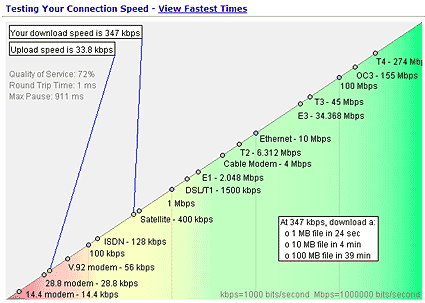
 The FoxNews program “
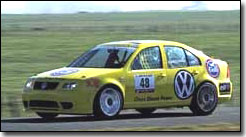 Here’s an update on Maurice O’Reilly’s high speed record attempts with a Volkwagen Jetta 1.9 liter TDI diesel. On Saturday and Sunday (July 29 & 30th) he set four records at Goudies Road in Rerewhakaitu New Zealand according to reports. The previous diesel record for this run was topped by 40km/h and is now Mr. O’Reilly’s at 232.1245km/h. (144.5416mph) Although I don’t know specifics in regard to what it takes to set a “Diesel Speed Record for the flying kilometre,” the new record is impressive and obviously requires a correctly tuned TDI and the right fuels? (I’ll await a reply from the club secretary in hopes of an explanation)
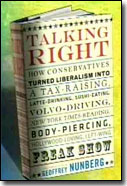 I’m looking for a light reading book for my upcoming vacation. Geoffrey Nunberg’s book,
  Its about as tense as it has been since the start of this conflict between Hezbollah and Israel. Sunday was a most brutal day for people still in Qana, a city in southern Lebanon, as a building was struck by Israeli air forces which was suspected of being a launch or storage area for Hezbollah rockets. (Update:
 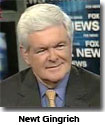 targeting nations’ citizens. With Secretary Rice returning prematurely before even attempting to work on a peace, it looks as if war will continue to rage unless the UN can come up with some palatable solution where a peacekeeping force can intercede. While watching some of the experts, I recorded a man I respect for his knowledge of history and pulse of current world affairs: Newt Gingrich.
 As mentioned in previous posts (
 I read several articles today highlighting a Texas company called