You would think an over 17 million viewed video on YouTube with a Pumpy Umpy reference would be something I would have watched before … nope … but now I have. So much for knowing about Amy Castle or the Cuppycake song.
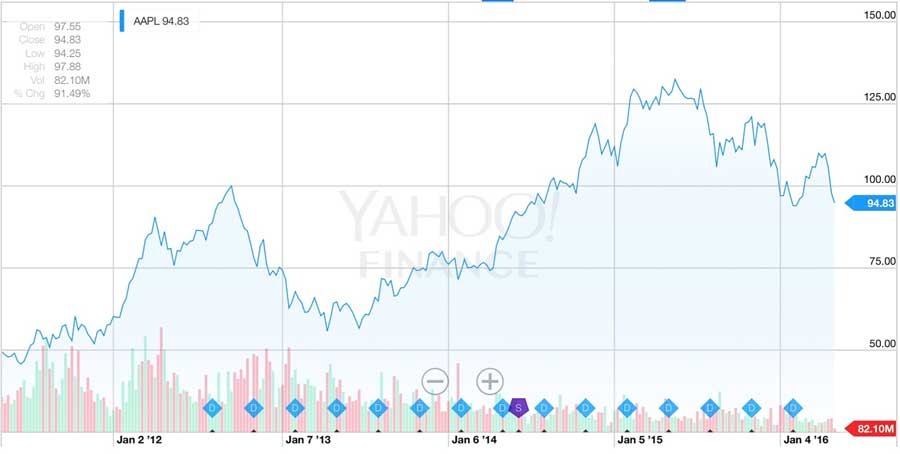
It has been a rough couple of days for Apple ($AAPL) shareholders as growth this past quarter was elusive. Most blame the global economy, and in particular China, for the weak quarterly numbers. It does remind me of late 2012 and 2013 when analysts questioned whether management had lost their way. The same is happening today in “questioning whether innovation has stagnated” … I would not bet against Apple.
While iPhone sales continues to dominate Apple’s growth, there are still a few future bright spots which hold potential for innovation, at least in my imagination: the Media Center/TV, automotive interface (or an actual car?) and robotics. In my opinion, they all need the Apple touch. Personally, I think there is still plenty of room for innovation and growth … and I’m not even touching on using their hoard of cash to make acquisitions.
Growth aside, Apple’s PE is a low 10-11 and they now have a 2% dividend (and rising). This all looks pretty good if you care to transition from growth to value stocks at some point. As Carl Icahn exits his positions, there will sure to be others seeing $AAPL as a good buy … if not for growth, then as a value play. Personally I think Apple still has upside growth potential like no other blue chip. My thought is to buy in the low 90s, collect the 2% dividend while CDs, bonds and money market interest pay almost zero and I doubt you’ll be disappointed down the road. (but then Icahn disagrees – watch the Thursday CNBC interview below)
Archiving a bit of information from a company I’ve purchased metal from in the past — good info.
Heat Treatment
Heat treatment is used to alter the physical and mechanical properties of metal without changing its shape. It is an essential process in metal manufacturing as it increases the desirable characteristic of the metal, while allowing for further processing to take place.
Heat treatment is a process during which the heating and cooling is carefully controlled. Steel, for example, responds well to heat treatment and is commonly heat treated for use in a variety of commercial applications.
Common objectives of heat treatment are to:
Increase strength
Increase hardness
Improve toughness
Improve machining
Improve formability
Increase ductility
Improve elasticity
Annealing
Annealing involves heating the metal to a specified temperature and then cooling at a controlled rate; usually slowly. This fully or partially separates the constituent atoms, resulting in a refined microstructure.
Annealing is commonly used to:
Soften a metal for cold working
Improve machinability
Enhance electrical conductivity
Tempering
Tempering is used to increase the toughness of iron alloys, particularly steel. Untempered steel is very hard but is too brittle for most applications. Tempering is commonly done after hardening to reduce excess hardness.
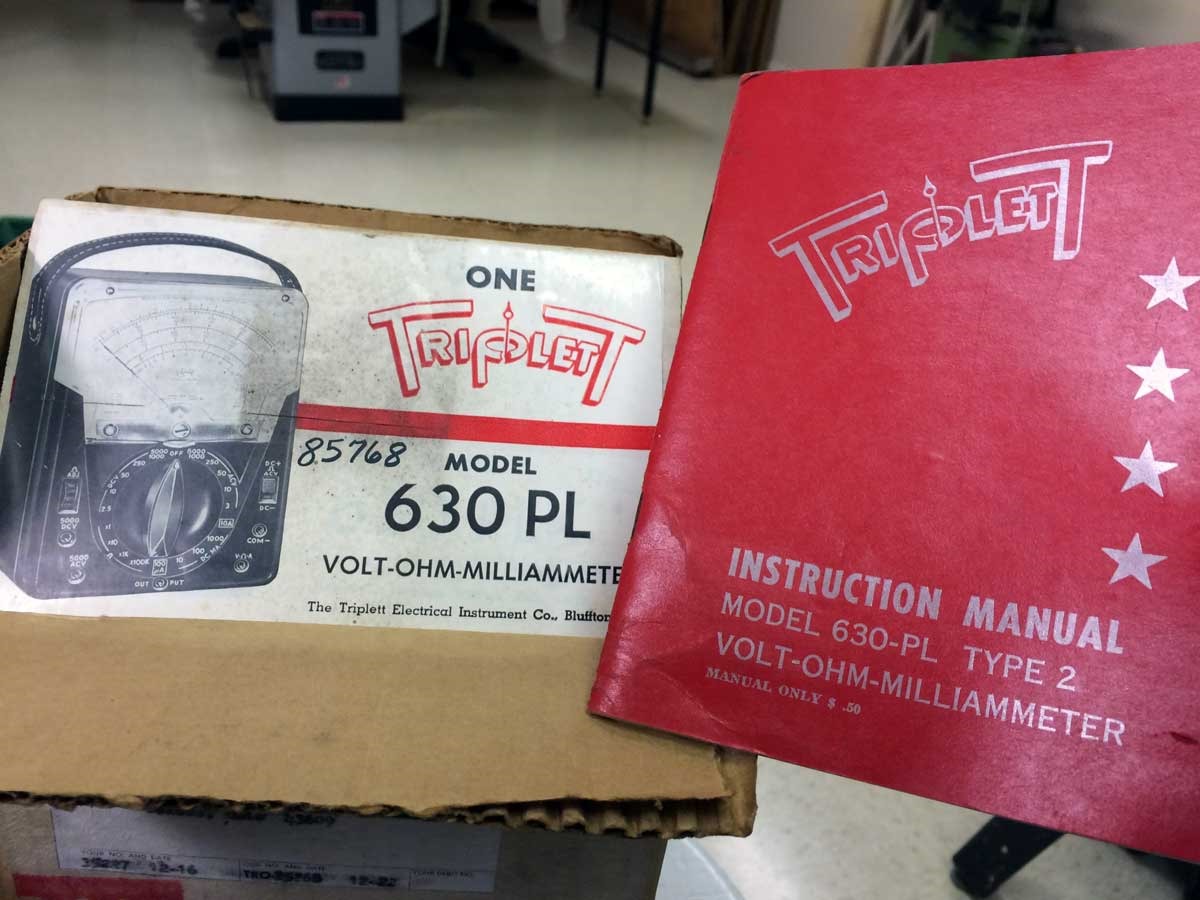
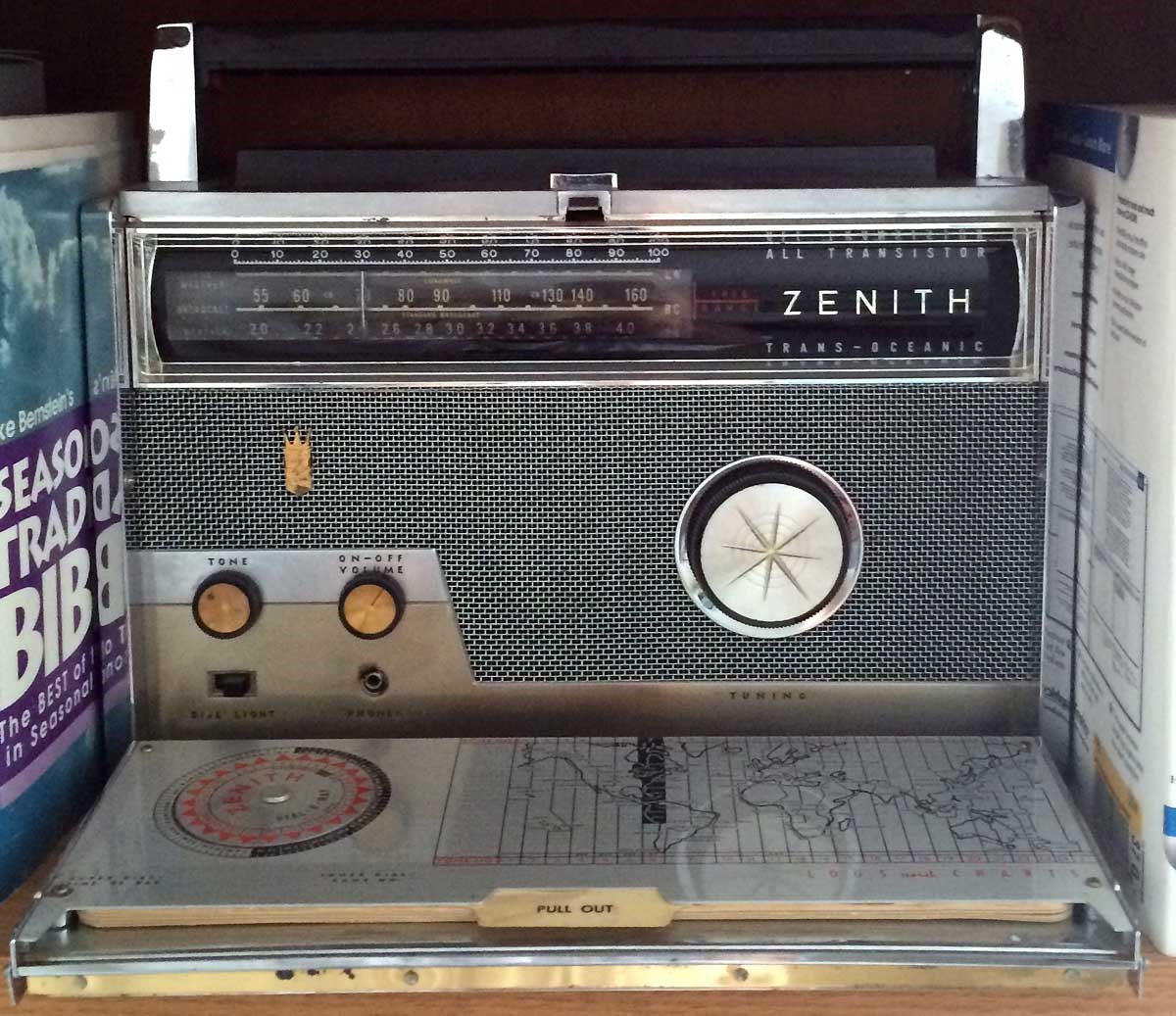
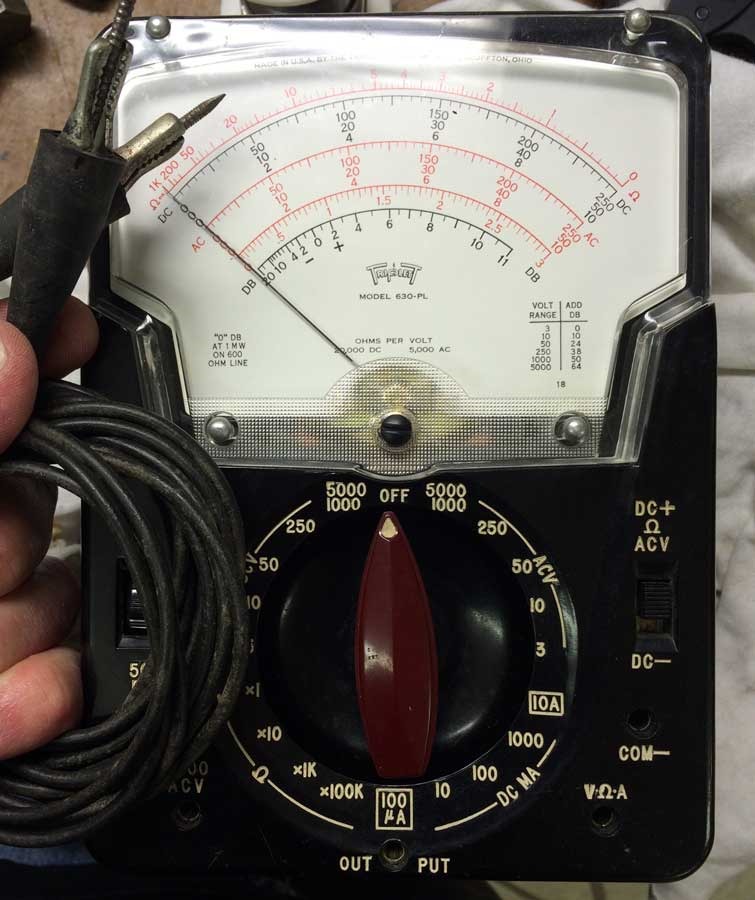
A leftover weekend project was to see if I could get my dad’s old Triplett 630PL meter back to working shape. As a boy, I remember "carefully" using "his" meter when I was in junior high school and attempting to build Heathkit projects … like my shortwave radio. Thankfully I never has to depend o the homemade radio since I had a Zenith TransOceanic … which I still have to this day! What is interesting is that I now live where we could ONCE see the Voice of America towers(Bethany Rely Station) before they were taken down (the Cold War was over). Some great history and memories listening to VOA and other shortwave radio stations as a kid.
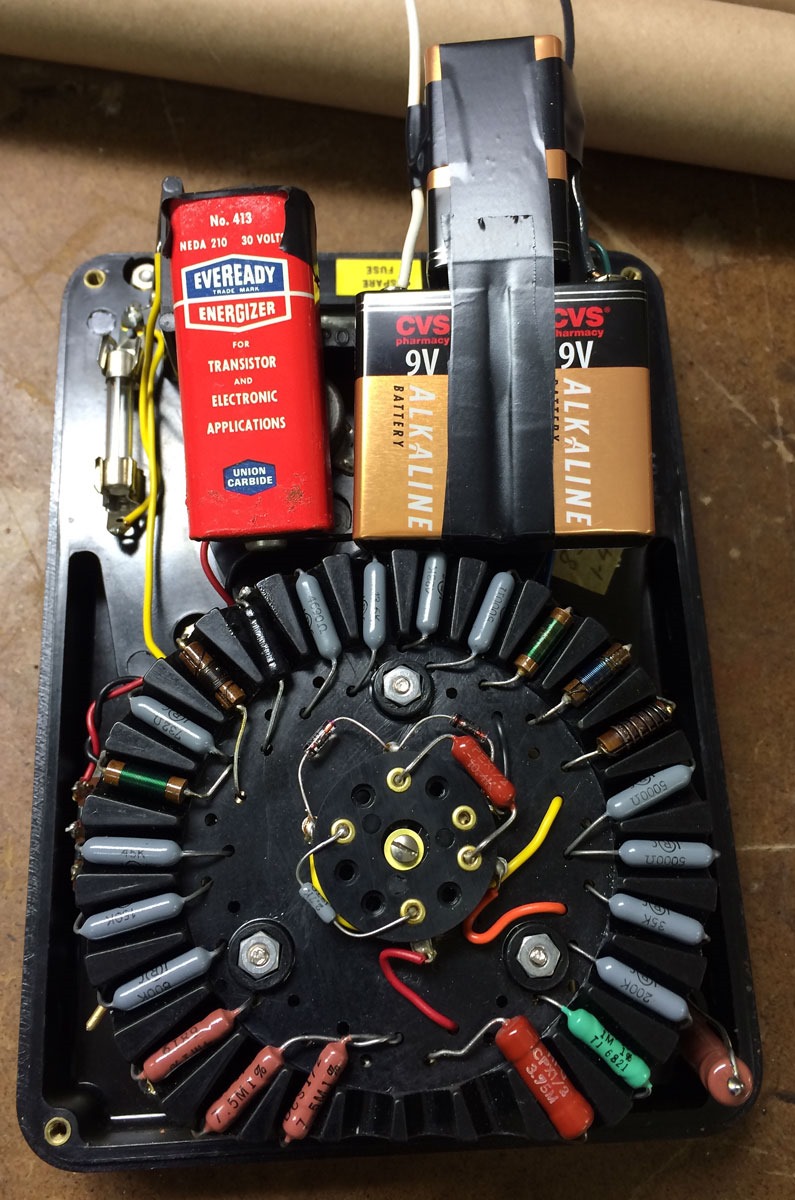
Back to reviving the old analog meter: Although the meter was in great shape and kept in its original boxes (with instruction book!), the 2 batteries inside the meter didn’t hold up so well. Thankfully no corrosion that did any damage and replacing looked to be simple … UNTIL trying to find an Eveready Energizer 413A 30 volt transistor battery … $37 ?? Yikes!
Thankfully there is a simpler solution. Put three 9 volt transistor batteries in series and the 27+ volts works great. Whew … now at an ultra-long life "D" battery to the mix and put the case back together.
Since I’ve been driving the 1982 Mercedes Benz 300D Turbodiesel most of the late winter and spring this year, I’ve been racking up the miles and am due for a full fluid and filter change. Tonight was the night and after 4 filters (2 fuel, 1 oil and 1 air) and 8 quarts of oil, the “old girl” is ready for her weekly road trips once again. I sure like the sound of this car!
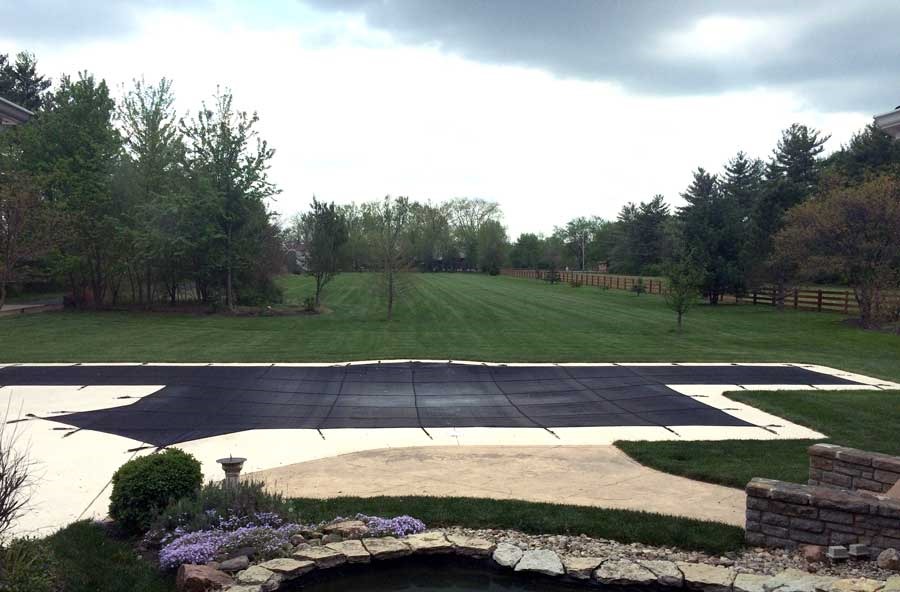
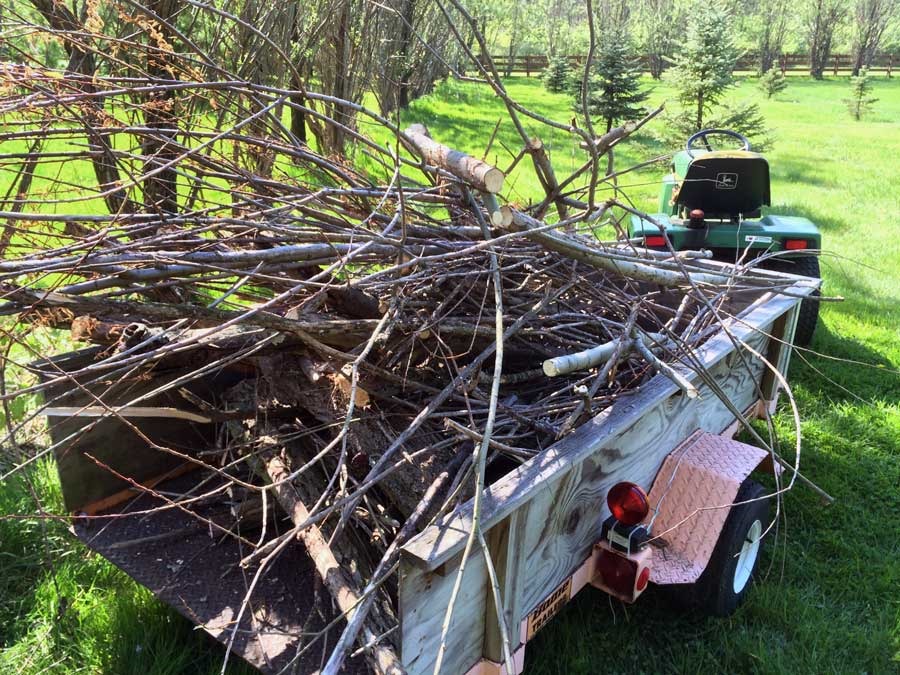
Our lawn has never looked greener than this year (above, although cloudy in the photo) even if the landscaping and general cleanup leaves a lot to be desired. Which reminds me, we have a lot to do before calling it summer, but for now just getting the limbs and fallen trees cleaned up is an satisfying accomplishment (one more fallen tree to go).
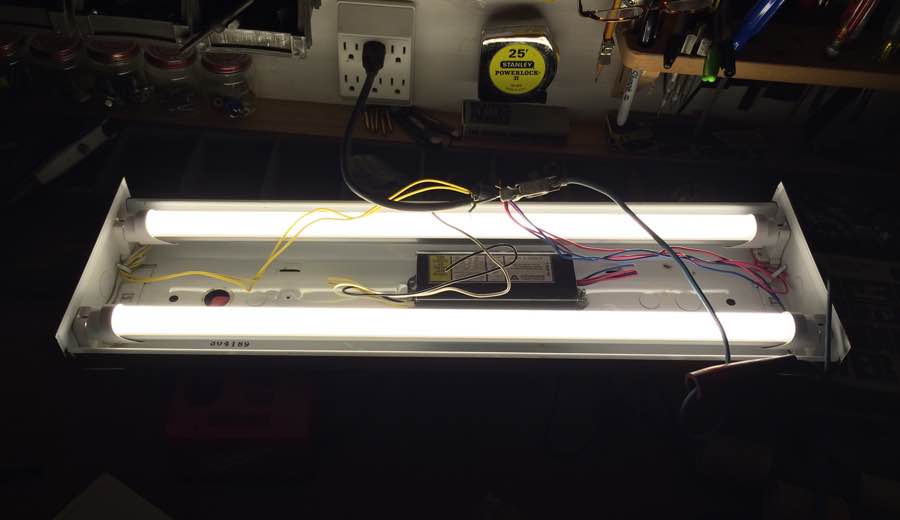
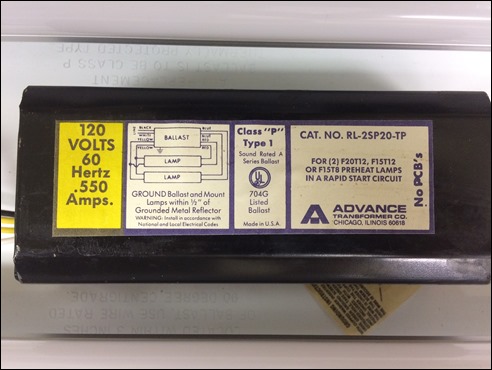
Since I have a bunch of florescent lights in my shops (most are 8 footers) it is getting to be a challenge to keep up with replacing both tubes and ballasts, I’ve decided it was time to experiment a small 2 foot 2 bulb fixture and replace with a couple cheapy “warm white” (2700 degree) LEDs from eBay.
So far my luck in rewiring has not been good. Supposedly just removing the ballast and wiring 110VAC directly should work … it didn’t???
Initially I tried using this ballast (probably bad) and then snipped it out and bypassed.
EDIT 4/25/2016: Looks like a little rewiring and retesting has it working. I like this little LED fixture … get those tubes priced lower and I’ve got quite a few to replace!

 a small 2 foot 2 bulb fixture and replace with a couple cheapy “warm white” (2700 degree)