Borrowing money at low rates when emergencies arise

Posted By on September 9, 2015

I’m a Dave Ramsey advocate for borrowforlessthan2percentthe most part and prefer not to borrow

money for anything other than a home. Unfortunately that’s challenging for most people as well as yours truly a few items in the past.

Brenda and I borrowed when starting and expanding our small business, for the occasional new car (a foolish luxury) and even at times when we could have paid cash things … but the incentive rates made it difficult to justify withdrawing invested money for a large purchase.

We’re facing a similar decision this year in dealing with a income shortfall due to Brenda’s recent injury, high deductible medical plans ($12,000 out of pocket) and short term disability compensation (this year only 60% of her base pay – hm, when did that change???).  This uncalculated loss of income and the extra expenses make paying our fixed expenses tough. It is probably my mistake in running our budget so tight as not to have enough extra emergency funds available … outside of tax favored savings, but I’m starting to conclude that borrowing short term may make more fiscal sense in the long term (although it still bothers me). 

chaseinkcardSo here’s the plan … I’m pulling out an old Chase INK business credit card that is currently not being used and am using the balance transfer option. I picked Chase due to the 15 month 0% interest offer with only a 2% transaction fee (less than most). This means that the annual percentage rate on borrowed funds is actually less than 2% (although beware of the terms if you should miss a payment, use the card for something else, etc). Frankly borrowing unsecured at less than 2%/year is hard to beat, particularly if I were to calculated the tax consequences of adding additional business income or the loss of investment earning that I would normal dip into to be used instead of borrowing.

So perhaps there are times when borrowing for the short term is a financially wise thing to do? It is times like these that I see the value in borrowing from a cash accumulating whole life insurance policy rather than choosing only term insurance.
Twitter $TWTR: What is the catalyst for growth?

Posted By on September 8, 2015

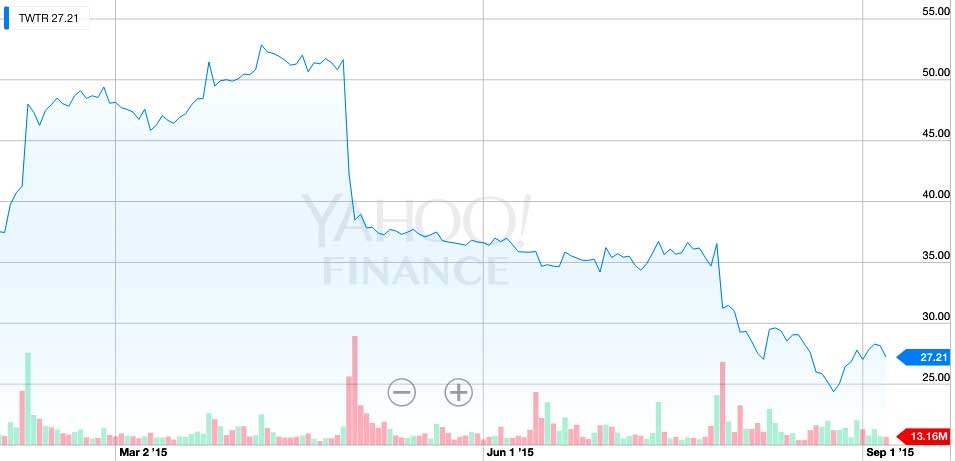
For those owning Twitter stock (TWTR) – trading Tuesday afternoon at $27.22 (down 3.3%), it has been a year without all that much good news to cheer about, followed by a declining stock price since May 2015.

Today another executive, the former CFO Mike Gupta (overseeing the company’s venture capital arm) jumped ship. One wonders what  the day to day mood of employees is like … especially for those holding stock options and doing their jobs (or still acting like they are living in a frat house — mentioned by a few analysts on the outside). More telling would be what management meetings must be like trying to figure out how to grow this “once a darling” social networking company? Oh to be a fly on the wall. It seems like investors are pinning way too much on finding a new captain to steer this ship … hopefully “steer” although it might be more like his/her ability to first right the ship? 

TWTR_150908

The gloomy picture aside, there are reasons to be optimistic. Appointing any experienced CEO will definitely give the company a boost. Someone with executive level experience and proven leadership qualities (even without the social networking and tech credentials) will give investor’s something to pin their hopes on. Longer term, the most substantial reasons for optimism is the expansion of the Twitter self-service ad platform expanding in new countries. Currently more than two dozen countries offer Twitter-promoted tweets and videos outside Twitter. According to research analysts, “the latter feature will be implemented via the Twitter Audience Platform (formerly known as Twitter Publisher Network), and will generate the potential for the company to leverage the scale of its MoPub network.”

Ameet Randive, senior director of revenue products at Twitter, spoke about the importance of this move, underlining that it allows advertisers to reach 700 million people, compared to 300 million active Twitter users, while also stressing that it targets the trend of increased user time spent on mobile in general and in mobile apps in particular. In a blog post last August, Twitter provided indications of the effectiveness of its platform’s ads, citing results from a MediaScience study, according to which "consumers – both on and off Twitter users – spent about 123% more time with Twitter Audience Platform ads compared to traditional mobile interstitial ads".

There are many reasons to believe that the aforementioned strategies will have a significant positive impact on Twitter’s revenue growth and that it may serve in restoring some of the belief in the company’s capacity to fulfill the potential the market once saw in it.

However, a more fundamental challenge the company faces has to do with its core product and, consequently, its long-term appeal to users.

Twitter is nowhere near becoming as big a part of users’ lives as Facebook (NASDAQ:FB) is. Indicative of this is the fact that it lost 1 million users due to the fact that after the roll-out of Apple’s (NASDAQ:AAPL) iOS 8 smartphone operating system, "users either forgot their password or never bothered to re-download the Twitter app", while an integration bug in Apple’s Safari mobile browser cost it approximately another 3 million users. If issues like these can make users can jump ship, you should be worried.

The implementation of a more intense type of monetization strategy may very well serve in further alienating users.

twtr_quote_150908

In conclusion, while Twitter is making moves that can have a notable positive impact on its revenue growth in the medium term, and indicators of bullish sentiment may pop up in that time span, the fundamental issue remains the product’s lack of mass market appeal, and investors with an eye on long-term potential should keep that in mind.

Seeking Alpha LINK

Super Sailing Yacht of Russian billionaire under construction

Posted By on September 8, 2015

superyatch_russianbillionaire

A 140 meter (450+ feet) Super “Sailing” Yacht is currently being built in Germany for a Russian billionaire. The very white tenth longest private yacht ever produced is currently being built in a German andreymelnichenkoshipyard and has been dubbed the “White Pearl.” The tallest of three masts on this super “sailing” yacht is expected to be 100 meters (325 feet) and will be made from carbon fiber. The super yacht (over 24 meters or 78 feet) will need a large crew (said to be 65) to both run and maintain this extravagant sailing vessel … although reminiscent of the “age of sail” … I assume accommodations for owner and crew to be a bit more luxurious.

White Pearl is scheduled to be ready at the end of the year and has apparently been ordered by Russian billionaire Andrey Melnichenko.

Have scientists found a cure for seasickness?

Posted By on September 7, 2015

Imperial College London scientists are developing a device that will plug into a mobile phone and deliver a short shock to the head via a set of electrodes. They hope it will be on sale within five years.

Source: Have scientists found a cure for seasickness?

Which beach will you swim at Volusia County, Florida?

Posted By on September 6, 2015

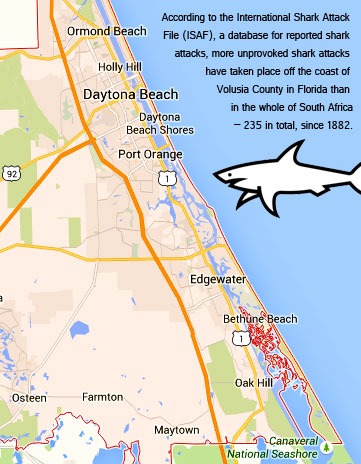
VolusiaCounty-FL_SharksVolusia County, Florida

According to the International Shark Attack File (ISAF), a database for reported shark attacks, more unprovoked shark attacks have taken place off the coast of Volusia County in Florida than in the whole of South Africa – 235 in total, since 1882. None, however, have been fatal.

You’re also more likely to be struck by lightening in Florida than anywhere else in North America: 71 deaths were caused by lightning in the state between 1997 and 2006.

Tidbits from the old days: The origin of sayings (maybe)

Posted By on September 5, 2015

The origins of these idioms are interesting (even if untrue). I didn’t bother looking any of them up, just posted the saying from a forwarded email … although probably pulled from a magazine or an archived site?

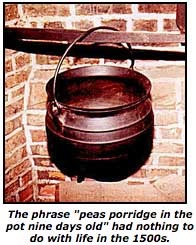
  1. “In the old days,” a big kettle hung over the fire and was used to make a stew. Each day they lit the fire and added more things to the pot. potpeasstewThey ate mostly vegetables and did not get much meat. They would eat this stew for dinner, leaving leftovers in the pot to get cold overnight and then start over the next day. Sometimes stew had food in it that had been there for quite a while. Hence the rhyme: “Peas porridge hot, peas porridge cold, peas porridge in the pot nine days old. Some like it hot, some like it cold, Some like it in the pot nine days old.”
  2. Sometimes they could obtain pork, which made them feel quite special. When visitors came over, they would hang up their bacon to show off. It was a sign of wealth that a man could, "bring home the bacon." They would cut off a little to share with guests and would all sit around and "chew the fat."
  3. Those with money had plates made of pewter. Food with high acid content caused some of the lead to leach onto the food, causing lead poisoning death. This happened most often with tomatoes, so for the next 400 years or so, tomatoes were considered poisonous.
  4. Bread was divided according to status. Workers got the burnt bottom of the loaf, the family got the middle, and those who were most important got the "upper crust."
  5. Lead cups were also used to drink ale or whisky. The combination would sometimes knock the imbibers out for a couple of days. Someone walking along the road would take them for dead and prepare them for burial. They were laid out on the kitchen table for a couple of days and the family would gather around to  eat and drink and wait and see if they would wake up. Hence the custom of holding a wake.
  6. England is old and had relatively small cemeteries so when the local folks ran out of places to bury people, they would dig up coffins and take the bones to a bone-house in order to reuse the grave. When reopening these coffins, 1 out of 25 coffins were found to have scratch marks on the inside and they realized they had been burying people alive. So they started tying a string on the wrist of the corpse and lead it through the coffin and up through the ground and tie it to a bell. Someone would then sit out in the graveyard all night (the graveyard shift) to listen for the bell; thus someone could be saved by the bell and was considered a dead ringer.
  7. They used urine to tan animal skins, so families used to all pee in a pot. Once a day the pot was taken and old to the tannery. If you had to do this to survive you were piss poor,” but worse than that, there were the really poor folk who couldn’t even afford a pot — they "didn’t have a pot to piss in" and were the lowest of the low.

Here are some facts about the 1500s:

Most people got married in June because they took their yearly bath in May, and so they still smelled pretty good by June. However, since they were starting to smell, brides carried a bouquet of flowers in order to hide the body odor. Hence the custom of carrying a bouquet when getting married.

Baths consisted of a big tub filled with hot water. The man of the house had the privilege of the nice clean water, theshroofthen all the other sons and men, then the women and finally the children. Last of all the babies. By then the water was so dirty you could actually lose someone in it. Hence the saying, "Don’t throw the baby out with the bath water!"

Houses had thatched roofs piled high with thick straw and no wood underneath. It was the only place for animals to get warm, so all the cats and other small animals (mice, bugs) lived in the roof. When it rained it became slippery and sometimes the animals would slip and fall off the roof … hence the saying "It’s raining cats and dogs."

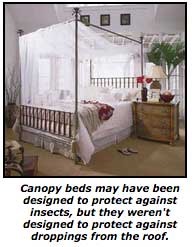
There was nothing to stop things fromcanapybed falling into the house. This posed a real problem in the bedroom where bugs and other droppings could mess up your clean bed. A bed with big posts  was used with a sheet hung over the top to offer some protection and that’s how canopy beds came into existence.

The floor for most peasants was dirt. Only the wealthy had something other than dirt. Hence the saying, "dirt poor." The wealthy had slate floors that would get slippery in the winter, especially when wet, so they would spread thresh (straw) on the floor to help keep their footing. As the winter wore on, they added more thresh until, when you opened the door, it would all start slipping outside. A piece of wood was placed in the entrance as a way to prevent this … hence, a threshold.

Pandora celebrates 10 years with an ad free day on 9/9/2015

Posted By on September 4, 2015

Pandora has announced that it will celebrate it’s 10th anniversary on Wednesday September 9th and will offer those who are non-paying listeners with an ad free day. According to a Forbes article, free listeners still make up 95% of Pandoras’ active users and maybe hoping that a sample of what the premium paid-subscriber tier is like will encourage subscribing.

pandorabanner

Pandora currently has about 250 million subscribers but only 80 million are active, according to the company’s own numbers. Of those, just around 4 million, or 5%, have chosen the $4.99 per month ad-free premium tier (and many of them subscribed at the previous $3.99 level). This ratio has been surprisingly steady throughout its history, and the service hasn’t proven that it has the ability to up the conversion rate.

MORE

My longstanding favorite Pandora Station is based on the music of Jackson Browne:

PandoraJacksonBrowneRadio2

Archiving a couple Facebook photos of Taylor and one of me

Posted By on September 3, 2015

TaylorRedsGameAug2015 Taylor3or4yrold_IMG_0968

It is obvious the #TBT photo of my son Taylor on the left was taken by me, but the one above at the Great American Ballpark this summer in Cincinnati was copied from Facebook. Since Taylor posted them both to wall this past week, I starting thinking about growing up … both for him and for me.

We have terrific memories and I can see that Taylor is making some great memories with his friends this summer too. So glad to see him happily enjoying life … come to think about it, Brenda and I did a pretty good job enjoying life at his age too – just in a different way since we had already been married a few years.

RichHoneymoon1982cropped
Ok, so I was only 23 in this photo, a few years YOUNGER than Taylor! (St Thomas – June 1982)

Seeing life through the prism of our own world

Posted By on September 2, 2015

Let me start off that I have been abundantly blessed and thankfully to this point I haven’t faced the need for “therapy,” as the many versions of the below tee-shirt make light of. In my case was fortunate to be born to loving parents who emulated what it was to be a great mother and father, as well as loving spouses to each other their entire adult lives. This built a solid foundation for me, something that is no longer the norm in today’s secular culture. IMG_5729Without faith and a strong family teaching by example, life for the next generation begins as an uphill climb.

That’s not to say there were no difficulties. There were enough challenges to experience failure, my own limitations and the wisdom of good judgment. I also learned the benefits of persistence and value of a good work ethic – belated thanks mom and dad. This meant that I wasn’t handed everything … but given what I needed in order to experience the satisfaction of achievement. Thankfully accomplishments rarely went unrewarded and setbacks only encouraged more effort.

I was reminded of this on Monday when showing a my mother-in-law’s car to a young man (Andrew), who recently graduated from high school; he was working two part time jobs in order to save for college and also wanted his own car (what boy doesn’t?) We talked a bit about his plan and he explained that he was unhappy living with his father and that being from a divorced family, his mother lived out of state. It is sad seeing broken relationships played out through children. Andrew achieved in all sports in high school and took pride that earned a baseball scholarship that would help him in college, but that he also was working two jobs in order to earn enough to even possibly go to college. Some of us take for granted that college is somehow always going to be available for those who want it. In Andrew’s case, he was putting off the first semester in order to save enough from his combined jobs in order to have enough for the Spring semester (I suggested taking a class or two locally … couldn’t help myself). He admitted that academics were not his strong suit and I wondered if buying an $11,000 SUV was the “perfect plan” … but I was once a young man and understand the strong pull of the “wheels of freedom” (your own car). Nevertheless, I was impressed with is work ethic and plan to achieve a goal. After talking with him, I realized that too many times we wear the blinders of our own communities and circles of friends (middle income suburbia) and we see things through the prism of our surroundings and not necessarily though those that face a few more challenges.

For Andrew, the father in me may have come out. I purposely didn’t over sell him the car. I pointed out that it is not fuel efficient for driving back and forth to his minimum wage jobs or commuting to classes before going to full time class in the spring. It was also over his budget, meaning he would have to borrow … although really didn’t want to dissuading him. I too remember the “freedom of my own car draw” and could hear my dad in my head logically pointing to the pitfalls of teenage car ownership when I could borrow my mom’s car when necessary (I eventually bought my first car when I was a junior in college … but have made up for the late start over the years!)
I think I’d make a lousy car salesman if all customers were like Andrew. Smile

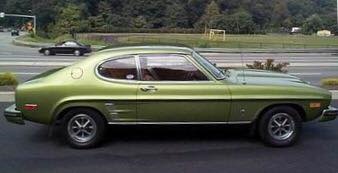
1974MercuryCapriPeaGreen 1974MercuryCapri_peagreen 
My First car (besides borrowing mom’s) was a Pea Green 1974 Mercury Capri

Three Ohio cities named Best Places to Live 2015 – @Money

Posted By on September 1, 2015

MoneyMag2015Cities

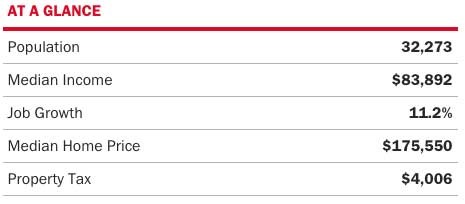
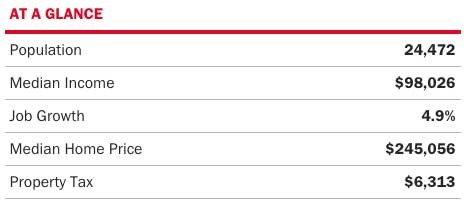
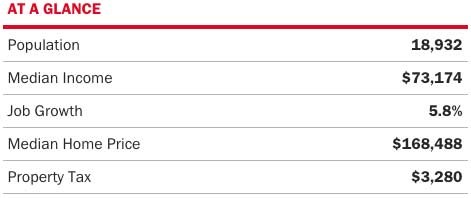
Three small Ohio cities made Money Magazine’s list of Best Places to Live in 2015. Having lived in neighboring communities to Mason (currently Liberty Township) and both Solon and Twinsburg, Ohio (previously Hudson), I agree that both areas are great places to live and raise a family. tackbestplacestoliveCommonalities are that they are growing upscale small towns, incorporating as cities near larger cities, and are populated with residents who embrace Midwestern traditional family values. If you are relocating to either the Cincinnati or Cleveland/Akron areas, and these “commonalities” appeal to you, start your thumb tack search around these small cities.

Mason, Ohio

MasonOHMoneyGraphic2015

Mayor David Nichols, former CEO of a publicly-traded manufacturing company, continues his great track record of luring big employers and quality jobs to this suburb north of Cincinnati. Procter & Gamble, which has its beauty and healthcare division here, announced it’s adding 1,400 R&D jobs, and Festo, the German maker of high-tech automation products, is moving most of its U.S. manufacturing to Mason from New York.

The job mix attracts a workforce from all over, and that diversity shows up in Mason’s schools — 27% of students are nonwhite. With more than 3,300 students, Mason High School is the largest in Ohio, but its “bigger is better” approach (67 athletic teams and 80 extracurricular clubs) has consistently landed it in the state’s Top 10 of academic ratings. The schools’ latest boast: The high school’s jazz band will be playing in the Rose Bowl parade in January.

Strip malls and big-box retailers are the norm, but residents regularly flock to what seems to be Mason’s true hub, the 199,000-square-foot community center, one of the state’s largest public facilities.—Vanessa Richardson

Solon, Ohio

SolonOHMoneyGraphic2015

On a typical weekday morning, it seems that as many cars make the rush-hour drive into Solon as those doing the 30-minute commute to downtown Cleveland. Among the 800-plus local businesses are divisions of the Cleveland Clinic and Nestlé and the world headquarters of Swagelok, maker of components for gas and fluid systems. The chamber of commerce aims to lure more businesses with tax breaks and job-creation grants.

Both the city and schools are working to teach students skills that could land them a job at one of those local businesses. A Young Innovators Society inspires kids from kindergarten on up to get into STEM fields, and a “Minnow Tank” contest for junior entrepreneurs will make its debut in January.

That doesn’t mean Solon is all work, no play. The town, which already has a popular community ­orchestra, just launched a band, and there are plenty of parks, trails, and riverside green spaces where locals can go to kick back. –Vanessa Richardson

Twinsburg, Ohio

TwinsburgOHMoney2015Graphic

Located halfway between Akron and Cleveland (a 30- to 45- minute commute in either direction), Twinsburg feels nearly as pastoral as it did in 1819, when twins Moses and Aaron Wilcox offered residents $20 for starting the first school if they agreed to change the settlement’s name to Twinsburg (the annual Twins Days festival, drawing up to 3,000 sets of twins, just celebrated its 40th anniversary).

The leafy parks have trails winding through meadows and woods, with the 4.4-mile Complete Center Valley Loop Trail connecting them all. The small town square transports you back to the 19th century. The downside of that is a lack of shops and restaurants, which means residents have to drive elsewhere for those.

Twinsburg’s first school has grown into five schools that have gotten Ohio’s top marks in academic achievement for the past seven years. Students gets a lot of financial and volunteer support for its athletic teams, music and fine arts programs—the Twinsburg Band Boosters recently donated more than $62,000 for new band uniforms.—Vanessa Richardson

Full article in Money Magazine for Best Places to Live 2015

Desultory - des-uhl-tawr-ee, -tohr-ee

  1. lacking in consistency, constancy, or visible order, disconnected; fitful: desultory conversation.
  2. digressing from or unconnected with the main subject; random: a desultory remark.
My Desultory Blog