When we were first married, we had an old hand-me-down clothes dryer from my in-laws … along with an electric “Maytag ringer washer” that came with our first house. The dryer was about 20 years old when we first started using it and lasted another 15 years or so and could be easily self-repaired.
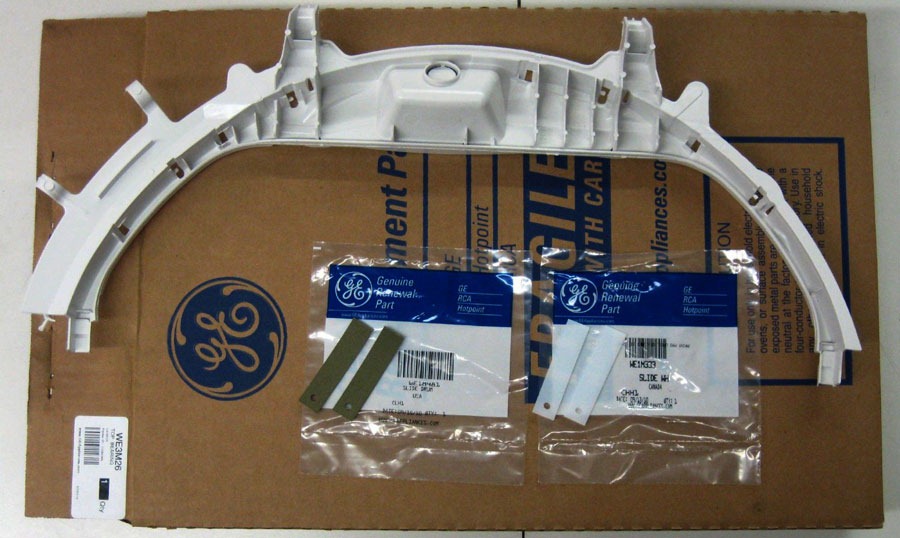
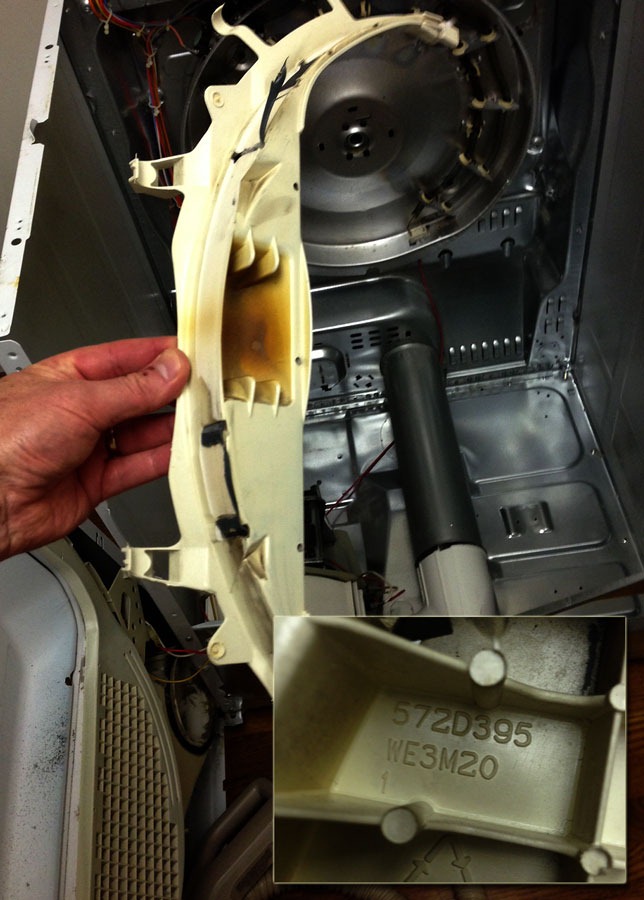
When we moved to Cincinnati, we bought a new matching GE washer and dryer with cheapened knobs and a variety of less durable molded plastic parts – some that I’ve complained about before. The ease of access in order to diagnosis is also an issue … as I found out while tracking down a dryer squeak. The photo to the left shows the “fail” … the Teflon slide bearings wear and eventually the drum grinds down the plastic housing. I suspect buying a new dryer would have been much easier than tearing apart the dryer (what a pain) as well as the hassle in shipping when ordering a new surround and bearing kit – it still isn’t here! ($21.75+sh)
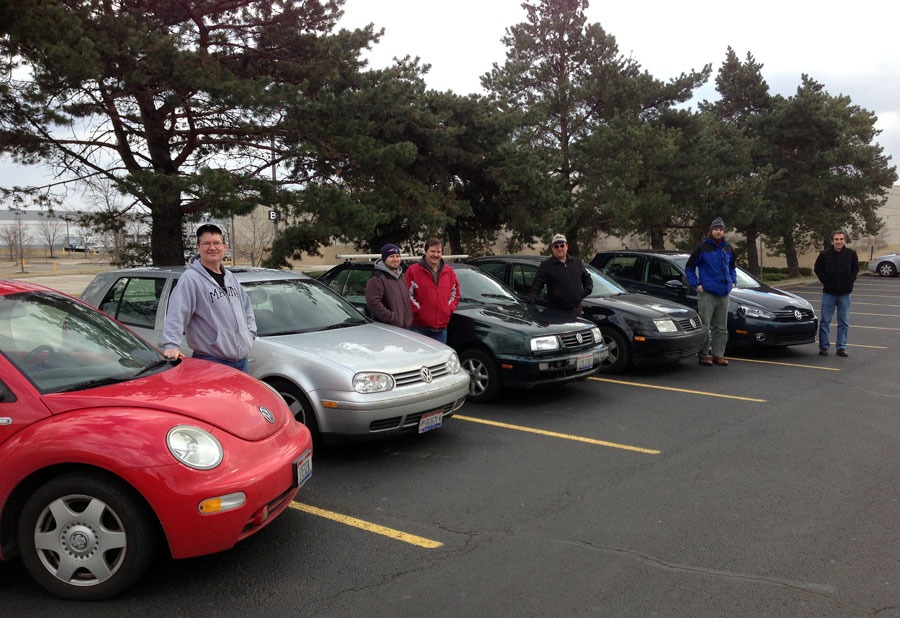
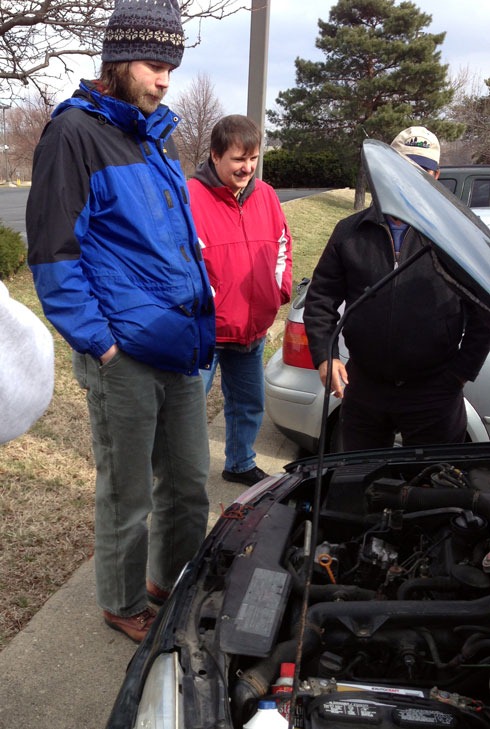
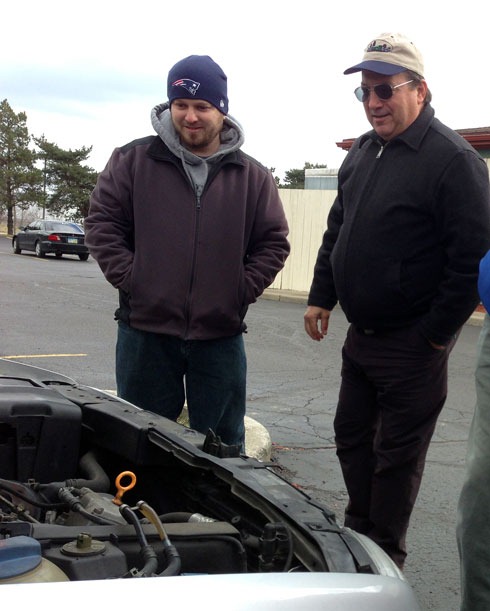
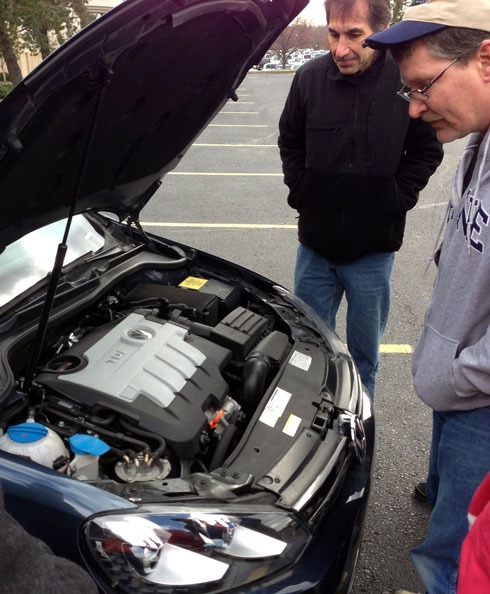
A handful of CinciTDI friends gathered on Saturday at Roosters in Fairfield Ohio with our Volkswagen TDIs and stayed warm inside most of the time for just a social get together (GTG). That’s not to say a few cars didn’t need a bit of "wrenching," but the temperature and wind chill would not have have made that a pleasant task – besides we only intended to talk and eat. (a few more photos below)
Shared per Emily Stewart of Online MBA blog … Thanks.
Global economists are keeping their eyes glued to the Asia-Pacific region, where a bitter feud is brewing between two of the world’s most powerful nations over a small collectivity of islands in the East China Sea. The Chinese government argues that a treaty signed during the first Sino-Japanese War (1894-95) conferred ownership of the islands to China. Japan has long disputed these claims, and today argues that the islands are integral to its national identity.
The argument came to a head last September, when a boycott of Japanese products led Chinese demonstrators to target fellow citizens who owned Japanese cars. Three months later, the situation escalated when when Japanese jets confronted a Chinese plane flying over the islands; no shots were fired, but the act of antagonism has set a troubling precedent between the military forces of both nations.
The conflict between China and Japan has put the United States in a precarious position: if a full-scale war were to erupt, the U.S. would be forced to choose between a long-time ally (Japan) and its largest economic lender (China). Last year, China’s holdings in U.S. securities reached $1.73 trillion and goods exported from the U.S. to China exceeded $100 billion. The two countries also share strong economic ties due to the large number of American companies that outsource jobs to China.
However, the U.S. government may be legally obligated to defend Japan. In November, the U.S. Senate added an amendment to the National Defense Authorization Act that officially recognizes Japan’s claims to the disputed islands; the U.S. and Japan are also committed to a mutual defense treaty that requires either country to step in and defend the other when international disputes occur. Not honoring this treaty could very easily tarnish America’s diplomatic image.
The countries of the Asia-Pacific region are collectively responsible for 55 percent of the global GDP and 44 percent of the world’s trade. A major conflict between the region’s two largest economies would not only impose a harsh dilemma on U.S. diplomats, but also have a significant impact on the entire global economy. It is in every nation’s best interest that the Chinese and Japanese settle their territorial dispute peacefully.
Video Transcript
Whispers of the unthinkable are wafting throughout the Asian-Pacific Region: war between China and Japan over a small cluster of resource rich islands in the East China Sea claimed by China (Diaoyu) and Japan (Senkaku).
In September, the dispute quickly came to a boil. Fueled by nationalism and the memory of Japan’s brutal occupation of China during World War II, enraged Chinese crowds filled the streets. They targeted owners of Japanese cars and launched a massive boycott of Japanese products, sending a debilitating gut punch to Japan’s still struggling economy. In November, the Wall Street Journal Live reported that the boycott had cost Japanese companies “billions of dollars.”
Since then, both nations have flexed their military muscle. In December, Japan scrambled jet fighters to respond to a Chinese plane flying over the islands. Although no shots have been fired yet, such dangerous confrontations are likely to continue.
Should the crisis worsen from its current status to, say, missiles launched and a ship sunk or an airplane knocked out of the sky, the United States will be forced to choose between backing a longtime ally (Japan) and supporting a nation more central to our economic health (China).
In terms of economics, China has the clear bottom-line edge, serving as America’s biggest lender. As of September, China’s holdings in US securities ($1.73 trillion) topped the global list of creditors.
In terms of trade, the most significant US relationship in the Asia-Pacific Region is with China – by far. According to the Office of the US Trade Representative, the export of US goods to China amounted to $104 billion in 2011, while exports to Japan over the same period were $66.2 billion.
Then there’s the extensive outsourcing by American companies, which ties the economies of China and the US even closer. A case in point is Apple, which designs its iPhone and other products in the US, but has them assembled at China’s massive Foxconn City facility.
All of this could be put at risk if the US sided with Japan in the current dispute – and the Chinese retaliated. A boycott would obviously harm American companies that ship agricultural products as well as cars and other finished goods to the Chinese market. Less clear is whether Chinese anger would extend to US firms such as Apple, which have deeper Chinese economic roots.
There’s also the possibility that China, to punish the US, could sell off its stash of US securities, a move that would devalue the dollar. It’s possible but not likely, at least according to a December report by the Congressional Research Service. Among other consequences, such a sale “could diminish the value of these securities” and “lead to large losses” for China.
In November, the US Senate unanimously approved an amendment to the National Defense Authorization Act recognizing Japan’s administration of the Senkakus and opposing the use of force. The Japanese cheered, and the Chinese howled. But the provocative sentiment expressed in the amendment should be no surprise.
In 2011, President Obama announced a major foreign policy shift. He declared that the Asia-Pacific Region – which generates “approximately 55 percent of world GDP and about 44 percent of world trade” – would be a top US security priority. The declaration was couched in normal and nuanced diplomatic niceties.
It could also prompt the Japanese to scrap their antiwar constitution – adopted after the US However, China and the other nations of the region weren’t fooled.
For the United States, China is a classic “frenemy” – an economic partner, a rival, and a potential enemy that has upgraded its military capacity and used it to reinforce its claim to other disputed islands in the South China Sea.
More importantly, the US and Japan – which is home to ships of the powerful US Seventh Fleet – are bound together by a mutual defense treaty, which commits the US to defend its longtime ally. US failure to support Japan would undermine US credibility not just in Japan but throughout this strategically important region. Firebombing of Japanese cities and the atomic devastation of Hiroshima and Nagasaki during World War II – and commit their deep pool of technological skills and talent to a single goal: a massive rearmament program that could include nuclear weapons. No one doubts that the Japanese, have the capacity to become a world-class military power – an outcome no rational person wants to see.
Should a shooting war erupt, the US will side with Japan despite the nightmarish economic scenarios that could follow. The challenge facing US officials and diplomats in 2013 is to help China and Japan find a face-saving way to keep the dispute from getting that far.
A friend of mine recommended adding the PrivacyFix plug-in to Mozilla Firefox and Google Chrome browsers. The install was simple on both and checks a variety of user adjustable privacy setting on Facebook and Google. After completing the 3 minute multi-step check, there is a option to install a small monitor icon on the browser header. Simple and hopefully clean enough not to slow down the browser or cause any issues. Check out the ReadWrite.com review.
Instantly check your privacy settings across Facebook, Google and the other websites and companies collecting your data. Get to the fix with one click. Know when policies change.
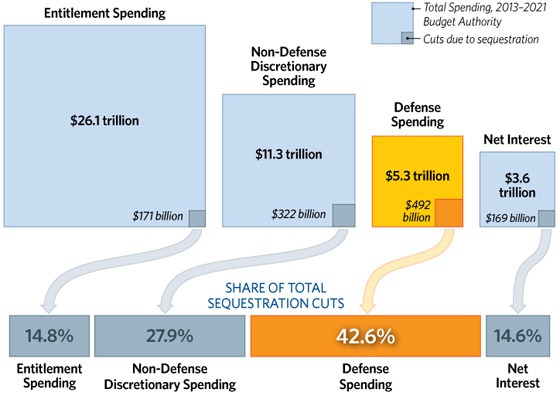
The coming government cuts, either by choice or sequester and their economic impact is bound to be felt by all of us. The President for his part Tuesday night in the State of the Union address offered a warning, but little that addressed the ominous across the board cuts coming on March 1st if nothing is done. As an advocate for a smaller federal government , cuts are necessary, but I also recognize that unmanaged instant cuts are not the best way to shrink Washington DC.
The pain will be felt most acutely by the military and those employed or planning to work for Uncle Sam directly. For the rest of us, I sense the immediate impact will be felt down the road as the economy will slow according to the CBO and as we begin to notice the missing or slowed government services. The Pentagon has already said that 800,000 civilian employees will see their hours cut by about 20% for the rest of the year and they will also lay off 46,000 temporary workers. Food safety inspectors will try to do their job with 600 fewer people. Weather forecast may become less accurate and the nation’s air traffic will most likely slow; there will be about 1200 fewer controllers to oversee U.S. airspace. We’ll all feel the pain of long delays when it comes to passports, taxes and social security paperwork, not to mention the difficulty for visitors when it comes to visas and tourism. Those wanting to visit the U.S. may just go elsewhere if entry becomes too difficult … of course that won’t impact illegals crossing at our southern border. The border patrol estimates that they will need to reduce their staff by 25%!
Research advocates have argued that cuts to the National Institutes of Health, which drive US medical research, will slash about $12.5 billion from research this year and reduce economic growth by up to $860 billion over nine years, hitting US competitiveness in science in the long run and triggering nearly half a million job losses between 2013 and 2016.
Despite political maneuvering by Republicans and the White House to find a solution to the so-called "sequester", there are no serious proposals to avoid the $1.2 trillion in automatic spending cuts that are expected to take effect on March 1. It might be a good time to put pressure on “all” of Washington DC … they need to come up with a better solution that the sequester.
I’m on a roll in posting a few old photos and still in the reminiscing mood, so figured I’d archive a couple more black and whites. These are from my home darkroom when I started photography as a hobby in junior high school.
We’re starting to pack things back in boxes again so the boring family “slideshow” will slow … maybe we’ll put them in plastic boxes this time? Duh! Above are a couple photos of our dog Skippy taken with my first camera … a Kodak Brownie camera and below a couple photos of the house I grew up in.
Back in 2009 I used Google to look up the house I grew up in about 20 miles east of Toledo on Lake Erie. Our old house has since been torn down according to Google’s Sat images, but the Streetview photos are still showing the old house.
It’s not fun drying out our basement, but I am enjoying finding long lost photos. Here’s one of a canoe trip (one of many) taken during a 1977 spring trip to the Whitewater River in Indiana with Charlie “Kamakaze” Matthews. We spent our free time both canoeing and sailing when we were in high school and it is fun to reconnect on social networks (Facebook).
He had an old Volkswagen and we’d strap his 17 foot canoe on top and had a great time. As I recall, we drove that “bug” pretty hard all over the place … including Florida. Great memories!
Now that he’s a mature and respectable realtor in the Washington DC area, I’m not sure these photos are helpful? Click for larger images.
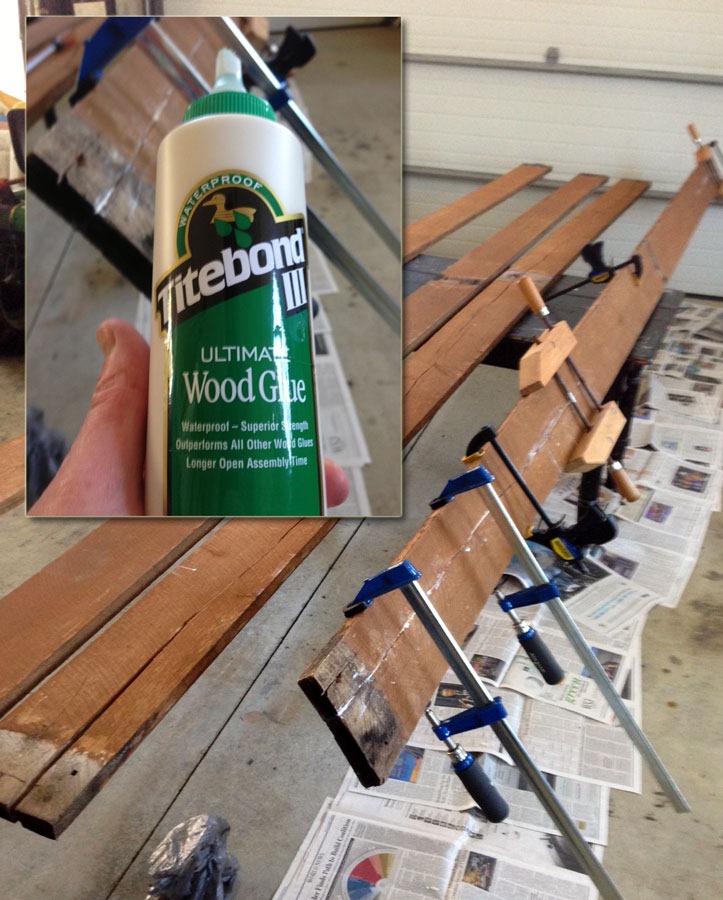
Along with our flooded basement and BlueMax water line repair mentioned the last few days, the boring equipment the excavator used took out some of my fence. Although we just stained it again this year, the boards are starting to show their age and have split. I figured this might be a good time to test a new Titebond 3 “waterproof” wood glue and see it it is up to the water-proof claims?
Titebond III Ultimate Wood Glue is the first one-part, water cleanup wood glue ever offered that is proven waterproof. The waterproof formula passes the ANSI/HPVA Type I water-resistance specification and offers superior bond strength, longer open assembly time and lower application temperature.
While drying hundreds if not thousands of photos after our basement flooding this past week, the memories have been both great … and have pulled my heartstrings. I’ve scanned a few photos this afternoon to share (they were pre-digital) and reminded me just how many years have past … and how fast those years have gone. This one with Katelyn (1987) for the first time made me melancholy about her wedding – yikes, its only 2 months away.
 When we were first married, we had an old hand-me-down clothes dryer from my in-laws … along with an electric “Maytag ringer washer” that came with our first house. The dryer was about 20 years old when we first started using it and lasted another 15 years or so and could be easily self-repaired.