Biodiesel and U.S Energy Consumption
Posted By RichC on May 8, 2007
I liked Megan Murphy’s post over on the Renewable Energy Access site enough that I didn’t want it to get lost … so I’m archiving it here for reference. An algae biodiesel article is in the works and I’ll keep my eye open for it.
May 8, 2007
How Does Biodiesel Affect U.S Energy Consumption?
Q: I am a retired biochemist and worked as a rice farmer from 1945 to 1949. So I am concerned about supply of oil for food production, which is now completely dependent on oil-driven machinery in the U.S., Japan and others. I would appreciate it, if you could give me some information on biodiesel production. — Hitoshi Maruyama, Kenmore, WAA: I wish I could say biodiesel, a renewable alternative to diesel fuel, is produced in such a way that it could safeguard our food supply from the effects of declining oil reserves and permanently higher fuel prices. Unfortunately, biodiesel is not a silver bullet, able to eliminate American agriculture’s dependence on fossil fuels. But biodiesel, produced sustainably and reducing our petroleum demand, can make the transition to a new energy economy less painful.
In 2005, America’s farms spent $27.4 billion on energy-related expenses. That breaks down to $3.4 billion on electricity and $12.8 billion on fertilizers that along with pesticides create a significant, indirect source of fossil fuel-dependent energy consumption for agriculture. The fuels and oils required to operate equipment and machinery cost farmers $11.2 billion, and included the cost of about 3.5 billion gallons of diesel fuel used to plant, tend, and harvest our crops and raise our livestock (1).
It sounds like a lot but the total energy use by the agriculture sector peaked in 1978, and has decreased since then despite increased agricultural output (2). Farm equipment and practices have become more efficient as farmers stay competitive in the market by keeping their energy costs down.
In America, a common way to produce biodiesel is from virgin soybean oil. The oil is harvested from the plant and sold on the commodities market. A biodiesel producer purchases the oil and ships it to a biodiesel refinery, where the process of making biodiesel, a transesterification reaction, takes place. The large triglyceride molecules of vegetable oil are broken into the smaller and less viscous, long chain mono alkyl esters of biodiesel. The reaction requires a short chain alcohol (usually methanol) and a catalyst (usually sodium or potassium hydroxide) (3). Glycerin, a sugar, is also produced in the reaction and is often sold to industry for use in soap, cosmetics, and many other applications.
The American biodiesel industry is experiencing tremendous growth, from its humble beginning of less than 10 biodiesel plants in 2000 to 65 plants operating and 58 more under construction or expanding in 2006. Biodiesel production capacity is projected to reach 1.7 billion gallons by 2008 (4).
1.7 billion gallons of biodiesel would cover almost half of the 3.5 billion gallons of diesel we use on farms, but biodiesel is not just sold to farmers and 1.7 billion gallons is more of a drop in the bucket when it comes to the annual 60 billion gallons of diesel fuel consumed in America.
Making a dent in the total diesel consumed in the U.S. would require a lot of biodiesel. According to a white paper from John Deere & Company, use of a B2 (2% biodiesel, 98% petroleum diesel) blend nationwide is an attainable goal. “It would require 1.1 billion gallons of pure biodiesel… [and] consume all the soybean oil from 18 million acres, or about one-fourth of current U.S. soybean production (5).” (John Deere & Co. is forgetting about my favorite, sustainable feedstock, Waste Vegetable Oil (WVO). And are you wondering about algae? Stay tuned for my next column.)
Eighteen million acres of soybeans grown for fuel to meet 2% of our nation’s diesel fuel demand, when my salad came all the way from California? Biodiesel cannot replace all or even close to all of the diesel fuel we consume here in the U.S. But there are simple and delicious ways to reduce our food supply’s dependence on petroleum like buying local, organic produce.
I live on the East Coast and on average the produce available here is 3 to 4 days older than the produce available in California. I don’t want to spend a lifetime eating old lettuce and wasting fuel. Fortunately, there is a growing movement towards Community Supported Agriculture (CSA) in America, where small organic farms can provide enough vegetables to support 200 to 300 local families on 5 to 10 acres of land. Here in upstate New York, I can get almost all of my produce during the growing season from the local farmers’ market or join a CSA and have a weekly share of what is in season. I can ride a bike (the chain greased with biodiesel) to where my beets are grown, instead of having them shipped to me from California. I find fresh vegetables and efficiency very appetizing.
So make your biodiesel sustainable and eat your locally grown kale and we might just make it out of this pinch.
Footnotes:
1. United States Department of Energy, Energy Information Administration. “Adjusted Distillate Fuel Oil and Kerosene Sales by End Use,” 2005.
2. United States Department of Agriculture. “Energy and Agriculture,” August, 2006.
3. United States Department of Energy. “Biodiesel Handling and Use Guidelines,” March, 2006.
4. Borgman, Don. “Agriculture, Bio-fuels and Striving for Greater Energy Independence: A John Deere perspective on the realistic role US agriculture can play in satisfying America’s increasing appetite for renewable fuels,” January 4, 2007.
5. Ibid— Meghan Murphy

 Turning 21 years of age is a milestone for most of us as we grow up, and one that is deserving in crossing in memorable style:
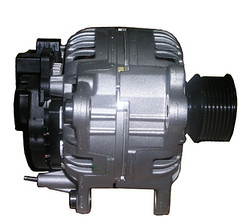 One of the reasons I didn’t take the VW TDI this week is because the bearing in my alternator is going. Its twice as bad now, but I tried a little
  May 3rd
  Oh what tangled webs ‘get’ weaved … especially when messing with the power of the masses connected online … and elsewhere. The story begins with copy protection of a new high definition HD-DVD format — protection intended to prevent (or at least make it difficult) for pirated copies of movies to be duplicated from this new generation of DVDs. Their copy protection uses a cryptographic key of 16-hexadecimals to encrypt the data so that digital duplicate copies could not be made. Unfortunately … or fortunately depending on your position on your right to maintain back-ups of purchased HD-DVDs … someone leaked the key. It didn’t take long before social networking and “people submitted news sites” started to post this hexadecimal number …
 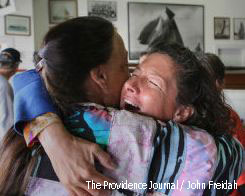 From all accounts and an email from Donna, the festivities in Bristol were pretty humbling or as she herself writes: “Life is beyond amazing at this point. The events happening are surreal. Someone pinch me.” The past week has been a whirlwind for Donna Lange, as she managed to give speeches, share some music and meet … and “hug” … many of those who had encouraged her along the way. The legislature in Rhode Island even declared April 28th as “Donna Lange Day!” She is the 46th American to solo sail around the world — the 257th person worldwide according to Ted Jones, chairman of the
 After meeting with EU leaders in the Rose Garden,

 I’ll just keep the gallery of photos private, but for those who are interested or have reason to want a copy (ie. they’re of your kids), I’ll email a link to the photos if you would like to see them, although by now I’m sure