VW R32 coming to the US in August 2007

Posted By on February 8, 2007

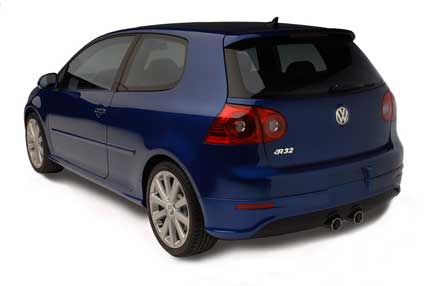
VW R32 for 2007
Volkswagen of America announced the high performance version of the GTI known as the R32 which boast a 250 horsepower narrow-angle 3.2L V6. This unique powerplant will be mated to the six speed dual clutch transmission (DSG) and shift paddles on the steering column. The 0-60 times are said to be in the mid-6 second times and special interior/exterior R32 trim. According to the spokesperson at the Chicago Auto Show, the first 832 existing R32 and GTI owners to place a deposit for this special edition VW will received the first vehicles in August 2007.
EDIT 2/8/2007Autoblog reader spots the hinted website to be given to existing GTI and R32 owners … check this out!
EDIT 2/9/2007 – My local VW Dealer contact has priced the pre-order only R32 at: $33,590 plus Tax and title. The only option available is the DVD nav system at $1800.

San Antonio Biodiesel conference

Posted By on February 7, 2007

With the day at home, I’m playing catch up and reading reports on the National Biodiesel conference which is underway in San Antonio Texas. I’ve posted two of the audio links in my sidebar (to the right) and will include a blog link commenting on the ‘daily goings on.’ Note: You can’t hear the questions in the recorded discussion between the politically opposite couple, James Carville and Mary Matalin, but it does indicate that biofuels and alternatives to petroleum have common ground.

Fresh snow makes for a winter wonderland

Posted By on February 7, 2007

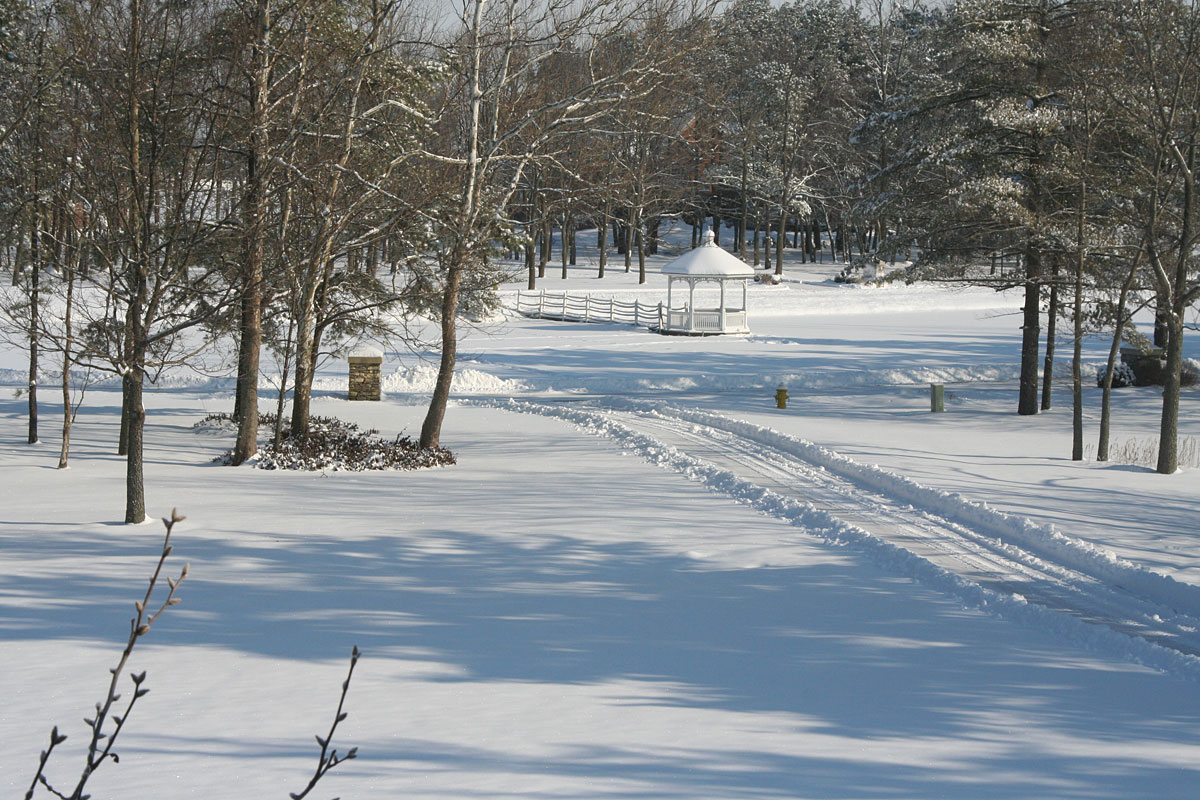
Photo of Snow Feb 6, 2007
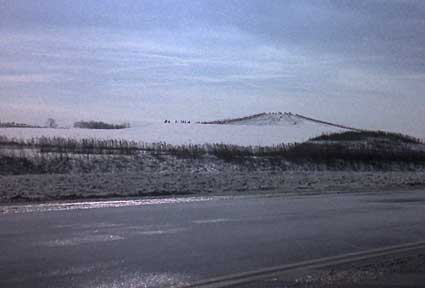
I’m using the 6+ inches of fresh snow and cold weather as an excuse to stay home today. The local schools closed and so after sleeping in my son is taking off to go sledding with his buddies. Mt. VOA is a favorite place, but is hardly a “Mount” … to understand you would have to be from this area or at least see a photo. (see Ronald Reagan Voice of Freedom Park)

EDIT: I’ll include a quick cellphone photo after running over that way for lunch so you better understand the joke in calling it Mount VOA.
🙂
Mount VOA

Has your ‘car’ ever driven through a red light?

Posted By on February 7, 2007

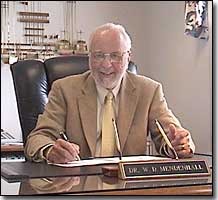
Traffic lightSeveral years ago while living and working in a suburb of Akron, I made the acquaintance of Dr. Warner Mendenhall, Jr. (but he’s the senior for this post) … I did some work on his mayoral campaign. Besides being a kindred spirit in our ability to discuss sailing, he was a good customer and became a friend. Years have passed and I’ve only talk to Warner a few times in the past 5 years, but a short news segment with his son caught my eye. He was on the Fox News Bill Hemmer program (he’s Cincinnati guy) discussing a case he was handling for his client … his wife.

Mayor MendenhallThe younger Warner Mendenhall is a noteworthy attorney in Akron who is known for his ‘watchdogging’ of government; Mr. Mendenhall has also shown local politic ambitions running for mayor of Akron. The case he is handling for his wife has to do with challenging the traffic light photo tickets — it is to be heard by the Ohio Supreme Court later this year. (see Class Action Complaint filed in Summit County’s common pleas court)
Warner MendenhallOhio drivers have probably noticed the use of cameras on traffic lights, but what many might not know is that they are set up to mail tickets to car owners who’s cars have been spotted driving through red lights. I’m not sure how tightly they are calibrated (photo immediately after the light turns from yellow to red?) but I know that even I have passed under a light that has just turned red. That noted, I’m guessing my wife and teen drivers might have done the same … yet all the cars are registered in my name. Perhaps you can see where I’m going with this? If not, check out the short interview below and ask yourself, “should the registered owner of the car receive a violation and fine?”

{democracy:4}

Winter in Black and White captured with Treo

Posted By on February 6, 2007

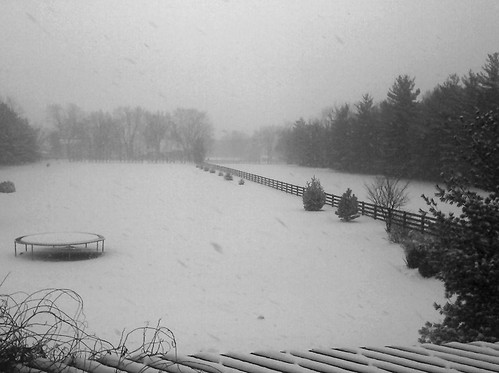
Winter in Black and White
Here in the mid-west we’ve been cold for about a week and there is little sign that winter is abating. (photo above is a black and white from my Palm Treo 700p smartphone) The snow has started in earnest and has curtailed my trip from Cincinnati to Cleveland this week. Notwithstanding, technology is keeping me connected and offers me little excuse to play hooky from work … FYI: my son is crossing his fingers that school will be cancelled tomorrow. I sent him out this afternoon to get a head start on shoveling the walks and as I supervise from the warm side of the window (smiling), I notice he is spending more time playing in snow than shoveling it … so much for getting a head start?
🙂

Too much news to comment on today, so I’ll just re-post a ‘fish story’ that I found interesting and save the ‘traffic signal post’ for tonight … aka: tomorrow’s post.

Capt. Roger Schmall’s fish story

FORT MYERS BEACH, Fla. — A crew of two fishermen was stranded 100 miles off Florida’s coast after a pack of bull sharks that had been following the shrimping boat for days smashed a hole into the ship’s hull and broke its propeller.

A group of sharks had been slamming into the Christy Nichole’s hull for four days, Captain Roger Schmall said. But then a 14-foot bull shark broke the boat’s tail shaft, leaving Schmall and his crew of two adrift about 100 miles off the coast. It eventually sank last week.

Schmall had seen the sharks trailing him for days, he told the News-Press newspaper.

A 14-foot long bull shark cracked through the shrimping boat’s tail shaft and broke the ship’s propeller, leaving him and his crew of two to drift 100 miles off coast.

“It’s pretty scary when you’re sitting there and you got all that water coming in,” Schmall told the News-Press.

Schmall radioed for help, and another vessel picked the crew up about two hours later.

After being rescued this time, Schmall remained aboard his ship to pump water out while the other boat pulled it back to land. He says it was working for a couple of hours, but the waves eventually took their toll on Schmall’s boat and the boat sank.

Sadly, this wasn’t Schmall’s first run-in with the sharks.

Once, in Freeport, Texas, Schmall’s dog jumped in the Gulf after the shrimpers dumped the extras. The dog was caught in the feeding frenzy and never came up again.

Sharks are a common sight for shrimpers, Schmall said.

“That’s where they get their food, when we throw our trash over,” Schmall said, referring to unwanted critters caught in the netting.

“Now, they’re so ferocious, they travel in such big packs,” Schmall told the News-Press.

He has no idea what he’ll do next. He’s considering leaving the shrimping industry altogether.

The Associated Press contributed to this story.

Sun21 completes solar only Atlantic crossing

Posted By on February 5, 2007

Sun21 Sketch
Although I’m a wind power guy and prefer sailing, I’m impressed with an Ocean crossing solar powered Swiss-made catamaran called the Sun21. The unique boat became the first solar-powered boat to cross the Atlantic and was able to log 107 nautical miles per day. The 41 foot catamaran sailed a similar route to that of Christopher Columbus leaving Chipiona, Spain and concluding in the Caribbean island of Martinique.

The boat is equipped with 650 square feet of solar panels successfully electrically motored its way 2700 nautical miles in 30 days non-stop across the Atlantic Ocean. According to Beat von Scarpatetti, “There’s hardly any vibration, the solar panels provide us with shade and, unlike a sailing boat, we make good headway even when there’s no wind.” Sun21 will next head to New York by several Caribbean islands, Miami Florida and eventually to Manhattan in May.

It is cold outside, duh …

Posted By on February 4, 2007

Colder weather has settled around much of the mid-west this past week as were in the single digits in and around Cincinnati. Thankfully we are only dealing with what is expected — winter, other are not as fortunate; my heart goes out to those dealing with the severe storms, the destruction and deaths in central Florida. (video of damage)

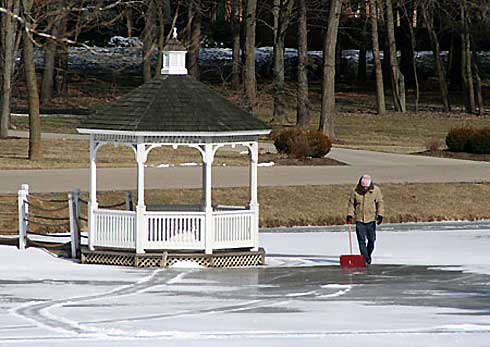
Taylor on the lake Feb 4, 2007

My son Taylor took an opportunity to play on the ice out in front of the house while my daughter reported that the pipes in her apartment (Northeast Ohio) froze. As she pondered who’s house she would be showering at, I suggested she use this as an early lesson in eventual home ownership.

Here are some simple hints for those facing their first blast frigid weather on their own: Check you water pipe runs as best you can to see if there are areas that you can add insulation or keep the really cold weather from getting to them. Garages and outside walls are notorious as areas that often have pipes and will freeze when the temperatures are in the single digits; leaving garage doors open in these areas is a ‘no-no’ when it is really cold, as is turning the heat down in rooms with outside walls, especially those exterior walls exposed to wind. If the house is brand new, many times the insulation on outside walls is not enough to prevent frozen pipes on really cold days and it need to be corrected. If you own your home definitely add some additional insulation even if you have to open a wall cavity; if you rent you might need to allow a faucet or two cracked to keep water flowing, especially on really cold nights. I’m hesitant to recommend this as a solution as 1) its a waste of water and 2) it can get expensive if done often, and 3) someday you’ll probably forget will find yourself with a leak and significant water damage.

Once your pipes have frozen, it important to find the area and heat the pipes. Hairdryers or space heaters work well, but avoid the propane torch method since you might not be the first person to start a fire. Another even higher risk is that of a leak and eventual flood. As water freezes, it expands and can easily crack a union, pvc/copper pipe or a valve. If you are lucky enough to catch the frozen pipe situation in time, it is important to address the problem early and get heat to the rooms, wall, area or pipe that is at risk. Add some insulation or change the heating flow … and at minimum keep the water dripping when temperatures go below 10 or 15 degrees.

Donna Lange: facing strong winds & big waves

Posted By on February 3, 2007

Donna Lange Google Earth 02/03/2007Yet another update from Donna Lange; she has encountered a significant amount of heavy weather. I received and update this morning on her condition (which is upbeat) and that her 28 foot Southern Cross sailboat is handling the 40 and 50 knot winds being dished out in the southern Atlantic. Thanks to her sailing and weather skills, she is down to a storm sail (very small heavy sail) as the rapidly moving fronts pass and has wisely put out warps to keep stern to the waves. She has emailed that seas have built to “20 foot sea conditions” with collisions building to 40 feet. We’re talking some serious and dangerous conditions.

1005UTC 0705LOcal
Feb 3,2007 Saturday morning Hugs!!!
A rough 24 hours!
position: 46*00’S 49*16’W
winds: WSW 30kn. to 45kn gusting 50+kn yesterday,
last night
sp: 5kn COG: ave 025 30nm off course to port
Seas: to 40′ overnight, diminishing now
point of sail: broad reach
sails: full reef main, 1/4jib, warps dragging(lines
to slow and hold stern steadier, less likely to
turn too far into a wave. only 1/4 jib yesterday
and night)
miles sailed: 120nm
miles to go: 6638nm to RI
474nm to 40S/42W
forecast: The storm center came much farther N
than thought, the center passing over me. For several
hours yesterday afternoon i had gusts above 50kn
and seas to 40′, terracing very confused as there
were seas from NW, Sw, W all colliding causing
very steep 20’sea conditions. Inspired Insanity
took 20+ hard hits over yesterday and last night.
I set several warps to help to keep II from turning
into the waves but during the confused seas, it
was not successful at preventing hits from all
sides. I stayed out on deck for the entire period
of confusion, not sure what i could do to insure
we would not capsize. One wave came at us so tall,
lifting the entire port stern perpendicular to
the sea, i am holding on to the lifeline,nearly
on the rail, as the SB stern scooped the cockpit
full of water as more rushed along the deck refilling
as we came level for another hit to bash into the
port side. Water had crushed up nearly covering
me in the process. We leveled out beautifully
and I went about bailing the cockpit, absolutely
full, sloshing water up under the lazarette hatch.
Each bit i bailed decreased the water along with
the scuppers draining. In only a minute, the bilge
pump had emptied the bilge. The water the flushed
across the salon floor would drain quickly down
the edged of the wood where the hull is exposed
from years of wet, but now creating a perfect drain.
The port salon porthole had begun to leak with
the high pressure of the hard hits and had taken
a hit so there was water sprayed across the boat,
but all the electronics are safely away in water
tight boxes. I have more clothes, towels and soon
the conditions will get better. It is now 1300
UTC and the winds have finally diminished to 25-30kn.
I’ll spend the rest of the day hauling out sail
while the winds clock around and settle down. But tomorrow there is another front due to come
through with 30+kn of wind. It is a fast moving
front so it will go quickly and then the conditions
will change. Today it is only 49*f, but by this
afternoon, with the lighter winds and sunshine,
it will warm up. That will really feel good. the
seas will slowly settle down. it is going to still
be a bit rough. We are a wet boat, but safe and
sound. I have to say, Ken Barnes was on my mind.
It was dangerous conditions. Luckily only confused
like that for a few hours, but big and still hitting
hard otherwise. Just a second ago, I took another
hit. As I am typing, the winds are really lulliing.
I will be chasing the wind around today. I’m pooped.
Relieved. I had hoped to avoid such a big storm.
This was bigger and more challenging than any
I have done since Cape Hope, though the seas didn’t
rise to nearly the height then. I was reminded
of the North Atlantic storms. Fear was with me
yesterday, but i truly felt the love that was surrounded
me and there was a peace and a knowing that we
would be OK. Hang on to me with all those amazing
hugs and energy kisses. Gonna still be a long
few days. This coast of ARgentina and Brazil has
lots of potential surprises. But I would say that
this storm should be my last southern ocean ‘storm’.
Hallelujah!! Bob was suggesting 60*f tomorrow.
Sounds great. Thanks to Bob, Kym, Wolfgang, for
the radio support. (7044 @1000UTC, 3790 @ 2330UTC,
8164 @ 1200UTC). Biggest hugs to all, xoxox d

Are public school teachers underpaid?

Posted By on February 3, 2007

school busThe Wall Street Journal published an article today (Is $34.06 Per Hour ‘Underpaid’?) that is bringing attention to how much public school teachers are paid. This kind of study will bristle the hairs of many in the education field, but since the common perception is that teachers are underpaid, it seems appropriate that a comparison is made? Unfortunately the linking of “underpaid” and “teachers” is a misconception that many of us make, including First Lady Laura Bush. She has been quoted when speaking about teachers: “Salaries are too low, we all know that and we need to figure out a way to pay teachers more.” That point is certainly debatable.

According to a recent study by the Manhatten Institute for Policy Research, public school teachers are paid better than many professionals. Jay Greene and Marcus Winter use statistics from the Bureau of Labor stating that “teachers earned $34.06 per hour in 2005, 36% more than the hourly wage of the average white-collar worker and 11% more than the average professional specialty or technical worker.” Actually in looking at the past 40 years, teacher salaries and benefits have actually risen significantly faster than other professionals. As a country we have nearly doubled the amount spent per student to where in the US we now spend over $500 billion on public education … most going to salaries.

Proponents of higher pay for teacher believe that better salaries will help attract and retain more capable teachers and therefore result in raising student achievement. Unfortunately where this has been tried, it has not proven to be true. A couple examples are pointed to: “Metro Detroit leads the nation, paying its public school teachers, on average, $47.28 per hour. That’s 61% more than the average white-collar worker in the Detroit area and 36% more than the average professional worker. In metro New York, public school teachers make $45.79 per hour, 20% more than the average professional worker in that area. And in Los Angeles teachers earn $44.03 per hour, 23% higher than other professionals in the area,” yet these school systems “do not graduate a higher percentage of their students than areas with lower teacher pay.”

In looking at this from the outside, or inside, as I do have a Master’s in Education, one of the problems is how teachers are paid; the seniority thing. Unlike many professionals who retain and earn raises based on performance, teacher salaries are determined primarily by years of service as well as advanced degree. Unfortunately this doesn’t always result in student improvement. Interestingly an incentive method was tried in Little Rock, Arkansas, whereas a bonus was paid to teachers based on the gains their students made in standardized tests. It was particularly helpful in math proficiency. Greene and Winter point out that a similar evaluation was done by researchers at the University of Florida coming to the same conclusion that performance incentives did work.

Science TeacherAnother concern that I have is that all disciplines are treated similarly when it comes to teacher pay. This runs counter to the supply and demand markets that our nation build its efficiency on. For example, in some school districts there is an overload of teachers in certain disciplines, yet shortages in others. In the business world this is solved by paying the salaries that the market bears. Why shouldn’t a school district be able to hire a person who has a education degree with 20 years in a math/science oriented industry and pay them more than another discipline where there may be an overabundance of teachers or where ‘real world’ business salaries are not as high?

One of the fallacies in looking at “hourly pay” is that it doesn’t take into account the fewer hours per year a teacher actually works, which in the past (and perhaps now) is one of the attractions to being an educator. Who doesn’t enjoy significantly more days off per year than the average worker? With time off in the summer, breaks in the winter and spring, teacher are working as many hours. Perhaps this is a fault/benefit of our US education system? Many teacher I know choose (or are force due to lifestyle choice) to work an additional job during their summers where other enjoy taking time off to travel or be with their families. Personally I think with all the overhead in building and maintaining schools, they should be utilized 12 months a year for education. If students need a break fine, but if a rotation plan was used, communities would better utilized both the personnel they hire and the facilities they build.

Another area that “is not compared” is that of retirement and health benefits. Public school teacher for the most part have much better retirement plans and health benefits than average workers. Also at a time many professionals and blue collar workers are feeling less and less secure in their jobs, teachers near the top in job security. (the ‘tenure’ aspect is pretty attractive)

The article concludes that unlike the misconception that teachers are underpaid, “the fact is that teachers are better paid than most other professionals. What matters is the way that we pay public school teachers, not the amount. The next time politicians call for tax increases to address the problem of terribly underpaid public school teachers, they might be reminded of these facts.”

Volkswagen Polo hinted for the US market

Posted By on February 2, 2007

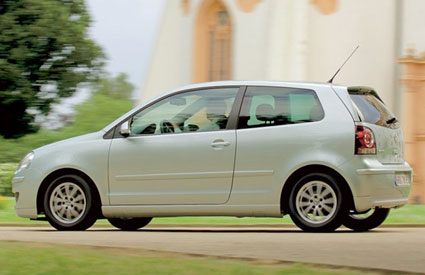
VW Polo
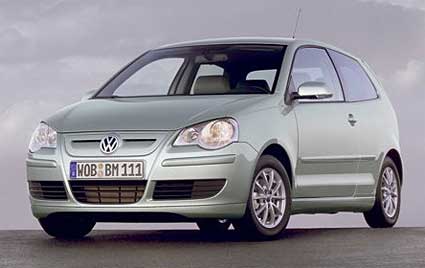
Volkswagen of America, Inc. may import the VW Polo to the United States around 2010. It will compete head to head with the Honda Fit, Toyota Yaris and Smart. eGMCarTech predicts that the gasoline version will probably come first and and possibly be followed by the BlueMotion three cylinder 1.4 liter direct injection turbodiesel. Polo BlueMotion has the ability to achieve 72.4 mpg and is said to be cleaner than a Toyota Prius. For those thinking green and thrify the VW Polo BlueMotion on biodiesel might be something to save your spare change for?

VW Polo Front

Desultory - des-uhl-tawr-ee, -tohr-ee

  1. lacking in consistency, constancy, or visible order, disconnected; fitful: desultory conversation.
  2. digressing from or unconnected with the main subject; random: a desultory remark.
My Desultory Blog