Posted By RichC on April 5, 2006
 Oh Boy … I wish I was home today to download the brand new “Boot Camp” patch for my Apple duo-core Intel-Based Macintosh computer. This patch is offered by Apple and will allow their new Macs to run the Windows XP operating system as well as most Windows software. This has been something that many have wanted to do for years and has plagued those of us in the printing and publishing world since computers took the printing industry by storm in the 1980s and 90s. (now … I’m not so naive to believe we will be without problems)
In my business, we have had to marry the creative and artistic work that has “always been easier on the Apple Macintosh” with the files and DOS/Windows type documents used buy the majority of customers and businesses we serve. In the early days of “Desk Top Publishing” and computer-generated design and graphics, this was a huge issue. Only recently have the advancements in software closed the divide; it is not nearly the issue it once was. Software companies like Adobe Systems have made working with two platforms far easier and most of the software vendors have worked closely with Microsoft (the window operating system developer) to improve on all aspects of font and graphics control.
Back to the story — When Apple announced the Intel-based Macs back in January the hackers and programmers began attempts to load the Windows operating system onto the new hardware. In fact, there was a contest to see who could do this first — yes it’s a ‘geek’ thing. Apple seems to have taken the same approach as the contest-winning hackers. The problem is that Apple uses a start-up technology that isn’t supported by Windows so the engineers at Apple went to work and created a patch called “Boot Camp” that allows the EFI (Apples start-up system) to communicate with Microsoft Windows XP in a computer language it understands. Sweet!
Apple must have been working on this a bit longer than the hackers, because what they bring is a nearly complete set of drivers, meaning that Windows XP should run on the Intel-based Macs at full speed. (Hackers didn’t have time to dig quite that deep)
To install Windows, Microsoft will still be kept happy because one is still required to purchase a copy of Windows XP with Service Pack 2, either Home or Professional editions. (the full edition … not the upgrade version) File sharing is also going to present a problem if the FAT32 format partitions are not used — and they most likely aren’t as they can’t support files larger than 4 GB. (Macs can see these drives and even copy files) But if your Windows partition uses the NTFS format, which allows larger partition sizes, the Mac can see files, but can’t write to the drive. Any other real negative is that Mac formatted drives can’t even be read by the Windows System without the use of special software such as Mediafour’s MacDrive.
As a Mac guy commented, “I’m more excited about Boot Camp than I was about the hackers’ method, mostly because this is something that regular computer users can do — it’s a simple installation method that doesn’t require any of the reformatting or file-tinkering that made the hackers’ method one for serious geeks only.”
Walt Mossberg the Technology Guru at the Wallstreet Journal has been quietly privy to the new Boot Camp for a few days now (he kept quiet) and made these comments:
I’ve been testing Windows on a new iMac for several days, and, except for a couple of trifling annoyances, it runs perfectly, just like a stand-alone Windows PC. I was able to install Boot Camp, and Windows XP Pro, on the Mac in under an hour. After that, I installed 15 Windows programs, most unavailable in Mac versions, and all ran properly.
In the meantime, the ability to run Windows natively on sexy Apple hardware opens up a new world. It finally opens up the stylist Macs to the business world — which has for years rejected them because they didn’t fit with the corporate Windows-based networks. No matter, noticing the nearly 10% pop in Apple Computer share price today, Wallstreet seems to like the news and so do I.
Apple Mac-Tel Computers to run Windows
Category: Apple, Computer, Video |
No Comments »
Tags: bootcamp, intel, mac, windows
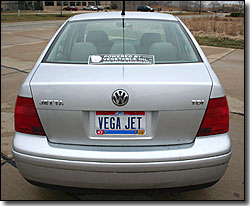 John Neff and Chris Paukert talked at length today on their podcast about a 2003 Volkswagen Jetta TDI (diesel) vegetable oil conversion. (See Autoblog Podcast) John met with the owners in Lorain Ohio and spent some time checking out their vehicle. The two brothers, Chuck and Tom Norton, had their car converted to run on Straight Vegetable Oil (SVO) or Waste Vegetable Oil (WVO) at a nearby company in Oberlin, Ohio (near Cleveland) called Full Circle Fuels . According to a previous article, Full Circle Fuels use hardware from Golden Fuel Systems . (formerly Greasel) The photos and description were excellent and well worth a read even though its not exactly biodiesel. (see link)
 Dealing with illegal immigration reform in Washington while humanely dealing with the 11+ million Central American and Mexican people in the United States is a very challenging situation. First dealing with those who are here illegally by force is impossible; we need a better solution. Second if we don’t have border security, no matter who is sent back, they’ll continue to cross back over again and again. Thankfully for as much criticism our legislators receive, yesterday they seem to be able to creatively compromise a solution that to me is some of the most reasonable legislation in a long time — at least the Senate version.
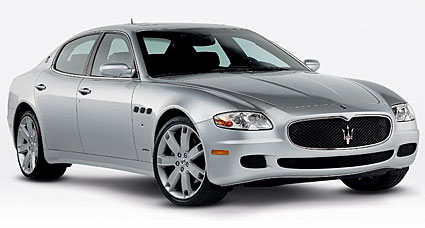
 There are some very interesting rumors floating around about the Audi R8 potentially being powered by a diesel after the
  What do you get when you drive a 1995 Dodge Ram 3500 Pickup a million miles? A phone call and a ‘self-promotion’ book.
  An interesting segment on the PBS program
 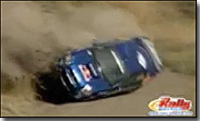 It’s been a long week and before I run out of steam I wanted to get this clip posted for April 1. Its ‘no joke’ and amazing these guys walked away uninjured. Click the Quicktime clip to watch the ‘rollover’ from three different angles: driver-cam, spectator video and the car mounted camera. It does makes me think my VW TDI friends on the