Archive: Older Corbett Christmas Letters 1983-2003
Posted By RichC on December 19, 2005
Posted By RichC on December 19, 2005
Posted By RichC on December 13, 2005

I’ll make this post brief and point to the Audi R10 link, but this 650 HP 12 cylinder diesel is really impressive. Don’t miss a few of the video clips (live unedited capture) as besides a good look at the car, there are some nice panoramas of Paris, France. If you only have time for a short MP3 clip of the ‘turbine’ whine … play this short audio clip.
There is also a thread about the Audi R10 over at the TDI Club forums and VWLivery posted a good write-up as well. The CarBuyersNotebook has a short entry and links to a variety of sites and video.
The heart of the Audi R10 is a completely new V12 TDI engine with a cubic capacity of 5.5 litres – the maximum permitted at Le Mans. Audi ventures into previously unexplored diesel-engine terrain with power exceeding 650 hp and torque of more than 1100 Newton metres from the V12 power plant.
“This engine is the specifically most powerful diesel there is in the world and, up until now, the biggest challenge that Audi Sport has ever faced in its long history,†explains Ulrich Baretzky, Head of Engine Technology at Audi Sport. “There has never been anything remotely comparable. We started development with a clean sheet of paper.â€
The V12 TDI used in the R10 is the first Audi diesel engine with an aluminium crank case. The cylinder-bank angle is 90 degrees. The V12 TDI has, like Audi production car engines, four valves per cylinder and twin overhead camshafts. The fuel induction is made by a modern “Common Rail Systemâ€. The injection pressure easily exceeds the 1600 bar achieved in production cars. The ignition pressures also reach values never previously seen in any Audi engine.
The engine’s power and the high torque are available to the driver practically from idling speed – a speciality of diesel technology, to which the Audi drivers must now become accustomed. The usable power band lies between 3000 and 5000 revs per minute.
Posted By RichC on December 7, 2005
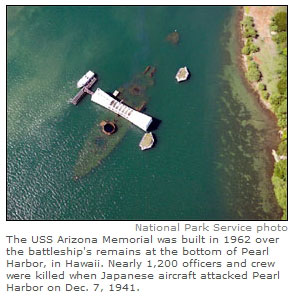 It happened a lifetime ago, but “it is a day that will live in infamy.” December 7, 1941 was the day a surprise attack was made against our country by the empire of Japan. We remember this day but unfortunately did not learn the lesson. Most of us were not alive to remember the heart wrenching shock and sickening feeling when Pearl Harbor was bombed by waves of Japanese carrier planes, but we were for 9/11. Americans could hardly believe it was possible to have suffered such a attack in Hawaii, yet 2,390 men and much of our Pacific fleet layed in ruins. How could it have happened? Didn’t we know of this possible threat?
 Fast forward 60 years and September 11th is remembered as a surprise attack too … and by most accounts it was even worse than Pearl Harbor. Not only was 9/11 a surprise attack, but it was an attack using commercial airliners (not military airplanes) against civilians (not targeting warships and sailors). The attack in the Pacific was enough to unite the country against the tyrants of the world; we never gave up and every America saw fighting the enemy as their duty. Are we united today? The enemies of our country are just as real and as motivated to kill Americans as were the Japanese. Todays’ enemies willing to blow themselves up just as some Japanese pilots would kill themselves in order to inflict damage to the US. Whether its the kamikaze suicide pilots of WWII or the Islamic extremist driving truck bombs today, they both targeted killing as many Americans as possible.
Just as we ‘should’ have learned preparedness from Pearl Harbor, we need to learn resolve against the enemy we face today. Both enemies were a threat to our people and way of life; willing terrorist who plot and kill should be a concern on every American’s mind.
We must win.
Our country finished World War II with nothing less than the full and complete surrender of Japan on September 2, 1945 that assured not another American would be killed … in some way we need to finalize this war on terror with an equally complete victory. Americans unite to defeat the enemy we face!
Posted By RichC on December 6, 2005
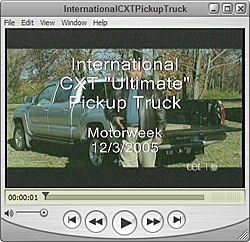 There was an interesting segment on Motorweek for those considering ‘big’ diesel pickups. The International CXT may just be the”Ultimate” in working (or show off) pickups. This bad boy boasts a turbo charged 6 cylinder International diesel with 320 HP and a whopping 860 pound feet of torque. I’m not sure if anybody wants to fill the 73 gallon tank, but considering you could drive it on biodiesel, you might opt for making your own fuel? (see “Biodiesel and Trucks!“) For those of you feeling emasculated by soccer moms driving Hummers or neighbors looking down on you from their Dodge, Ford or Chevy 4 x 4 pickup … this would make them all look like they are driving Tonka toys.
If you are still with this Tim Taylor “GRUNTING” type post, I’ve included a segment from Motorweek that will help you visualize just how big is big. Most of us probably would be hard pressed to spend $120 to $135,000 on a pickup, but if you need to pull 40,000 pounds or haul around 12,000 pounds in style … this International will do it. It would be nice to know you could move your house or yatch the next time a hurricane heads your way? Personally, I think even the baby brother, the International’s RXT, is a tad large for my needs.
🙂
Posted By RichC on December 2, 2005
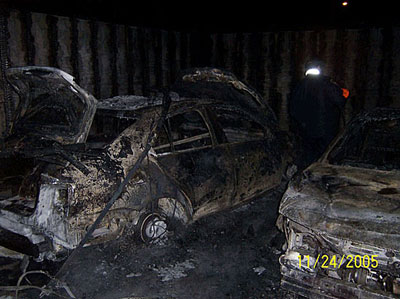
Josh Hiebert of Winnipeg, Manitoba, Canada posted a couple of gruesome photos of his VW Jetta TDI about the time my friend Charles B. mentioned he had picked up a ‘heater’ for his VW TDI. He mention he had found a great deal on them and was looking to install. Weigh your decision carefully.
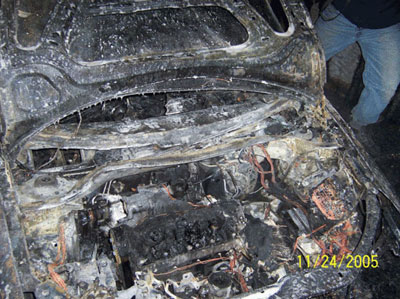
On Wednesday night November 23 my jetta burned to the ground taking with it our garage and my roommates Grand Prix GTP. The cause of the fire was the block heater patch that VW puts on. It is an aftermarket patch called the Canadian Polar Patch. heres some pics…..grab some tissues….im sure other TDI drivers will get a little misty eyed.
Posted By RichC on November 23, 2005
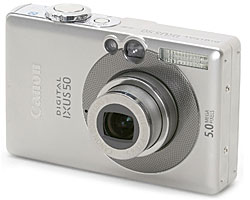 Christmas is coming and being the ‘go to guy’ when discussing photography in my family I was asked to give an opinion on the tiny Canon Powershot Digital ELPHs. A buddy of mine just purchased the SD450 model for a ski trip to the Canadian Rockies and didn’t want to be bothered with his larger SLR and offer to let me see it.
My first impression is that it is a great little camera for anyone wanting point and shoot simplicity and a tiny size. The quality of the metal case is perfect and it still offers top of the line features ‘if and when’ you need them. Perhaps the biggest difference most will notice between the 400 and 450 or 500 and 550 is the LCD screen on the back.

This is important for those of us with aging eyes and larger size is well worth the extra dollars. Besides having ease of use features that allow most anyone to click away at family events, the small compact size allows one to slip the protected covered lens design in a pocket or purse. (when camera is off) My friends camera had a worthless case that made using it a real pain so spend some time looking at slipcovers that protect but simplify regular storage.
For those already Canon-ized (familiar with modes) the Digital ELPHs will be easy use but for those new to digital cameras I highly recommend a short course or time in the manual to get the most out of the camera. There is little sense writing an indepth review when dpreview.com is around. This is by far the best website for those enjoying cameras or wanting to compare cameras. If you are looking to spend $300 on a high quality compact digital camera that fits the most peoples needs … I’d recommend the Canon Powershot SD450 ELPH. (for a few more dollars and a couple more meg CCD the 550 would no doubt be a tad better but only if you are seriously looking to enlarge your photos … otherwise the 400 and 450 will suffice)
Since I was previewing this model in a restaurant, about the best I can do to squeeze the limitations would be a low light macro test … I’ll include a resized photo below.

Posted By RichC on November 23, 2005
 BitTorrent and the MPAA have come to an agreement that may prevent future legal action against the file sharing network. Unfortunately it will make searching even more of a challenge but will cut the illegal use of the popular and growing peer to peer file sharing service. MPAA’s problem with bittorrent is that many users have been sharing feature films through the service and using bittorrent.com to find the torrents.
Bram Cohen, the creator of BitTorrent, introduced his software in May of 2005 and it permits users to search the internet for ‘torrents’ – files that include music, software and video content, some of which are protected by copyrights. Bittorrent advocates contend that a good deal of the content is legal, but a quick search also finds copyrighted material including full length movies and television shows.
Cohen, under this new agreement with MPAA, will add technology to the search engine used by bittorrent.com that would effectively remove content owned by the studios that make up the MPAA. Bittorrent Inc. discourages the use of its technology for distributing films without a license and will work with the film industry to remove unauthorized content from bittorrent.com’s search engine.”
Problems still abound for file sharing users though, as the agreement only covers Mr. Cohen’s search site (bittorrent.com) and not other search engines that locate ‘torrents.’
Both Bram Cohen and MPAA CEO Dan Glickman agree that the Bittorrent and MPAA are leading the way for other companies in protecting content and preserving file sharing distribution.
Posted By RichC on November 21, 2005
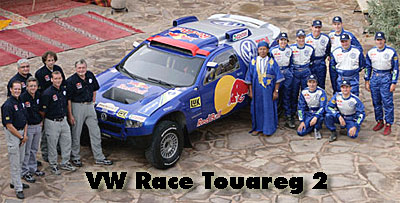
The cross country rally team at Volkswagen unveiled its improved Touareg 2 at the German Essen Motor Show this past weekend. The new Race Touareg 2 will be VW’s entry in the 2006 Dakar Rally. The new model is built on its race proven predecessor and has undergone improved suspension and and increase of engine power. TDI Diesel power of course … this this time to the tune of a TDI producing 275 hp. The race will be an African desert run from December 31st to January 15th over a distance of almost 6000 miles. The race combines 5 driver and co-driver combinations and requires talented driving to get both speed and survivablity from their vehicles. More information can be found at www.volkswagen-motorsport.info.
Posted By RichC on November 16, 2005
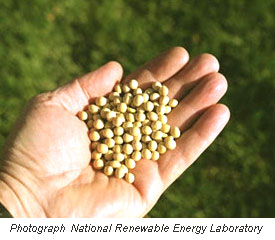 As noted in the journal Nature, Japanese scientists may have found a cheaper and more efficient way to produce “biodiesel.” This breakthrough could reduce the cost and improve the efficiency just as the demand for the cleaner, greener fuel is increasing. Any vegetable oil can become fuel, whether as ethanol or biodiesel, but for the more efficient diesel, the quality is not sufficient until its fatty acids are converted to chemical compounds known as esters. Currently the acids used to convert the fatty acids are on the expensive side when compared to petroleum diesel products. The paper is entitled:
Green chemistry – Biodiesel made with sugar catalyst
Masakazu Toda, Atsushi Takagaki, Mai Okamura, Junko N. Kondo, Shigenobu Hayashi, Kazunari Domen and Michikazu Hara
Although only 2 percent of automobiles in the US are currently diesel, there are many personal vehicles around the world are powered by the efficient diesel internal combustion engine including 40% of personal vehicles in Europe. Also trucks, trains, ships, farm and construction equipment are almost always powered by the durable and long running diesel engine, which by the way was design originally to run on vegetable oil. (Peanut Oil by Rudoph Diesel)
Michikazu Hara, of the Tokyo Institute of Technology in Yokohama, Japan, and his colleagues estimate the cost of the catalyst to be one-tenth to one-fiftieth that of conventional catalysts. This breakthrough could provide cost savings on a large scale because the technique could easily be adopted to current biodiesel refineries.
With current demand for fuel increasing, and biodiesel production on the rise (estimating 75 million gallons in 2006 or tripling 2005 production -National Biodiesel Board) any improvements in production efficiency and cost will be huge. Currently the cost to produce a gallon of biodiesel is higher than the petroleum counterpart, but many including congress and the Whitehouse have endorsed it as an alternative. Tax incentives for ‘blenders’ are given substantial credits to use biodiesel blends as a way to reduce dependency on foriegn imports and encourage continual improvements in the processing infrastructure as demand rises.
The advantages of biodiesel are many; it is renewable, domestic, clean and can be based on a variety of vegetable feed stocks. Some early fleet reviews have also indicated long term maintenance improvement, stay tune for more on this. The current US feed stock is primarily midwestern grown soybeans (and recyled cooking oils), Canada is promoting Canola and in Europe the standard is Rapeseed. Many biodiesel advocates promoting biofuels see the day when algae-based fuels will be a new industry and could out produce any other feedstock. (great for those concerned that traditional farm produce will be used for fuel?) An excellent PDF paper can be downloaded (right-click/save as) and is well worth reading through … it is enlightening for those questioning just how much petroleum that we can displace.
Environmental groups are also praising biofuels as a way to reduce carcinogentic emissions and polutants associated with petroleum diesel fuel. The Department of Energy’s Clean Cities program has been at the forefront in encouraging biofuels and just recently celebrated “Beyond a Billion” day – day in which the 88 Clean Cities mark displacing 1 Billion gallons of petroleum with alternatives. (see my post regarding our Cincinnati based event)
Posted By RichC on November 11, 2005
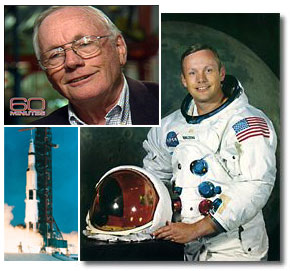 For many baby boomers, “The Eagle has landed” and “One small step for man, one giant leap for mankind” (click for audio) were monumental audio moments that recall American success and rekindle proud memories of the Apollo space program. Practically every American alive and countless millions around the world held their breath and watched as Apollo 11 astronauts landed NASA’s spidery looking lunar lander on the moon on July 20th 1969. This was an extraordinary event in human history and the memory was rekindled this past week by a rare interview CBS news program “60 minutes” with Neil Armstrong.
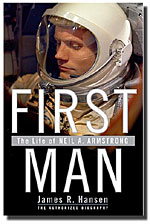 What made this interview by Ed Bradley unique is that the first man to walk on the moon has been relatively camera shy about his celebrity status. Until this interview Armstrong has not not made many appearances, preferring to live quietly near Cincinnati, Ohio. A biography has recently (published 10/2005) been written by James R. Hanson, title “First Man – The life of Neil Armstrong” is on my Christmas book list, although weighing iin at 784 pages might take a little midnight oil to read.
Perhaps what make this astronaut interesting to many is that one can relate to his persona. I suppose having a daughter with ambitions to be an astronaut and living only a few miles from Mr. Armstrong that I pay a bit more attention than most. I’m am struck by his humble character and normalcy in how he lives his life. Imagine living near Christopher Columbus or other great explorers of the past; would they be just a normal Joe … yet Neil Armstrong is just that.
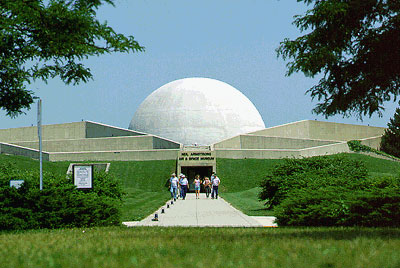
He grew up just north of my hometown but lived in several communities, including Warren, Jefferson, Ravenna, St. Mary’s, and Upper Sandusky. Because Armstrong’s father was an auditor for the State of Ohio, Armstrong grew up in several communities, including Warren, Jefferson, Ravenna, St. Mary’s. Wapakoneta is considered his home town and has a unique museum just off Interstate I-75.
As a boy developed an interest in flying at age two when his father took him to the National Air Races in Cleveland, Ohio, according to historian Rit Nosotro. Mr. Nosotro comments that Armstrong’s interest “intensified when he went for his first airplane ride in a Ford Tri-Motor, a “Tin Goose,” in Warren, Ohio, at age six” and “from that time on, he claimed an intense fascination with aviation.” Of course for those learning to fly at Red Stewarts field, you be glad to know that you are in good company flying classic taildraggers as Neil Armstrong learned to fly in an Aeronca Champ.
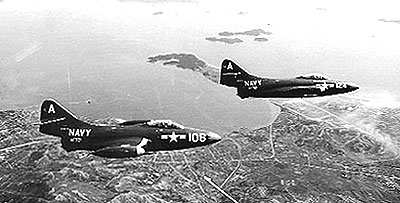
Armstrong was born in western Ohio near Wapakoneta, on August 5, 1930. He was fascinated with flight at an early age and was flying before he could drive a car. His career started as a Naval aviator and he served in the Korean War as a fighter pilot flying 78 combat missions from USS Essex in a F9F-2 Panther. He received the Air Medal with two Gold Stars.
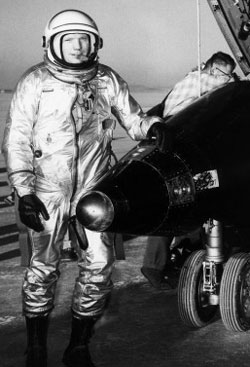 Armstrong received his degree after the war at Purdue in Aeronautical Engineering in 1955 and earned a masters degree from the University of Southern California a few years later. After school, Armstrong became a civilian test pilot for the NACA which was the predecessor to NASA and worked at Edwards Air Force Base, California. His work in high speed flight gave him seven flights in the North American X-15, reaching an altitude of 207,500 feet in the X-15-3 and a speed of Mach 5.74 (3,989 mph) in the X-15-1. He left the Flight Research Center with a total of 2,450 flying hours in more than 50 types of aircraft.
In 1962 Neil Armstrong was selected as an astronaut candidate and began his training. He was backup command pilot for the Gemini 5 mission in 1965 and commanded Gemini 8, being the first to dock of two orbiting crafts. He also served as backup command pilot for the Gemini 11 mission in 1966 as commander of the backup crew for the 1968 Apollo 8 lunar orbital mission. In his training as pictured in the “60 Minutes” broadcast, Armstrong narrowly escaped death during training in the crash of a lunar landing research vehicle on May 6, 1968.
Finally in July 1969, Armstrong commanded the Apollo 11 lunar landing mission, which was perhaps the most famous and successful NASA accomplishment in history. This historic landing included lunar module pilot Buzz Aldrin and command module pilot Michael Collins.The moon landing took place on after the successful launch from the Cape Kennedy in Florida four days prior. Armstrong took manual control of the Lunar Module Eagle and piloted it away from a rocky area to a safe landing. Upon stepping onto the surface of the moon Neil Armstrong said these now famous words: “That’s one small step for man, one giant leap for mankind.” (click for audio)
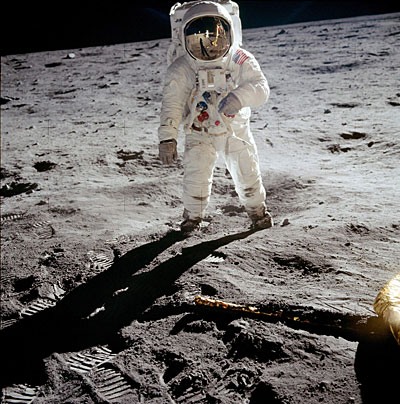
The Apollo 11 crew returned safely to earth on July 24, 1969 to worldwide acclaim and fanfare. Armstrong eventually settled to a suburb outside Cincinnati, Ohio accepting a teaching position at the University of Cincinnati and served on several corporate boards. He now lives a relatively quiet life and is publicly reserved considering his notoriety.
Hopefully in time, Neil Armstrong will consider visiting our small ‘rag tag’ Waynesville Ohio EAA chapter, I know we’d love to show him around our hanger.