Life’sense’ Advice

Posted By on May 5, 2005

I’ve often talked about sharing what I’ve learned through mistakes and success in a book. I’ve got a pile of notes that I’ve continued to add to over the years in this regard and thought I would segment them into a collection of thoughts or essays with the hopes of creating the book project I’ve always talked about.

The subject is something everyone uses after leaving home, or perhaps even before that. The idea is to share the wise decisions in regard to commonsense … “life-sense” … advice from things like what tools to purchase when your are young to avoiding the pitfalls of living above your means. Wise living and commonsense can use a few pointers and those tossing these thoughts around will find their lives happier and more comfortable.

My thinking is to combine practical ideas and decisionmaking with satisfaction and happiness at each stage of ones maturity. Occasionally my suggestions will refect ‘commonsense,’ but other times the ‘off the beaten path’ suggestions are a bit more radical. Anyway this is the place I will be exploring occasional thoughts for the project.

Interested in Biodiesel?

Posted By on May 4, 2005

I’m always looking to build a better mousetrap … like replacing our petroleum diesel fuel with biodiesel.

With oil prices over $50/barrel, biodiesel is in the news almost everyday. Obviously some big dollars from American soybean growers have boosted the farm lobbies and politicians are finding out that supporting renewable homegrow alternatives to foriegn oil ‘sells.’ That was quite evident in the November presidential campaign where President Bush mention it in many of his stump speechs.

It has been amazingly difficult to make inroads with an alternative that makes so much sense, yet when you talk to the average American about replacing the primarily imported, dirty, stinky, carcinogenic fuels we are now using, they support clean renewables to the tune of 74 percent. Of registered voters, 79 percent favor extending the biodiesel tax incentives. The Chairman of the National Biodiesel Board, Darryl Brinkmann believes that “Americans clearly see the important role renewable fuels can play in reducing our dependence on foreign oil and cleaning up emissions.” Its impressive to see more than 500 major fleets nationwide now use biodiesel commercially, including NASA, Harvard University, the National Park Service, U.S. Postal Service and all four military branches. The U.S. Navy is the world’s largest diesel fuel user and it has recently issued a memorandum establishing as policy that “all U.S. Navy and Marine non-tactical diesel vehicles shall operate on a blend of 20 percent biodiesel fuel no later than June 1.”

The rest of us are left to struggle a bit, as currently there are just over 400 retail filling stations that make various blends of biodiesel publicly available, but more than 1,000 petroleum distributors carry it. Perhaps it is the peoples turn, we biodiesel advocates need to convince retail stations to offer biodiesel and then convince diesel owners to support them?

There are many advantages of adopting biodiesel, ethanol and blends to our current fuels. Both biofuels provide cleaner emissions, an economic boost to our US economy and biodiesel due to its lubricity has shown to extend engine maintenance cycles and reduced wear. (something ULSD will be challenged to match) The 1998 U.S. Department of Energy and U.S. Department of Agriculture full lifecycle emissions study, which found that for every unit of fossil energy needed to make biodiesel, 3.2 units of energy are gained. In contrast, petroleum-diesel production requires a net loss of 1.2 units of fossil fuels to produce 1 unit of energy.

Beyond socio-economic, environmental and health benefits, biodiesel (and ethanol) eases U.S. withdrawal pains as the nation will eventually be forced to wean itself from diminishing, costly imported oil. The United States consumes approximately 20 million barrels of oil a day, more than half of which is imported. Even under the most aggressive, environmentally controversial development scenarios, the U.S. Department of Energy predicts that by 2025 we will import 70 percent of our petroleum. Despite ongoing turmoil throughout the Middle East, the U.S. remains dangerously dependent on foreign oil.

Although it is contraversial, the Department of Energy estimates that the military cost of securing foreign oil was $57 billion annually and foreign tax credits accounted for another $4 billion annually. There is also environmental impact of extracting and transporting oil; these costs are estimated at $45 per barrel and for every billion dollars spent on foreign oil, America has lost 10,000 to 25,000 jobs.

Biodiesel can be manufactured using existing industrial production capacity with conventional equipment, thus it provides an opportunity to immediately address U.S. energy security issues. Requiring 4 percent biofuels use would displace nearly 2.9 billion barrels of crude oil by 2016, rendering unnecessary, among other things, industrial development of the Arctic National Wildlife Refuge’s unique, biologically rich coastal plain.

BTW it was recently announced, for those of you who enjoy Indy car racing, the IRL- home of the Indianapolis 500 – it will power its racecars with ethanol beginning in the 2006 season. Keep the support and publicity going for biofuels.

I just realized that this entry might not be in a useful form; I’ve pretty much jumped from one tidbit to another as I was recalling articles that I’ve recently read. Maybe that’s the way a blog should read???

“What is” Odds and End

Posted By on May 3, 2005

I thought I would start the Misc section today and start with the ‘click’ of the day post. 🙂

Today’s interesting link is a semi-reference site that usually provides more humor than information: “What is” lookup. It is interesting what pops up by plugging in different words.

Example:
Since I’ve been following the Ivory Billed Woodpecker story, I thought it would be interesting to see “What is the Ivory Billed Woodpecker.”

  • The ivory billed woodpecker is said to be the “Holy Grail” of bird watching.
  • The ivory billed woodpecker is a pretty bird.
  • The ivory billed woodpecker is not extinct.
  • The ivory billed woodpecker is extinct in the US.
  • The ivory billed woodpecker is a tale of how humans pushed a species to the brink of extinction and then tried valiantly to undo the.

Found 5 ways to describe what The ivory billed woodpecker is.

Rocketchip/Nozzles – AWESOME!

Posted By on May 1, 2005

I spent Saturday, April 30 at with a bunch of TDI owners at Jon Hamilton’s tuning session, driver for team rallyvw.com. The event was scheduled as a fundraiser for the race team around chip tunning by Jeff (Rocketchip) and injector nozzles from Charlie (KermaTDI). It was a busy day as there were 9 sets of injectors installed, 15 ECU tunings and a few other improvements. Forunately there wasn’t any rain, but the temperatures were on the chilly side.

Our host spent his time coordinating and scheduling the variety of modifications to our cars, showing off the newly tuned RallyVW Golf and generally talking a mile a minute instilling excitement to all in attendance. He was a terrific host … although could have left a few pieces of pizza for those doing the labor! (I’m kidding of course!) 🙂

Jon Hamliton eating pizza

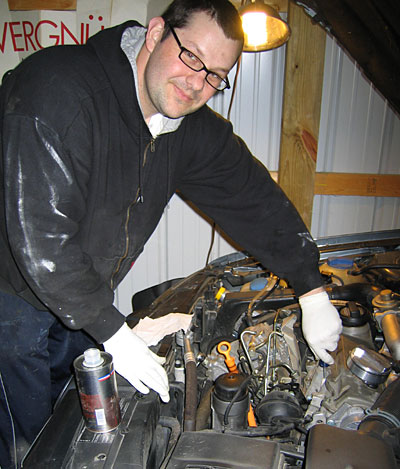
Speaking of labor, the process started for most with nozzle removal by Oliver while most of us watched over his shoulders … although I did get my hands slightly smudge. 😉 I’m curious as to how many injectors he removed?

Oliver

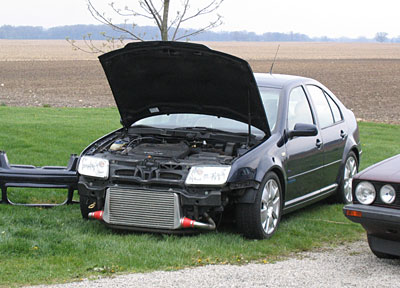
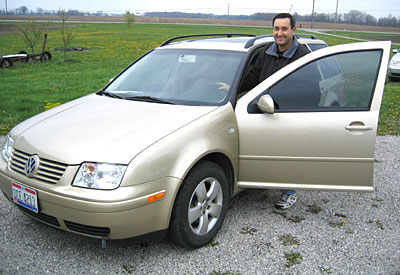
I’ll include a couple of photos below … first in Olivers agressive looking TDI and second is Dennis’s sleeper PD wagon … maybe I’m just getting old but there is something to be said for that ‘stealthy diesel?’

Olivers Jetta

2005 PD Jetta Wagon

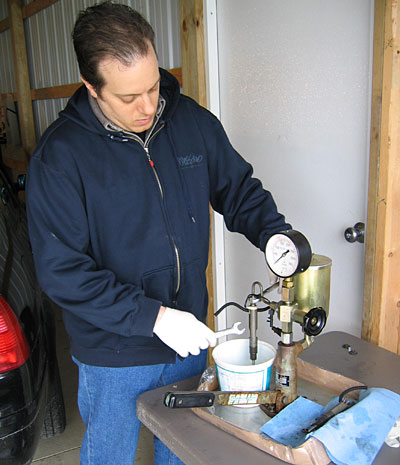
Charlie (KermaTDI) was busy pop testing injectors and installing the nozzles. He remained steady to the end and I know his trip from Utah was appreciated. Thankfully the shipment he sent on ahead of him arrived to the post office or much of the added HP and Torque for the day would have been lost … you cut it close Charlie!

Charlie pop testing injectors

Speaking of the post office, I was fortunate to be able to ride with Jon in the Rally Golf and its new agressively profiled Rocketchip into town. Oh baby does that bugger move! It was tuned nicely and even provided a grin of approval by Jon.

Jon and Rich test drive the Rally Golf

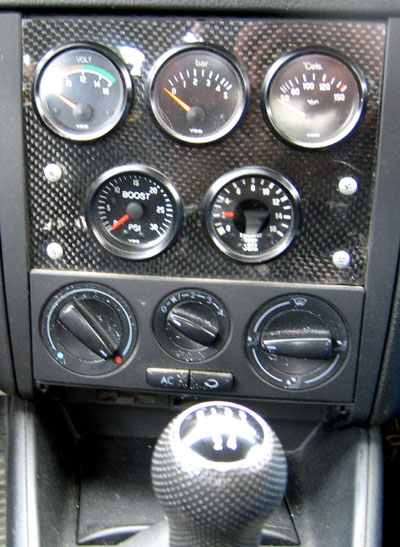
The highlight of this run to the post office was a backroads detour that was sure to get the attention of a few of the neighbors. 🙂 I kept my eye on the boost and EGT gauges while Jon pushed that little 1.9 TDI engine pretty hard. The boost valve did its job and it took some really effort to get the EGT to rise to 140.

Rally Golf gauges

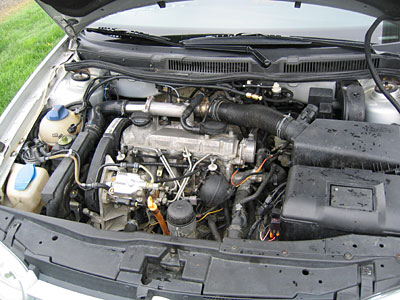
If they are not able to win rally races it will not be due to “a diesel lacking power.” Although IMHO most of the additional power is due to Jeff’s new profile for the RocketChip, many of the mods under the hood of the Rally Golf are important too.

Under the hood of the Rally Golf

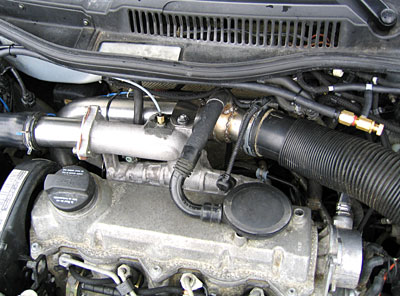
Rally Golf's modified intake and exhaust

Some of the improvements can be seen in the above photos but the exhaust has also been improved using a larger pipe to reduce backpressure and heat build up. The team still has a few other improvement up their sleeves in hopes to keep their car competitive as they move from stock.

Their was a steady flow of new faces throughout the day and believe that most were thrilled with unlocking the power within their car.

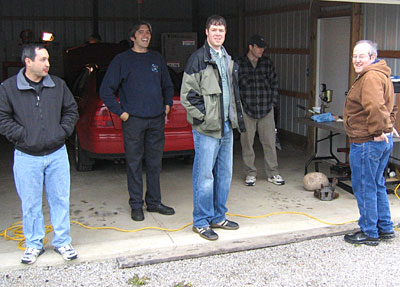
Tuning Session April 30, 2005

Tuning Session draws a crowd

As for my BIODZL Jetta … I intended to add ‘just’ a mild Rocketchip Stage II upgrade to enhance my Sprint 520 nozzles. Unfortunately because I spent the day hanging around these ‘nuts’ … I was infected and opted to upsize my nozzles a notch and have Jeff tweak the Rocketchip to reduce the smoke and keep the power. (of course that’s a chuckle because its what everyone asks of him) 🙂 Nevertheless … I’m super happy with the extrodinary increase in power even though I’ve also added a ‘tad’ of smoke on hard acceleration. I’m sorry not to have taken a photo of Jeff Robertson (info@rocketchip.com) doing his thing. He is amazing … what a talented guy.

I would like to offer my sincere thanks to Jon, Charlie, Jeff and Oliver for all their work … I hope the event was as successful at raising a few dollars for the team as it was for those of us getting personalized service in tweaking our TDIs. For those reading who are running stock …. its just amazing what power is bottled up inside our little engines!

2005.5 Jetta V Trunk with CinciTDI.com

Posted By on April 29, 2005

Since my digital Canon S50 comes with a limited ‘video’ mode I thought I would try it out and include a short video clip without audio below.

What is noticable is that the trunk opens slowly when one triggers the trunk release and that the capacity is huge. Over 16 cu. ft. which is larger than the mid-sized Passat sedan! A couple of other impressive features are the removeable side panel inside the trunk that allow for wide items such as a golf bag. 🙂

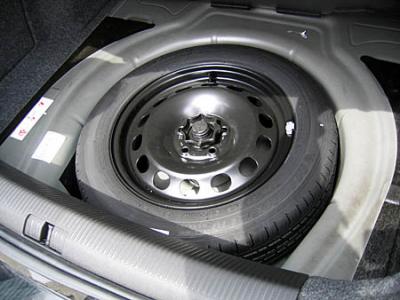
On the down side … my usual under the rear cover storage space is gone, but there is still the full size spare tire.

Video Demonstration of the Truck Release

Video of Charles Buyers replacing VW Key FOB Battery

2005.5 Jetta V TDI Impressions

Posted By on April 28, 2005

I had a chance to test drive a new 2005 Volkswagen Black on Black Jetta V TDI today. This was the first opportunity to see the new reskinned TDI Jetta and I was very impressed. This new Jetta is not just sporting a new skin; its most definitely a totally new car with a bunch of well-earned improvements.

Jetta 5 TDI at FairfieldVW, OH

I received an email this morning from Stew Williams, Sale Manager at FairfieldVW, and believe he was as excited to let me know the new TDI had just arrived as I was to take the test drive. 🙂 I didn’t disappoint him, as I cleared my afternoon schedule and BIO -dieseled over as soon as I could. I grabbed Jerry Lewis an experienced sales rep that knows his VWs and had him fill me in on a bunch of the Jetta V improvements. Some I knew about and others I didn’t.

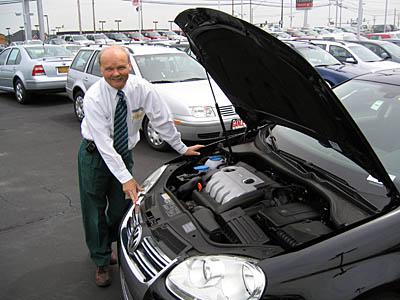
Jetta 5 TDI and Jerry Lewis under the hood

The PumpeDuse TDI started quietly and it was hard for me to believe it was ‘our’ 1.9 diesel? The diesel ‘jiggle’ is non-existent and the new larger and extremely comfortable interior was hushed far better than my current A4.

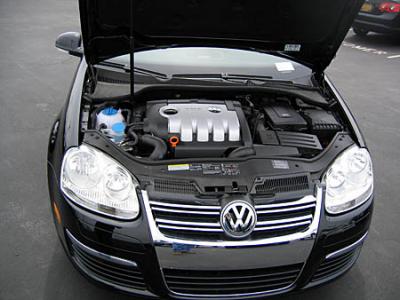
Jetta 5 TDI Under the Hood

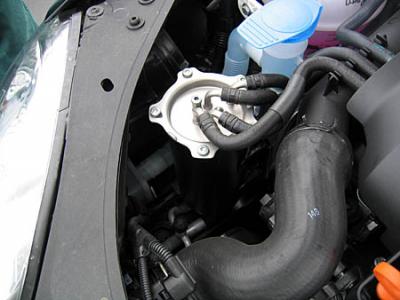
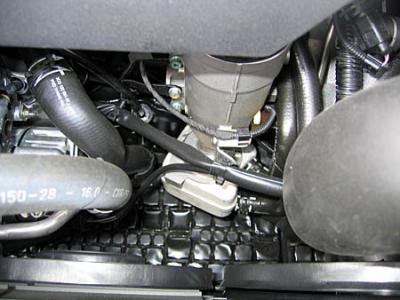
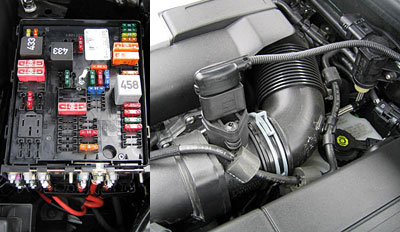
Under the hood some changes have been made. The battery placement and weight has been moved back, the fuse box greatly improved and a new monster looking fuel filter. (No ‘Mickey Mouse Clip’ 🙁 )

Jetta 5 TDI Fuel Filter

Jetta 5 TDI Oil Filter

Fuse and Maf

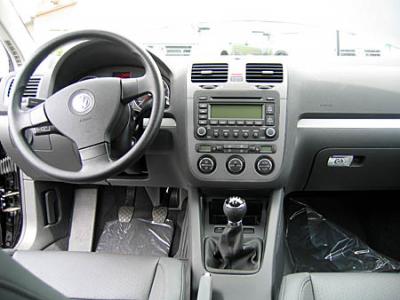
The seats were firm and VW German and are as comfortable as ever, IMHO. The $24,000 sticker 5-speed Package 1 car that I was testing had the ‘leatherette’ seats and the steering wheel had a little bit of a plastic feel. I think I’ll hold out for the leather seats, wrapped wheel, wood trim and powered memory seats. (Package 2) I don’t think we’ll be seeing much movement on the price for a while so make your current car last a bit longer.

Jetta 5 TDI Interior

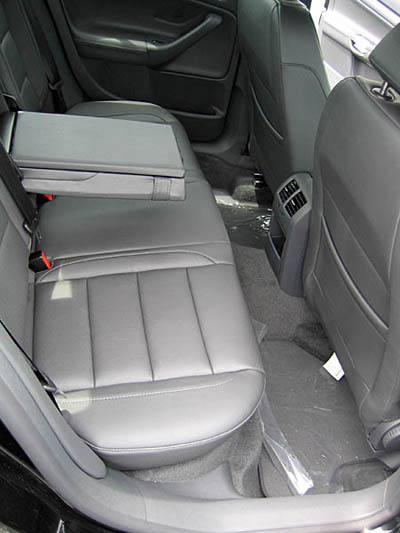
I loved some of the subtle improvements like the dual climate controls, self-dimming mirrors, info cluster, turn signals on the door mirrors, safety improvements everywhere and all that rear-seat legroom! 🙂

Jetta 5 TDI Rear Seat Room

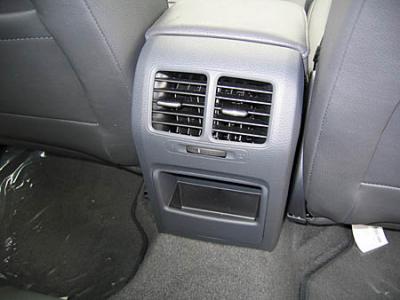
And those riding in the rear will appreciate the added flow of air!

Rearvents

Anyway … enough gushing about the comfort inside this new Jetta … time to take it for a ride! The first thing I noticed was that the 5-speed gearbox reminds me of a BMW or Audi. Short, tight and solid … oh and smoooooth! I was impressed with that. The new all-electric power steering was a tad different although much appreciated at slow speed backing and turning. There was plenty of power, but perhaps a slight loss of road feel as speed increases … so I’ll dock it 1 point. 🙂

Jetta 5 TDI Drivers Seat

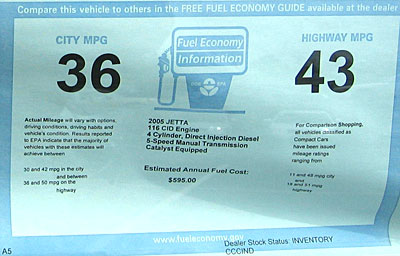
The PD TDI engine puts out adequate power and appropriate economy for a mid-sized diesel-powered car. The new Jetta is no longer small in my book.

EPA Economy Numbers for the Jetta 5

I eased the “Black on Black” beauty out of the dealer lot and thankfully had a chance to try a few things. Idling at a light the inside cabin was very quiet, the car felt very well built and as solid as could be. No rattles or squeaks, no body roll or clunky feel over bumps. I accelerated through the gears quickly and Jerry suggested I keep my speed up over some rough railroad tracks … unbelievably solid. I know that my steel skid plate on my A4 Jetta would have taken a bite of pavement, but the new Jetta V hardly dipped. Some real improvements in the stock suspension … it was noticeable.

Jetta V Wheels and Tires

Next I took a few tight corners and the Jetta V and it acted just like a German car should … nice and tight, even though the car has Mexico written all over it. 🙂 Off for some highway cruising and as with other TDIs this is where our little diesels shine. The Jetta V was no exemption and did not disappoint.

Sadly my test drive came to an end and although I entertained taking this ‘grown-up Jetta’ home, I justified the need for a few more optional appointments and will wait for another day.

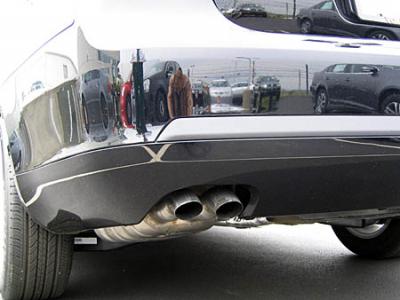
One last thing … this is all that I could find indicating the ‘diesel inside.’

Diesel tailpipes

TDI Badge

For additional independent ‘owner-based’ information on Volkswagen diesels and in particular, TDIs, be sure to check out Fred’s TDIClub.com and the Greater Cincinnati area group at CinciTDI.com.

General ‘Homebrew’ Biodiesel Information

Posted By on April 1, 2005

Graydon Blair’s excellent FAQs and links:

Introduction:
Vegetable Oil can be used in some diesel engines in three main ways:

    1 – Directly at 100% concentration in a heated two tank system.
    2 – Blended in various percents with other fuels in heated or unheated systems depending on the percent of veggie-oil blended and the operating climate.
    3 – Chemically converted into biodiesel.

This list focuses primarily on the third way; chemically converting vegetable oil into biodiesel.

A Little About Biodiesel:
Biodiesel is the name commonly used to describe a fuel that can be made from any organic oil by chemically altering it’s molecular structure to run in an unmodified diesel engine.

The chemically altering it part involves mixing a reagent (typically Sodium Hydroxide- NaOH or Potassium Hydroxide- KOH) with an alcohol (typically Methanol or Ethanol) to make a sustance called Methoxide (or Ethoxide if Ethanol is used).

The organic oil is then heated to a fairly high temperature (approx. 120-130 F 48-54 C) and the methoxide mixture is then mixed into the oil. The oil & methoxide is then mixed for a period of time (typically 1-2 hours) and then allowed to cool and settle for a period of time (typically at least 8 hours).

After it’s cooled for a period of time, a settling will occur in the mixture. The substance that falls to the bottom is called Glycerin and is removed from the mixture by draining it off. Based on how successful the reaction is and how much alcohol and reagent is used, there may be another layer of soap that is also removed. The top layer is a substance called Biodiesel.

Biodiesel’s chemical name is “Fatty Acid Methyl Ester” (if methanol is used) or “Fatty Acid Ethyl Ester” (if ethanol is used).

The Biodiesel is then either washed or allowed to settle for a period of time. If washed, it is washed by either mist-washing, bubblewashing, or both. After it’s washed it is then dried to remove excess moisture. If settled, the biodiesel simply is allowed to sit for a period of time to allow the impurities to settle to the bottom. Once settle, washed, and dried it may be filtered and then can be used as a fuel in most diesel engines without any problems.

Use In Diesels:
Biodiesel can be used, for the most part, in unmodified diesel engines. It can be blended with petro diesel fuel in any ratio and is commonly blended in blends of 20% biodiesel to 80% diesel when sold commercially. It can also be run straight in a diesel engine.

When used straight (100% biodiesel), some precautions need to be followed. Biodiesel, depending on the organic oil it was made from, tends to gel up. Petro diesel also will gel at lower temperatures, but Biodiesel typically gels at higher temperatures than Petro diesel.

By mixing Biodiesel with either Petrodiesel or various grades of diesel fuel (commonly called Kerosene or Jet Fuel), it can be used in lower temperature settings. For temperatures below freezing, most recommend no more than a 50% mixture of biodiesel in an unmodified diesel engine.

Biodiesel also may cause older fuel lines to break down over time with extended use of high blends (50% or higher). This is due to the solvent properties in Biodiesel breaking down the older rubber fuel lines. Most people report no problems with the use of Biodiesel in their older engines, but there have been some cases where fuel lines have started to leak and are in need of replacement. If the fuel lines are replaced with biodiesel compatible ones, the problem is resolved.

Biodiesel vs. Vegetable Oil:
Quite often, Biodiesel is confused with running Straight Vegetable Oil in diesel engines. Both can be done and both are viable alternative fuels in diesel fuels.

Biodiesel is typically “thinner” than straight vegetable oil at room temperature, although by modifying the fueling system to heat the fuel before it’s introduced to the engine allows for straight vegetable oil to be used relatively easily in diesel engines.

The easiest way to remember the difference is that:

    1- Straight Vegetable Oil is just the organic oil with no modifications to it except filtering when used as a fuel.
    2- Biodiesel is an organic oil that has been chemically altered and then it is used as fuel.

Additional Resources:
The Collaborative Biodiesel Tutorial
http://www.biodieselcommunity.org
– This great resource has several articles dedicated to helping you get started making biodiesel. You can even learn how to build the equipment to make the biodiesel yourself.

Here’s a few links directly to great articles:
Getting Started Article:
http://www.biodieselcommunity.org/gettingstarted/
How It’s Made graphic:
– http://www.biodieselcommunity.org/howitsmade/
Building A Processor:
http://www.biodieselcommunity.org/appleseedprocessor/
Building A Wash Tank:
http://www.biodieselcommunity.org/standpipewashtank/
Performing A Titration:
http://www.biodieselcommunity.org/titratingoil/

There are a LOT of little thing’s I’ve left out and there’s still a lot of “wiggle room” for how biodiesel is made. It can be made several different ways, but the basic premise is still the same; convert an organic oil into biodiesel by chemically altering it through the use of a reagent and an alcohol.

Desultory - des-uhl-tawr-ee, -tohr-ee

  1. lacking in consistency, constancy, or visible order, disconnected; fitful: desultory conversation.
  2. digressing from or unconnected with the main subject; random: a desultory remark.
My Desultory Blog