Happy Birthday to Brenda … and it was a “happy time” after some summertime fun with our granddaughters
Posted By RichC on August 12, 2026
This content is restricted.
Posted By RichC on August 12, 2026
This content is restricted.
Posted By RichC on August 11, 2026
For much of the post-Global Financial Crisis era, equity investors enjoyed a structural tailwind. Low interest rates, subdued inflation and steady growth created a favorable liquidity and supply/demand backdrop. Companies borrowed cheaply, bought back 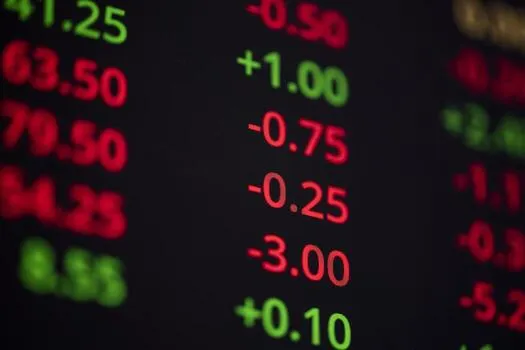 shares aggressively, and pursued takeovers that further reduced the public float, according to Interactive Brokers trader insight. The net supply of shares shrank for years, mechanically boosting per-share metrics and amplifying the effect of passive inflows.
That regime is shifting. The same forces that once provided reliable support now risk becoming headwinds—or at least far less dependable tailwinds.
Policy rates sit in the mid-3% range, and inflation has remained sticky. Real rates are positive again. The cost of capital is higher, and the era of near-zero rates and financial repression is over. Markets can no longer assume every dip will be met with aggressive monetary easing.
On the supply side, buybacks remain large and still outweigh new issuance in many forecasts. Yet equity supply is rising. AI-related capital needs have driven a sharp increase in follow-on offerings and other issuance. Hyperscalers are directing cash into massive capital spending rather than solely into share repurchases. The long period of de-equitization is easing; net supply is becoming less negative and could turn positive.
Liquidity itself is more volatile. The ultra-abundant, low-volatility conditions of the 2010s have given way to a more temperamental environment of supply shocks, fiscal competition for capital, and frequent policy trade-offs.
None of this guarantees a bear market. Earnings growth, residual buyback support, and productivity gains can still sustain equities. The change is structural: a multi-year tailwind that lifted valuations and cushioned drawdowns is becoming less one-sided. Higher real rates raise the return hurdle. Rising share supply reduces the mechanical lift from a shrinking float. Liquidity is less of a one-way support.
Investors who treated the post-GFC backdrop as permanent may need to recalibrate expectations for returns, volatility, and the reliability of strategies that thrived on a shrinking free float. The market winds have shifted. They may not reverse course entirely, but they are no longer the consistent ally they once were.
Posted By RichC on August 10, 2026
 The recording of “Twist and Shout” is legendary for being performed in a single take by The Beatles in 1963. John Lennon delivered a raucous, throat-shredding vocal performance while suffering from a cold. Producer George Martin scheduled the track as the final song of the session to preserve Lennon’s voice, noting it as “arguably the most stunning rock and roll vocal and instrumental performance of all time.”
Recording late at night on February 11, 1963, Lennon was already suffering from a severe cold and had been singing for nearly 12 hours. Producer George Martin intentionally saved the song for last, knowing it would destroy Lennon’s voice. After the first take, Lennon’s vocal cords were so shredded that a second attempt was abandoned almost immediately; Lennon later described the sensation of swallowing afterwards as feeling like “sandpaper.”
Posted By RichC on August 9, 2026
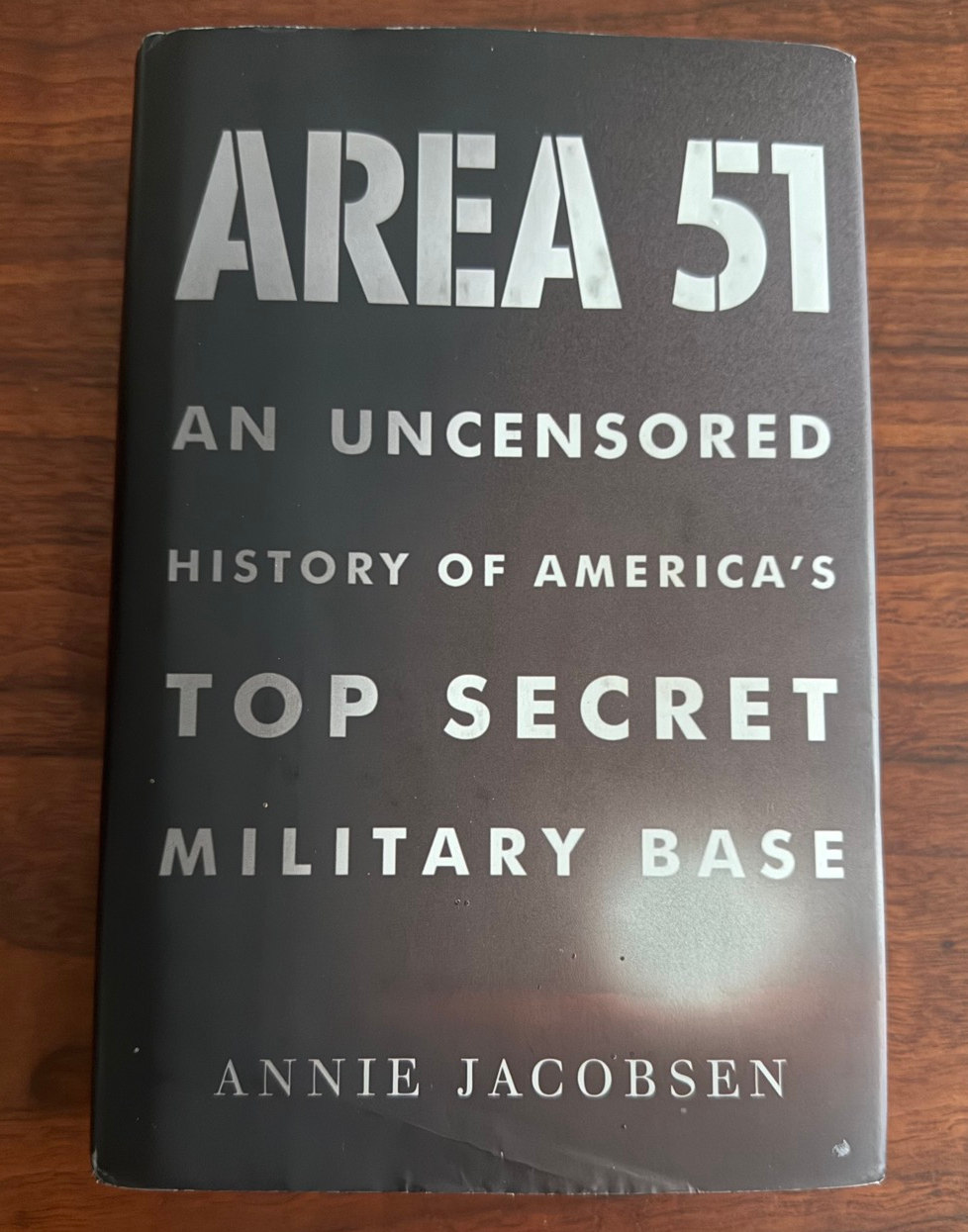 Sometimes it is the small things in life that get one excited. That happened for me as a fan of books by Annie Jacobsen last month and finding out I was the winner of a signed 1st Edition of her 2011 book “Area 51: An Uncensored History of America’s Top Secret Military Base”
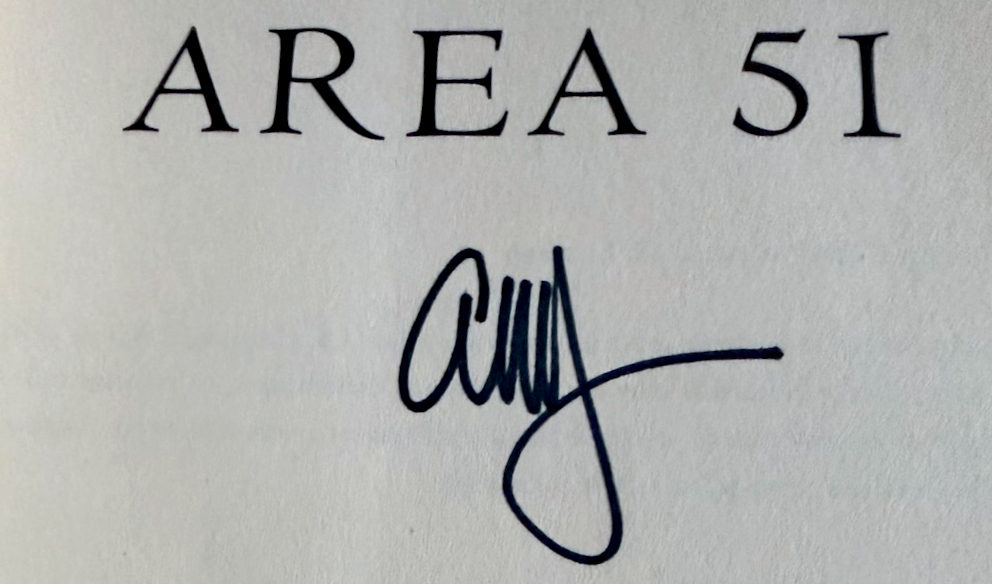
Yes, I’ve read the Kindle version before, but am thrilled to have the hardback version with photos pages etc. It will be a hefty bookshelf filler at 532 pages … and am also looking forward to “Biological War: A Scenario.” 😉
Posted By RichC on August 8, 2026
I’ve subscribed to newspapers and financial publications for most of my adult life (and complained about subscription woes before). Having started my career working for HBJ and then a division of Knight-Ridder, I have always appreciated getting news and information from newspapers and magazines … and believe  quality journalism is worth paying for –– I don’t expect everything on the Internet to be free.
That’s why this experience with Dow Jones surprised me so much.
Like many companies today, Dow Jones offered introductory subscription rates on almost all their products. After year or so on the promo, a subscription automatically renewed at roughly **ten times** the promotional monthly price. I’ve played the game with customer service each renewal go-around and am careful to renew early — usually they just upsell me on more content or digital access, etc. During my recent experience though, I didn’t expected a different tack. First I didn’t receive a reminder email or a pop-up that my 13 month term was ending (as in previous years) … or receive a “tickle my fancy” with another attractive offer to remain a loyal subscriber (again, WSJ my entire life and reference a thousand times here and on social media).
My mistake? I trusted a company whose publications I’ve respected for decades.
When I noticed the auto-renewal charge and called as soon as it appeared (3-days after posting), I wasn’t looking for something for nothing. I contacted customer service hoping for a reasonable solution. Over the course of speaking with three different representatives — including a customer service supervisor — I suggested several possibilities:
Every conversation was polite. Every representative was professional. Every answer was “no.” What disappointed me wasn’t the people. They were courteous throughout. It was the policy.
One comment in particular stuck with me: I was told that customers in certain states have stronger legal protections regarding automatic subscription renewals, and that if I lived in one of those states, the outcome might have been different. But because I live in Ohio, they were under no obligation to offer the same accommodation.
That may be legally correct … but it left me wondering  whether companies should provide their best customer experience only where the law requires it?
I’ve had very different experiences with other subscription publishers. One investment newsletter I subscribe to has allowed me to try premium services, cancel during the trial period, and receive refunds without argument. Did they lose money on those transactions? Perhaps. What they gained was something far more valuable: my trust.
Because they treated me fairly, I have no hesitation about considering another subscription from them in the future … and after my Dow Jones experience this week, probably will (thank you Contrarian Outlook).
 Ironically, Dow Jones accomplished the opposite.
I may be able to still respect the journalists working at The Wall Street Journal, Barron’s, Investor’s Business Daily and MarketWatch … but not their publisher. Their writers didn’t create this experience, but someone needs to address it … and soon.
But the subscription policy left me with a question that every subscription business should ask itself:
Is maximizing one renewal worth losing a customer who was willing to keep paying for years?
For me, the answer is no.
This experience has also changed the way I manage subscriptions. From now on, every promotional subscription goes on my calendar with renewal reminders as it once did (trust has been lost). More importantly, I’ll increasingly use payment methods that allow merchant-specific virtual cards or spending limits whenever possible.
It’s unfortunate that loyal customers feel they need these tools. Good companies don’t just earn our money. They earn our confidence. And sometimes, that’s worth much more than one unexpected renewal charge.
*Purposely delaying posting this just in case I receive a polite
call from Dow Jones — not that I’m expecting it.
Posted By RichC on August 7, 2026


Prior to installing OpenCore my aging “tweaked” Late 2012 iMac was becoming worthless as the MacOS wasn’t updatable from Catalina, now with Sequoia it has a new lease on life … at least for a little longer.
It is running flawlessly and doing nearly everything I need it to do … nice big iMac 27” display with a second 27” Apple Thunderbolt Cinema Display next to it. It has been a great Intel-powered MacOS setup for 14 years. Yes, it does occasionally glitch and slow, but for the most part, it is still a preferred computer to use when it come to having screen real estate. So if you are married to an older Mac and would like to continue using MacOS rather than trying a Linux install or mothballing due to it being beyond the Apple support years, give OpenCore Legacy Patcher a try, you won’t be disappointed.