Archiving photos and getting together with my brother’s family
Posted By RichC on May 13, 2018
This content is restricted.
Posted By RichC on May 13, 2018
This content is restricted.
Posted By RichC on May 12, 2018
This content is restricted.
Posted By RichC on May 11, 2018
Retirement is continuing to change and "has changed a lot in recent years, and may be far different from what you expect," says Tom Sightings, author of You Only Retire Once. The biggest difference is that you will most likely be responsible for overseeing (or hiring out) much of your own finances and health care management.
Here are ten truths about today’s retirement published online on USNews.com:
1. This is not your father’s retirement. The days of the 40-year career with the same company are gone.  The gold watch is gone. In many cases, the pension is gone as well, or was converted to a self-managed IRA or 401(k) plan. The first truth of retirement is that we are responsible for our own finances.
2. You’ll probably live longer than your parents. The average life expectancy for a 65-year-old is 19 years, and many of us will live another 25 or 30 years. The good news: We have more opportunities to pursue new dreams, reinvent ourselves or just bask in the glow of a well-lived life. The bad news: You have to pay for it.
3. Medicare does not cover all your health care costs. Medicare is the government health insurance program for people age 65 and over. The program covers a lot of the services older people require, but you also need supplemental insurance to help pay doctor’s bills, prescription costs and dental expenses. And even supplemental insurance doesn’t pay for everything, especially when it comes to hearing aids, eyeglasses and a host of other age-related health expenses.
4. You need to take care of yourself. Retirement is the time when all the bad habits of your youth come home to roost. But it’s not too late to give up smoking, start eating right and begin an appropriate sports or exercise program. A healthy diet and regular exercise routine are the key factors for keeping our bodies running smoothly and painlessly into our 70s and 80s.
5. You still have to plan for the future. Retirement is not a constant. There are many stages of retirement, from an active early retirement to perhaps needing personal care for daily needs later in retirement. So think about your living quarters, and whether you want to still be climbing stairs or taking care of a yard a decade from now. Consider long-term care arrangements for your later years. Plan your investments not just for the next few years, but for a longer span of time that may involve periods of inflation or another recession.
6. There’s more to retirement than money. You can have all the retirement funds in the world and still be bored, lonely and frustrated. Conversely, you don’t need a huge retirement portfolio if you’re ready to make some major lifestyle changes, such as living abroad, sharing living quarters or doing something unconventional that you find exciting, creative or fulfilling. In retirement, even more so than in your younger years, money is not an end in itself, but a resource to help accomplish the things you want to do.
7. Time is of the essence. The retirement paradox is that we are more aware that time is ultimately limited, yet we have more time now because our days are not crammed full of work or family responsibilities. So there’s no room left for procrastination. If you have a dream, now is the time to pursue it, whether it’s traveling to the seven wonders of the world, finding a peaceful spot on a far-flung beach, starting your own business or reconnecting with children and grandchildren.
8. There’s no time for regret. None of us have come this far in life without making a few mistakes. Don’t let them haunt you. The past is over and done with. There’s nothing you can do about it now. Just accept what happened and let it go.
9. Talk to your loved ones about end-of-life decisions. It’s not a pleasant task, but it needs to be done. Most experts recommend a health care proxy so someone else can make crucial medical decisions if you are incapacitated. A power of attorney allows someone else to use your money to pay your bills. And a will directs what will happen to your leftover assets when you die. It’s better that you make that decision rather than let the government do it for you.
10. You are responsible for your own retirement. You will need to find a way to pay your bills without income from working in retirement. Beyond that, perhaps for the first time, you are now in charge of your own life. You no longer answer to a boss and are no longer tied down by family responsibilities. And so the most important truth of all is that the retirement you get is the retirement you’ve prepared for. Retirement is, literally, a once-in-a-lifetime opportunity. So go ahead and make the most of it.
Posted By RichC on May 10, 2018
Brenda was subpoenaed to be a witness in a "drug diversion" case and appeared before a Grand Jury in our today. For someone not all that familiar with law and legal proceeding this just sounded ominous. Since I’ve been summoned to jury duty this summer, I figured it was a good time to tag along and learn a bit more (besides Brenda wanted me for moral support) .
Normally the Grand Jury does not question witnesses (from what I was told) but a bit more reading on the subject and I can see that it is not all that uncommon either. The role of the Grand Jury is to "determine whether criminal charges should be brought" and if there is probable cause to indict … so as to "also shield the accused against unfounded and oppressive prosecution."
Posted By RichC on May 9, 2018
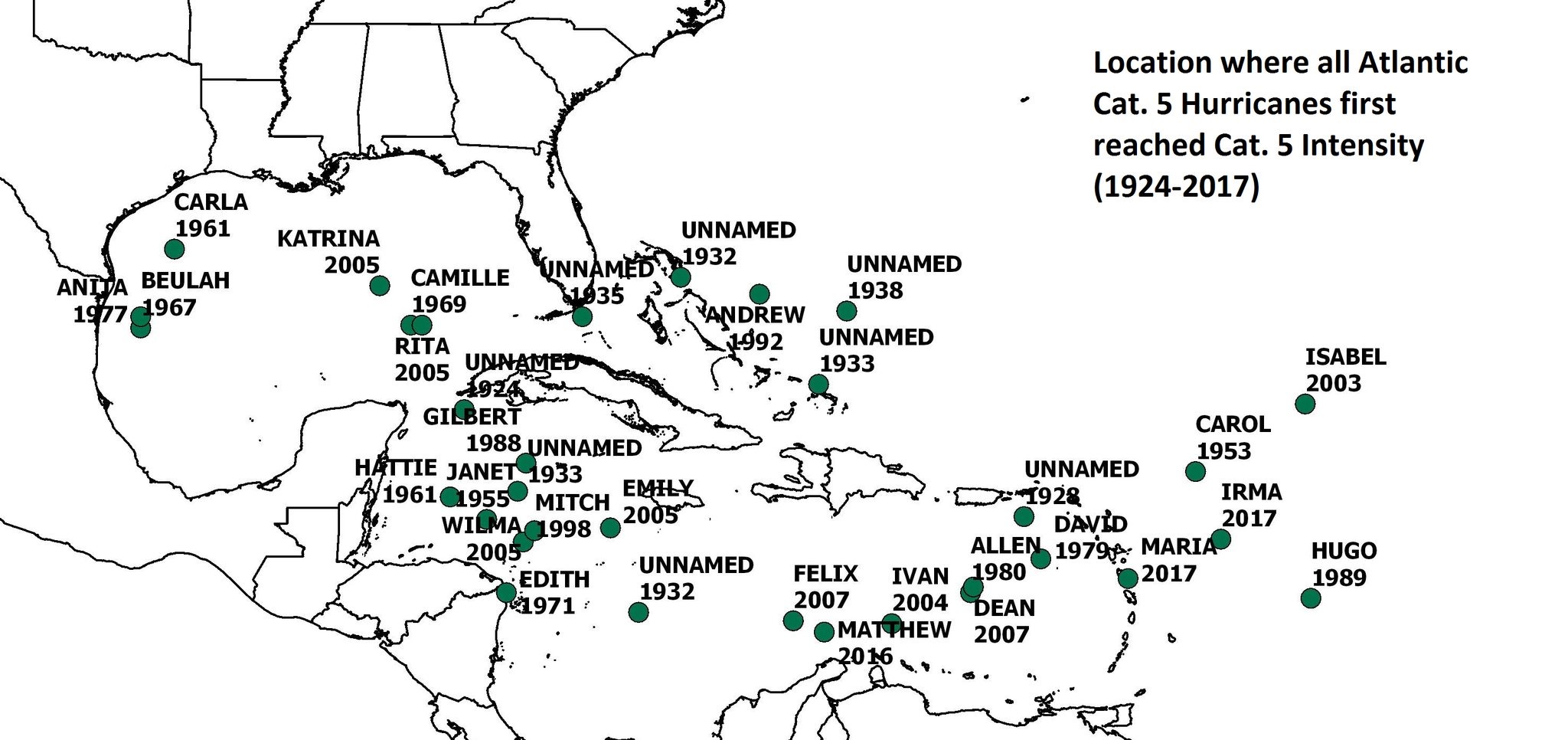
A great map was shared by CSU meteorologist Philip Klotzbach this week highlighting location where all on record Atlantic Cat. 5 (>= 157 mph) hurricanes first reached Cat 5 intensity (click above image for larger). Definitely random.
Posted By RichC on May 8, 2018
Add something slick to the pole and enjoy the show …
The birds eating at this birdfeeder are laughing at the squirrels today … #humor pic.twitter.com/MB7I3TZirM
— Rich Corbett 🇺🇸 (@RichC) May 7, 2018
Posted By RichC on May 8, 2018
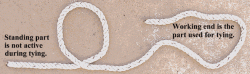
Bitter end: the free end of a line
Standing part: the longer part of a line which is fixed during the tying of a knot
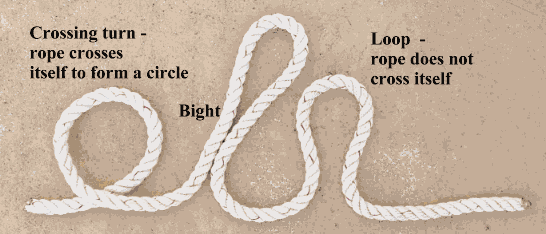
Bight: The part of the rope between the end and the standing part. A loop formed by folding the rope back on itself
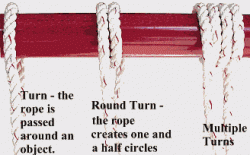
Turn: a loop formed around a post, rail, or the line itselfCrossing Turn: a circle of rope made by crossing the rope over itself
Loop: a circle of rope made by bringing two parts of the rope together without crossing them over each other
Splice: weaving strands of a line to itself or to a second piece of line
Whipping: wrapping twine or tape around line to line’s end to prevent unraveling
Seizing: wrapping twine or tape around two lines to bind two parts of line side by side
Worming: laying smaller line in the spiral grooves (with the lay) between line strands
Parcelling: winding strips of canvas over, and in the same direction as, worming
Serving: winding small line against the lay and over worming and parcelling to protect line from chafe and water damage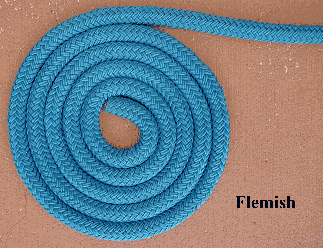
Flemish: to make a Flemish coil by taking the end of a line and laying it in a tight flat spiral on the deck. Used to “tidy” up and keep line neat
Faking: laying a line on deck in a series figure eights so the line will run free without tangling
Flaking: laying out line on deck in parallel rows.
Short splice: the strongest way to connect two lines. This splice has 6 strands in the cross section and is thick and may not run through a block
Long splice: the strand of one line replaces the strand of the other line. The size of line is kept the same however, and it is weaker than the short splice
Eye splice: stronger than any knot in forming a loop in a line
Thimble: a metal or plastic form inserted in the eye splice to prevent chafe
Back splice: splicing a line back on itself to prevent unraveling – it like the short splice has a cross section of 6 strands and may not be able to be pulled through a block
Eye: A loop made in the end of a rope either by knotting, seizing or splicing.
Coil: Rope made into a neat series of loops or circles, usually for storing.
Source: Marlinespike – Terminology
Posted By RichC on May 7, 2018
This content is restricted.
Posted By RichC on May 6, 2018
 Parkinson’s Law has a wide lattitude of application or perhaps abuse by those of us that do the same for Murphy, but I’ve heard it most often when referring to bureaucratic management and the perpetual growth of an organization. The adage goes that “work expands so as to file the time available for its completion.”
The corollary to the adage is that “a luxury once enjoyed, quickly becomes a necessity.”
Posted By RichC on May 5, 2018

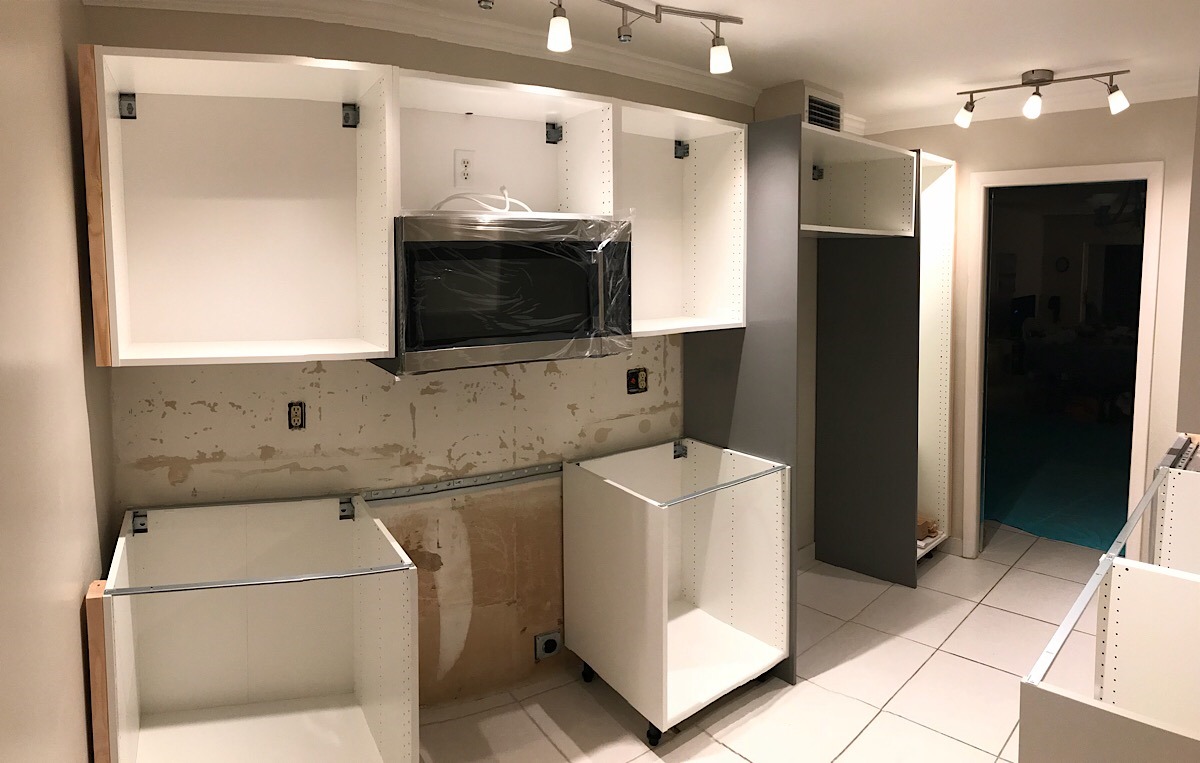
Just a couple more panarama catch-up photos for the archive from the updates to the condo kitchen. Brenda has been a great help and we both "enjoyed" working together.