A lot of great blog posts on War History Online
Posted By RichC on May 1, 2016
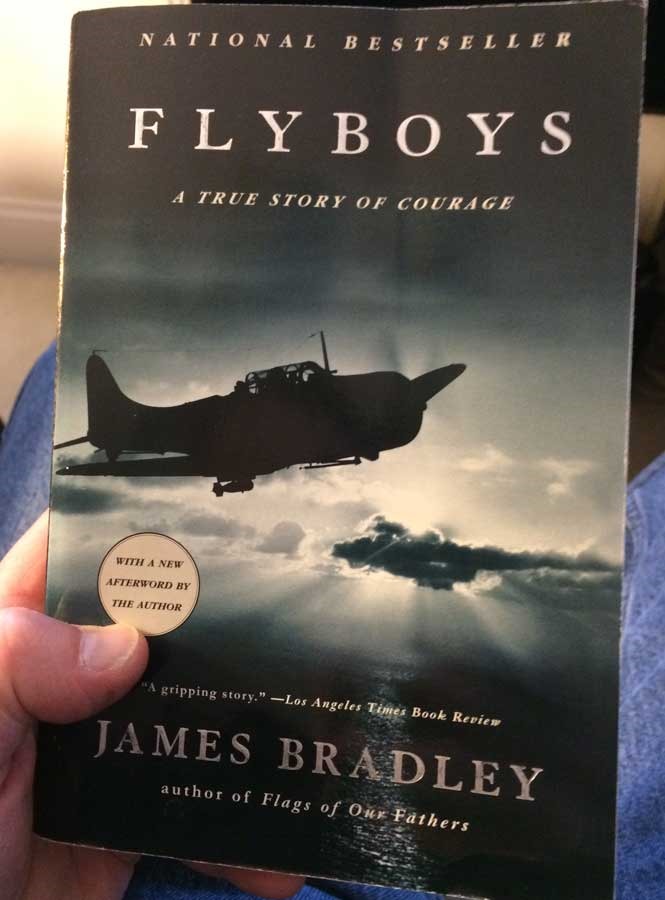 I recall thinking a bit more about the barbarism of the Empire of Japan during (and prior) to World War II when I read the book Flyboys by James Bradley a few years back. When it came out in 2003, I remembered thinking about just how tainted public secondary and higher had become in regards to teaching history. So many have forgotten or purposely glossed over the atrocities of our enemies and the heroism of our armed forces. I fear that as the philosopher George Santayana penned, "those who cannot remember the past are condemned to repeat it."
It was interesting to read a War History Online blog post by Colin Fraser reminding us of just how courageous the young men of the Greatest Generation were in their bloody push across the Pacific. It might be a good conversation starter from one generation to another to see just how much of of the full history is being taught.
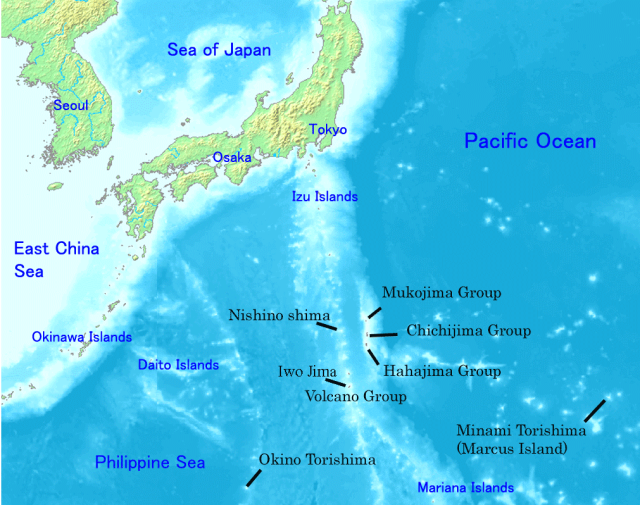
In September 1944, the USS Finback submarine surfaced a few miles off the coast of Chichi Jima, an island some 700 miles South of Tokyo. It’s periscope had popped above the water and spotted the man they were there to save. He, however, first thought the sub was a hallucination.
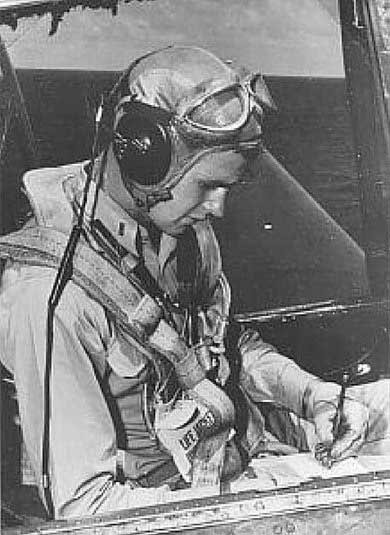
Lt. George H. W. Bush (a man who, in forty odd years, would be president of the United States),
was delirious, bleeding, vomiting off the side of his small life raft, and lucky.
Of the more than 100 American pilots that were shot down during the raids over the Bonin (Ogasawara) Islands preceding the storied landings on places like Iwo Jima, Bush was only one of three airmen that were rescued. Scores of others perished with their aircraft or died in the cold waters.
The most unfortunate of all were those that flew in the September 3rd 1944 bombing raid with Bush, were shot down and captured by the Japanese soldiers stationed on Chichi Jima. There were nine, in total, and only one survived. The others disappeared, their files sealed by the U.S. government until decades later.
The horrific fate of these aviators was virtually unknown past the war trials after World War II until James Bradley, author of “Flags of Our Fathers,” investigated the now unsealed files, found living eye-witnesses, and published the book “Flyboys: A True Story of Courage,” in 2003. Even Bush didn’t know the fate of his comrades until Bradley delivered the news. The former president shook his head in silence. To be straight-forward, the men were beaten, tortured, beheaded and eaten.
Chichi Jima was of great strategic importance to the Japanese war effort. It held more than 25,000 troops, gunboats, a seaplane base, and relayed vital intelligence and communications via the two radio stations atop its two mountains. Hence, the multiple Allied bombing raids on it as the American forces closed in the on the Japanese Empire.
The U.S. Navy had also effectively cut off supply lines to this island and the soldiers on it were bordering on starvation.
Much of the information Bradley found on the dark incidents in this place was in the documents covering the 1947 war trial of General Yoshio Tachibana and his subordinate officers stationed on Chichi Jima. Tachibana was a notorious sadist and alcoholic.
o give fair warning, the events to be described here are quite graphic, so please proceed with this in mind.
During the trials, there were many first-hand accounts from Japanese soldiers and even a medical orderly who helped the surgeon, Dr. Teraki, prepare the dead soldiers for feasts held by the officers.
It was Tachibana who ordered the execution of all eight captured American airmen on that island. Many were clubbed and bayonetted, as well. A Japanese soldier, identified in the trial documents as Iwakawa, recalled when radio operator Marve Mershon was kneeled over a freshly dug grave and beheaded.
The day after that execution, Major Sueo Matoba ordered a feast for his fellow officers on the islands. The menu included both sake and dead Americans. According to the U.K. paper The Telegraph, in an article about the incident and Bradley’s retelling, the medical orderly assisting the surgeon stated, “Dr. Teraki cut open the chest and took out the liver. I removed a piece of flesh from the flyer’s thigh, weighing about six pounds and measuring four inches wide, about a foot long.”
In testimony from Admiral Kinizo Mori, one of the “delicacies” that Matoba brought to the feast was the liver of crewman Floyd Hall, which Matoba had cooked with soy sauce and vegetables and which the officers ate in small pieces.
Two other airmen were reportedly cannibalized, the other four only executed, with at least one clubbed to death.
Bradley, in his book, contextualizes the brutality of these events with an explanation of Japanese atrocities against the Chinese and other people they conquered and captured, as well as American atrocities against people like the Filipinos after the Spanish-American War and the conquest of the Native Americans.
He explains that what leads up to such horrifying spectacles is a strong belief, an indoctrination in cultural superiority and a total disregard for others as those indoctrinated spread their might through those other nations and people.
The events on Chichi Jima were not at all an isolated incident. There are many accounts of Japanese soldiers turning to cannibalism of prisoners as Allied ships began to cut off their supply lines in the later years of the war. The military/veteran history blog Together We Served quotes Japanese historian Yuki Tanaka as claiming that “cannibalism was often a systematic activity conducted by whole squads and under the command of officers.”
At the 1947 trials, which took place on Guam, 30 Japanese officers and soldiers were charged in the killing of the eight airmen. However, there was nothing in international law that dealt with cannibalism, so the additional charge against the officers was one of “prevention of honorable burial.” These five officers were found guilty and hanged: Maj. Matoba, Gen. Tachibana, Adm. Mori, Capt. Yoshii, and Dr. Teraki.
These are the eight American airmen who were killed on Chichi Jima:
Navy Aviation Radioman Jimmy Dye, from Mount Ephraim, New Jersey
Navy Pilot Floyd Hall from Sedalia, Missouri
Navy Pilot Warren Hindenlang of Foxboro, Massachusetts.
Navy Aviation Gunner Glenn Frazier from Athol, Kansas
Navy Aviation Radioman Marve Mershon from Los Angeles, California
Marine Pilot Warren Earl Vaughn from Childress, Texas
Navy Aviation Radioman Dick Woellhof from Clay Center, Kansas
Aviation Gunners Grady York from Jacksonville, FloridaThe lone American who survived the gruesome time was Navy Pilot William L. Connell of Seattle, Washington. In 2012, at the age of 88, Connell went parachuting for the first time since the day he jumped from his plane and landed in Japanese custody.
By Colin Fraser for War History Online
Sources:
The Telegraph-George Bush’s comrades eaten by their Japanese PoW guards
Together We Served-George H. W. Bush and the Chichi Jima Incident
Wikipedia-Chichijima Incident
Wikipedia-Flyboys: A True Story of Courage
All photos sourced from wikipedia.com


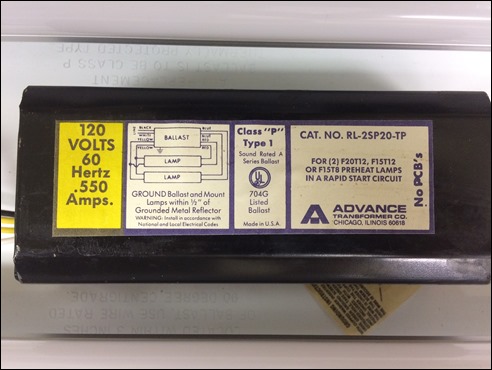 a small 2 foot 2 bulb fixture and replace with a couple cheapy “warm white” (2700 degree)