Not my idea, but I’d be interested to know how many regular travelers have secured their computer, camera or regular luggage by flying with a “weapon?” I might toss my Orion 12ga. flare gun in a bag and give it a try next flight. (A weapon in a bag keeps the bag secure since the TSA doesn’t want these items to get lost or misplaced … although I wonder if passengers get delayed on the receiving end?)
A “weapons” is defined as a rifle, shotgun, pistol, airgun, and STARTER PISTOL. Yes, starter pistols – those little guns that fire blanks at track and swim meets – are considered weapons…and do NOT have to be registered in any state in the United States.
I have a starter pistol for all my cases. All I have to do upon check-in is tell the airline ticket agent that I have a weapon to declare…I’m given a little card to sign, the card is put in the case, the case is given to a TSA official who takes my key and locks the case, and gives my key back to me.
That’s the procedure. The case is extra-tracked…TSA does not want to lose a weapons case. This reduces the chance of the case being lost to virtually zero.
It’s a great way to travel with camera gear…I’ve been doing this since Dec 2001 and have had no problems whatsoever.
There was a day when we didn’t watch much TV, but nowadays that wouldn’t be true. Besides too much football and cable news, my wife and I have become addicted to a few weekly programs … one which had its 2010 season premiere Sunday evening: 24. As usual, it was exciting and left me hanging in anticipation for the next episode … thankfully it will be Monday night.
HULU Video deleted
But that’s not the point. In the season premiere one of the new CTU agents was hanging up her cellphone when I noticed it was a Sprint Palm Pre. I promptly snapped the photo and Twittered to Twitpic … what a geekly thing to do (below). The program does tend to highlight many of the latest tech gadgets and often has them doing much more than is realistic … in this case it was just a phone call, although it looked as if the agent used the slider feature to hang the call up (it doesn’t do that).
😉
Edit: Adding a couple more photos from February 2010 episodes below
– taken with my Palm Pre off television screen (click for larger).
If you have a need to send a large file, such as a video, compressed archives or entire directories, or other large digital files where the size is too large for email or normal FTP file sharing services which limit file sizes (often around 400MB), then give Load2All.com a try. This free (but advertising buggy — so be warned) site receives your uploaded file and will even split the file into ‘parts’ that are loaded to multiple sites. Once uploaded, a link can be emailed automatically (or copied and directly shared) to the person who needs the large file. Personally I’m not fond of the excessive ‘in your face’ advertising associated with these websites and mirrored websites, but the service is free and can help to send large files. I tested this with both and large video file and a PDF, although prefer using something like Sugarsync, Carbonite or Dropbox … even the subscription versions.
I’ve been debating on how to archive the 2010 Earthquake in Haiti since there isn’t one article or report that has summarized the disaster appropriately. After 96 hours, one thing that is significantly clear is that the loss of life in this poor country is tremendous — estimates of the number of dead range from 30,000 to 500,000.
No photo or news clip is appropriate, but it is safe to say that no matter the effort and actions being implemented, we’ll be too slow. Hopefully the outpouring of aid will soon make it from the airport in Port au Prince “securely” to the people who are thirsty, hungry, injured and homeless. My prayers go out to the people of Haiti and all the volunteers doing their best to care for them. I’ll include a FoxNews clip (below) of reporter Jonathan Hunt who has been on the ground for 3 days … and is showing frustration that aid isn’t getting to suffering people.
I received a phone call from my neighbor a few minutes ago concerning a wounded and limping coyote on her back porch (previous post). By the time I retrieved my voicemail it was too late to do anything as the county sheriff arrived and the critter headed off into the ravine. A brief search with our dog did little and probably frighten him away even further … this is probably not the last we’ll see of from him. (attached are photos from her cellphone)
I would have thought that the unusual mid-winter fog would have disappeared by 10:30 in the morning … I guess not? (test post ‘again’ using Palm Pre to richc.myarchive.us)
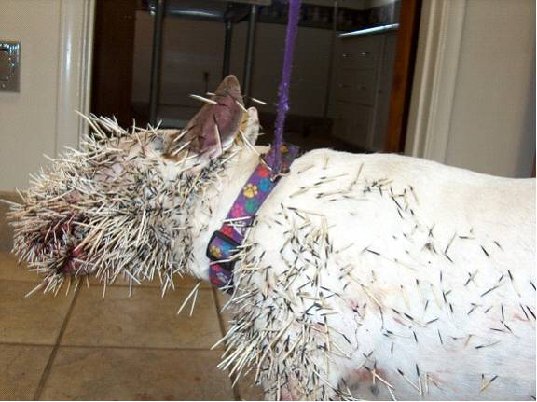
A friend sent me this knowing how our dog reacts to ‘critters’ in the yard.
A pit bull was in his backyard in southern California, minding his own business, when a porcupine invades his territory. The brave, but stupid pit bull immediately challenges the porcupine!
Bad decision…the porcupine won this short contest.
Follow up:
A vet sedated the dog and then removed a total of 1,347 quills. The dog survived and has, hopefully, learned a valuable lesson.
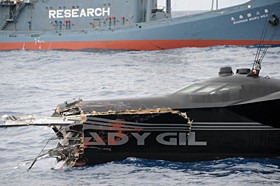
While monitoring what my friend Pete Bethune has been up to since he and his biodiesel powered boat Earthrace circumnavigated the world in 2008, it was with distress to see the unique boat destroyed (see previous posts). In 2009 the futuristic boat joined up with an anti-poaching marine wildlife conservation organization Sea Shepherd which utilized the futuristic trimarian which was Earthrace, now Ady Gil. It is now in operation with larger Sea Shepherd vessels and takes advantage of its open ocean speed to keep up with the hunter ships used by the Japanese to kill whales. The current task is to protect as many whales as possible from the Japanese whalers who are, according to Sea Shepherd, “operating illegally” and “targeting endangered and protected whales in an established international whale sanctuary in violation of a global moratorium on commercial whaling, in violation of the Antarctic Treaty and in contempt of an Australian Federal Court order.”
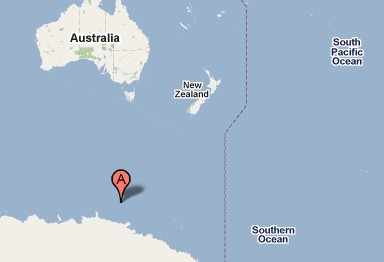
On January 5th (press release) however, things changed in the so called “Whale Wars” as it is dubbed by the television program Animal Planet. The Ady Gil was aligned, engine off, in a parallel position with the larger Sea Shepherd vessel as the Japanese whaling security ship, the Shonan Maru No. 2, charged toward their position. The Ady Gil crewmembers were on sleek fiber decks as they watched Shonan Maru No. 2 head toward them showing their starboard side and spraying water. (video taken from it below). A change of course is seen by the Shonan Maru, presumably they intended to be closer to the Ady Gil, but collision occurred between the smaller fiber composite Ady Gil and a larger steel ship.
To some this may have looked like an accident, to others a mistake by the Ady Gil, but to most the Shonan Maru No. 2, operating under speed is seen to make a purposeful starboard course change taking directly towards the new and effective Sea Shepherd vessel. For those noting that the Ady Gil started it engines and moving forward just prior to impact, this is true … but those familiar with handling a boat at sea know that directional control and maneuvering speed is effective in the forward direction (not reverse). Besides, no captain risks his life, a crew and boat ramming using a small plastic boat with large a steel ship operating at nearly full speed – other than a terrorist with a bomb. Conclusion: either the captain/crew of the Shonan Maru purposefully made a direction change with intent to ram the Ady Gil, or they purposefully directed their ship towards the Ady Gil with the intent to disrupt with their bow wave and water canons – a mistake that caused the collision.
It should also be noted that Sea Shepherd does not use aggressive tactics beyond lights, lasers, sound and positioning which requiring the whaling ships to alter course in their mission to protect whales. While this is a frustration to factory ships operating from Japan that harvesting whales, Sea Shepherd is within their legal rights according to international maritime law and intentional collisions should be prosecuted. Without repercussions or an independent investigation, the “Whale Wares” will escalate and loss of human life will be the outcome.
Sea Shepherd’s Mission Statement
Established in 1977, Sea Shepherd Conservation Society (SSCS) is an international non-profit, marine wildlife conservation organization. Our mission is to end the destruction of habitat and slaughter of wildlife in the world’s oceans in order to conserve and protect ecosystems and species.
Sea Shepherd uses innovative direct-action tactics to investigate, document, and take action when necessary to expose and confront illegal activities on the high seas. By safeguarding the biodiversity of our delicately-balanced ocean ecosystems, Sea Shepherd works to ensure their survival for future generations.
Although I rarely forward emails since I dislike the spam filling up my box, I do once in a while get the urge to share. Here’s a snippet worthy of thought as the our elected representatives continue in a direction to take over reform health care. Will they break their streak and run it efficiently or go further in debt while asking taxpayers for more money? Do we really need to ask that question …
To President Obama and all 535 voting members of the Legislature,
It is now official, you are ALL corrupt morons:
The U.S. Postal Service was established in 1775. You have had 234 years to get it right and it is broke.
Social Security was established in 1935. You have had 74 years to get it right and it is broke.
Fannie Mae was established in 1938. You have had 71 years to get it right and it is broke.
War on Poverty started in 1964. You have had 45 years to get it right; $1 trillion of our money is confiscated each year and transferred to “the poor” and they only want more.
Medicare and Medicaid were established in 1965. You have had 44 years to get it right and they are broke.
Freddie Mac was established in 1970. You have had 39 years to get it right and it is broke.
The Department of Energy was created in 1977 to lessen our dependence on foreign oil. It has ballooned to 16,000 employees with a budget of $24 billion a year and we import more oil than ever before. You had 32 years to get it right and it is an abysmal failure.






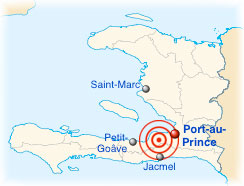 96 hours, one thing that is significantly clear is that the loss of life in this poor country is tremendous — estimates of the number of dead range from 30,000 to 500,000.