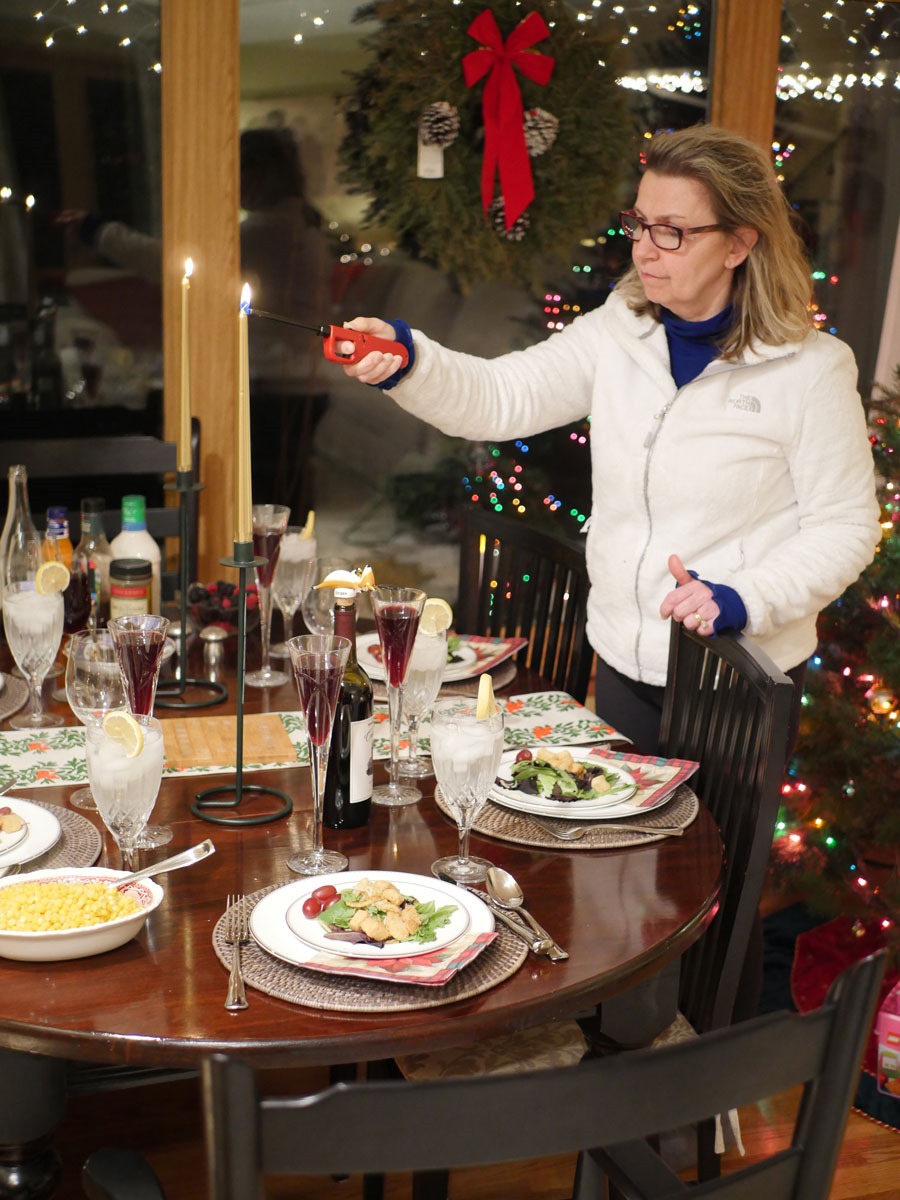
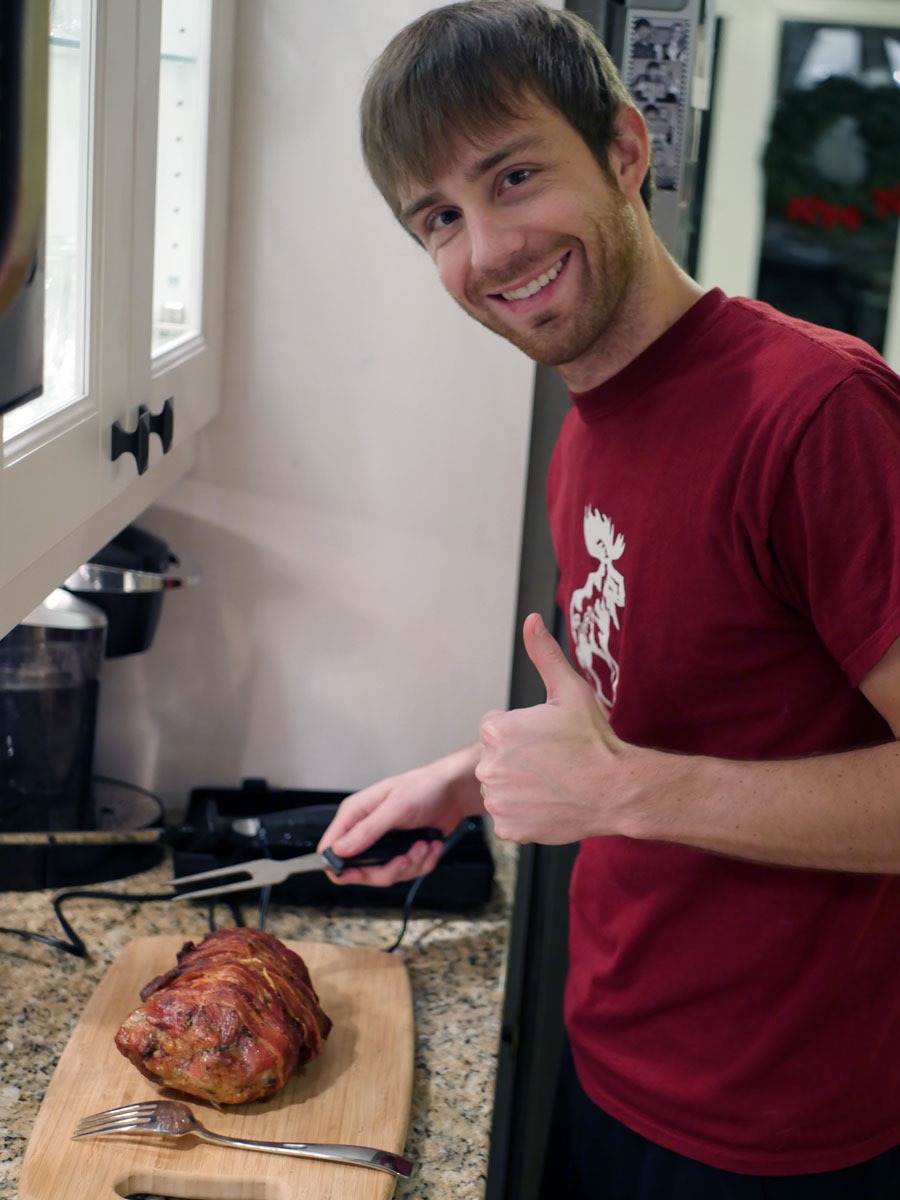
What photo is most vivid in your mind for 2016?

Posted By on December 31, 2016

The last several years MyDesultoryBlog has highlighted "banished words" from the list Lake Superior State University (LSSU), who puts together a list at the beginning of a new year (and probably still will in early January)? This year we’ll end we’ll end 2016 with a couple memorable photos. The first being serious, and second … well …

HighlightPhoto_AleppoBoy2016

No doubt the "Aleppo Boy" (Omran Daqneesh) and the video footage has to be part of everyone’s memory. It illustrates the horror of war and the "stark reminder of the toll of the war in Syria" and in particular the city of Aleppo.  Let us hope we will see an end to that war in 2017 … and a collapse of ISIL/ISIS who has taken advantage of disarray in Syria … as well as Iraq.

This second memorable photo is a bit snidely and political on my part. It is a photo that represents the end of the road for two Democrats. President Obama will be leaving the office after 8 years and semi-successfully moving our country toward a social democracy (Europe) and several decades of knowing Hillary Clinton who most assumed would be his inevitable replacement. Her "less than likeable demeanor" and decades of political dirt became too much for her to overcome, not to mention blue collar frustration and the lack of working class jobs. Eventually doling out borrowed and “other people’s money” does not overcome a weak economy. As with the Bush administration preceding, Obama, Hillary Clinton and fellow democrats left behind a mess.

Seeing this sickening 2016 photo again, after the American people chose President-Elect Donald Trump, is now much more tolerable than when it first appeared. Goodbye and good riddance to both!

PresidentObamaHRC2016

Archiving: Great sailing related article on reefing sails

Posted By on December 30, 2016

There are much better places to save articles than a publicly available blog like Evernote, GetPocket, Google apps as well as locally archived HTML, Docs and PDFs, but I still occasionally enjoy having them on MyDesultoryBlog. So as with a few other archived articles on reefing (1 & 2), I’m saving this Cruising World Seamanship 101: Reefing the Main article on  myarchive (also testing a larger slideshow WordPress plugin for images at the bottom of the post — hold cursor over the slideshow image to pause).

Seamanship 101: Reefing the Main
Mastering this basic tenet of seamanship can help any sailor control the circumstances when the conditions get gnarly.
A few years back, on a gusty day with winds over 40 knots, my 34-year-old Cape Dory 28, Nikki — a cruising boat I live aboard — won the coveted Michelob Cup on Florida’s Tampa Bay, topping a fleet of more than 40 other yachts, most of which were hard-core raceboats. Not coincidentally, Nikki’s crew had trained in heavy weather and could reef the mainsail in 40 seconds or less, and shake it out even quicker.

Nobody in Tampa Bay racing circles had ever seen or competed against Nikki. She was the oldest and smallest boat to race that day. Though we were later accused of cheating by a disgruntled opponent (and quickly exonerated), Nikki continued her winning ways and was later named Southwest Florida’s Cruising Boat of the Year by the West Florida PHRF Racing Association. Proficient and rapid reefing remained a key to our success. In fact, unlike many of our competitors, we always hoped for strong winds on race days.

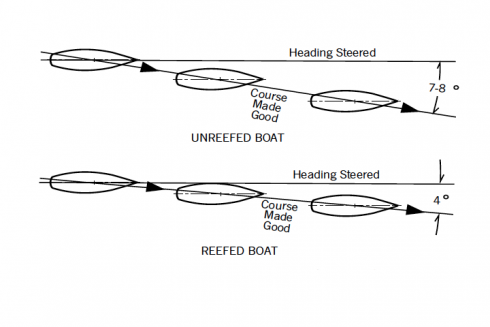
Of course, there are lots of reasons to reef that are more important than winning races. Well-executed, timely reefing has a positive impact on your boat’s performance and safety in heavy weather. A well-balanced sail plan also keeps your crew and passengers safer and able to move about more comfortably, increasing their level of confidence in your sailing abilities and attention to their welfare. There’s nothing that will ruin a day on the water faster than a partner or friend screaming, “We’re tipping over!”

Here are a few more ways reefing promotes better sailing:

  • Keeps the boat “on its feet” and more efficient in terms of hydrodynamics and aerodynamics.
  • Increases speed potential in rough conditions.
  • Reduces adverse weather helm (unnecessary drag).
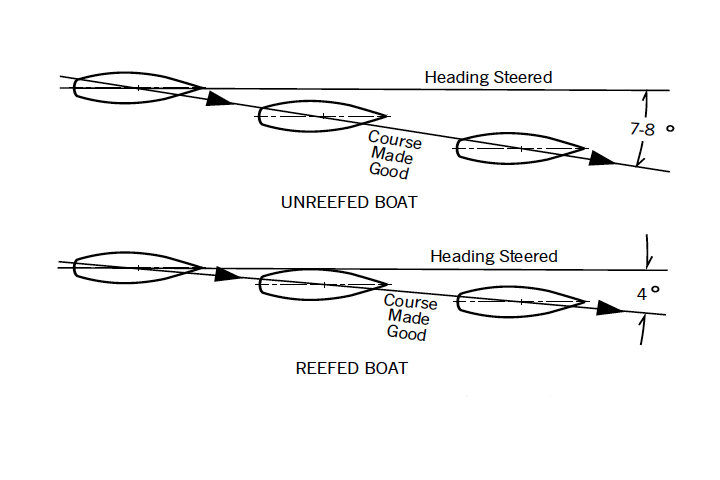
  • Dramatically reduces leeway when pointing and close-reaching.
  • Reduces wear and tear on sails and equipment.
  • Makes sails easier to trim and handle.
  • Setup and Sequences


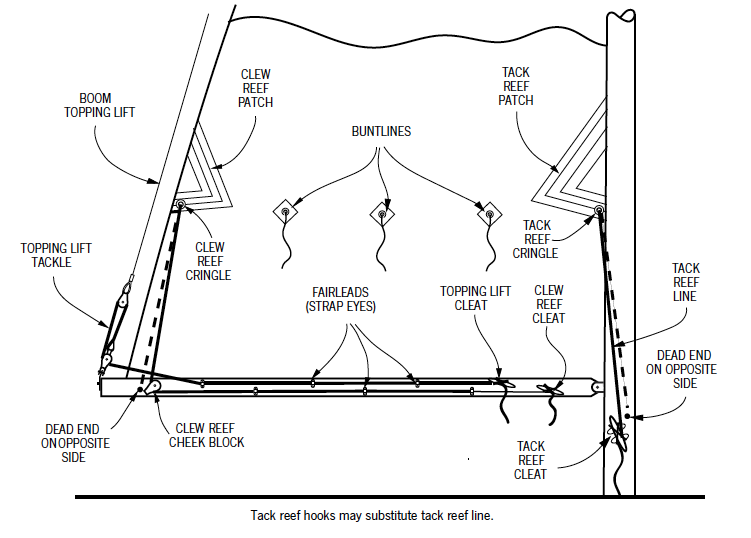
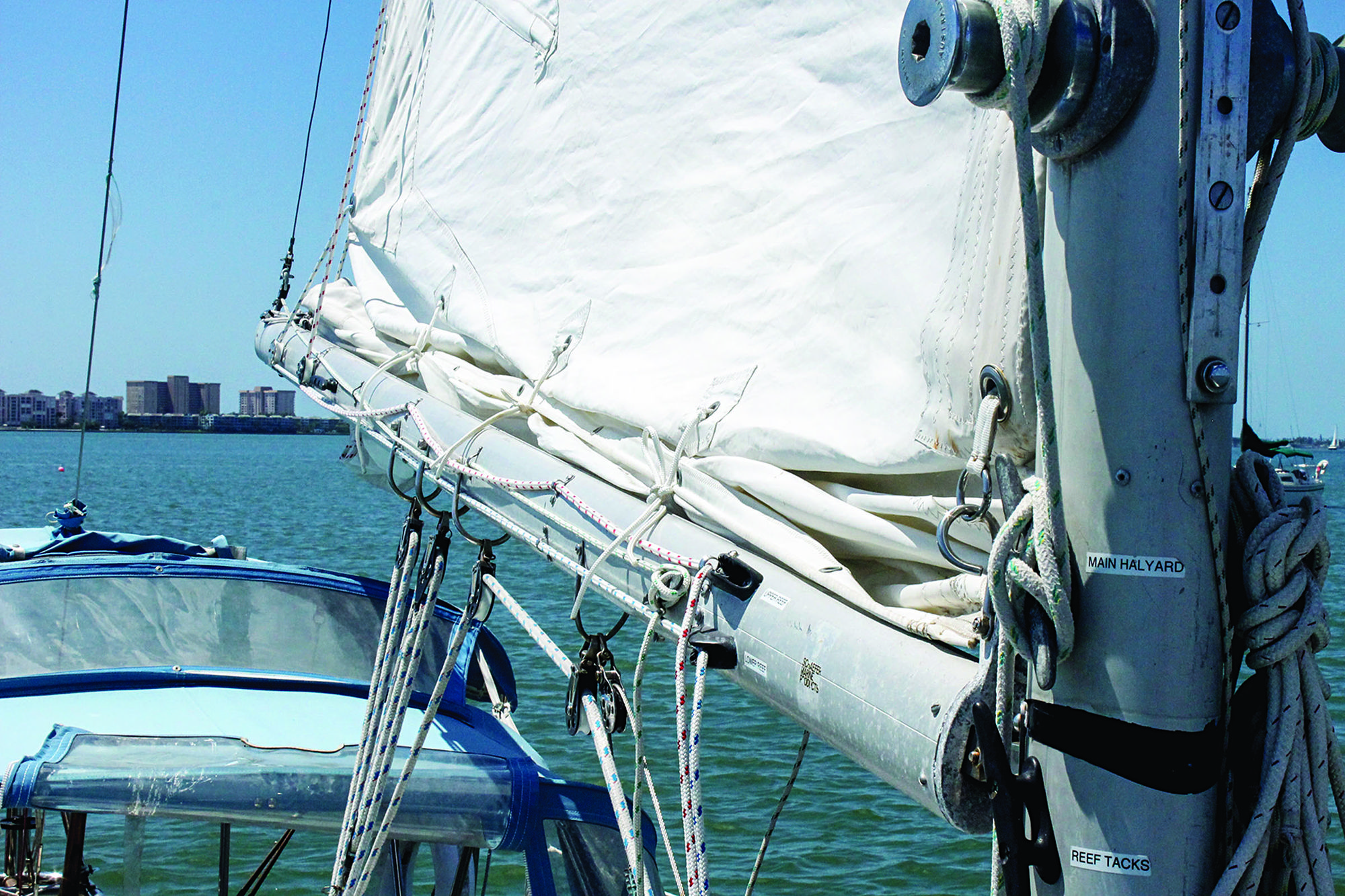
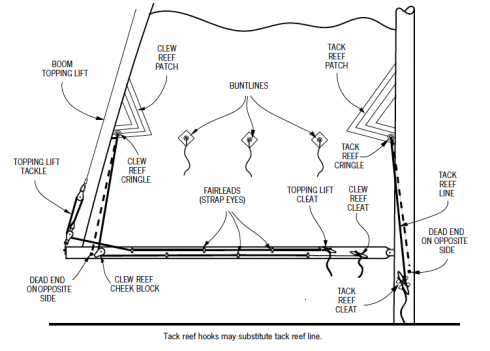
It’s important that all the hardware and running rigging for reefing maneuvers are close at hand. For a classic plastic cruiser like Nikki, the reefing-control gear — the bitter ends of the reefing tack and clew lines and their respective cleats or clutches — should be situated on the same side of the mast and/or boom as the main halyard winch (usually on the starboard side). On more contemporary cruising boats, this gear is often led aft to the coachroof, flanking the companionway. The main topping lift should also be readily close by. This way, the crew tucking in the reef needn’t move from one side of the boat to the other to complete the task. Topping lifts and clew lines should never terminate at or near the end of the boom; these would potentially require the crew to hang ­dangerously over the lifelines to access them.

Because they’re quickly made, saving valuable time, I prefer cam or clam cleats for all reefing control lines. On the boom, reefing clew lines are best installed internally to keep the spar uncluttered. Alternatively, these clew lines can be routed through three or four small strapeyes that are machine-screwed to the boom.

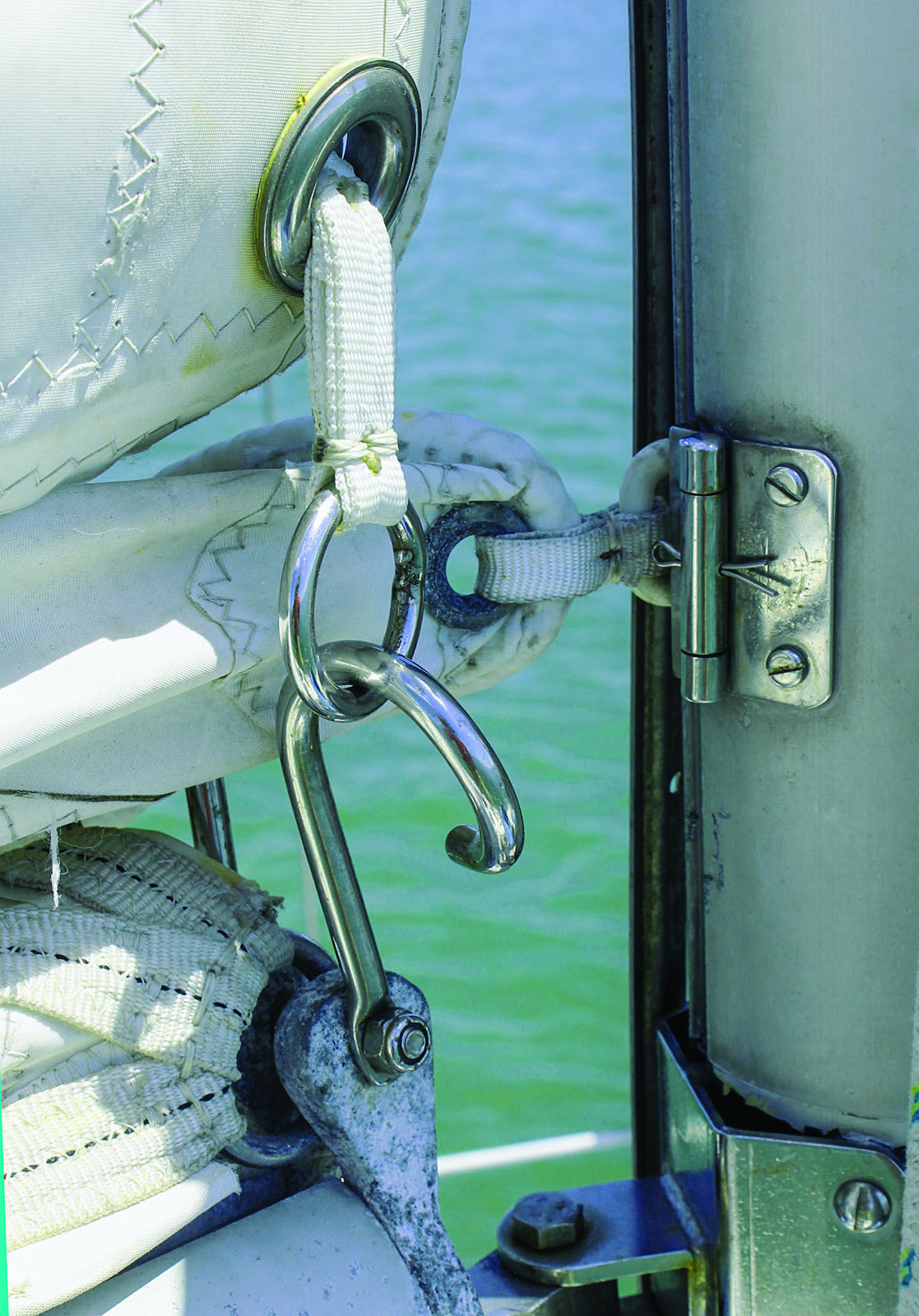
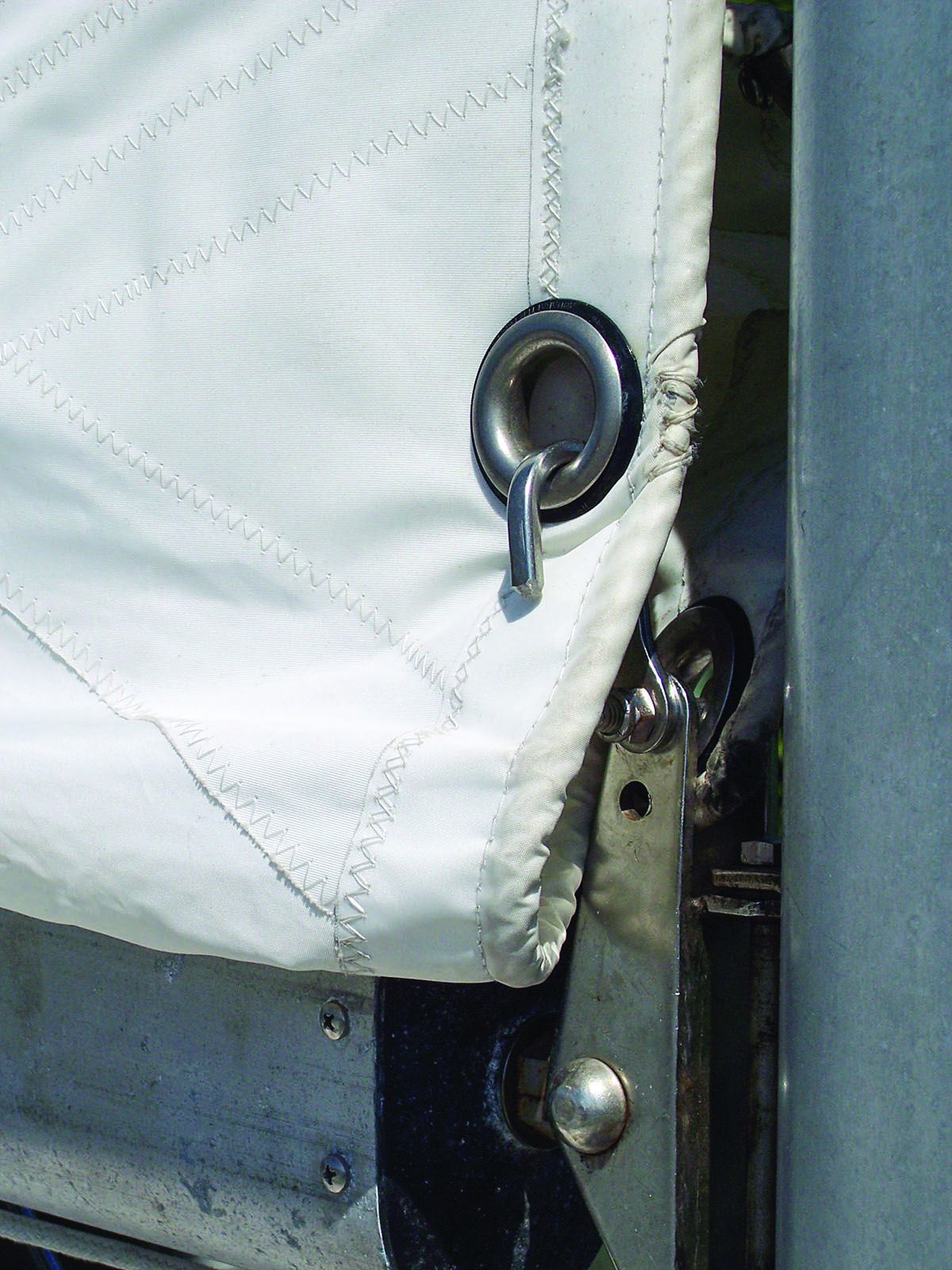
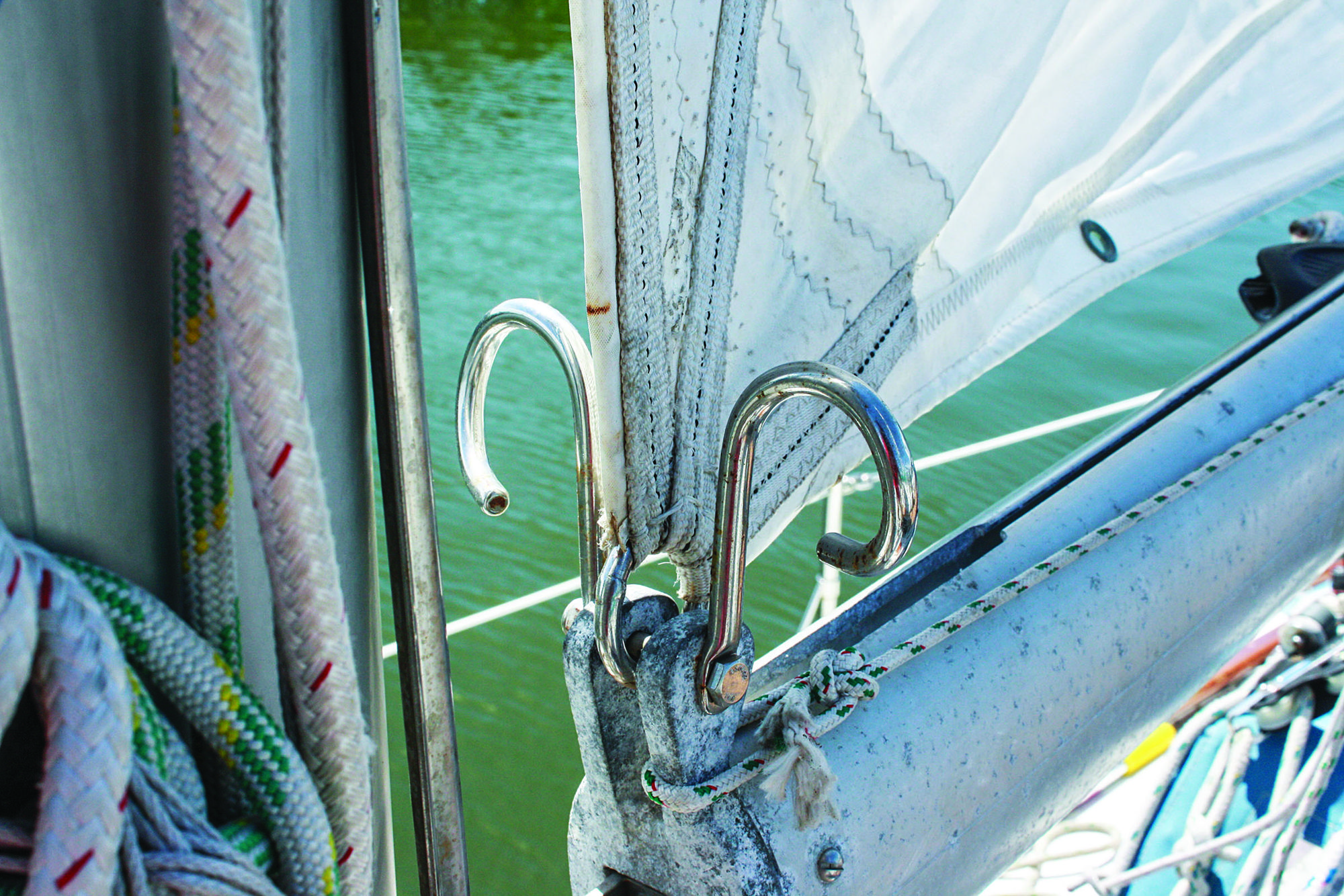
Many booms are equipped with reefing tack hooks integral with the gooseneck; others have dedicated tack lines. Nikki has both, and I’ve found that the tack line is much faster to use, saving precious seconds.

Whether you sail a sloop, cutter, yawl or ketch, the traditional jiffy- or slab-reefing sequence is virtually universal. Practice it with your crew until reefing becomes a streamlined and habitual process. Eliminate confusion, yelling and mistakes. The job should be smooth and rapid. The following is the correct sequence for all boats that do not employ a single-line system (more on those in a moment). On Nikki I’ve actually printed out and laminated two copies of these instructions, and taped one to the mast and the other in the cockpit.
Here’s the drill:

  1. Ease the boom vang and then the mainsheet so both are slack.
  2. Take up the topping lift so the boom is stabilized.
  3. Lower the main halyard until the desired reefing tack cringle is in position.
  4. Tighten and make fast the reefing tack line, or put the tack cringle onto the gooseneck hook, ring or shackle.
  5. Hoist the main halyard until the luff is firm and wrinkle-free.
  6. Take in the reefing clew line, or luff cringle, via a boom winch or tackle as much as possible, and make fast.
  7. Ease the main topping lift.
  8. Trim the mainsheet.
  9. Tighten the boom vang.

Personally, I find this slab-reefing system, with separate controls for the leech and luff of the sail, to be preferable to single-line reefing systems. First, due to the friction and loads caused by a single-line system running through multiple sheaves and leads before terminating in the cockpit, those sheaves are not timesavers. Also, because the reefing line is so long, it may develop kinks in the line that delay the maneuver until they’re straightened out. Finally, single-line reefs eliminate the ability to adjust sail draft and leech tension separately.

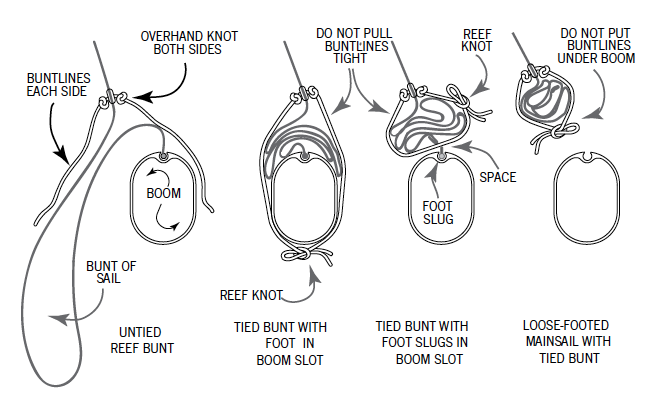
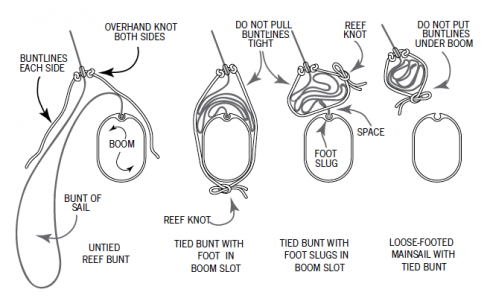
So now that your sail is reefed, what do you do with the lowered panels of the sail that are no longer set? On Nikki, I use dedicated buntlines: small-diameter lengths of line that pass through a horizontal series of cringles in the sail, between the reefed tack and the reefed clew, and tied with reef knots. Their only purpose is to store the “bunt” — that excess sailcloth that hangs down from the finished reef — to increase visibility from the helm and reduce flopping. For mainsails without buntlines, the sail can be gathered and secured with sail ties rove through the appropriate reef points, or through cringles in the sail, which serve the same purpose. Either way, buntlines or sail ties should never be pulled tight before tying, because they will strain and eventually tear the sail at the cringles. Your reefed sail should be left loose-footed, although the buntlines or ties can be knotted under the boom or only around the bunt itself, which I prefer. When I race Nikki, I leave the bunt untied because it doesn’t get in the way and it reduces the time to take another reef in or shake it out.
Over the years, I’ve heard some sailors say they don’t know how or when to reef, justifying this confession by stating that they don’t sail when it’s too breezy, or they simply bear away as the wind stiffens. This is shortsighted and even dangerous, for the day will come when you’re caught in a rising squall or changing weather, and there are few choices or tactics other than reducing sail.

So practice with your family and ­regular crewmembers, and you’ll soon discover how easy reefing really is. Keep a stopwatch handy and try to beat your best time. This skill will broaden your sailing horizons and increase your self-reliance dramatically as you discover what you and your boat are capable of when conditions deteriorate.

Learning to reef quickly will also teach you what needs to be corrected or modified on your boat to make reefing more effective and convenient. Boat manufacturers are not necessarily heavy-weather sailors and often take shortcuts. What they install is not always ideal in terms of hardware or deck layouts.

In my experience, sailmakers, mast and boom assemblers, and yacht designers aren’t always on the same page either, and the result can be reefing systems that just don’t work.

So let’s delve a bit deeper and focus on some of the finer points of the design and installation of reefing hardware.

End-Boom Dilemmas

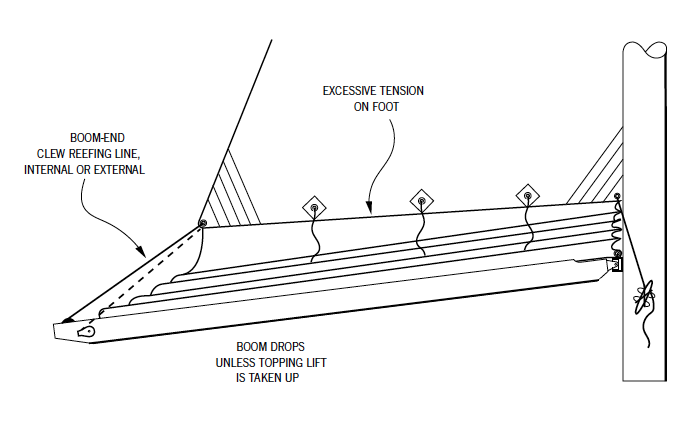
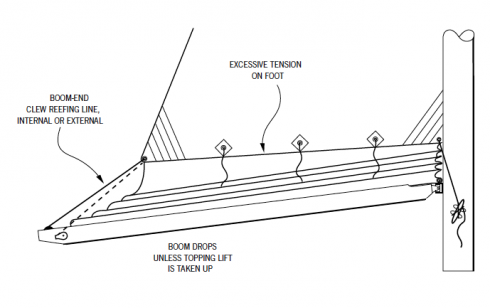
If you have a boom with an internal reefing system — with sheaves for the clew(s) installed at the outboard end of the boom — you’ve probably ascertained that something wasn’t right when you tried to set a reef. Most likely, your boom drooped to an odd angle and may even have ended up on top of your bimini or dodger. If your boom has external clew reef lines with cheek blocks and dead-end padeyes installed at the end of the boom, the same thing will happen.

To make matters worse, if the clew reef lines are led to cleats that are also near the end of the boom, you can’t reach them unless you are either sheeted in and sailing to weather or luffing head to wind.

Clew reefing lines emanating from the end of the boom are not only inefficient; they can be hazardous for anyone who has to make them up while hanging over a lifeline or under a thrashing boom.

In other words, there’s really no excuse for this system on a well-found cruising boat.

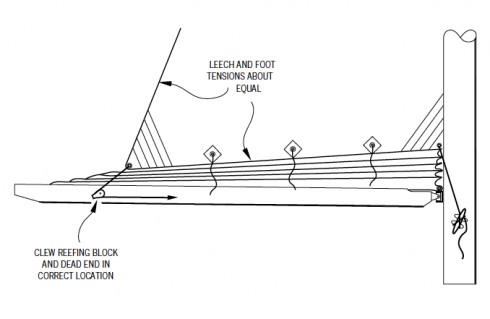
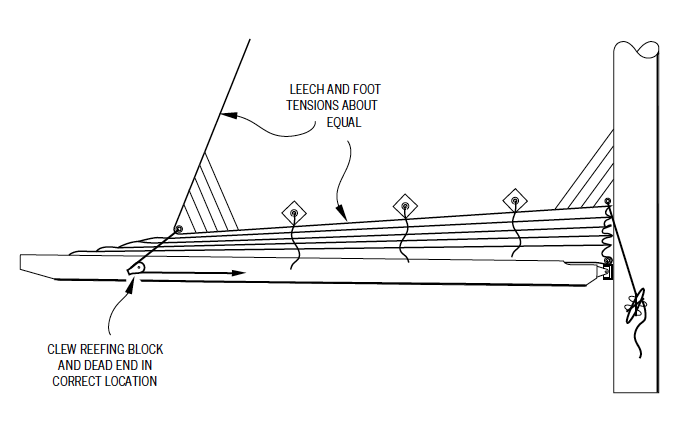
The angle of that clew line, when reefed, is a related issue. When a mainsail is reefed, it essentially becomes a loose-footed sail (even if the actual foot of the sail is slotted into the boom). A reefed sail’s draft and twist control is not unlike a headsail’s; in other words, the angle of the jib or genoa sheet and the angle of the clew reefing lines determine the sail’s twist, while the tension on these respective lines controls the draft. So it is vital that the position of the clew reefing hardware is correct, and this is easily determined.

With your mainsail lowered to its reefed position and the new tack placed into its reef hook (or, similarly, with the tack reefing line taut and made fast), pull on the clew reefing lines and manually change their angle. When you pull downward, hard, the sail’s leech tightens and its twist is reduced, while the foot of the sail loosens and develops more draft. Likewise, when you yank the clew reef line upward, the foot of the sail becomes tighter and flatter, while the leech loosens and develops more twist.

Ideally, you want to strike a balance so the leech and foot tensions are about the same. The angle for this clew reef line might not be perfect for all points of sail, but you will need to reef most often when sailing to weather, so I recommend adjusting the clew hardware accordingly.

Many older boats have the cheek block for the reefing clew on a track so small adjustments can be made to accommodate changing wind velocities and points of sail. If you want to split hairs, a block on a track is the way to go. Clew reefing hardware at the end of the boom will never result in a reefed sail that is well-trimmed.

Tacks and Leeches

When reefing a mainsail, the first reef-point connection to make is the tack cringle. But this can be difficult if the sailmaker has not made adequate accommodation for the stacked-up luff on the mast that occurs when lowering the sail.

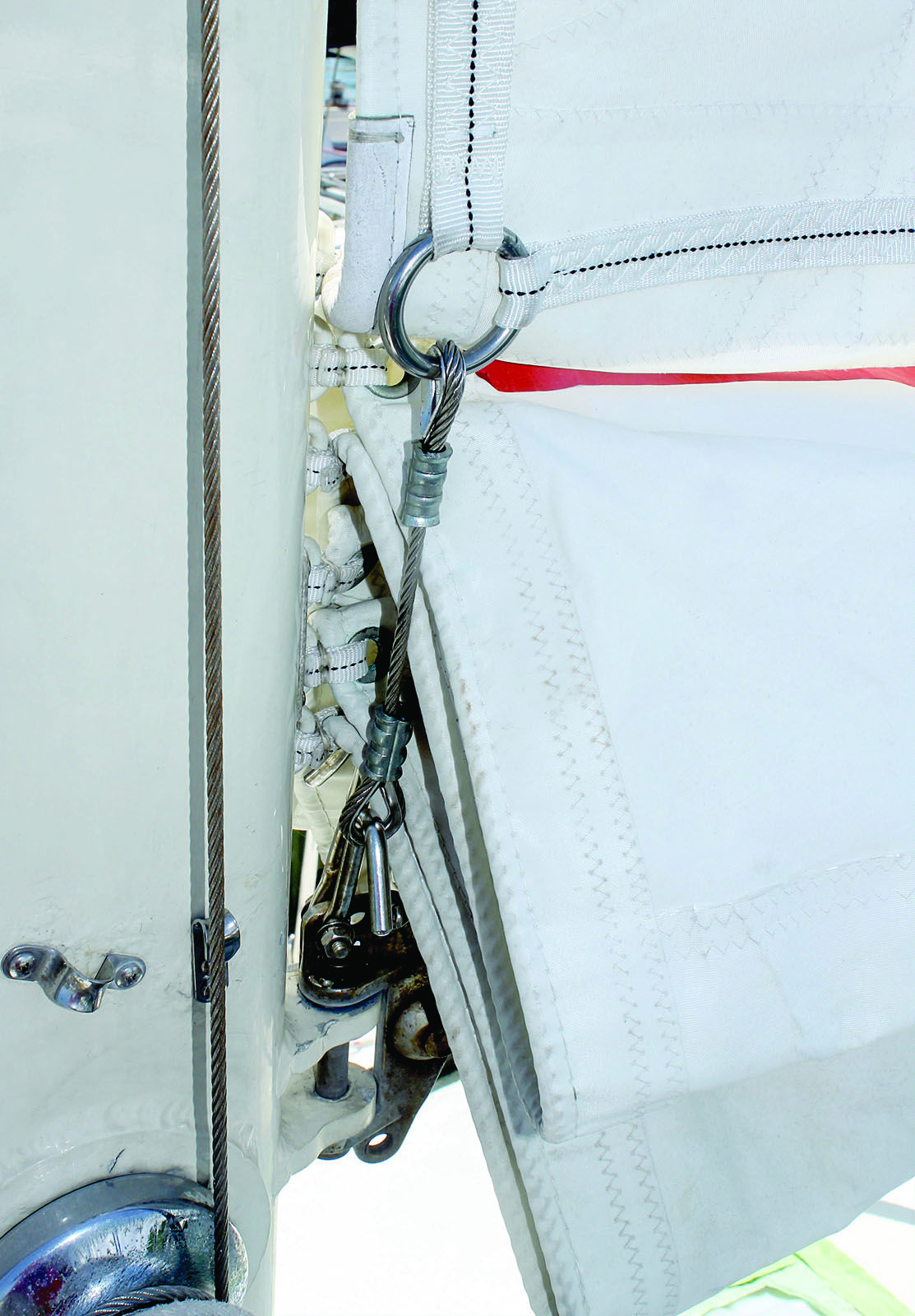
If you are using reefing tack hooks, a major problem can occur if there is a slug-entry closure in the mast that prevents the luff from dropping fully to the gooseneck. A ring pendant may be added to the reefing tack cringle so the tack hook can be reached. Cringles for second or third reefs will also require pendant extensions.

If your mainsail is set up with reefing tack lines, rather than gooseneck hooks, the problem of sail stacking is greatly reduced. But the height of the reefed tack position still causes distortion with the sail. My recommendation is to close the slug entry with a semipermanent cover that will allow the sail stack to be much lower. If using tack reef hooks, you’ll still use extension pendants, but that stack will be much shorter.

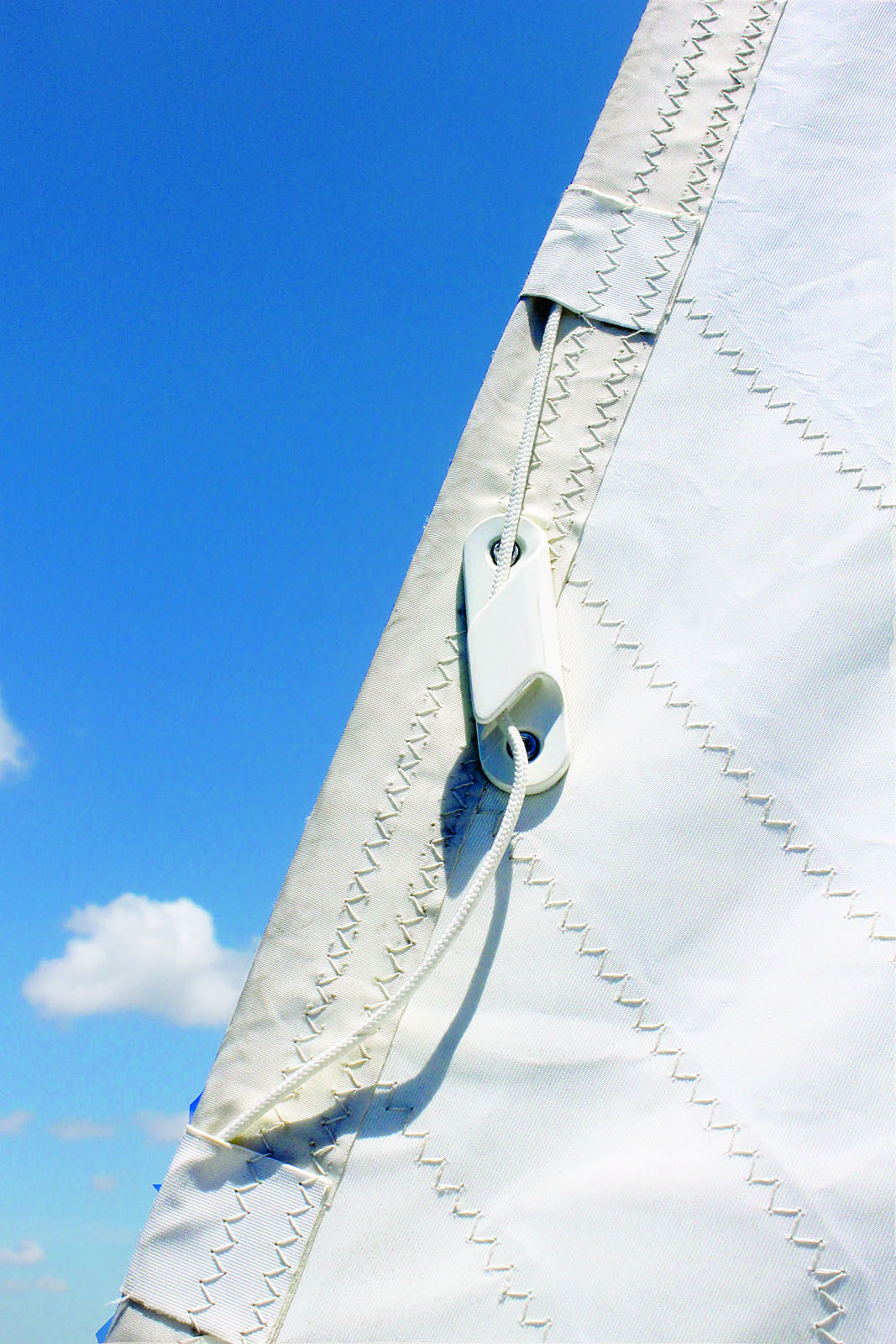
Along the trailing edge of the main, chances are that your sail has a small-diameter leech line that begins at the head of the sail and extends all the way to the foot. The leech line exits the leech hem through small cringles just above the boom and at the respective patches for each reefing clew. A small cleat will be situated at each reef point. Once a reef is tied in, you should apply just enough tension on the leech line to stop any flapping or movement of the sail’s leech, and then make it fast. When shaking out a reef and before you fully hoist the main, always remember to slack those leech lines to prevent a series of distinct hooks in the sail. Not only do they look bad, they’re also inefficient.
Boatbuilder, naval architect, author, illustrator, marine surveyor and long-time CW *contributor Bruce Bingham is also the proprietor of Bruce Does Boatwork, a yacht repair and refit business in St. Petersburg, Florida. *

Semi-enjoying my shoe debate with Clarks consumer services

Posted By on December 29, 2016

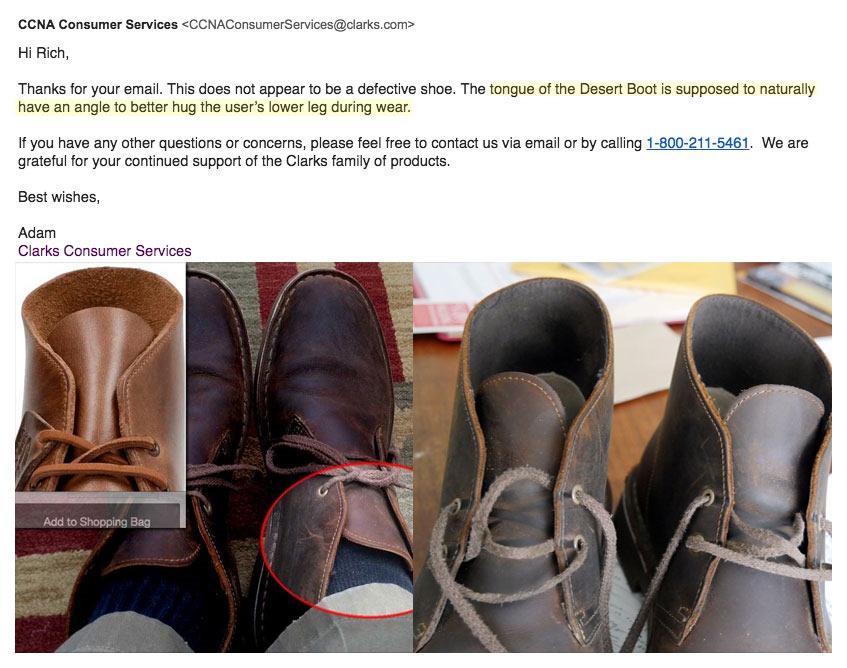
One month ago I inquired as to the "tongue creep" on a pair of Clarks Desert Boots that were a gift. Occasionally I will give a company feedback if there is something positive or negative so they know they are pleasing a customer or disappointing one. I sent a image as requested to the consumer services email address regarding was I suspected may have been a stitching flaw or quality control. After a few weeks and having receiving an automated case number, I followed up again more out of curiosity than anything serious. Personally I like the shoes and wouldn’t mind buying another pair, but after the excuse written below (click image) suggesting the "tongue is suppose to naturally have an angle," I’m not sure I will buy the Clarks brand again.

Clarks_tongueanglednaturall

From a business perspective, addressing the off-centered tongue as a designed in feature to a customer who likely would have purchased again was a mistake.  If consumer services were to only addressed with a coupon or even an apology for "quality control oversight" they would have been smarter. Some companies still have some improving to do when interacting with customers in today’s socially connected world. If Clarks USA wants a referral … don’t come to me. (although I do feel bad, I mentioned my disappointment on Twitter to the UK Clarksshoes … whoops … but at least learned a little Desert Boot history)

Two New Trane Furnaces installed on a COOL winter day

Posted By on December 28, 2016

Trane_Thermostat

With the intent to capture the end of the year 2016 tax credit and take advantage of a slow work week, I scheduled the replacement of our 21 year old Bryant HVAC equipment. The installers from Logan-Inc worked one full day to replace our two furnaces with higher efficiency Trane models (XR95 + S9V2) and a 4 ton outdoor XL18i AC unit — we’ll continue to use the old smaller AC on the basement equipment since it is rarely used. TNewFurnaceRoom161228he eventual plan to use that electrical circuit to run a ductless mini-split just for my home office, although it may take some salesmanship to get Brenda onboard — kitchen negotiations perhaps??? 

A couple of changes we made besides improving efficiency to 95% and 96% (18 SEER for AC), was a bit more focus on the location of AC condenser lines which were originally installed in the inaccessible rear and rerouting of the natural gas lines to make servicing the equipment easier … not to mention just moving around it. Also we opted for a variable speed fan and a 2 stage set-up for the main unit that runs based on the temperature and demand rather than cycling full capacity on and off … this should help with our utility bill. Time will tell.

All in all, the furnace room is a little bit more user friendly (photo above).

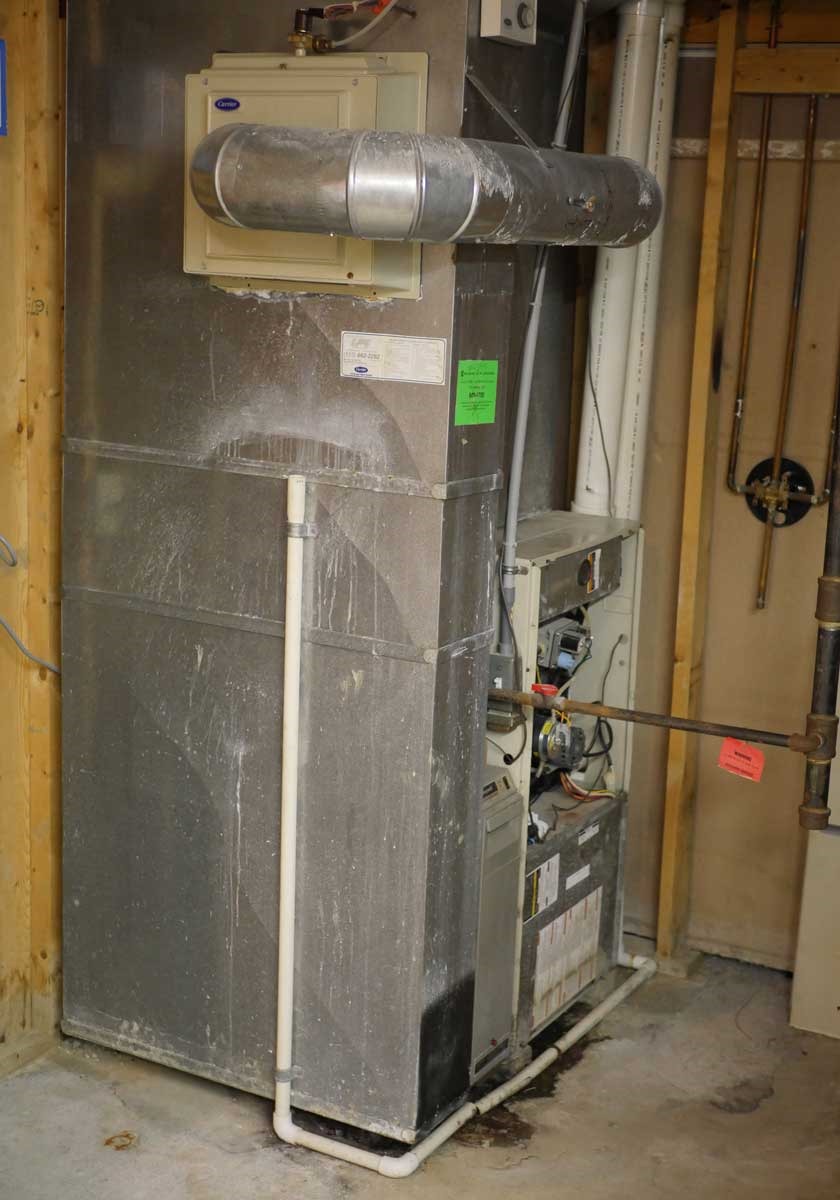
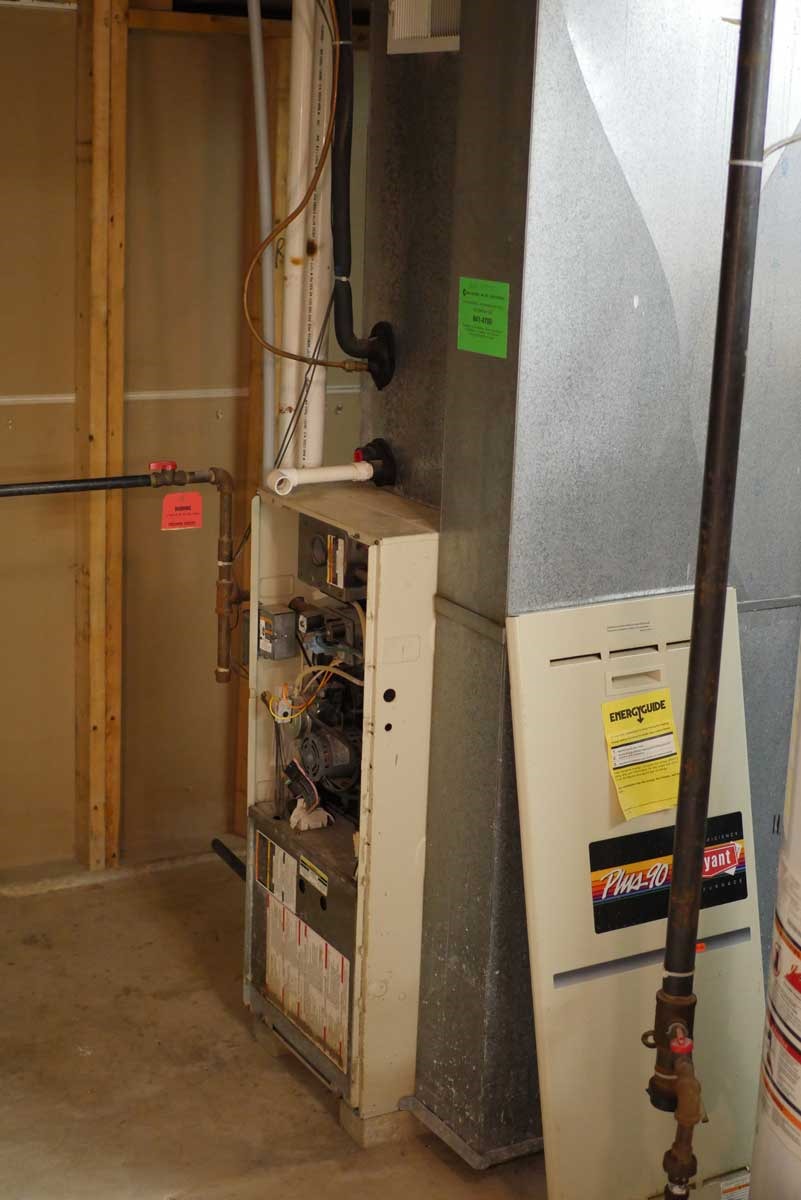
Out with the old …

Bryant_MainFurnace161227 Bryant_BasementFurnace161227

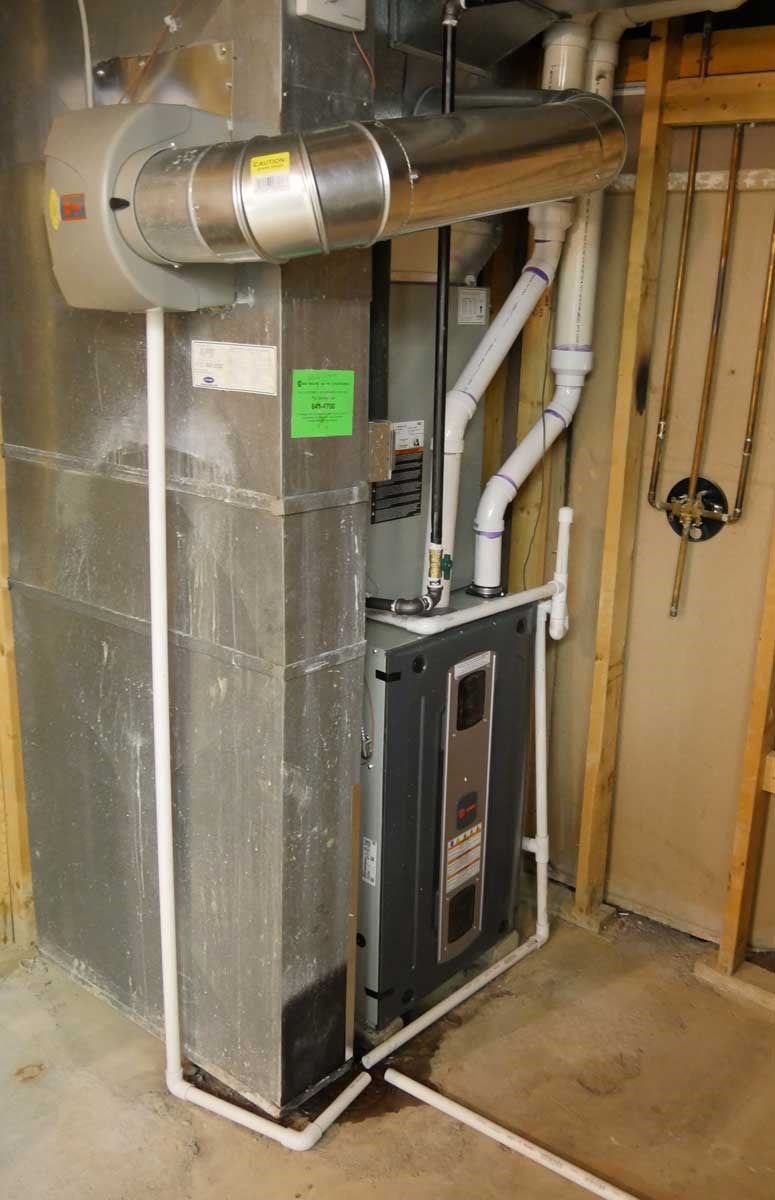
and In with the NEW (and with a much slimmer wallet!) Smile

Trane_MainFurnace161228 Trane_BasementFurnace161228

Christmas in Minnesota as a family

Posted By on December 27, 2016

CorbettOostraChristmasPhoto2016

After a bit of a delay in maintaining daily blog posts, Brenda, Taylor and I returned from our family Christmas with  Katelyn and Drew  in Wayzata, MN on Monday night. It was a whirlwind trip and thankfully without incident. First thing first … KatelynBabyBump161225our growing granddaughter is definitely noticeable as a “babybump” (an overused word). The size change has Katelyn sporting a wardrobe to accommodate Babygirl Oostra. All are doing great.

DrewKatelynFire161225

Below are a few more photos from our 2016 Christmas in Minnesota.

KatelynTaylorOhio161225 DrewBrenPies161225

TaylorYogaComputer161225

TaylorBlueShirt161225 BrendaCandles161225

TaylorTablet161225

BabySnowsuitKatelyn161225 DrewCuttingMeat161225

DrewKatelynHatFire161225

KatelynDrewBabybump161224

Photos from the new Lumix GX8 … although a bit more learning is going to be required. Also, I ran out of steam tonight … it is time for bed.

Out to Christmas Eve dinner in Wayzata Minnesota

Posted By on December 26, 2016

DrewAcuraRX161224 Adding a couple catch-up photos to the mix after driving the BMW X5 35d (26.1 mpg) up for a busy Christmas weekend with Katelyn, Drew and Taylor in Wayzata, Minnesota. We took Drew’s Acura RX out for a nice Christmas Eve dinner and am starting to realize Brenda and I are definitely looking older (and feeling — speak for yourself Brenda says)  but the dim lighting in the very nice Gianni’s Seafood & Steakhouse helped make the photo acceptable!

RichBrendaWayzataMN161224
Smile (thanks for the photo Katelyn!)

Getting in the Christmas spirit. This is so very wrong —

Posted By on December 25, 2016

Christmas morning is almost here so I need to get this out of my system before getting together with Drew and my “soon to be a mom” daughter Katelyn. For the record, this is not an example of good parenting!

Who doesn’t remember Rudolph the Red Nose Reindeer?

Merry Christmas and God bless all of us on the good Earth

Posted By on December 24, 2016

It still give me chills to hear astronaut Frank Borman close Apollo 8’s message on Christmas Eve in 1968: "God bless all of you – all of you on the good Earth" (below). It has been a tumultuous election this year for many in out country, but even with our strong disagreements, we Americans are so blessed to freely exchange our opinions and vote democratically for our leaders. As a United States, we have a promising future and need to do our best to take care of each other and our "good Earth."

15178324_295732600826264_5735899198309896037_n

The Apollo 8 Christmas Eve Broadcast

Apollo 8, the first manned mission to the Moon, entered lunar orbit on Christmas Eve, December 24, 1968. That evening, the astronauts; Commander Frank Borman, Command Module Pilot Jim Lovell, and Lunar Module Pilot William Anders did a live television broadcast from lunar orbit, in which they showed pictures of the Earth and Moon seen from Apollo 8. Lovell said, "The vast loneliness is awe-inspiring and it makes you realize just what you have back there on Earth." They ended the broadcast with the crew taking turns reading from the book of Genesis.

William Anders:

"For all the people on Earth the crew of Apollo 8 has a message we would like to send you".

"In the beginning God created the heaven and the earth.
And the earth was without form, and void; and darkness was upon the face of the deep.
And the Spirit of God moved upon the face of the waters. And God said, Let there be light: and there was light.
And God saw the light, that it was good: and God divided the light from the darkness."

Jim Lovell:

"And God called the light Day, and the darkness he called Night. And the evening and the morning were the first day.
And God said, Let there be a firmament in the midst of the waters, and let it divide the waters from the waters.
And God made the firmament, and divided the waters which were under the firmament from the waters which were above the firmament: and it was so.
And God called the firmament Heaven. And the evening and the morning were the second day."

Frank Borman:

"And God said, Let the waters under the heavens be gathered together unto one place, and let the dry land appear: and it was so.
And God called the dry land Earth; and the gathering together of the waters called he Seas: and God saw that it was good."

Borman then added, "And from the crew of Apollo 8, we close with good night, good luck, a Merry Christmas, and God bless all of you – all of you on the good Earth."

Investing to and past DOW 20,000 under a President Trump

Posted By on December 23, 2016

We still have a week of trading before closing the books on 2016, but those last few DJIA psychological points to 20,000 have proven evasive. Thursday’s 23 point decline, after the steady climb since the election, has a few gurus thinkingDJIATrumpRally161222 the Trump Rally may be ahead of itself?  Some are looking at current corporate earnings and consumer spending with questions and are merely suggesting a pause … while others are seeing a much larger number under a President Trump helped by an agreeable congress. Most acknowledge that some serious change will happen in the first couple years of a Trump presidency and that a friendly, pro-business administration will be rolling back impediments to growth — all changes that are good for investors and business  …unless trade policies also changed? A trade war will hurt everyone.  

Consider this, the past eight years of President Obama’s anti-business policies pushed large domestic corporations who do business worldwide to sit on piles cash.statueoflibertychokehold They park it offshore paying no US corporate tax and continued to move production and even management overseas. Smaller entrepreneurs have had to fight big government’s chokehold which has forces many businesses to layoff, automate, resist hiring or close their doors all-together. All businesses have faced a new mountain of regulation during the past 8 years. Front and center was costly Obamacare, but the high corporate taxes and threat of even bigger government up until a surprise on November 8th has kept the economy from really expanding. With change in the air, it is easy to see why smart money sees improving corporate profits and a better environment for business to expand. These are positive signs for the economy and for investors in the U.S. … that is until "normal" capitalistic pressure of higher wages, inflationary concerns and  healthy competition tamps back growth potential.

All in all … it is not a time to bet against business and the U.S. economy, even at a time of huge deficits, a $20 Trillion debt, an underfunded social security program and so much unrest around the world.

Online contact forms are not always what they seem

Posted By on December 22, 2016

Speed kills … and being rushed can make people do stupid things, that would be me in this case. I was in a hurry to get a HVAC replacement estimate after scavengering parts off of one furnace to keep the other running — both need to be replaced.

ConsumerReportFurnaceACWhile researching gas furnaces and air conditioner replacements, I checked with Consumer Reports for a list of the most reliable brands. Since American Standard and Trane were at the top of their list (along with our current 21 year old Bryant equipment), I started the HVAC dealer search in our area by brand. Finding a couple companies with recognizable names, I called a couple and left a message and for the other I filled out the online form without thinking. “Hm, this is a professional looking site for a small contractor … and look,  they do other things too?” That last statement should have been enough for me to resist offering up my email, address and cellphone number!

Within minutes, my phone started to receive multi-part automated text messages as well as phone calls from the marketing arms (hired guns) of different companies … some with area codes all over the country. Emails too with the “do not respond to this email address directly” request, but instructions to click the link and fill out yet another online form. Am I the only one who doesn’t plan on using ANY company marketing in this way?

Eventually I was able to connect with the company RenovationExperts.com who hosts the original offending site and they said they could removed “my request” from their database (so they say), but that the contact information had already been sent to they subscribing contractors. To make matters worse, the calls are coming in offering services other than what I was even looking for.

Lesson (again): Don’t give out private information unless you are 100% sure it is going only to the person you intend to received it … and even then, be sure they do not resell or give that information out to others. (BTW, normally I’ll use a Google Voice phone number and return the call only if I wanted too … but as I said, I was in a hurry.)

Desultory - des-uhl-tawr-ee, -tohr-ee

  1. lacking in consistency, constancy, or visible order, disconnected; fitful: desultory conversation.
  2. digressing from or unconnected with the main subject; random: a desultory remark.
My Desultory Blog