Policies need to change to stop Ebola and protect U.S. citizens

Posted By on October 15, 2014

ebolacases141014
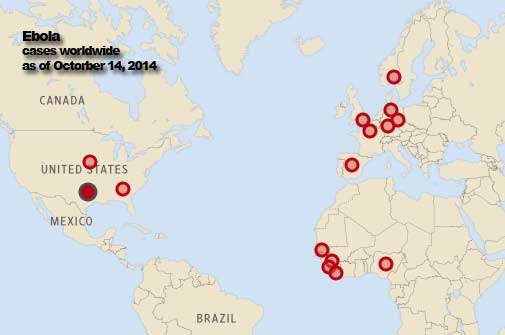
WSJ’s “Ebola’s Deadly Reach” map of locations

I understand our government’s reluctance to over react to the deadly Ebola virus, but disagree with the lack of precautions being taken to prevent the spread by those traveling from Western Africa to the United States … particularly by air.

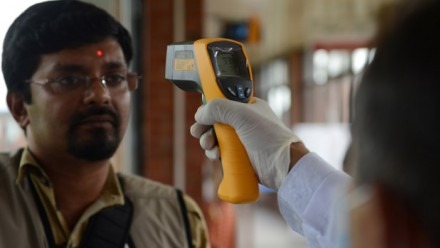
Commonsense dictates that we expect too much from airport 141010-ebola_0screeners that ask questions and take surface temperatures of those entering the country. The risk of someone arriving who doesn’t have signs of Ebola and may only have come in contact is too high.  Just because they don’t show symptoms when they arrive, doesn’t mean they aren’t transporting the virus. We should at minimum error on the side of caution and temporarily restrict access to the general populace by travelers in the short term, at least until we have a better handle on things. When even the medical workers who know the dangers and take every precaution to wear protective gear are getting infected, having a traveler roaming around because they don’t show symptoms when exiting a flight is not the best way to retard the spread. We don’t know yet, but perhaps even having it on their person or luggage is too high of a risk. A quick read of what experts do know makes it clear that our current policies aren’t good enough.

Slightly Paraphrased below:

The Ebola virus can live longer on hard surfaces than porous – surfaces such as metal and glass. As well, there have been lab studies showing that dried samples of Ebola virus can survive for days; but other studies have found the virus doesn’t survive more than a few hours outside of a host.

It’s important to note that in the tests where the virus lived for days, they were kept in the dark, at low temperatures, around 4 degrees Celsius, which helped the viruses survive.

Battery replacement for my Uninterruptable Power Supply

Posted By on October 14, 2014

IMG_4026Most offices (home and commercial) protect their computers and electronics with at least a surge strip and many of us with Uninterruptable Power Suppliesor UPS units. I’ve owned a couple from APC (now Schneider Electric) and over the years have been frustrated with having to replacing the expensive back-up batteries. The replacements are costly to replace and really don’t last that may years … considering how infrequently they are used.

SO … instead of replacing the batteries again, I’ve opted to run a a couple heavy cables with clips through a grommet in the side of my APC 650 box. I am clipping it to a spare 12 volt car battery (the older, but new-ish, separate starter battery that I replace on the boat). If I were buying new, I’d opt for a deep cycle marine battery, but the “Platinum AGM” will have to do for now. I’m hoping for at least 5 or 6 years?

IMG_4029

I ran the garage shop night bulb (LED 60 watt equivalent) for 12 hours overnight on battery power and noted that it dropped the larger battery’s voltage less than 1 volt. I’m checking now to see if the APC unit’s charger will return that “1 volt.”  Once I move the APC box and battery back to my home office and plug in the big iMac, cable modem, external hard drive, NAS, 8-port VPN firewall and wireless access point we’ll see how it holds up. An update to come.

Archiving Bing maps aerial photos before they are gone

Posted By on October 13, 2014

  OldHouse124LagoonDr

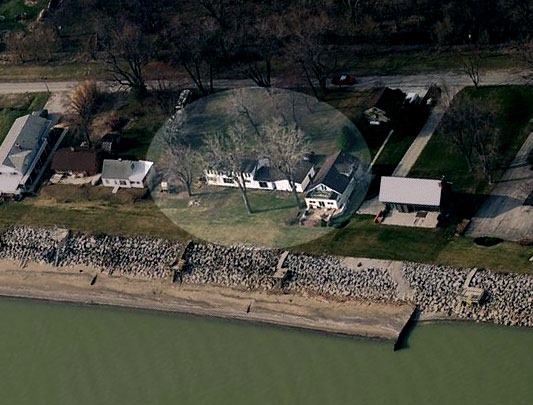
Before my childhood home photos are gone from Bing’s Maps, I wanted to archive a couple aerials of the house where I grew up in a rural Curtice, Ohio on Lake Erie. Although my family moved to the “metropolis” of Sidney Ohio when I was in high school, my fondest memories were of growing up on the lake.

I’ve mentioned growing up here a few times before (Link 1, 2, 3 … with old photos), but since our old house was torn down a couple years ago, I wanted to save the last couple images left on Bing. What is amazing to me is that this old house survived several owners, a couple of significant floods (the bigger ones in 1966 and 1973). Eventually the Corp of Engineers added the rock dike to protected the homes and all those living in lower areas inland. Unfortunately for us with beach frontage, this pretty much ruined the view and activities on the water that were part of my youth. I’m glad we had those years.

House124LagoonDrFrt House124LagoonDrRear

So Lonesome – Dome homes in Cape Romano Florida

Posted By on October 12, 2014

Somewhat an excuse to slip in a Hank Williams song, but the Dome Homes article was intriguing because we explored this area with my college buddies in the late 1970s every Christmas break. I’d still like to get back there by sailboat and anchor for a few days …weeks … or maybe months … and just drop off the grid.
Smile

It also brings back the memory of putting plywood sheets on the roof of the car and then placing them one after the other as we drove through the sand trails to get to a deserted beach … now known as Tiger Tail Beach on Marco Island. Hmm … a little development going on in the last 40 years?

tigertail-beach-aerial

Nicki Bluhm and the Gramblers with a new Bus Session 1

Posted By on October 11, 2014

This content is restricted.

TechFriday: MeteoEarth website, mobile app and weather

Posted By on October 10, 2014

MeteoearthWebApp_Vongfong141010

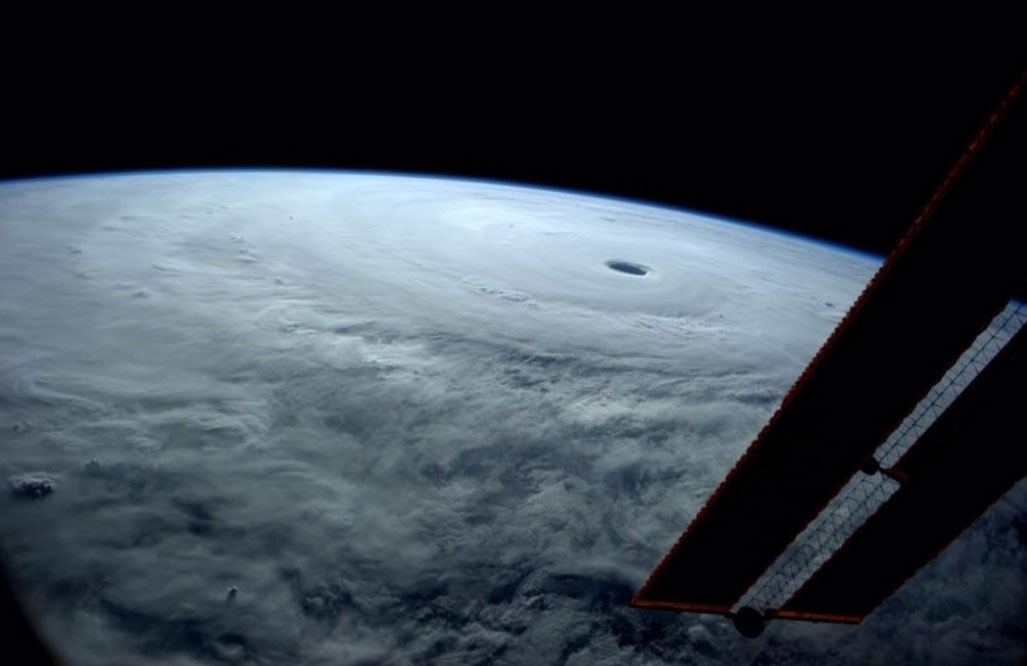
Sort of a timely website find if you are an amateur meteorologist or just enjoy watching and learning about weather. Check out MeteoEarth.com or their MeteroEarth smartphone app for $2.99. (explainer video) There are some pretty powerful meteoearthappstorefeatures and the real time software offers stunning visual views of weather happenings — like the current Typhoon Vongfong in the western Pacific.

vangfongfromspacestation

The storm (above from the International Space Station – click for larger) was a monster storm and comparable to a Cat 5 hurricane in the Atlantic. Meteorologists say that it is winding down but still projected to cause significant damage when it comes ashore this weekend in Okinawa. “It could be devastating when it comes ashore in Japan,” remarked Peter Saskina who has been plotting and tracking for the last week.

Why do most investors see October as a scary month?

Posted By on October 10, 2014

Investors have a love-hate relationship with the month of October. It is a volatile month and has had its share of stock market ups and stock market downs. Those of us who were around and investing in 1987, we mostly remember the “down.” In those days before Internet investing, hearing and seeing share prices drop 20% in and instant was painful… we don’t easily forget the pain.

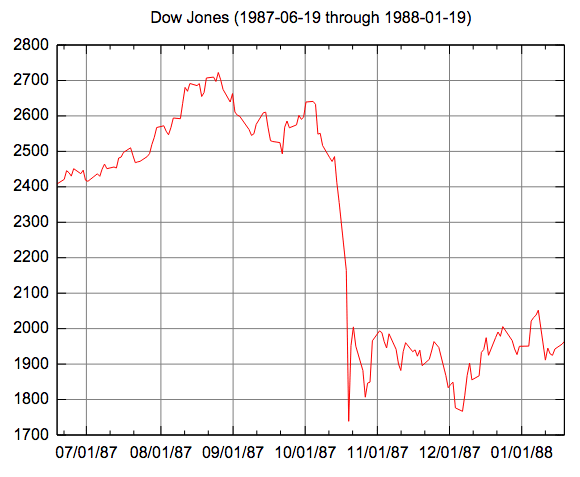
The memories are still vivid to me as I had just remodeled a new building for my company (old photos) and signed an order for a new printing press at the big Print Expo trade show in Chicago. To fund this purchase we planned the sale of stock from my previous job and my wife’s stock purchase plan. Along came Black Monday and we took big hit on on our investments that we now had to sell to pay for this new equipment. The DJIA dropped 22.61% in one sickening day (see chart below). To make matters worse, this particular offset press ended up not being one of the more productive pieces of equipment in our shop; it sat idle on most days. It did prove to be both a lesson in equipment purchasing and financial investing … especially when it comes to the month of October.

For some perspective as to the size of the 1987 one day event … visualize the the current day DJIA 17,000 dropping 3845 points in a single one day move … that’s 14 times as large as the 270 point swings we had this past week.

djia19870619-19880119
Black Monday – October 19, 1987

Investors get jittery and decide to sell – DJIA down 335 points

Posted By on October 9, 2014

stockmarketclosed141009

Volatile financial markets seesaw so far this week. From 2% down on Tuesday, to 2% up on Wednesday and now back down 2% on Thursday … Friday should be an interesting day and right in keeping with October trading. Here are a few thoughts from Jeff Macke (Yahoo Finance) concluding that the “stock market has gone a little bonkers lately.”

Ebola: How serious is it in the U.S. and what should we do?

Posted By on October 9, 2014

ebolavirusReality … as of yesterday … is that the long studied Ebola (EBOV or the related strain Marburg virus) is now a killer in the U.S. Hopefully those having contact with the first U.S. death, Liberian Thomas Duncan, are quarantined and that the infectious virus is being contained to the Dallas area. After a couple high profile recoveries last month, this recent case highlights the seriousness we face. The fear of contagion is real, but according to most experts, fears can be eased with a little knowledge and precaution. Hopefully our government will pick up the pace in securing entry points (airports, seaports and borders – hmm?) and at the labs and hospitals where the virus is being studied and patients are being cared for.

Since there isn’t a vaccine or cure, prevention is the number one (and only) defense in the spread and contraction of Ebola. Containment is do-able, but will require deliberate response from both our government and citizenry. There are many resources and write-ups to educate on EBOV … but a Q and A from Canada (below) was simple, short and clear. It was written before the WHO acknowledged that “spreading by a sneeze can pass the virus” (something most of us already assumed).

How long does the Ebola virus live on surfaces?

We’ve been hearing for months that Ebola virus has been shown to survive for days on surfaces, but it’s important to consider a few things.

First off, viruses do not survive long on porous surfaces, such as fabrics for example. They can live longer on hard surfaces, such as metal and glass. As well, there have been lab studies showing that dried samples of Ebola virus can survive for days; but other studies have found the virus doesn’t survive more than a few hours outside of a host.

It’s important to note that in the tests where the virus lived for days, they were kept in the dark, at low temperatures, around 4 degrees Celsius, which helped the viruses survive.

In real life, the Ebola virus is sensitive to light, heat and low humidity, so it’s less likely to live long in environments such as brightly lit airplanes or hospital waiting rooms, both of which are scrubbed down regularly.

How easy is it to kill the virus from surfaces?

Relatively easy. In the Ebola-affected countries, health teams are using bleach to disinfect surfaces and bed sheets. But good hospital-grade disinfectants will kill off the virus as well, as will alcohol-based and acetic-acid based cleaners.

Could someone become infected by touching things the infected person has touched?

While the possibility exists, the U.S. Centers for Disease Control says there is “no epidemiologic evidence of Ebola virus transmission via either the environment or (surfaces) that could become contaminated during patient care.”

Infectious diseases expert Dr. Neil Rau say says it’s unlikely someone in Canada could become infected by touching a contaminated surface for a few reasons.

For one, only those who are actively ill are shedding large amounts of the virus. As well, the virus has to more than just touch your hand; it has to enter broken skin, or mucous membranes, such as the eyes, mouth, nose and eyes. The virus would have to transfer from the hand of a highly ill patient, survive on a doorknob, then move to the hand of another person, then to their mucous membranes.

While it’s all theoretically possible, as Dr. Rau says, “lots of low probability events would need to come together to transmit by these means.”

The possibility increases for those working in health care in affected countries, of course, since they may be surrounded by highly ill patients. But that’s why they are taking protective measures such as wearing gowns, gloves and masks.

What if I shook hands with someone who was in the early stages of illness?

In the early stages of the illness, when patients develop a fever, a patient is not shedding as much virus as they will in later stages of illness. But by those later stages, the person is very ill and almost certainly bed-ridden with fever, intense fatigue, vomiting and diarrhea, and not shaking hands.

While it’s impossible to know how every patient became infected, it’s safe to say that the vast majority came from people directly touching the fluids or the dead body of a patients who were actively ill. The patient in Dallas, for example, helped to carry the very ill daughter of his landlord to a clinic. She was turned away from the overcrowded clinic and carried home, where she later died.

What if the virus mutates and learns to become airborne?

If someone with Ebola sneezes or coughs and the saliva hits another’s eyes or nose, there is a risk of transmitting the infection, but this is not what is meant by an "airborne” transmission.

“Airborne” means the virus can live suspended in tiny droplets in the air, which Ebola cannot do.

It is theoretically possible that an RNA virus such as Ebola could mutate, and with each case of infection, that possibility increases slightly. But remember that HIV, also an RNA virus, has never mutated to change its mode of infection. And it’s infected more than 75 million people — many more than have contracted Ebola.

In fact, it doesn’t appear that any human virus has ever changed its method of transmission, so while the possibility exists in theory, most infectious diseases experts feel assured it’s highly unlikely.
Staying in touch and keeping up with careers

Posted By on October 8, 2014

It is nice to stay in touch with family and now with cellphones, email, text messaging and video calling, redphoneI communicate with both children often – probably more now than when they were in college?

My daughter Katelyn calls regularly as she is driving (just like me) and seems to enjoy updating me on the events of the day. After her Minnesota medical boards on Monday (gulp) she entertained me with a story about three neighbor boys wanting to see her bunny. She asked them if they wanted to give him a treat and then told them to hold the “Cheerio” so the rabbit wouldn’t bite their finger … of course the oldest boy’s finger was in the way. “HE BIT ME!” as he went running out of the garage. He was of course first and neither younger boy wanted to try. So funny and enjoyable … and I’m SO glad Katelyn and Drew are happy in Minneapolis

I talk with my son Taylor more about his career than his social life and find it gratifying that he is productive and has a purpose. Unfortunately as with all jobs, they have their ups and downs. Situations change based on people, personalities and politics, maybe even more than performance and competence? It’s that political component that is challenging to negotiate. I can now see how politics determines keeping a job even when you’re “playing by the rules” or performing the job you were hired to do. It is more evident in northwest North Dakota in the influence of outside business heavy-weights and such rapid growth in a small community. 1385361_10151657401435373_1030134081_nIn Williams County, almost ever decision hinges on land, development and oil. Begin to restrict that wild west “free for all” as development planners … and doing keeping your job becomes a really big challenge.


Learned Advice: Beware of influential
power players who have millions of dollars
riding on decisions that are made.


Earlier today I heard that Williams County North Dakota’s Planning Director Ray Pacheco submitted his resignation after a recent “restructuring.” This placed Taylor’s boss and his planning and zoning staff under the control of another department head. The structural change was tough on the whole department, but the resignation of a mentor and friend has been even more challenging for Taylor and the others in the department. I hate to see good people push out for doing their job, but was thankful to read that Ray will not be unemployed or to need to sell his new house (his family just moved in this summer after spending 2 years in a small, but expensive, apartment). Who knows what the future holds for Taylor or how well he, as currently the most senior planner, will handle the workload. I suspect the county will begin interviewing for a “more” experienced planner, although am already sensing the HR director’s comment as to having more then enough staff: “I’d say we have Yana, Taylor and Ray, so I’d say we have three planners.”  How many are needed and do they need at least one that can bring experience to the table?

Whatever happens, I suggested to Taylor that he needs to see this as a chance to be constructive and lead with a positive attitude. Since he’s a big football guy, I suggested he respond like a coach at halftime and be an asset to the new department director. Hey, at minimum it’s a resume builder.
Winking smile

Desultory - des-uhl-tawr-ee, -tohr-ee

  1. lacking in consistency, constancy, or visible order, disconnected; fitful: desultory conversation.
  2. digressing from or unconnected with the main subject; random: a desultory remark.
My Desultory Blog