Links and more links: Do we really need more government?

Posted By on July 17, 2012

Said tongue in cheek, just to be clear … Without big government, individuals and their businesses couldn’t build anything, according to President Obama. I suspect if he had his way we’d even have more government funded federal programs and bureaucratic agencies to oversee innovative and productivity. (Wake up America … take a look at how that worked in the old USSR, Cuba, North Korea or for wrightbrotherobamathat matter in much of socialized Europe?)

Government Departments and Agencies

Federal Government

And a few more departments listed below [sarcasm]…

My father-in-law and his old John Deere bulldozer

Posted By on July 17, 2012

I enjoyed a little back and forth reminiscing this morning on Twitter with a friend of mine who shared a photo of his dad on his old 1951 Ford 8N. It brought back a few memories of my Ford 800 (searching for an old pre-digital photo) when we lived in Hudson, Ohio … and before Brafferton Ave and all the housing was developed.


Fred Howard in 2005 (Jamestown, NY) — Click for larger

The tractor talk also had me thinking about my father-in-law when he had better mobility; Oh how he loved clearing brush and building fire piles with his John Deere bulldozer!

Brush your teeth by chewing on Rolly

Posted By on July 17, 2012

rollyimage

Hmm … I kind of like this new Rolly product. I wonder if it will take off?

Designed for those times when you’ve just had a meal but can’t sneak away to brush your teeth, the Rolly is a small rubber disc covered in 276 spiky bristles that promises to be as effective at cleaning your teeth as brushing, when chewed like a piece of gum.

More at Gizmodo

Maybe we’d all be better working for the government?

Posted By on July 16, 2012

Is this really President Obama’s thinking, or is he just pandering to his base and continuing his campaign to divide the country? At some point, he is going to offend every American who pays income taxes (50%?) … and cause even more businesses to close their doors or move elsewhere (a charge he is attempting to pin on Mitt Romney). Successful entrepreneurs (and many who have failed) risk more and work longer hours than every government employee that I know. When it is their “skin in the game,” there is a good chance a person will work harder and and invest wisely. (Edited with image above and placed the very small video snippet below)

Sea of Cortez fisherman lands a 20 ft Great White Shark

Posted By on July 16, 2012

fishermanbringsin20ftgreatw

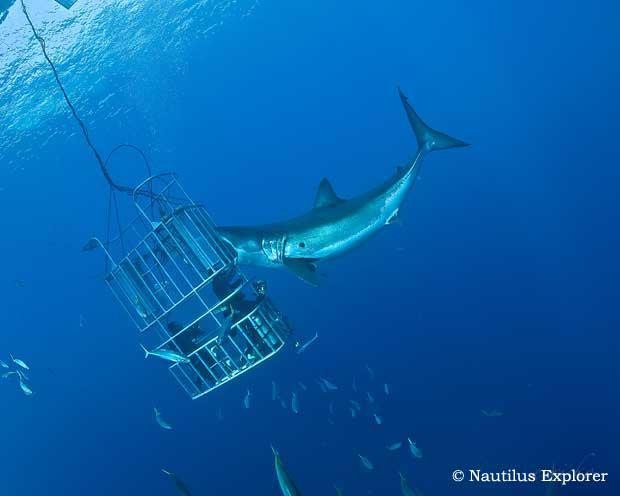
This may not be a current story (April 2012), but this weekend I read about a fisherman hauling home a gigantic 20 foot, 2000 pound Great While Shark. The large fish was a chore to bring in and was found dead tangled in his nets in the Sea of Cortez near Guaymas Mexico. This hefty predator obviously had plenty to eat in order to grow to this size.

A great white shark measuring nearly 20 feet and weighing 2,000 pounds — according to a  local report — was hauled up Sunday by commercial fishermen in the Sea of Cortez near Guaymas.
The massive predator was dead when it was brought to the surface in a net deployed by fishermen named Guadalupe and Baltazar, who were treated to the surprise of a lifetime when they saw what they had captured.

"We were amazed and immediately realized that we had a huge, dead, great white shark, and then we thought what are we going to do?," Guadalupe told Pisces Sportfishing, which is located in the resort city of Cabo San Lucas.

There is some dispute about the size. If, in fact, it measured six meters (19.8 feet), as Milenio News reported, it’d be one of the longest white sharks ever recorded. Also, if it measured 20 feet, it should weigh a lot more than 2,000 pounds.

Regardless, it’s a humongous specimen. The fishermen, who were aboard a 22-foot skiff, towed the behemoth two miles to the beach, where dozens of people helped drag it onto dry sand.
"Guadalupe and Baltazar swore they had never seen a fish this big before in their lives," the Pisces blog stated. "Even though on March 13 of this year, some of their fellow fishermen had also caught a great white, which had weighed 990 pounds."
Adult white sharks were once believed to be rare in the Sea of Cortez, or Gulf of California, but scientists now believe parts of the gulf serve as a nursery for the species.

LINK

The “quote-unquote, outdated notion of two parents”

Posted By on July 16, 2012


  WSJ This Morning Podcast (MP3 Snippet) – “outdated notion of two parents”

HeatherHasManyParentsEvery once in a while there is a morning when I wake to read, or in this case half-listen to the news and think, “I must have over-slept … by a couple generations! The WSJ This Morning podcast (MP3) relayed an article that Ashby Jones wrote about California’s proposed bill SB 1476 dealing with the “outdated notion of two parents.”  (two parents = outdated???) The bill proposes that judges should be permitted to rule that children can have 3 or more legal parents … the article points out this may create more problems than it solves. Hmm, I’m reminded of the Hillary Clinton 1996 point of view … "it takes a village to raise a child" … are they all parents too?

Excerpt below:

"Families are formed in a variety of ways today, and this bill will bring California into the 21st century by recognizing that," said Sen. Mark Leno, a Democrat and the bill’s author.

The legislation’s opponents object on a number of grounds, including that the bill, which contains no upper limit on the number of parents a court could recognize, is likely to spawn unintended consequences.

"If a minor dies, will all five parents have rights to bring wrongful-death claims?" asked Assemblyman Donald Wagner, a Republican who opposes the bill. "Does a child get Social Security benefits if one of his five parents dies? Right now, there’s really no end to these questions."

Another argument raised in opposition: multiple parents can be harmful to children.

"This bill theoretically allows a family court to be able to divide up a child’s time among a number of people," said Karen Anderson, the executive director of the California Protective Parents Association, which works to protect children from incest and family violence. "But in situations like these, children often need more stability, not less."

Full Article

I say Ponzi Scheme, WSJ blog says “high-yield hara-kiri”

Posted By on July 15, 2012

A Ponzi scheme is a fraudulent investment operation that pays returns to its investors from their own money or the money paid by subsequent investors, rather than from profit earned by the individual or organization running the operation. The Ponzi scheme usually entices new investors by offering higher returns than other investments, in the form of short-term returns that are either abnormally high or unusually consistent. Perpetuation of the high returns requires an ever-increasing flow of money from new investors to keep the scheme going.

Wikipedia

If you are searching for a higher rate returns while investing,  or a “better than average” dividend” yield, be careful you aren’t purchasing a imageinvestordripfund that is returning investors principal as “distribution yields.” Last week I read an article which highlighted a family of closed end funds with higher than average yields. (way higher)  In today’s low rate environment, it doesn’t take a genius to know that something isn’t right.

The point is to be cautious when analyzing the dividends and distribution yields on funds with too good to be true yields, and read the prospectus carefully. High percentage returns in a low bond rate environment means one of two things: 1) very high risk, or 2) returning capital as a “distribution” … and likely a lot from new investor dollars. The big risk is that only so much principal can be return to investors before the house of cards gets shaky … “after the advisors have been paid” of course. Sooner or later investors will want their investments back and distribution yields will disappear.

High Rates? Are You Delirious?

Have today’s insanely low interest rates driven investors insane?

Three closed-end funds offered by Cornerstone Advisors of Asheville, N.C., show that some investors have come to believe the impossible: that high yields can persist in a world where central banks have squashed down bond rates to next to nothing.

These people have deluded themselves into believing they are earning fat yields. In reality, they merely are getting their own money back—and you can’t turn a fantasy into fact just by wishing it were so.

At Cornerstone, investors are receiving "distribution yields" of roughly 22% of net asset value, and the shares trade for much more than the value of their underlying assets. According to the WSJ Market Data Group, the Cornerstone funds are the three highest-yielding of the 657 closed-end funds in the U.S.

Most of the yield at Cornerstone, however, doesn’t come from its investments. In past years, it came from giving investors some of their original assets back. Now, it comes out of money the funds’ investors have just added.

In each of the past five years, the Cornerstone Progressive Return CFP +0.37% fund distributed more than 10 times as much in dividends and other payouts as it earned in net investment income.

In 2008 and 2009, for example, 93% of total distributions were return of capital—giving shareholders their own money back (after subtracting the manager’s fees, of course).

By the end of 2010, assets had shrunk to just $55 million from $132 million in 2007. At that rate, the fund would pay out its entire portfolio by 2014 or 2015—a kind of high-yield hara-kiri.

"If you keep throwing out more income than you can possibly make, someday your assets will go to zero," says Mariana Bush, a closed-end fund analyst at Wells Fargo Advisors. "And so will your management fees."

So, in 2011, the managers of Cornerstone Progressive Return raised $41 million in a "rights offering," a deal available only to existing investors that enabled them to buy one extra share for each three they already owned. That fresh capital injection helped the fund sustain its yield at more than 20%.

Last month, the fund raised $49 million in another rights offering. The prospectus says Cornerstone may turn around and pay much of that money back out to the same people who put it in.

Like a mutual fund, a closed-end fund is a pool of investments. But a closed end generally has a fixed number of shares, which trade on a stock exchange, where their prices can deviate from the underlying value of their holdings. Usually they trade below that value.

Most closed ends distribute varying amounts of dividends and capital gains. But roughly three dozen closed-end funds have "managed distributions" like Cornerstone’s, seeking to pay out a flat rate of income regardless of market returns.

None comes close to Cornerstone’s 20%-plus rates, which are "not reasonable or sustainable," according to Ms. Bush of Wells Fargo Advisors. And while rights offerings are fairly common, she says, they are "very unusual" among managed-distribution funds.

The magical payout machine at Cornerstone works roughly like this: Say you have $1,000 invested. You buy into the rights offering, shelling out another $250 or so to get extra shares. Cornerstone then pays out 20% or more in distributions, causing the value of each share to shrink accordingly.

The end result: You own more shares of a fund that is worth less, and most of the income you "earned" came from the money you put in yourself.

Cornerstone’s prospectuses disclose that much of its payouts "will not represent yield or investment return on the fund’s portfolio."

Still, Mike Taggart, an analyst at Morningstar, says he has received many emails from Cornerstone investors who believe that they are earning 20% yields and don’t understand that these funds are simply giving them their own money back.

"People see the ‘yields’ on these funds and they jump in," he says, "and it makes me sick."

Regarding such a switcheroo as "income" is like making an interest-free loan and then telling yourself, as the debtor pays back only your principal, that you are earning a generous return on your money.

Cornerstone’s portfolio manager, Ralph Bradshaw, didn’t respond to requests for comment.

Cornerstone Progressive Return has 93% of its assets in the shares of other closed ends, many trading below the value of their assets. The largest holding, at 4.9%, is the Eaton Vance Tax-Managed Global Diversified Equity Income fund.

But while you could buy the Eaton Vance EV +2.33% fund this week at a 14.3% discount to its net asset value, meaning that each $100 of its investments cost you less than $86, Cornerstone traded at a 10.3% premium. That means you had to pay $110 to get $100 in underlying assets.

That isn’t all. Because most of its portfolio is in other funds that charge their own expenses, the effective annual costs at Cornerstone reach 2.5%, according to its prospectus—roughly double those of the typical closed end.

Investing has sunk to this: People are willing to pay a big premium for the privilege of getting their own money back, after fat fees, without interest—apparently because it gives them the illusion of earning a high yield.

Desperate people do desperate things. Investors who are starved for yield do desperately stupid things.

intelligentinvestor@wsj.com; twitter.com/jasonzweigwsj

Looks like a 4-cylinder BMW diesel is coming to the U.S.

Posted By on July 14, 2012

Rumors have yet to be confirmed, but believe to be factual, that BMW will be adding a single or twin turbo 4-cylinder to their offering in North America next year. The 2.0L most likely will be offered in the 3-series which currently is available with a 6-cylinder diesel … a nice driving car by the way. The smaller engine should improve the current 36mpg U.S. diesel and put it right up there with the Volkswagen Jetta and Passat TDIs.

Photo

What it remains unknown is which variant of the 4-cylinder diesel will they use. Currently BMW offers 184 bhp and 380 Nm (280 lb ft) of torque, and also a twin-turbo variant of the same displacement but with 204 bhp and 400 Nm (295 lb ft) of torque.

Jason Cammisa of Automobile Mag says the engine is the single-turbo version. The engine currently powers the 320d model in Europe and is rated at 52 MPG. We believe BMW will use the 325d or 330d designation for U.S. models.

http://www.bmwblog.com/2012/07/13/rumor-2-0-liter-4-cylinder-diesel-engine-coming-to-u-s/

Posted via email from RichC’s posterous

Tech Friday: Surprising real data browser speed comparison

Posted By on July 13, 2012

mydesultoryblog_browserspd120711This comparison is not scientific since it only compares data pulled from Google Analytics and 25,000 MyDesultoryBlog visits, but it did surprise me. I expected to see Chrome a bit faster, but not Internet Explorer. Sadly the one time favored Mozilla Firefox is now a chubby porker and slow to load pages.

The music of Buffalo Springfield and triggered memories

Posted By on July 12, 2012

This content is restricted.

Desultory - des-uhl-tawr-ee, -tohr-ee

  1. lacking in consistency, constancy, or visible order, disconnected; fitful: desultory conversation.
  2. digressing from or unconnected with the main subject; random: a desultory remark.
My Desultory Blog