Enjoyed my drive home on a clear night
Posted By RichC on February 5, 2009

Sunset on I-71 between Cleveland and Columbus (click for larger)

Posted By RichC on February 5, 2009
Sunset on I-71 between Cleveland and Columbus (click for larger)
Posted By RichC on February 5, 2009

My daughter emailed me an article (also below) in the February 6th issue of The Chronicle of Higher Education which debates accelerated medical school programs. It caught her attention because one of the medical schools mention is Northeastern Ohio Universities College of Medicine — NEOUCOM, her school. For the most part, the article does a fair job in presenting the pros and cons to a shortened path to becoming a doctor, but what is missed by most people is the caliber of student accepted into this type of program. Often these students are already significantly beyond the normal college freshman (even pre-med freshman); they enter college with not only strong transcripts, but often with a significant number of AP credits and post secondary classes under their belt.
Although I can’t speak for other accelerated medical schools, the BSMD program at NEOUCOM is extraordinarily competitive and the high school applicants are put though an intensive academic review and interview process. These 17 and 18 year old juniors and seniors are scrutinized not only for their SAT/ACT score and transcripts, but for their maturity and study habits. Of the nearly 2000 student who apply, a mere 105 are accepted into one of three feeder university programs: Kent State University, the University of Akron and Youngstown State University. Each consortium university has created unique schedules, guidance and classes that cater to this accelerated two full year undergraduate education. Over the years, they have learned how to prepare students for the challenging MCAT required for entry to medical school.
The work and load in these first two undergraduate years is intense and there is little room for mistake when it comes to grades or scheduling.  The number of classes per semester is a grueling as this is a year-round schedule; it requires constant focus and study habits similar to what first or second year medical student will face. For these BSMD undergraduate students, falling behind is not an option as there just isn’t time to catch back up. As the article mentions, about 1/3 opt to either slow it down and take a third year, or opt to take time off to work, study overseas or even do some community service or missions work. My daughter’s only regret is that there wasn’t much free time for electives or extra-curricular college activities enjoyed by traditional 4 year students. Still, compared to the normal 8 years of school (4 undergrad, 4 medical school) followed by a multi year residency and possible specialty beyond that, shaving two (or often just one) year off the undergraduate portion of one’s education is a significant savings, both in time and dollars.
I’m of the opinion that an accelerated program managed correctly is an appropriate way to prepare some unique students to be doctors. If you were to take a close look the average pre-med freshman college student and a NEOUCOM 6-year BSMD first year student, you would quickly realize that they are at a different starting point.
From the issue dated February 6, 2009
New Medical-School Programs Put Students on a Fast Track to the White CoatBy KATHERINE MANGAN
In January, California’s lieutenant governor proposed a fast-track medical school that would shave three years off the training needed to become a physician. It wasn’t the first time such an idea had raised eyebrows.
His proposal, for a hoped-for medical school at the University of California at Merced, struck some medical educators as both unrealistic and unwise, for it drastically compresses the eight years it usually takes to earn an M.D. (It typically takes four years of undergraduate work followed by four years of medical study.) “There are reasons it takes time to become a doctor, and you don’t want it to become a trade school,” says Robert H. Eaglen, a former executive at the Liaison Committee on Medical Education, which accredits medical schools.
But a handful of medical schools have, for decades, offered six-year programs that combine undergraduate and graduate degrees to students who are in a hurry to become doctors. And starting this fall, Tulane University’s medical school hopes to join them, breaking up the degrees with a year of community service. (See article, Page A9.)
Accelerated options persist, their supporters say, because they offer a sensible solution for today’s shrinking state budgets, soaring tuition, and looming doctor shortage. “We have a desperate need for more doctors, and this program could significantly lower the cost both to the students and to the state,” says John Garamendi, a University of California regent and the state’s lieutenant governor.
Given California’s fiscal crisis and the already announced cuts in higher education, however, it is unclear what chance even a slimmed-down medical school has in the near future.
At the same time, economic woes reinforce the need to come up with a more affordable model for medical education.
“It’s becoming a hot topic,” says Henry M. Sondheimer, senior director for student affairs and programs at the Association of American Medical Colleges. “Everyone is very aware of the length of training, total cost, and indebtedness of young physicians.”
The median debt for 2008 medical-school graduates, he said, was $155,000. Students saddled with that kind of debt are less likely to enter primary care, a field that’s in great demand but has one of the lowest salaries.
Making Doctors More Quickly
Eighteen-year-olds who enter a public medical-school consortium in Ohio and keep their noses to the grindstone can emerge after six years — not eight — as physicians ready to start their residencies. Northeastern Ohio Universities College of Medicine is a public school whose partners are the University of Akron, Kent State, and Youngstown State Universities. High-school graduates start the program in the summer and enter one of the three universities for two years of premedical study. If they do well, they enter the four-year medical phase.
The program works for mature, committed students who have excelled academically and can handle the rigorous course load, says Polly Moss, assistant dean for student affairs and admissions.
“At least a third of our students take an extra year of undergraduate study for various reasons,” she says. “They may need to for academic reasons, or they may simply say, ‘I want to slow down.'”
The Ohio program accepts 105 students each year, and 80 percent to 85 percent of them go on to graduate from medical school with debt that is $15,000 to $25,000 less than the national average, Ms. Moss says.
Mr. Eaglen, who is now a scholar in residence at Northeastern Ohio, says there are things students may miss by speeding up. “Students in traditional programs will likely have more exposure to the liberal arts and appreciate the contributions of social sciences to medicine,” he says.
At age 24, Jason Tank is a first-year resident in orthopedics at an Akron hospital. He says that the program was intense but that he still found time to play rugby and do community service. “It was a sprint from the beginning, but I knew in high school that I wanted to be a doctor and liked the idea of finishing in six years.”
The University of Missouri at Kansas City School of Medicine offers a similar six-year program. Beginning the first year of undergraduate premedical study, groups of 10 to 12 students meet weekly with a physician, who serves as their mentor over the next few years.
A few other medical schools offer shortened programs to small cohorts of students.
Jefferson Medical College and Pennsylvania State University have teamed up to give 25 to 30 students a year a chance to complete two years of undergraduate education at Penn State followed by four years of medical school at Jefferson, part of Thomas Jefferson University.
About 10 of Howard University’s 120 incoming medical students will participate in a six-year program.
Carla Gordon, a first-year medical student from New Orleans, is the kind of student such programs attract. The daughter of two pharmacists, she got her feet wet while still in high school, assisting researchers who were studying strokes and epilepsy at a Louisiana State University teaching hospital.
The 20-year-old has finished her premedical study and will graduate from Howard’s medical school at age 24. Then she will start a residency program that could last between three and eight years, depending on the specialty she chooses. “I want to have kids in the future, so I like the idea of finishing my education quickly and getting settled in my career first,” she says. “That way, even if I go into an intensive residency like neurosurgery, I won’t mind committing the eight extra years because I will have already shaved two years off.”
New Ways of Training
Some medical educators are also studying ways to shorten the other end of the pipeline by trimming a year off the expensive period of graduate education.
“Nearly three-quarters of the students entering medical school come from households in the top quintile of earnings,” says Michael E. Whitcomb, a former editor of Academic Medicine. “The field is becoming elitist, and that’s not what the country needs.”
In the 1970s, a number of schools went to a three-year model, but gave up, partly because students had to skip summer vacations and work straight through the three years. Both students and faculty members quickly burned out, says Barbara Barzansky, director of undergraduate medical education for the medical schools’ accrediting body.
Meanwhile, in California, the debate continues over the best way to educate more doctors for the underserved San Joaquin Valley, where the Merced campus is located and where it hopes to build a medical school.
Under the lieutenant governor’s plan, students could earn a medical degree in as little as five years, going to school year-round for the first three or four years.
They would be recruited from area high schools and begin their premedical studies at the Merced campus or at local community colleges. At that point, they could take classes with nursing students. Medical students would then split off and complete their clinical training in existing medical centers and clinics, instead of at an expensive research-oriented teaching hospital.
“Central Valley is one of the most underserved areas in the country, with some of the worst health statistics,” Mr. Garamendi says of the remote, rural region.
Officials at the Merced campus had little to say about his proposal. The plan “is just one of several creative approaches being discussed,” says Brandy Ramos Nikaido, a spokeswoman for Merced, which opened in 2005 with the intent of becoming a major research university.
John D. Stobo, senior vice president for health sciences and services for the University of California system, says he supports Mr. Garamendi’s goals. But he cautions that a focus on churning out doctors could shortchange the scientific and research underpinnings essential to medical education.
“There has to be scientific rigor. It can’t just be an apprenticeship,” he says. Hurrying students through medical school carries other risks, Dr. Stobo says. “One of the concerns is a lack of maturity of the students and the fact that they may not get enough exposure to areas other than science.”
But for graduates like Dr. Tank, the trade-off is worth it. “To me, two years in practice is better than two more years in college.”
http://chronicle.com/temp/email2.php?id=Ms9sWnKtzqhhc2ndQ8ppHwzrvJKrndXp
Posted By RichC on February 5, 2009
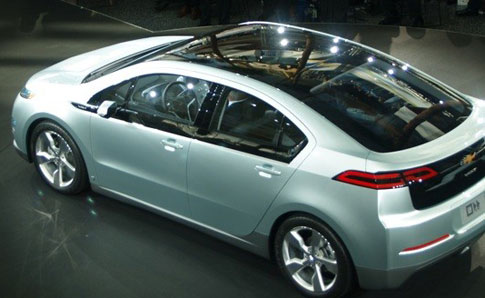
Last year, General Motors announced that it would build a $370 million engine plant in Flint Michigan to supply the 1.4L engines for the 2011 Chevrolet Volt and Cruze; 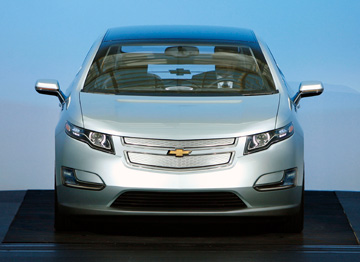 autoworkers in the depressed southeastern part of Michigan thought this was good news with so many jobs were leaving the area. In October, GM started the 552,000 sq. ft. facility just as the economy headed deeper into recession. With financial woes of its own, the largest domestic automaker decided to postpone the construction project. Rumors spread that the ‘halo‘ car would now see these small engines built overseas.
Confirmation of this rumor came at the end of January as GM announced they would product the engine for the Volt and Cruze at their existing ‘overseas’ Aspern, Austria plant, which currently builds the 1.4L engine. These engines will then be shipped to Hamtramck, Michigan plant for final assembly of the Volt, and to the Lordstown, Ohio plant for the compact Cruze. There is some concern that the goal of staying under $40,000 for the Volt might not be obtainable? A spokesperson for GM says Flint Michigan still remains “the target for North American sourcing of the 1.4L engine, and GM’s plan always has been to initially bring the engine over from Aspern, where it already is built.”
So much for a true domestic alternative. If someone is looking for an American made “green” car I wonder if the Chevy Volt or Cruze will be as misleading at the American sounding Jeep Patriot?
Posted By RichC on February 4, 2009
 After downloading the .iso and creating a Microsoft Windows 7 Beta installation DVD last month, I’ve been ‘on-again off-again’ while contemplating taking a chance on a Microsoft Beta OS replacement for my Gateway notebook computer. Finally after hearing the positive reviews (compared to Vista), and the fact that the cut off day to download and install the Win7 Beta is Feb. 10, 2009, it seemed like it was now or never.
Download location for Microsoft Windows 7 Beta

So I made a fully Macrium Reflect backup and started the long slow install which lasted most of Monday evening — in fact I went to sleep while my computer was chugging away.
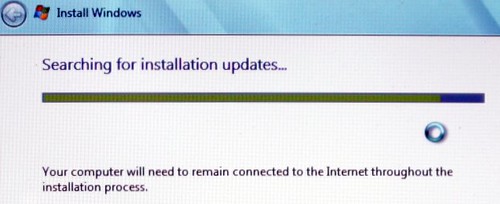
By morning the screen was asking for the authorization code (emailed by Microsoft) and withing a few minutes I was up and running … nearly flawlessly. The cross check according to Microsoft found two items to be incompatible: 1) Logitech webcam software — no available update yet and 2) an older PDF 5.0 component –I just discarded the older PDF 5.0 item.
After a full shutdown and a slow 8-1/2 minute reboot and hard drive virus update and scan, I was off and running until lunch on Tuesday. Every program I used ran well and seemed to be a bit ‘speedier’ than on Vista — in my opinion anyway. I again decided to do a full shutdown at lunch and was pleased to see that the “Hibernate” button was back — thank you. (Vista did away with the three modes: Shut down, Sleep and Hibernate most Windows users were accustom too). The new OS install has so far eliminated my glitchy screen-sleep problem that has been nagging me for the last few months. I’ve been unable to wake up my screen once in a while from a sleep state and requiring a full reboot — irritating.

Now for a couple getting use to items. I miss the old style task bar items, but can see that I’ll gradually get use to the little (or bigger) icons — they are rather Mac-ish? A nice feature is that these new icons offer a “bunched up” look at the open windows from each running application. For example, if a browers program window, or two, or three, or four are opened, they will be consolidated under one movable icon. This movable feature is most appreciated since I like the same ordered desktop/taskbar no matter how I’ve opened programs. The icons also offer multiple ‘real time’ thumbnail views of the windows and with a right click recent items or a full close of the program. I’ve decided to “pin” the regularly used programs in place on my taskbar like the “quick start” menu in previous versions of Windows.
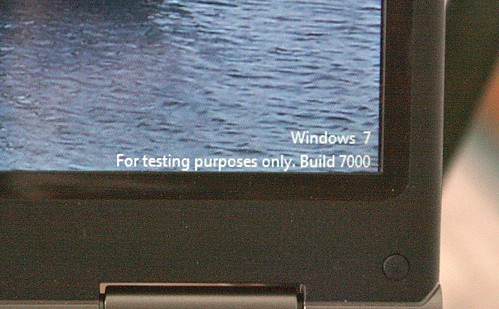
Now that I’m into day two running Win7 Beta, I’m even more satisfied than before. It quickly (can’t be said for Vista) picked up my regular hotspots when traveling and provided me with quick lunchtime access to a couple websites and my email. No doubt I’m still going to find a few thing to complain about, but my initial conclusion is that Microsoft has bettered XP and can shut the door on their mistake — goodbye Vista.
Conclusion and advice: If your happy with XP, wait for the Six Favored Release (will Microsoft ever learn?) of Windows 7 later this year. If you are running Vista, don’t wait but give Windows 7 Beta a try before the February 10th trial ends.
Posted By RichC on February 3, 2009
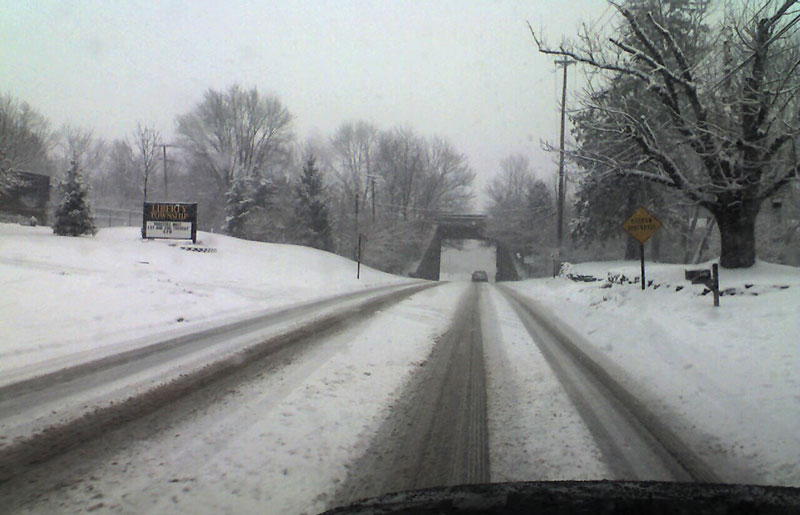
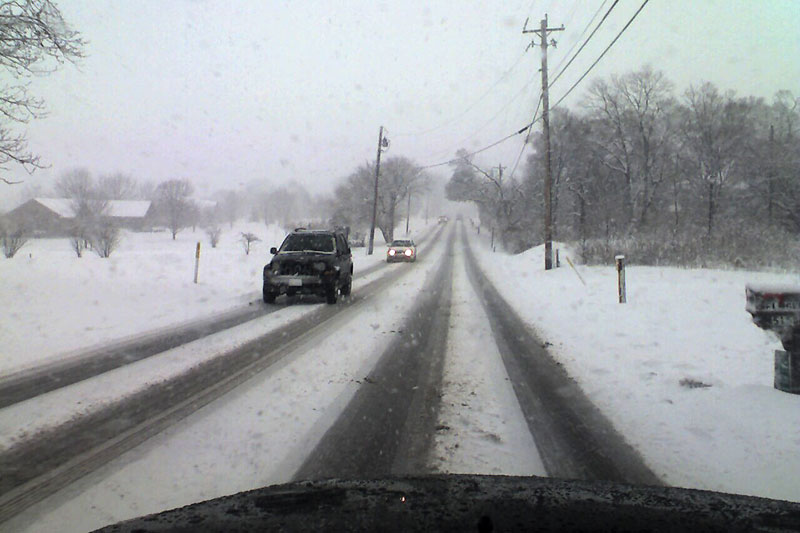
Here’s hoping that everyone who lives in my neck of the woods, from Dayton to Cincinnati Ohio, made it home safely? The roadways on Tuesday afternoon were about as slick as they can get without being sheets of ice. That was evident by the very slow going and significant number of vehicle either in the ditch or playing bumper cars. I took a couple photos on my aging Palm Treo 700p and will include here. (if you can’t tell, I’m angling for a new smartphone — maybe the Palm Pre)
Posted By RichC on February 3, 2009
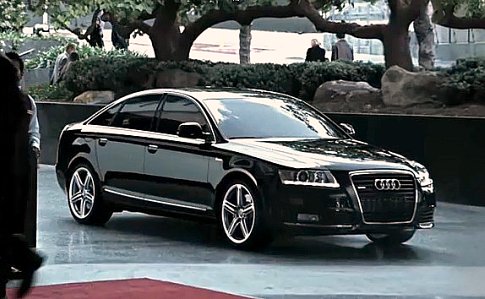
Although all the Superbowl 43 ads are here, I’m only going to embed one … not because it is a favorite, but because I know my Audi-loving son will enjoy it (besides we both enjoyed the Tranporter movies with Jason Statham).
Check out the making of the Audi Superbowl ad below …
Posted By RichC on February 3, 2009
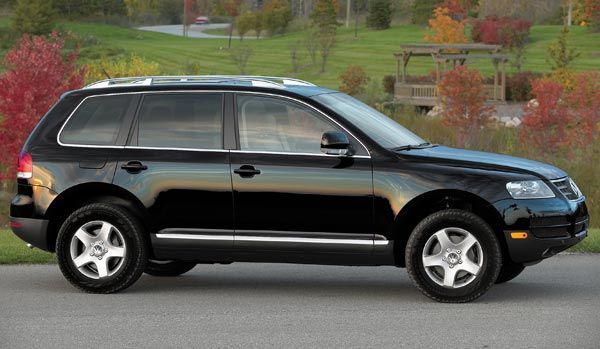
Volkswagen, a leader in clean alternative fuel technology, will be launching four new BlueMotion vehicles. Two of them will be super clean diesels, the Passat BlueMotion, Passat Blue TDI, one running on compressed natural gass — the Passat TSI EcoFuel, and the headliner a Touareg V6 TSI Hybrid.
The Touareg with be be VW’s first hybrid and uses the same 3.0L supercharged V6 used in the Audi S4 which develops about 330 HP. It will be coupled to an eight-speed automatic transmission and an electric motor capable of running the SUV on electric power alone — in fact up to 31mph. The vehicle uses Nickel-metal hydride batteries and can both scoot to 60 in 7 seconds as well as tow 7,700 pounds.
There isn’t news as to what will be sold in the U.S. although wouldn’t mind seeing the any of these vehicles. (where’s the Touereg TDI Hybrid?)
Posted By RichC on February 2, 2009
A friend of mine forwarded some talented computer morphing work on flixxy.com. The video below starts with George Washington and morphs through to the 44th President of the United States.
Posted By RichC on February 1, 2009

Superbowl XLIII (43) has turned out to be quite the exciting game as the Arizona Cardinals came back in the forth quarter to take the lead. (23-20) Pittsburgh used the last 2 minutes to mount a last stand and marched up the field just hoping to make it into field goal range in order to tie the game. A wild completion to Santonio Holmes (Ohio State) ends up making it to a 1st and goal situation with only 49 seconds. Then with 30 seconds to go, a Pittsburgh’s QB Ben Roethlisberger (’04 MiamiU of Ohio — my alma mater) made a terrific corner of the endzone TD pass to Holmes again and the extra point to bring the final score 27-23.
Well done gridiron superstars — can’t ask for much more from a Superbowl!
Posted By RichC on February 1, 2009
 I enjoyed another ‘babyboomer worthy’ Superbowl halftime show with Bruce Springteen. He entertained the crowd with “Tenth Avenue Freeze-Out,” “Born to Run” and “Glory Days” and although The Boss did a great job, I missed “Born in the U.S.A.”
Halftime entertainment aside, Superbowl XLIII has given us an exciting first half as the score is now 17 – 7 as the 3rd quarter begins. The highlight play has to be Pittsburgh’s James Harrison’s interception at the end of the first half. The Arizonia Cardinals looked to be ready to score when QB Kurt Warner threw an interception to long time Steeler Harrison (Kent State) who ran 100+ yards to score a touchdown. His run was the longest in Superbowl history.
As for me, I don’t necessarily have a favorite in this game. As an AFC guy (Browns and Bengals) I find myself favoring the Steelers (gag!), but wouldn’t mind seeing the NFC underdog Cardinals come up with a long deserved Superbowl win. It’s nice for once to just be able to enjoy the game with out the emotional roller coaster.