Losing loyal WSJ, Barrons and Marketwatch readers over auto-renewal subscriptions and poor customer service policies
Posted By RichC on August 8, 2026
I’ve subscribed to newspapers and financial publications for most of my adult life (and complained about subscription woes before). Having started my career working for HBJ and then a division of Knight-Ridder, I have always appreciated getting news and information from newspapers and magazines … and believe 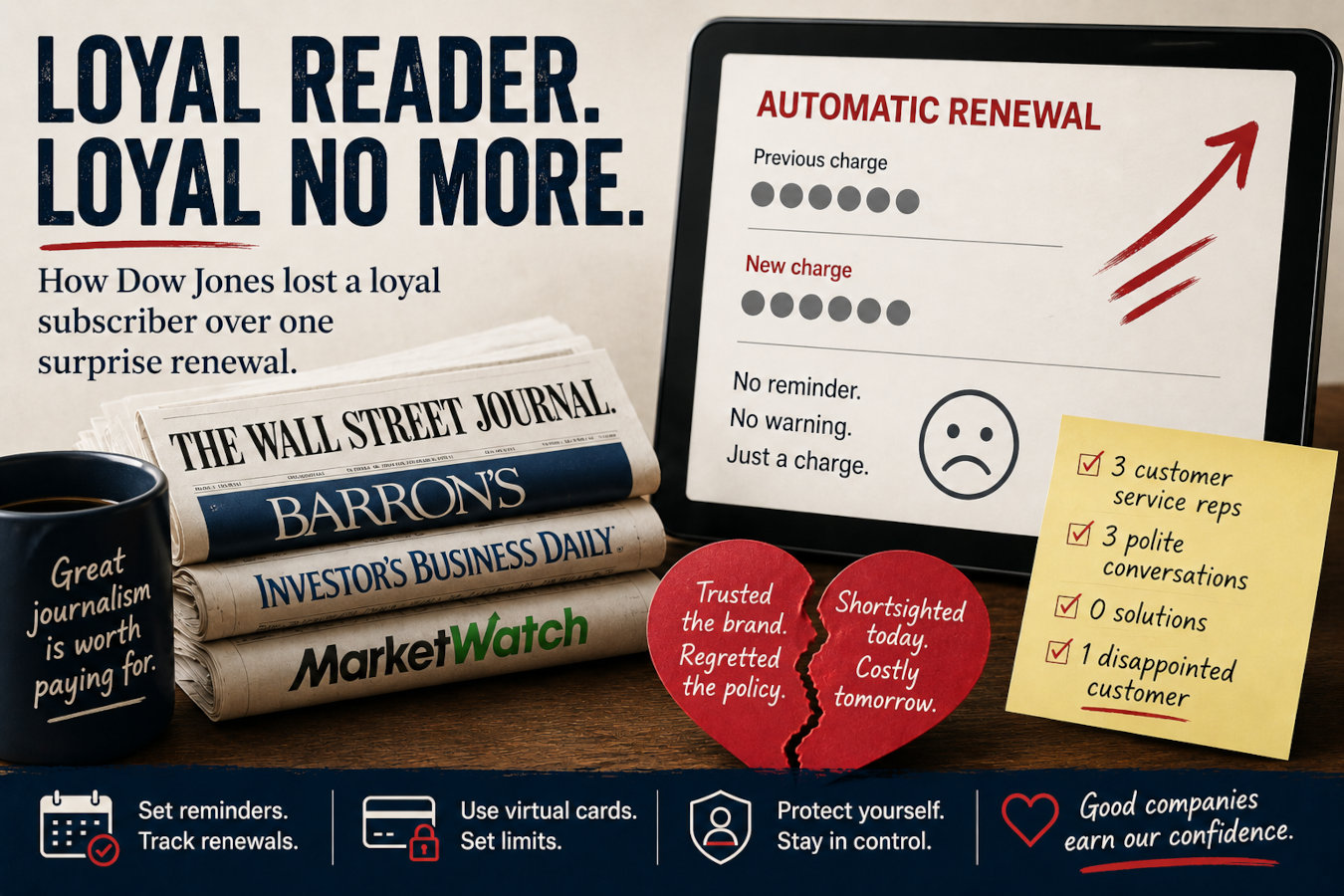 quality journalism is worth paying for –– I don’t expect everything on the Internet to be free.
That’s why this experience with Dow Jones surprised me so much.
Like many companies today, Dow Jones offered introductory subscription rates on almost all their products. After year or so on the promo, a subscription automatically renewed at roughly **ten times** the promotional monthly price. I’ve played the game with customer service each renewal go-around and am careful to renew early — usually they just upsell me on more content or digital access, etc. During my recent experience though, I didn’t expected a different tack. First I didn’t receive a reminder email or a pop-up that my 13 month term was ending (as in previous years) … or receive a “tickle my fancy” with another attractive offer to remain a loyal subscriber (again, WSJ my entire life and reference a thousand times here and on social media).
My mistake? I trusted a company whose publications I’ve respected for decades.
When I noticed the auto-renewal charge and called as soon as it appeared (3-days after posting), I wasn’t looking for something for nothing. I contacted customer service hoping for a reasonable solution. Over the course of speaking with three different representatives — including a customer service supervisor — I suggested several possibilities:
- Refund the renewal.
- Prorate the unused portion.
- Convert it to a discounted annual subscription.
- Extend my access at a more reasonable long-term rate (I was offered $250/year rate vs my previous $60/year rate that was billed monthly to my credit card).
Every conversation was polite. Every representative was professional. Every answer was “no.” What disappointed me wasn’t the people. They were courteous throughout. It was the policy.
One comment in particular stuck with me: I was told that customers in certain states have stronger legal protections regarding automatic subscription renewals, and that if I lived in one of those states, the outcome might have been different. But because I live in Ohio, they were under no obligation to offer the same accommodation.
That may be legally correct … but it left me wondering  whether companies should provide their best customer experience only where the law requires it?
I’ve had very different experiences with other subscription publishers. One investment newsletter I subscribe to has allowed me to try premium services, cancel during the trial period, and receive refunds without argument. Did they lose money on those transactions? Perhaps. What they gained was something far more valuable: my trust.
Because they treated me fairly, I have no hesitation about considering another subscription from them in the future … and after my Dow Jones experience this week, probably will (thank you Contrarian Outlook).
 Ironically, Dow Jones accomplished the opposite.
I may be able to still respect the journalists working at The Wall Street Journal, Barron’s, Investor’s Business Daily and MarketWatch … but not their publisher. Their writers didn’t create this experience, but someone needs to address it … and soon.
But the subscription policy left me with a question that every subscription business should ask itself:
Is maximizing one renewal worth losing a customer who was willing to keep paying for years?
For me, the answer is no.
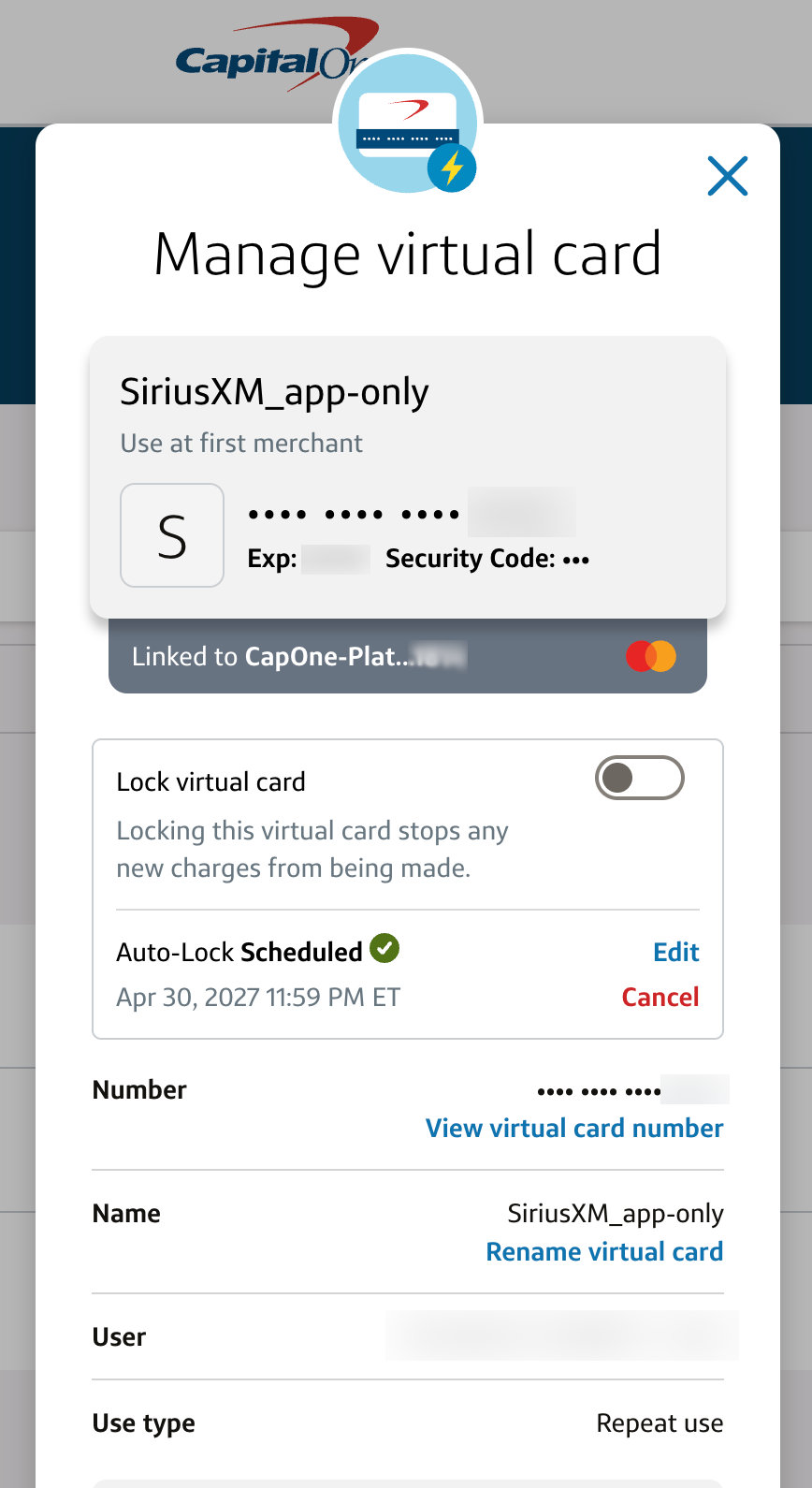
This experience has also changed the way I manage subscriptions. From now on, every promotional subscription goes on my calendar with renewal reminders as it once did (trust has been lost). More importantly, I’ll increasingly use payment methods that allow merchant-specific virtual cards or spending limits whenever possible.
It’s unfortunate that loyal customers feel they need these tools. Good companies don’t just earn our money. They earn our confidence. And sometimes, that’s worth much more than one unexpected renewal charge.
*Purposely delaying posting this just in case I receive a polite
call from Dow Jones — not that I’m expecting it.