Looks to me like there isn’t much of a deal?

Posted By on December 11, 2012

Senreidfiscalcliffcomments1

Got to love the “balanced” approach to the fiscal cliff of Sen. Harry Reid. [sarcasm] Does he really represent his constituents and does he know we “all lose” if congress and President Obama can’t manage spending?

Posted via email from RichC’s posterous

Who should pay more in taxes and what should be cut?

Posted By on December 11, 2012

Those of us watching the “dance” in Washington DC over the looming taxes and possible spending cuts closing in on every American can make one’s head spin. What we all know is that our government spends too much and seems unable to even come fiscalcliffsignclose to balancing their budget or coming up with a plan in order to realistically address it. A couple positives — The U.S. economic engine “could” address the revenue side IF encouraged to grow. Even an increase of 2% in economic grow (over the current 2% growth) could generate enough in tax revenues that would dwarf the tax rate increases demanded by President Obama. So my question is “Why isn’t the focus on growth?” The second positive is that neither Democrat or Republican benefits by going over the fiscal cliff, so there is an incentive to get a deal done before sequestration.

Unfortunately there is a list of never ending negatives. For this post, I point only to the tax rate and structure being trumpeted by President Obama and his merry band of mainstream media groupies. I’m not suggesting that increasing income tax rates from the current 36% to 39.6 for $200,000 and up earners ($250,000 joint) is alone going to sink our country, but don’t think that it solves any of our fiscal problems, nor does it encourage growth or make funding our government any more “fair.”

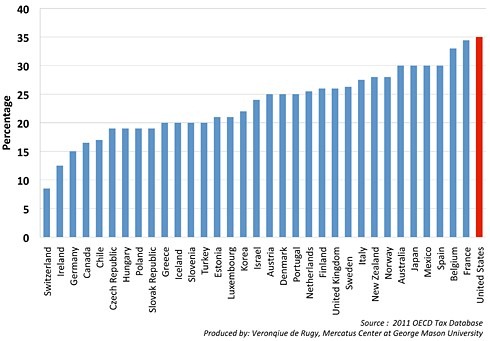
One of my primary concerns is that there will be an inevitable tax rate change – primarily because it sells well to the average Joe. Unfortunately it creates a long-term growth deterrent. It heavily impacts the small business owners who create the majority of jobs in America. This is the exact group we need to be encouraging in order to get the above mentioned national economy to 4%. These higher taxes seem to be coming at the same time big corporations are lobbying for more competitive U.S. corporate tax rates (which are needed, btw). Most people looking at the chart below understand, as do politicians, that U.S. based corporations are at a disadvantage worldwide. Most agree that putting American corporation on a level playing field with other developed nations make sense and that bringing their rates to somewhere around 25% (or Dems think 28%) needs to be done.

 corporatetaxrates_oecd2011

Of course what does this do if you are a “small business” paying taxes at the individual rate is being pushed up to 40%? (not to mention the additional 3.8% plus .9% Medicare tax and their state taxes  — ie. 14% in California.)

So, let’s say rates go up to 40% on top earners and small business … and taxes drop for American corporates to under 30% … what do you think will happen? Isn’t it logical?

  • Small business with “busy” CPAs will file C corp and switch from paying current 36% (proposed 40%) to expected lower corporate tax 25% or (28%)
  • Big Corporations will compete more efficiently and keep income in the U.S. and will expand/locate in states where taxes are low or zero if they haven’t already.
  • Less sophisticated and the smaller profitable small businesses will not expand or hire new employees due to higher taxes, Obamacare (cost of doing business) and find their companies less competitive with larger corporations paying lower taxes.
  • The expected revenue increase will be a net sum gain (unless economy grows and corporations bring cash home) while small business in America will get the short end of the stick and be hit with a higher tax bill, close their doors or just operate less profitably.
  • The big corporations will get bigger and those small businesses spending more for tax lawyers and CPA guidance may be able to avoid some additional taxes based on restructuring as a C corp for additional professional advice and $$$.

Is the “dance” seemingly around higher taxes instead of reducing spending and making government more efficient one worth going to? (of course we don’t have a choice … we are being shoved toward this cliff)

Political Games with the Fiscal Cliff – Christine Lagarde

Posted By on December 10, 2012

While following the Kabuki Theatre between President Obama and congress in Washington DC focused on increasing the top tax rate, christinelagardecutting government spending and dealing with what has become known as the “fiscal cliff,” it was interesting to hear what European’s think of our latest governing hurdle.
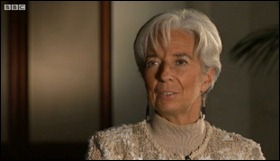
The BBC offered up a video interview with Christine Lagarde, the well respected head of the International Monetary Fund where she voiced concern over the “political games” being played in Washington DC, but admits she understands the politics involved. Lagarde warned the fragile economic recovery around the world would suffer if the U.S. in unable to come to an agreement and triggers a recession. Economist for the most part agree that the U.S. will see significant job losses and a 2% decline in economic growth. The projection is not that much better for Canada and Mexico which would also suffer a similar economic decline (maybe 1%) and that Europe which is still trying to dig their way out of a recession. All in all, the world would suffer a slow-down if the American economy (nearly 20%) fails to deal with their fiscal issues.

  BBC – Christine Lagarde (mp3) “They are big boys and can negotiate without my help.”

The BBC headline is was interesting (it has since changed) … considering the kid gloves President Obama has been handled with by the U.S. mainstream media:

Obama Pushes Tax-The-Rich plan 

US President Barack Obama is to address Michigan car workers to build support for his plan to raise taxes on the rich and avert a looming "fiscal cliff".

The visit follows face-to-face meetings with Republican House Speaker John Boehner at the White House on Sunday.

After their first private talks since Mr Obama won re-election, both sides said communication lines "remain open".

Deep spending cuts and tax rises due to take effect on 1 January threaten to derail US economic recovery.

Last week, Barack Obama visited a toy manufacturer in Pennsylvania to talk about his plan

Extended benefits for the long-term unemployed and a temporary cut to payroll taxes are also scheduled to expire at the same time.

International observers, such as Christine Lagarde, head of the International Monetary Fund, have warned that there would be ripple effects for the rest of the world if US lawmakers are not able to agree to a deal.

‘Shifting focus’

Mr Obama’s appearance at a car factory outside Detroit is his latest public outreach effort in recent weeks to sell a plan that would increase taxes for the rich while extending Bush-era tax cuts for everyone else.

The president’s plan calls for $1.6tn (£990bn) in new tax revenue over 10 years.

Mr Boehner, the top Republican in Congress, has said that he is prepared to consider increasing tax revenue – by closing loopholes and limiting deductions rather than raising rates.

Neither side revealed details about the meeting between Mr Boehner and Mr Obama on Sunday, but representatives released identical statements saying "the lines of communication remain open".

On Monday, White House spokesman Jay Carney told reporters travelling with the president to Michigan: "The president does believe that we can reach an agreement.

"We, broadly speaking, continue to engage in this process with important players and stakeholders."

Although Republicans are philosophically opposed to raising taxes, some congressmen have recently suggested they would consider agreeing to Mr Obama’s demand.

Republican Senator Bob Corker told Fox News on Sunday: "There is a growing group of folks looking at this and realising that we don’t have a lot of cards as it relates to the tax issue before year end."

He added that if Republicans accepted the higher top tax rate, "the focus then shifts to entitlements, and maybe it puts us in a place where we actually can do something that really saves the nation".

The Republican counter-offer would aim to collect $800bn in revenue by closing tax loopholes and deductions.

It would also reduce government spending by $1.4tn, raising from 65 to 67 the age of eligibility for Medicare, a popular healthcare programme for the elderly, and by changing the way annual increases in Social Security payments are calculated.

So far, Democrats have appeared reluctant to discuss reforms to major entitlement programmes.

Senate Democratic Whip Dick Durbin told NBC News on Sunday: "We need to address that in a thoughtful way through the committee structure after the first of the year."

The White House has repeatedly said it would not support any deal that did not increase tax rates on the wealthiest.

If a deal cannot be reached, economists say the fiscal cliff would suck about $600bn out of the economy.

The measures were partly put in place within a 2011 deal to curb the yawning US budget deficit.

BBC © 2012

Diesel fuel prices: Cracking, Fracking and Biodiesel Brewing

Posted By on December 8, 2012

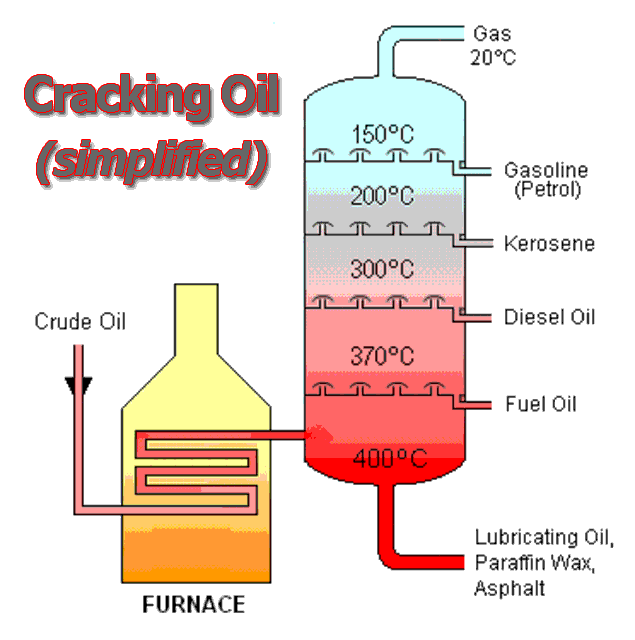
My kids roll their eyes when I strike up offhanded conversations with strangers in parking lots, gas stations, etc. Take Friday for instance, I saw a guy get out of crackingoilhis new Passat TDI and glanced over to ask how he liked his new diesel. He grinned and exclaimed, “I’m getting 47 mpg!” which I assumed that meant he liked it.
Winking smile
Unfortunately our conversation went down hill from there as talk quickly eroded into the price of fuel … and in particular the premium price he felt he was paying for diesel fuel (over $4.00/gallon while gasoline is currently $3.26). He stated that when he was younger, “diesel was always cheaper than gasoline” and that even in Europe diesel was less expensive than gasoline … so I started my lecture and will summarize below.

The ultra-low sulfur diesel fuels we purchase today are more refined with less sulfur than years ago. This makes them better for the environment and the higher winter cetane rating also help with ignition. Rarely do we see the heavy clouds of smoke and difficult starts as in years gone by … especially in passenger vehicles like the newer Audi, BMW, Mercedes Benz and Volkswagens. Also in the U.S., gasoline get a preferred tax structure with the rationale that larger diesel vehicle damage the roads more and diesel car drivers pay the penalty too. In Europe the opposite exists in order to encourage the more  efficient diesel over the gasoline engine (diesels are up to 35% more efficient … ie. mid-sized VW Passat at 47 mpg). Add to the political factors that we also use fuel oil … a close cousin to ‘diesel’ … in the winter to heat homes therefore making less of the heavier hydrocarbon crude oil available for road use this time of year – it all adds to inching up of the price. In good economic times this could even be more pronounce because oil producers will sell their desirable “ULSD — clean diesel” to the buyers who will pay the most … often overseas.

Here in the U.S. we are trying to offset this demand with new products that don’t use crude oil … or as much of it in the blend, since it do take 25% more crudebiodieselcycle to make a gallon diesel than a gallon of gasoline (remember physics and the laws of thermodynamics – heat, energy, etc … a BTU is a BTU). Those of us recognizing this are advocates for alternatives to petroleum and are hoping farming and industry can offset petroleum demand by adding biodiesel. That industry has stepped up with a variety of feedstock options in order to create a form of diesel fuel made from plant materials and as well as recycled cooking oil. Hopefully we’ll continue to see the newer algae based “grown materials” and that they will prove to be fast growing economical feedstocks. If perfected, this will create an entirely new fuel industry reducing the demand for food-based biodiesel as well as supplement petroleum diesel.

With natural gas being cheap and more plentiful here in the U.S. due to hydraulic fracking, I’m also hoping companies working on synthetic diesel derived from natural gas can be economically viable. Royal Dutch Shell is already producing it overseas and other oil companies could start processing in the next few years as well.

But for now, the price will be set by demand … and tweaked by politicians who are coerced by the energy lobbiests with the most influence – ok, so I’m cynical.

washingtonlobbists

Tech Friday: When replacing a device make more cents

Posted By on December 7, 2012

Tell me I’m not crazy, but this is the third  time that I’ve purchased an all-in-one multifunction printer in the past several years. epsonwfprinterFor one, inkjet printer heads and ink are challenging to keep flowing without problems, particularly when using refills and remanufactured inks – link. The customer support phone line suggested that using “their branded” replacement ink prevents problems, but purchasing them can have consumers scratching their heads and looking at  empty wallets.

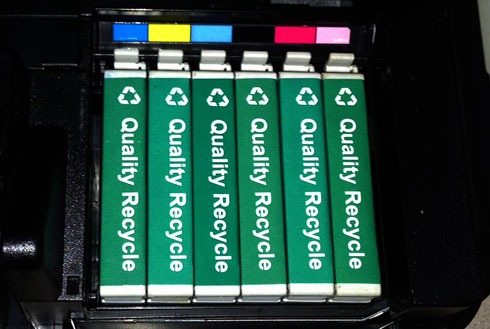
Years ago, I filled my own ink cartridges and tinkered with cleaning heads, but sometimes it is wiser to just replace the printer. Improvements in speed and features justified (at least in in my mind) a device replacement, because even trying a new set of “branded” cartridges is cost prohibitive. epsonartisancartsThis was frustrating enough when it was only the important black cartridge, but in my current Epson Artisan 800 printer, one empty (or plugged) color cartridge prevents a printer from operating “even in grayscale mode.” A call to Epson customer service recommended taking the device to the nearest repair facility which is over an hour away … or to to replace the device with the brand “loyalty discounted one.”  This was an easy call when the price of the new multi-function printer is nearly what it would cost me in fuel to drive to the repair facility or purchase SIX new ink cartridges. (see below) More junk heading for the landfill I guess?

epson98inkpack

VS

epsonwf545order121206

Tiny internal combustion engines

Posted By on December 6, 2012

I remember Cox model plane and car engine when I was a boy, but this “Tiny” 4-stroke “popper” is as impressive as a Swiss watch.

The Jeep Grand Cherokee diesel coming first quarter of 2013

Posted By on December 6, 2012

2013grandcherokeediesel

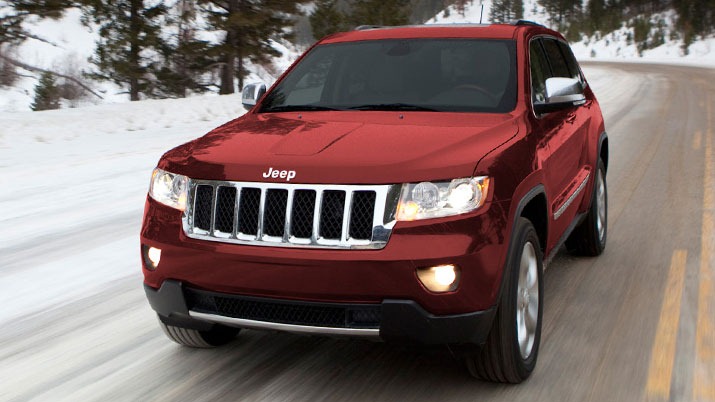
Jeep is heading back to market again and giving diesel another go in the US. According to WardsAuto, the Grand Cherokee will be available in the first quarter of 2013 and will have to continue to compete in a crowded SUV and car platform CUV market. The 3.0L diesel engine currently being sold in Europe should prove to be a solid choice for the Grand Cherokee by offering the torque and economy unmatched by other fuels. A few years ago I took the 2007 Jeep Grand Cherokee CRD diesel for a test drive, but it was a bit noisy, pricey and was lacking in refinement … two of the three I suspect the 2013/14 model will have improved on. Price … hmm? 

Jeep’s CEO Mike Manley says “drivers will be impressed with the SUV’s driving dynamics and reduced noise, vibration and harshness.”

Next year also brings a diesel entry from General Motors, the Chevrolet Cruze, an oil-burning Mazda6 sedan and increased marketing of existing diesel offerings from Volkswagen and Audi.

“I see that growth continuing,” Manley says about diesel popularity in the U.S. “As people realize that diesel not just offers great fuel economy but also good driving dynamics in a clean way, I see that part of the segment continue to grow.”

READ full article

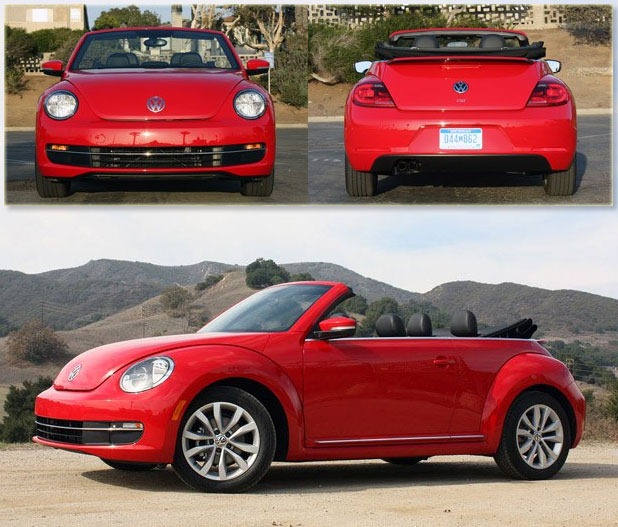
The 2013 Volkswagen Beetle Convertible TDI looks fun

Posted By on December 5, 2012

2013vwbeetletdired

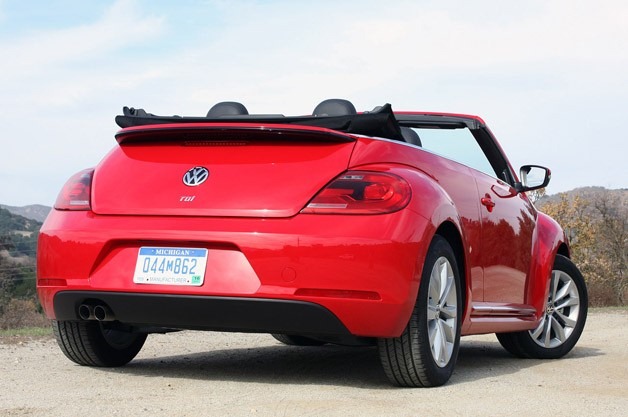
Autoblog posted a full review of the newly unveiled 2013 Volkswagen Beetle Convertible TDI which makes it the first diesel soft top in North America. On top of more aggressive and decidedly more masculine styling, the TDI will also be available with a 6-speed manual gearbox … and in “red” may be just the new car for my wife?

2013vwbeetletdiredint

2013vwbeetletdiredtdi

Want proof that diesel is finally taking hold in North America? Look no further than this 2013 Volkswagen Beetle Convertible. For a while now, it’s become easier to understand why more automakers are opting to pair their large-volume models with diesel, but it’s only when a given technology or feature starts to infiltrate the industry’s smaller segments that we can argue that something has truly taken hold. After an agonizingly slow buildup, we’re prepared to say that the high-mileage fuel has finally come of age here, and the evidence is right under this VW’s bulbous hood.

Consider this: Diesel has become so viable that it’s trickled down to this car, a niche-within-a-niche-within-a-niche model. Niche number one? The Beetle is a retro-styled spinoff of VW’s volume hatchback, the Golf. Niche number two? It’s a convertible.

2013vwbeetleconvertiblefd

READ the Full Review

How to parallel park in a tight spot

Posted By on December 4, 2012

Although I had to parallel park to pass my driver’s test, I don’t recall being taught to do it this way???
Smile

Clickity-click … the sound of flip-flopping sandals

Posted By on December 4, 2012

I know the clickity-click (or is it clickity-clack?) is to be expected when wearing flip flops, but some pairs are noisier than others. A few months ago I purchased a new pair of Keen Waimea H2 sandals that keentoeprotectionI intend to keep on the boat because they have toe protection, but I can’t figure out how to make them a little quieter when I walk?

The last few days have been exceptionally warm here in southwest Ohio and so I opted to wear flip flops while bring in the garbage cans on Monday. I was amazed at how much “clackier” they were than previous sandals and am wondering if over time they will break-in and quiet down (as is common with the foam soled brands)?  These Keens are a made with sturdier materials and foot bed is cup shaped to fit the foot. It is possible the stickiness will wear off (at least that is what I’m hoping), but I’m wondering if a little powder or something might help? All I know is that they are annoying … but with 60 degrees in December, who’s complaining!

  Keen Flip-flop sandals (mp3) going “clickity-click” or “clack”

Desultory - des-uhl-tawr-ee, -tohr-ee

  1. lacking in consistency, constancy, or visible order, disconnected; fitful: desultory conversation.
  2. digressing from or unconnected with the main subject; random: a desultory remark.
My Desultory Blog