Houston, we have a problem – a SKUNK problem

Posted By on May 24, 2017

As less developed areas evolve from rural to suburban, many homeowner and the critters who call the area home, are faced with figuring out how to live together Skunk in livetrapor struggle to set boundaries.

We have never lived in urban or fully developed areas so dealing with Ohio’s variety of wildlife is normal. In the early 1980s I build a deck onto our little brick farmhouse outside Aurora, Ohio and spent a spring co-existing with a mother skunk having her babies nestled under it … eventually they went away and we never had an issue. In our second house it was groundhogs — I probably should have known that since we lived in Hudson Ohio on 5 acres parcel with a sign labeling it “Groundhog Hill.” Let’s just say my eradication method of pouring diesel fuel with a gasoline chaser down their holes was not effective or a recommended method, but it did leave a black scorched streak up the side of our house for the groundhogs to laugh at (FYI, don’t do that).

Here north of Cincinnati we were relatively early in building our home in Liberty Township and regularly are dealing with everything from deer, mink, coyotes, feral cats, mice and my ongoing battle with raccoons finding their way into my attic (which is why the trap is set).

Looking for a good deal on a new car?

Posted By on May 23, 2017

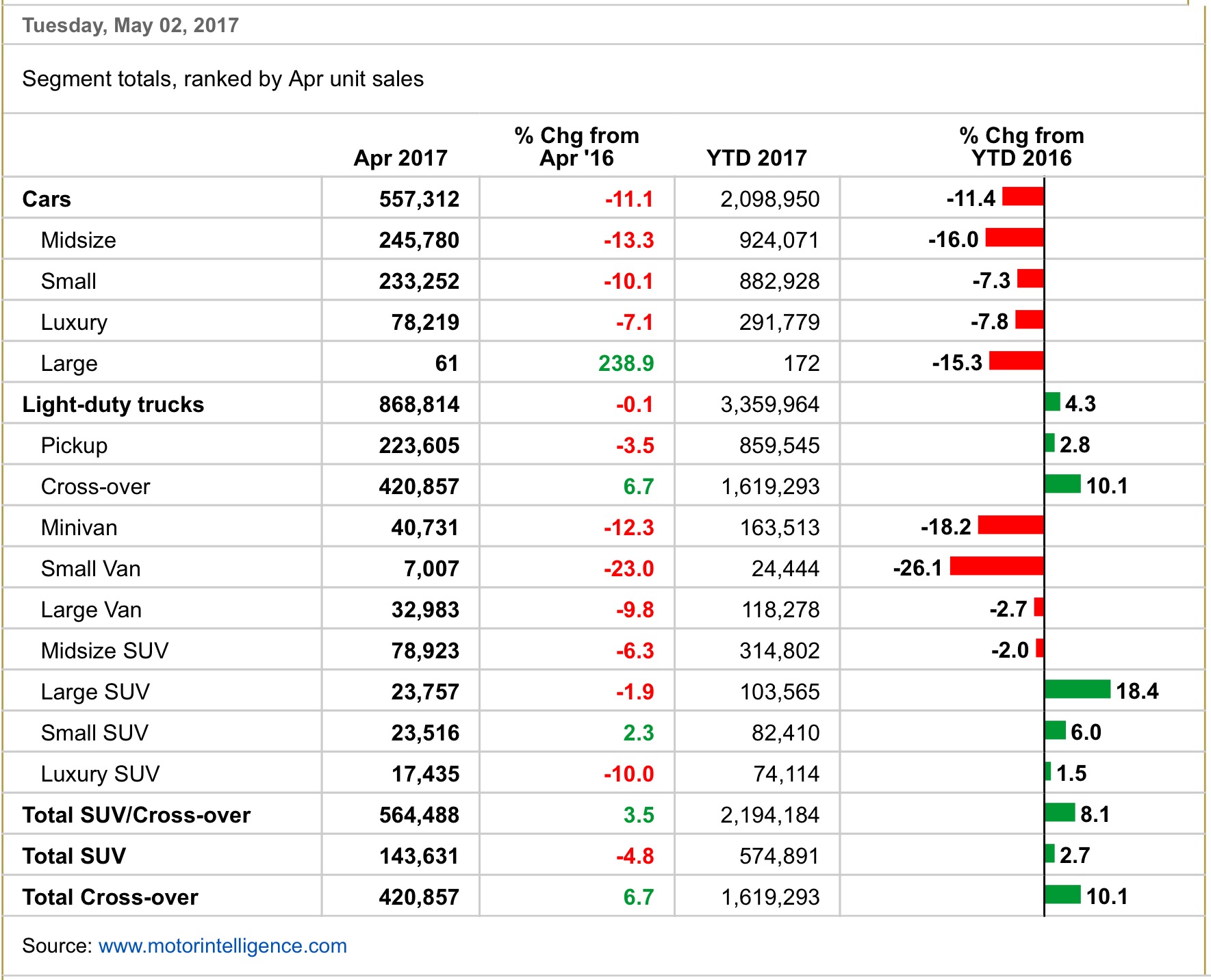
Cars inventories are building up, especially “cars” as compared to SUVs, etc. … so for the best deals (negotiation power) on new cars start with what isn’t moving. If an SUV is a must, the mid-sized models might make for the best deal and if it is “just reliable transportation” you need, there are a lot of 2017 4-door sedans looking for a home before the 2018s start showing up in a few months.

Music Monday: The Byrds and Mr Tambourine Man from 1965

Posted By on May 22, 2017

This content is restricted.

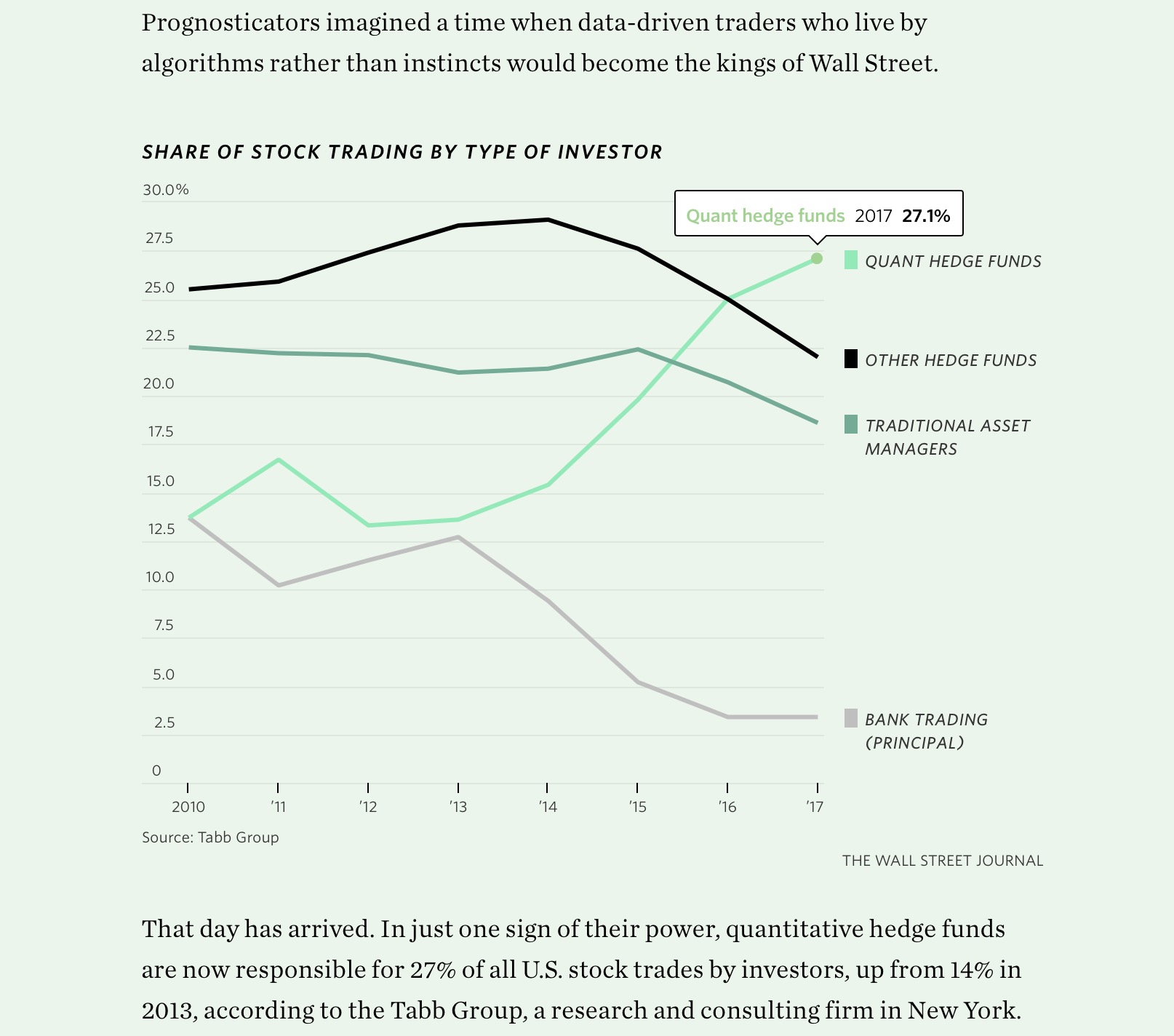
The Quants Run Wall Street Now – @WSJ

Posted By on May 21, 2017


LINK to WSJ article

Matched content ads by Google Adsense

Posted By on May 21, 2017

For those of you who are regular visitors to MyDesultoryBlog and are not running an ad blocker plugin on your browser, you may have noticed a small snippet of new  ad content in the sidebar. Last month, GoogleAdsense offered an upgrade to this blog’s minimal advertising experiment. The new ad content promotes “matched” internal content from similar previous posts their algorithms pick … with 6000 to choose from, it would be interesting to know how “it” decides?
🙃
The new small ad box is not a “pay per click” unit like most online marketing linked ads, but is used as a way to keep a viewer on a site longer. The longer visitors read and view, the more “other” marketing attempts can be put in front of potential customers. According to their research, the “number of pages viewed increased by 9% on average” and the “time spent on site increased by 10%.” Obviously my personal journal style blog is not the ideal place for ads, but it is still surprising to review just how Google is building their marketing powerhouse.

If you are thinking about “matched content ads for your site and if it is right for your site, there are a few limitations:

Matched content is available for sites with multiple pages and high volumes of traffic. Have a look at the site management settings in your AdSense account to see if your site(s) is eligible to run Matched content. Make the most out of your Matched content units with these best practices:

  • Let Google help you find the right size by using responsive Matched content units.
  • Place your Matched content unit directly below the article and either above or below your ad unit
  • Consider using Matched content on long scrolling pages

LINK

The economy: 5 Lessons From 1Q 2017 – Jim Glassman

Posted By on May 20, 2017

Every once in a while comes an it’s a small world surprise and one wonders, “why didn’t I know this?” This past week, my sister-in-law sent me a link to an article from her husband Dan Glassman’s brother Jim. The link was to Jim’s Linkedin page and opined on the economy. I figured … we are all amateur economists and doodle our opinions on blogs and social networks since everybody has access the Internet and self-publishing platforms nowadays — I figured I would check it out later.

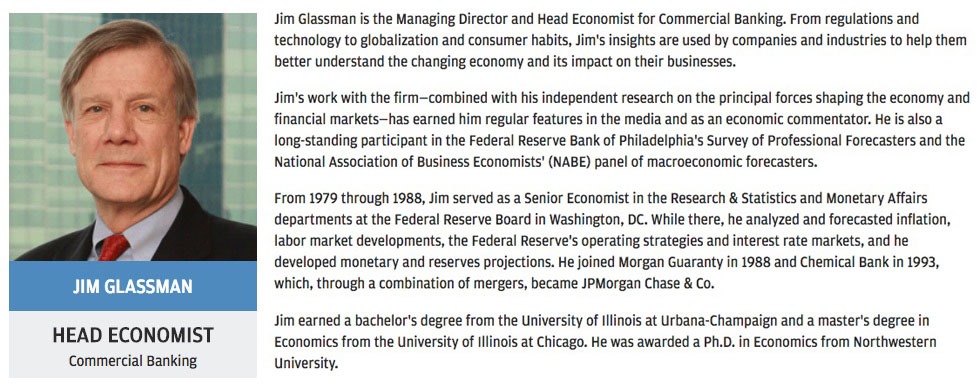
After finally reading, I found out Dan’s brother is Jim Glassman of JPMorganChase and his opinion as “head economist” is actually a bit more respected than those of us who run around bloviating on the subject; he actually gets paid for his opinion! Obviously a few “higher on the finance education chain” (JPMorganChasethink so too and have found his thoughts worthy of their attention.

JimGlassmanHeadEconomistJPM
Click  above image for larger and to read Jim Glassman’s bio

After noting this, I read his latest article on “5 Lessons From the 1Q 2017” with a bit more interest and even search back to read a few more articles … and watched his presentations and TV interviews. Very impressive credentials and worthwhile thoughts. Thanks for sharing, Lynda!

5 Lessons From 1Q 2017

Coming out of the first quarter, the focus may have been on GDP figures, but there are plenty of other lessons to learn from the first three months of 2017, including these five key takeaways.

The primary news coming out of the first quarter was the disappointing GDP figure, signaling US economic expansion slowed to a 0.7 percent annualized rate over the first three months. As discussed in last week’s article, there are broader measures that should also be considered when evaluating the economy’s health. This week, we focus on five key lessons coming out of 1Q.

1. We’re Not “Due” for a Recession

The recovery is wrapping up its eighth year, placing the current period of economic expansion among the longest on record. Fortunately, the business cycle doesn’t run on a calendar, and recessionary risks should remain low until the Federal Reserve fully normalizes interest rates.

Despite having taken the first steps toward normalization, the current monetary posture remains quite accommodative. Not only are short-term rates still at historically low levels, but the lingering effects of quantitative easing have also pushed long-term borrowing costs below their natural level. Artificially low borrowing costs should allow the economy to absorb imbalances that might otherwise lead to a recession.

2. Profit Slumps Don’t Tell the Full Story

Weak profits and falling corporate expenditures have often preceded recessions, but not every period of declining profitability has signaled a downturn. The decline in capital spending and corporate profits that accompanied the oil glut wasn’t a sign of weakness in the broader economy. While capital-intensive oil exploration projects were paused, consumers enjoyed the windfall from falling fuel prices. The resulting benefits from cheap oil are still materializing across the entire consumer sector, but the pain was immediately felt by energy companies and oil patch towns. However, the dislocations from falling oil prices will ultimately be overwhelmed by the benefits accompanying rising household wealth.

3. The Fed Focuses on the Big Picture

With the economy near full employment, the Fed is shifting its strategy toward prolonging the business cycle’s peak. After eight years of above-trend growth, the recovery’s health is no longer in doubt, and the Fed is likely to begin taking a more conceptual approach to interest rate normalization.

Over the coming year, monetary policy decisions will be guided by the long-term goal of withdrawing accommodation in a predictable fashion, even if that means being less responsive to the most recent economic data. Individual economic reports are always volatile, and the importance of monthly figures is likely to fade as the Fed’s focus shifts toward promoting long-term sustainable growth. Expect the Fed to stick to the plan, even in the face of temporary weakness.

4. Economic Activity Doesn’t Stop for Uncertainty

Political uncertainty has done little to slow the markets, as evidenced by the immediate aftermath of Brexit and Donald Trump’s surprise victory. While major legislation hasn’t yet been passed in 2017, equities investors appear to be encouraged about how the administration’s pro-business agenda could impact them in the future.

5. An Equation is No Substitute for Monetary Policy

Some of the Fed’s critics suggest that monetary policy should be governed by a set of fixed rules, eliminating the need for a committee of economists to set interest rates. But an equation linking rate hikes to developments in unemployment and inflation would’ve likely been counterproductive during the recovery.

It’s easy to find points in the recent past when a strict rule-based monetary policy would’ve led to missteps. For example, when the headline unemployment rate underestimated the true level of slack in the labor market, a rule would’ve likely prescribed monetary tightening prematurely, restricting job growth when it was still needed. Additionally, when collapsing oil prices skewed inflation downward, a rule-based reaction might’ve missed the underlying strength in demand and left rates too low for too long, risking an overheated economy. In retrospect, the Fed has done admirably at promoting the recovery, and it’s hard to imagine an equation could’ve capably substituted for experienced judgment.

Jim Glassman, Head Economist, Commercial Banking May 10, 2017

Obviously some strong microbursts blasted SW Ohio?

Posted By on May 19, 2017

heavyrains170519It takes a bit of wind to blow a grill off the patio, but with the wild storm blasts rolling from the south and west the last couple of days, that is just what it did. (and I think the back wheels were locked!)

I picked up the pieces last night (but not on the patio) and the recycled grill is still functioning … although with a few more dents, twists and a torn cover. Perhaps it is time to rethink the location or the wheels. (caster cups?)

GrillBlownOffPatio170518

Tips on making Gmail easier to use by Joanna Stern, WSJ.com

Posted By on May 18, 2017

Great tips from tech writer Joanna Stern of the Wall Street Journal on dealing with a few Gmail nits most of us using Google’s free services have. See her article at WSJ.com.

1. Priorities, Priorities

You may not know it, but Google’s email bots have not one but two ways of automatically organizing your messages: tabbed inbox and priority inbox.

Tabbed inbox—the default—filters those “A friend liked your post” or “BLOWOUT SALE!” emails into automatically created tabs marked Social and Promotions, respectively. If you want something in a different tab, drag it there, teaching the system where you want to see stuff from that sender.

(Gmail app tip: Cut down on needless notifications by specifying “Primary only” notifications in the app’s settings.)

Priority inbox organizes messages into tiers. It puts unread important emails at the top. Google determines those based on your habits, and marks them with small yellow flags. Below that are your starred emails, below that is everything else. You can enable priority inbox by tapping the gear-shaped icon then selecting Settings > Inbox > Inbox Type.

I wouldn’t dare tell you how to organize your inbox—it’s personal. I prefer threaded conversation view, where emails and replies are all grouped together. If that drives you nuts, you can switch it off in Settings. If you like to keep your inbox empty at all times, give Inbox a try. Google provides tools there to snooze and dismiss multiple messages.


2. Stars, Labels and Flags

Gmail has a tagging problem so pay attention: Use stars to mark emails you need to return to—you can even go multicolor in Settings. Use labels for projects or similar messages (show tickets, receipts, etc.). And use the yellow Important flags to train Google to highlight your most important correspondents (Aunt Bertha, naturally).

 
3. Find It Faster

Gmail’s search is fast—scrolling through search results isn’t. In the search box, click the down arrow for specific search filters. You can also type shortcuts into the search field (even in the mobile app). To find every email from me, type “from:joanna.stern@wsj.com”. Some standard Google search commands also apply: Add quotes if you want to search exact phrases, use the minus sign to eliminate results containing those words, etc.

 
4. Easy Writing

On the iPhone or on Android, you can set up keyboard shortcuts to speed up typing responses. You can also lean on Gmail’s Smart Reply. Starting Wednesday, an update to the Gmail apps will suggest quick replies to messages based on text from the previous message. It doesn’t read your mind but the short responses can be useful.

If you find yourself spending too much time writing the same emails or boilerplates over and over you can save them in Canned Responses, a tool from Gmail’s experimental “Labs.” Head to Settings > Labs > Enable Canned Responses > Save. Compose a new email with the text you want in it, click the down arrow in the bottom right corner of the window, select Canned responses, then New canned response… When you want that passage—an address, signature, whatever—again, you’ll find it in that same menu.


5. No Funky Formatting

The Gmail peeve that drives me most bonkers? When I copy text from Word or the web, then paste it into an email, it appears normal on my end. But the recipient sometimes sees text in different formats. Instead of using Ctrl + V, use Ctrl + Shift + V to strip out odd formatting. On your phone, you’ll need an app like Plain Text Paste. (Google says it’s working to improve this issue.)

Speaking of keyboard shortcuts, I am convinced you can save at least an hour a week by learning key Gmail shortcuts. Print the box below and tape it to your computer monitor. Thank me later.


6. Undo Send

We’ve all been there: You hit Send too quick and regret immediately sets in. Gmail gives you a few seconds to save yourself with its Undo Send feature. It’s automatically enabled in the iPhone app (and not available on the Android app). As soon as you hit Send, an Undo button appears for five seconds.

On the website, head to Settings and check Enable Undo Send. Choose the delay period—5, 10, 20, 30 seconds—then hit Save. After sending, an Undo button appears up top.


7. Panes, Not Pains

If you want a deeper Gmail fix—one that makes Gmail look more like Outlook—set up Preview Pane to show your inbox and message contents at the same time.

Go to Settings then click the Labs tab and enable Preview Pane. Scroll to the bottom and save. Activate Preview Pane view by clicking on the icon to the right of the message count.

While this, the most game-changing Gmail trick, is currently five clicks deep, Google says it plans to surface it soon. (Be careful: Many Gmail Labs features may not be ready for you. If you get into trouble, escape using this link.)


8. Stop Emailing

My best email tip of all: Look at how many lengthy threads in your inbox could’ve been replaced with texts, group chat or, dare I say, a phone call. At work, use Slack or Google Hangouts. With friends and family, pick your poison: standard texts, Apple iMessage, WhatsApp or Facebook Messenger.

LINK to full article at WSJ.com

Birthdays, baby Annalyn, mothers, grandmothers and LOVE

Posted By on May 17, 2017

This content is restricted.

New book: White Working Class by Joan C. Williams

Posted By on May 16, 2017

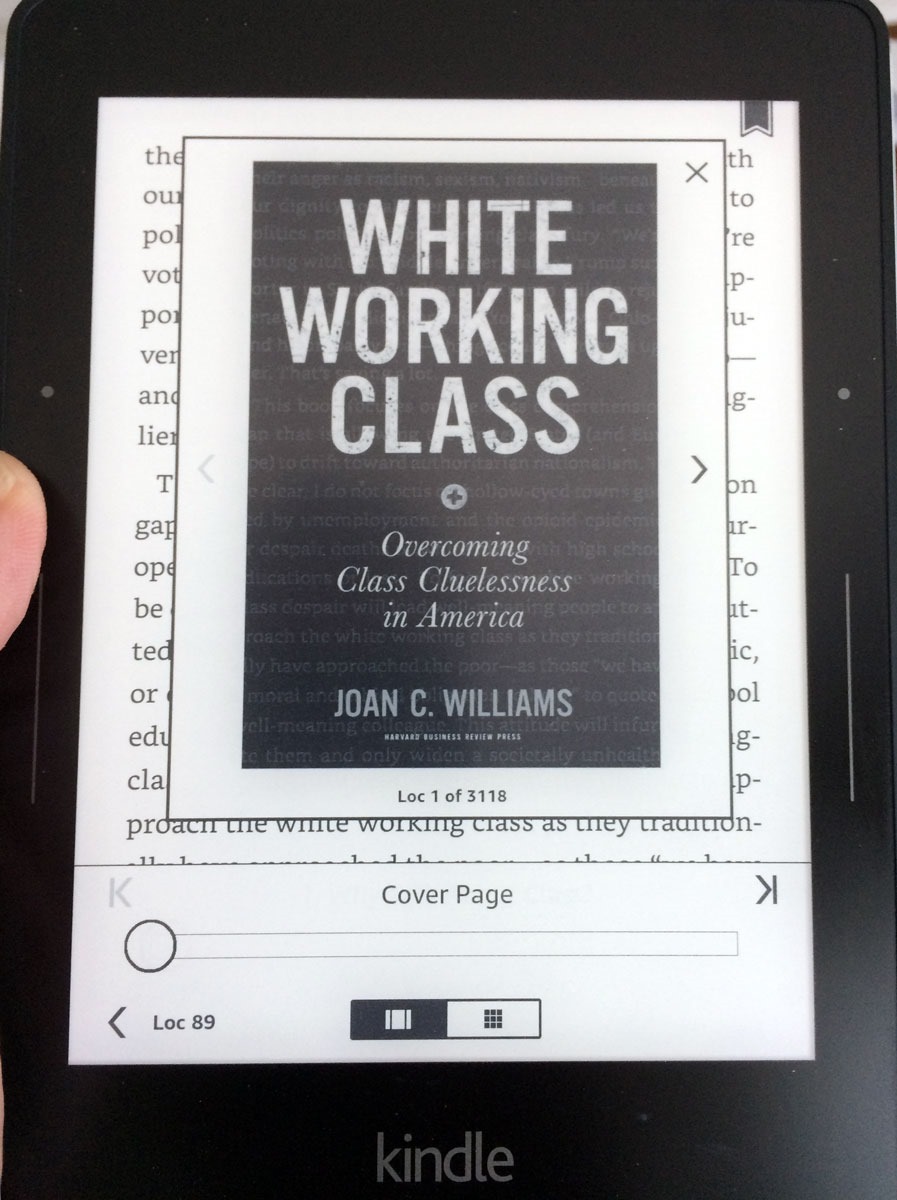
The Kindle ebook reader is my preferred choice ever since getting my "own" ereader. My buddy Jeff has found a new way to entertain me … WhiteWorkingClass_JoanCWilliams170516gifting Amazon books (this one for my birthday). I sense that he assumes everybody reads as much as he does? I assure you that I do not … but do start a lot of books … before getting bogged down and moving on to the next.

This week was a new release by Joan C. Williams that analyzes the cultural change from the wealthy old money Republicans of the past in contrast to the working class union Democrats who became this country’s middle class (I think she usually is focused on gender?). Her new book titled White Working Class – Overcoming Class Cluelessness, is timely in that the political types now clearly see a multiple decade change … particularly from the leadership and direction of Democratic Party. The non-traditional left has now clearly taken over to the point that not much room is provided for the "salt of the earth, traditional, hardworking, blue collar, patriotic" Democrats of yesteryear. There views are no longer tolerated by the academics and social issue driven progressives. Although I’ve just started the book, Williams is clearly painting the picture as to why many long term "working class" Democrats have turned to the Republican Party and in particular the hard driving and hard working President Donald Trump for representation in Washington DC. Clearly the Democratic leadership has turned their nose up at blue collar inclusiveness of the White Working Class base … and in particular it "male" component. Who knows if the GOP can represent them …that is yet to be seen … but better jobs and a paycheck would make for a grand start.

wwc_williams_tweet

Around the world, populist movements are gaining traction among the white working class. Meanwhile, members of the professional elite―journalists, managers, and establishment politicians―are on the outside looking in, left to argue over the reasons. In White Working Class, Joan C. Williams, described as having “something approaching rock star status” by the New York Times, explains why so much of the elite’s analysis of the white working class is misguided, rooted in class cluelessness.

Williams explains that many people have conflated “working class” with “poor”―but the working class is, in fact, the elusive, purportedly disappearing middle class. They often resent the poor and the professionals alike. But they don’t resent the truly rich, nor are they particularly bothered by income inequality. Their dream is not to join the upper middle class, with its different culture, but to stay true to their own values in their own communities―just with more money. While white working-class motivations are often dismissed as racist or xenophobic, Williams shows that they have their own class consciousness.

White Working Class is a blunt, bracing narrative that sketches a nuanced portrait of millions of people who have proven to be a potent political force. For anyone stunned by the rise of populist, nationalist movements, wondering why so many would seemingly vote against their own economic interests, or simply feeling like a stranger in their own country, White Working Class will be a convincing primer on how to connect with a crucial set of workers―and voters.

Desultory - des-uhl-tawr-ee, -tohr-ee

  1. lacking in consistency, constancy, or visible order, disconnected; fitful: desultory conversation.
  2. digressing from or unconnected with the main subject; random: a desultory remark.
My Desultory Blog