Posted By RichC on April 14, 2023

A speed test doesn’t really tell us everything (new USMobile wireless service above), but since I was frustrated  with 0.34Mbps upload Xfinity WiFi upload speeds at the condo last weekend (Xfinity WiFi speediest below the break), it was a perfect time to take the risk to port my cellphone number from Mint Mobile to USMobile. There wasn’t really a reason for me to be switching, as Mint (T-Mobile is now the owner) has been very good service for the $15/mo per line (paid in one yearly $180 payment). BUT … my renewal date is this month and who doesn’t appreciate pushing off a yearly payment when someone is offering 100 days
  free to try their Verizon backboned service — USMobile.
So far so good, although the port-out was a bit more challenging that I was hoping. Thankfully the Mint rep on chat was patient and helpful in getting the details pushed through … albeit slowly. One would think that by now it would be a bit easier once the phone number ownership is confirmed and that the person switching has the authority (fraud and ownership by chat is concerning). For now, we will keep my wife on Mint Mobile and decide IF the USMobile $15/mo plan is at least equal — already an issue as found out that using the iPhone as a WiFi hotspot is an upcharge with USMobile. Stay tuned.
Note: Can’t comment on 5G since the iPhone 7 Plus is still only LTE (4G).
(more…)
Category: Cellphone, Technology |
No Comments »
Tags: free, iphone, mint mobile, mobile phone, telecommunicaion, trial, usmobile, wireless
Posted By RichC on April 13, 2023

There is part of me that can’t help but smile when seeing the new label that Elon Musk’s Twitter put on NPR’s feed. The left-leaning taxpayer-funded media title is partially accurate since tax dollars are used to support public radio and television. At this point with the variety of media news and programming available in the US, it is difficult for even those of us who still enjoy some of what is on NPR to justify taxdollars being used to support only progressive political views. Personally I’d prefer the VOA be funded, but really it is just time to cut all government subsidies to media.
NPR has decided to stop using Twitter on the heels of Elon Musk’s social media juggernaut temporarily labeling its account “state-affiliated media.”
The move is significant as the left-leaning outlet is the first major news organization to essentially quit the platform.
“NPR’s organizational accounts will no longer be active on Twitter because the platform is taking actions that undermine our credibility by falsely implying that we are not editorially independent,” NPR said in a statement.
LINK
Category: Humor, News, Radio, Social Media |
No Comments »
Tags: Feed, funded, journalism, media, newfeed, npr, social, taxpayer, twitter
Posted By RichC on April 12, 2023

Guess when this Fed news came out?
High inflation and tight labor markets led Federal Reserve officials to signal they could raise interest rates at their next meeting despite a higher likelihood the economy would enter a recession later this year.
Fed officials considered skipping a rate increase at their meeting last month but concluded that regulators had calmed banking-sector stresses enough to justify a quarter-point rate increase, according to minutes of the March 21-22 gathering released Wednesday.
Looking ahead, officials concluded that given the strength of price pressures and demand for labor, “they anticipated that some additional policy firming may be appropriate” to bring inflation down to the central bank’s 2% goal, the minutes said.
Read more at WSJ
Category: Financial, News |
No Comments »
Tags: economy, federal reserve, interest rates, investing, markets, stocks, wsj
Posted By RichC on April 12, 2023
Just a short video filler test from Twitter after receiving a message that MyDesultoryBlog was inaccessible (suspect it is because previous post was personal and only for registered readers?)
Category: Nature, Social Media, Video |
No Comments »
Tags: beautiful, birds, eagles, mp4, testing
Posted By RichC on April 11, 2023
This content is restricted.
Category: Personal, Photos, Video |
No Comments »
Tags: annalyn, bike, brenda, cornhole, delray beach, drew, easter, ellerie, family, katelyn, megan, mp4, perrysburg, richc, soccer, taylor, vacation
Posted By RichC on April 10, 2023
This content is restricted.
Category: Health, Music |
No Comments »
Tags: aging, alzhemers, disease, grandparents, Health, kenny chesney, love bugs, mp3, music monday, musicmonday, parents
Posted By RichC on April 9, 2023
Easter is a time for celebration, a time to reflect on the sacrifice that Jesus made for us, and a time to rejoice in His victory over death. It is the day that we Christians celebrate the resurrection of Jesus Christ; His resurrection is the foundation of our faith.

The crucifixion of Jesus was a sign of the evil and sinfulness of the world. But it was also a sign of God’s love. Jesus died on the cross to pay the penalty for our sins. He took our punishment upon Himself, so that we could be forgiven and have eternal life.
On Easter Sunday we celebrate that Jesus rose from the dead and that He is the Son of God has the power to overcome death.
If you are not a Christian, I encourage you to learn more about Jesus and His resurrection. It is the most important event in history, and it has the power to change your life forever.
===> Happy Easter! <===
Category: Faith, Holiday |
No Comments »
Tags: christian, christianity, easter, jesus, resurrection, sunday
Posted By RichC on April 8, 2023
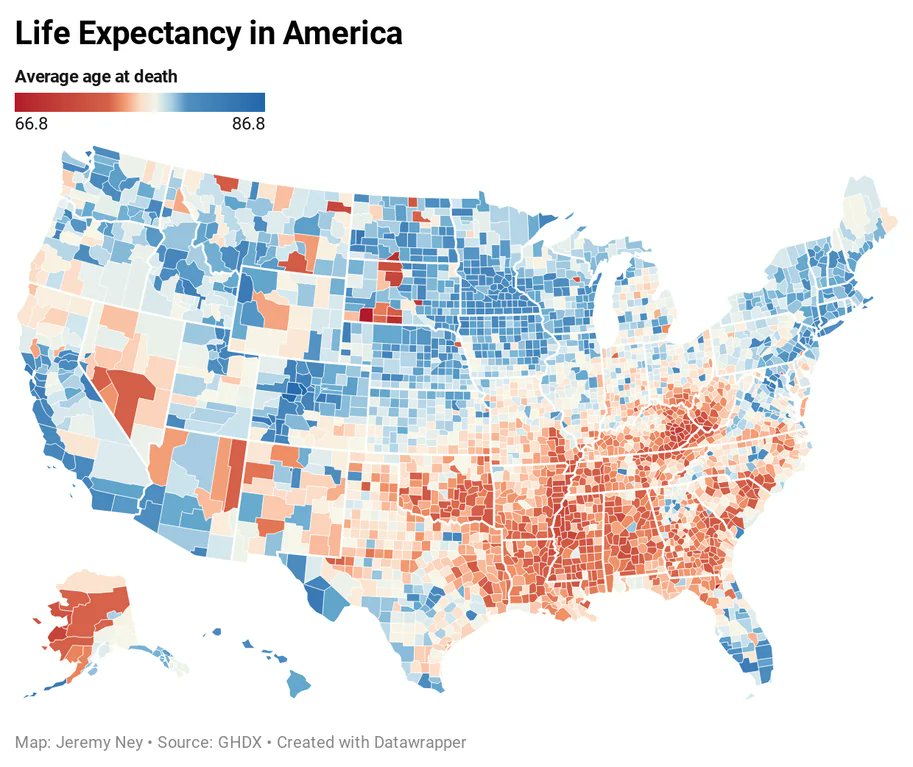
I’m not really sure where the data for this map came from or if it is accurate (??) … but it is something to think about.
Category: Health, Human Interest, Social Media, Tidbits |
No Comments »
Tags: america, expectancy, life, map
Posted By RichC on April 7, 2023
Last year one of my earlier Wyze Cams failed to update and wasn’t connecting to our mesh wifi (continued to disconnect). Thankfully Wyze politely discounted a newer version to which I happily upgraded. The old one has been sitting on my workbench and before tossing it in the trash, decided to peek under the hood. I was impressed at just how much is jammed into this little cube and sold for a fairly low price. Well done Wyze.

Category: Misc, Technology |
No Comments »
Tags: camera, cams, disassemble, security, tech friday, techfriday, wyze
Posted By RichC on April 6, 2023
There is probably a new survey or report out every month or so comparing the cost of living in different areas of the country. I usually gloss over them for one reason or another. Some exclude income taxes, state and local taxes or hefty property taxes. Others ignore lower  salaries and some just don’t factor in the unattractiveness of living in a particular area.
For most of us though, we prioritize living in a city or state based on our job and providing for our families … although often are required to compromise when it comes to career opportunities in a two income family. Once a person or a couple are empty-nesters or entering retirement, there are a few other criteria that factor in: interests, weather, activities, health care … as well as being close to grown children and growing grandchildren. Still it is interesting to know where money goes a bit further.
In any case, here is a current look at where $100,000 goes furthest. A SmartAsset article reprinted in the Cincinnati Business Courier caught my eye and had me thinking, perhaps we should move to Tampa, FL (23), Columbus, OH (13) or Fort Wayne, IN (14) instead of staying in Cincinnati (25)? (but at least we are not on the east or west coasts!)
(more…)
Category: Business, Financial, News, Retirement |
No Comments »
Tags: Business, cincinnati, cost of living, money, smart asset, survey