Assembling a simple (cough, cough) swing set for grandkids
Posted By RichC on September 6, 2020
This content is restricted.
Posted By RichC on September 6, 2020
This content is restricted.
Posted By RichC on September 5, 2020
 In trying to look at our divided America in a glass half-full way, the 2020 Presidential election at least gives voters a clear contrast in a candidates or political party’s desired direction for the country.
Obviously symbolism plays a part in painting a picture of political philosophy and the kind of voter each candidate seeks, but I suspect there are a lot of voters stuck in the middle wanting some sort of unity? Of course, t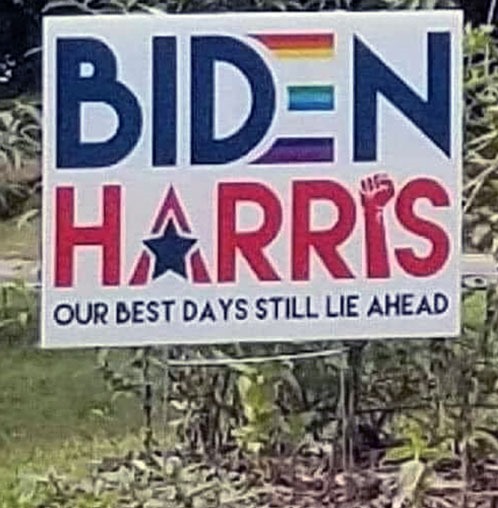 hese are probably the same voters who once complained that elections really didn’t matter since once a Democrat or Republican gets to Washington DC, they all became part of the swamp.
What triggered this post was seeing a Biden/Harris yard sign with, as the artist stated, “the rainbow colors in “BIDEN” is for inclusivity, the fist in “HARRIS” is for BLM, the star in “HARRIS” is my nod to patriotism and because I think she’s a STAR.”
(more…)
Posted By RichC on September 4, 2020
 Larry and Lin Pardey have been a couple of my sailing idols since I was in high school. Their life adventure, magazine articles and books have been a mainstay in keeping the cruising lifestyle close to my heart and in my dreams. I’ve posted a few times before regarding their philosophy and many skills, but learned last month that Larry had passed away at age 80. Several years ago his Parkinson required him to give up the boat and even his workshop life in New Zealand and then last year Lin messaged that he also had a stroke. Nobody wants live their final lives this way, but nobody will deny that his lived is first 75 years to the fullest. He died in a nursing facility in Auckland on July 27, 2020.
The NYTimes even published an article marking his passing. Since I have most of their books and a lot of their articles with ideas from several … one more archived link and read (PDF) is worth keeping.
Although he was aware of his diminishing physical abilities, he attributed this all to normal aging, saying, ‘What do you expect after you’ve used your body so hard for 70 years?’” Lin. Pardey said of her husband. “‘Boats wear out. So do people!’”
Posted By RichC on September 3, 2020
I shared a question to a few of my automotive friends on a Twitter a few weeks ago … prior to my WordPress post disappeared due to a mysql crash (grrr!) …
A question for #Millennials: What is this automotive “thing”
and how does it work?


So much of what we remember from our youth pops out later in life and well after we realize something is obsolete or no longer relevant. The above photo, for those born after 1980, is an oil can spout kept in my tool cabinet.  The one in the photo above was my personal favorite and fit in my back pocket when I worked at a full service Shell gas station at age 16. It was my first real job outside of grass cutting, commercial fishing and farm work. Most oil CAN spouts were of a solid funnel design and held a fair amount of oil in the tube that couldn’t be wiped out easily (see Quaker State can) .. but the one I kept could be kept clean and drip free after each use because the spout was open on the top.
| What is this sound? |
 Back “in the day” cars and truck burned a lot more oil as engine wear and slop caused more crankcase oil to make its way into the cylinders (a lot more cylinders back then too). So checking and adding oil regularly was a job for pump-jockeys. At the Shell Station in Sidney Ohio, we were incentivized with a 25-cent per quart bonus for every “can” of oil we sold … a nice bonus on top of the $2.25/hr wage.
Posted By RichC on September 2, 2020
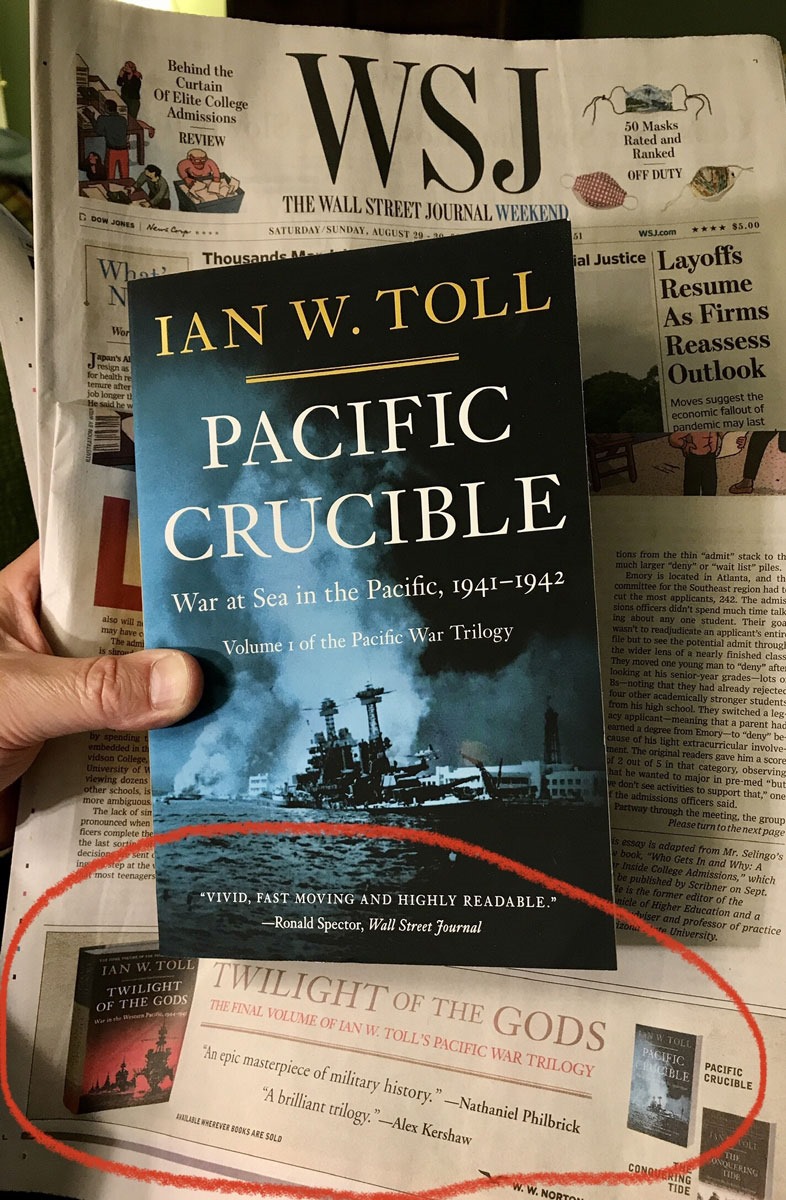 As a World War II history buff, and someone who has read a few Navy and Merchant Marine stories over the years, I was triggered to start a hefty Ian W. Toll trilogy after reading a book review in the WSJ last weekend of Twilight of the Gods. The 3 volume work starts with Pacific Crucible (2011) covering 1941-1942 as the World War 2 island war begins against the Empire of Japan.
Hopefully by the time I get through this first 600 page book, I’ll be ready for the second and third .. but who knows. The WSJ initial book review in November 2011 by Ronald Spector wasn’t all that positive … but I’m already appreciated the “Mahan to Pearl Harbor” prologue that Spector didn’t like?
“Readers, moreover, would be well advised to skip the portions of Mr. Toll’s long prologue that deal with the prewar U.S. Navy.”
Of course Spector is/was a George Washington University professor of history and likely has far more knowledge on world Naval history?
Posted By RichC on September 1, 2020
Although we have "requested" Ohio absentee voting ballots before as a convenience or often for being away from the local polls, this is the first time ballots requests forms are just showing up in the mail. If it were any other "let’s try statewide vote by mail year or election," this might be worth sending out, but trying it just before a critical 2020 presidential election is a questionable idea. The election is two months away, we having even had debates yet and I can already see this is a recipe for disaster or coordinated election fraud by whoever chooses to go down the path. Third-world banana republics or Communist dictators have nothing on the USA in 2020. "May the craftiest cheater win." #sarcasm
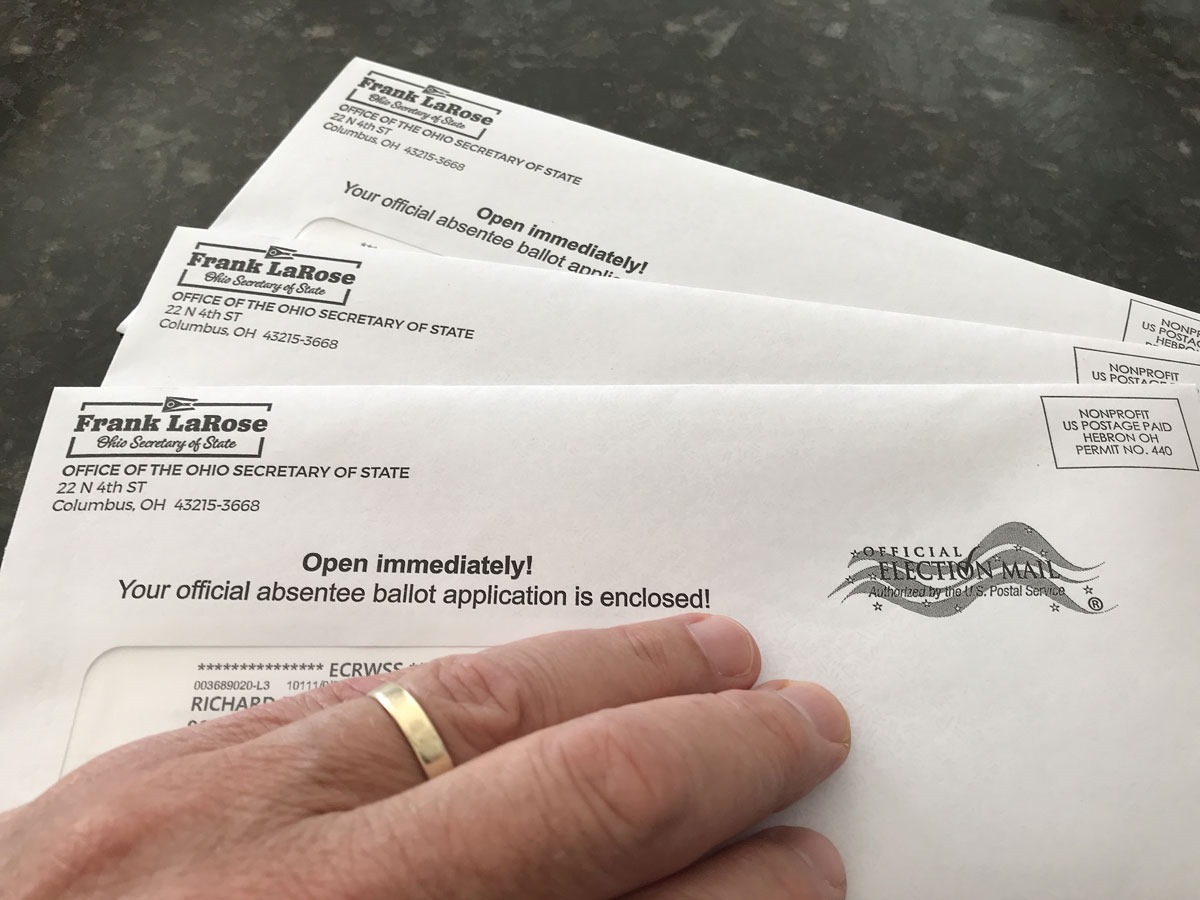
My point is that if honest citizens receive three ballot requests (two of us live here now) and one is a leftover for our 31 year old son who hasn’t lived here since he went to college in 2008 (that’s 12 years ago) … then I suspect others who move around more frequently are seeing ballots show up too (and I didn’t even register our dog)? To make matters worse, after college, Taylor spent 3 years working and living in North Dakota and then five years ago moved back to Cincinnati … living in East Walnut Hills. If it were not for it being illegal, I’d love to test this to see just how thorough the checks are in determining who is actually mailing back the ballot? My assumption is that whoever has the absentee ballot request in their hands, and appropriate personal information, they could actually have ballots sent to their address and cast another vote?
How does a poll worker/vote counter handle multiple ballots or possible voter fraud? If someone votes-by-mail "pretending" to be a different person, what happens IF the real voter requests a ballot at a different address or shows up at the local polls to vote?
Do poll workers deny that citizen a right to vote IF someone else sends a ballot in? Do they count all ballots, no ballots or even have the manpower to determine who casts the appropriate legal ballot (Voter ID laws have always made sense to me and make even more sense today.)
Posted By RichC on August 31, 2020
Brenda started to sing along to a song that was on in the intro or background of a movie or TV show were were watching a couple weeks ago (don’t recall the show). I looked over and asked, “How do you remember this song … it was before our time?” She replied that she thought it was a song from the 1970’s … our era. I raised my eyebrows in question as to the timeframe … “no, I don’t think so.”
Now, I’ve heard and know the song “The Letter” but honestly could not name the group which “first” made it popular – The Box Tops in 1967. I also knew from the sound that it was vintage 1960s, but really didn’t know much about it without looking it up … which I quickly did in order to prove my wife was off-base (what a terrible husband). 🙂 She replied with the excuse that “I had an older sister and brother so likely heard them listening to it.” Well, that’s probably true … now if my nephew Aaron is reading, what are the chances your dad could sing this … or for that matter my “slightly older” buddy Mark Jones?
Posted By RichC on August 29, 2020
 On Friday afternoon I stopped in to talk with Rick Benhase, the guy looking at the Packard transmission for me. He is a truly old car nut and can’t seem to get rid of his “fleet” once he buys or fixes them. This applies to more than just cars, too (read below if you must know).
Unfortunately our small car repair talk lead to more of a connection than I expected. After mentioning a few other cars including the MGB, his eyes lit up and off we went into his storage warehouse. He started to show me “his” British car collection including a couple of his daily drivers, some on racks, some covered and some in various states of repair .. and then admitted that he has too many but just can 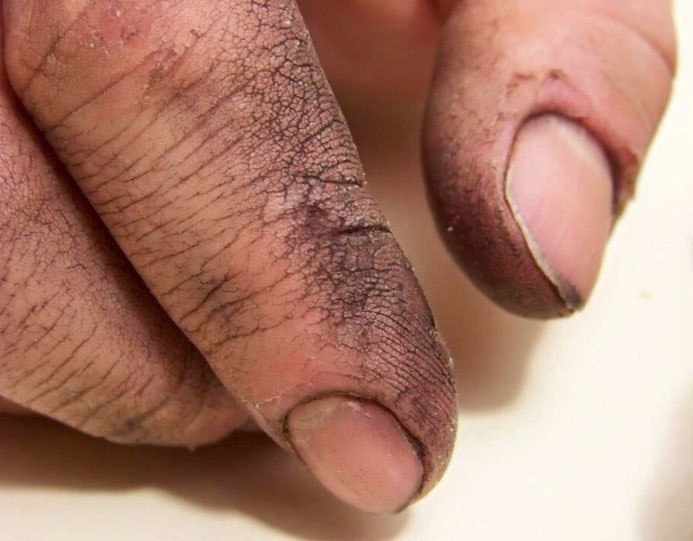 seem to part with them(according to him, he lost count at 60 cars and project cars .. plus nine more at home). Oh my … I don’t feel so bad having a couple extra cars.
One thing led to another and I “mistakenly mentioned woodworking” as a hobby. Off we went to an other section of his large warehouse housing older industrial woodworking machines, piles of plywood and stacks of hardwood; it seems prior to working on old cars, he was in the cabinet making business and built cabinets for Holiday Inn and others. It was raining and we walked around a few leaks (storms just peeled back a section of his flat roof) and told me the insurance quote came in at $400K for the roof this morning! I’m glad I don’t still own my flat roofed building in Cuyahoga Falls!
So after my hour long tour, he asked what business I was in … and after mentioning “printing” his 70 year old eyes lit up again. Before he started his first job in advertising, he worked running a letterpress for his uncle. Small world as we are both luddites who are attracted to work that leaves our hands caused, dirty or stained by grease or ink.
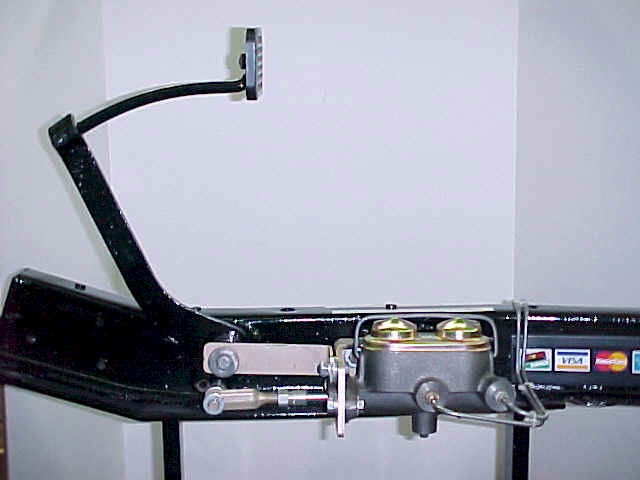
Back to the Packard discussion. His transmission guy has been off this week so he apologized for not being able to dig into it (no rush on my part). But since I had him as a captured audience, I asked him if there was anything else that he noticed that I should be looking and mentioned the new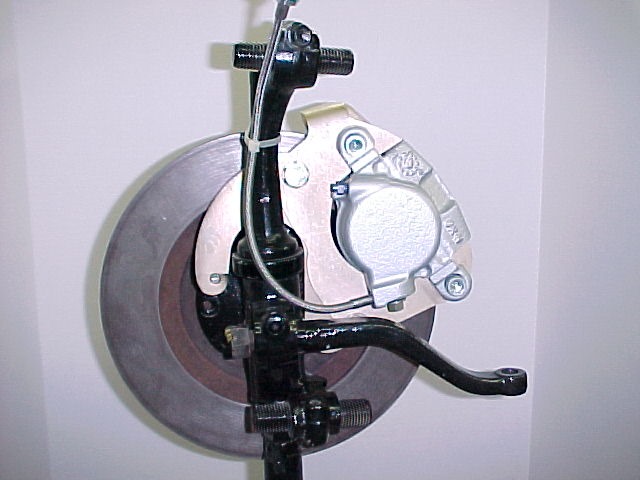 master cylinder that I have in order to fix the brakes.
We talked a bit more about brakes and thought it sounded reasonable wanting make sure the car could “stop” when needed. Ha!
So I’m planning to see if there are any conversion kits to switch from drum to disc for the Packard or if the Studebaker Hawk kits might fit? I’m planning to connect with Turner Brakes in Noblesville Indiana as they “might” make a bolt on upgrade kit that will double the braking power – convert the front brakes to disc brakes AND a dual rather than stock single master cylinder (photos above) I think I’ll at least look into that before re-doing my stock brakes?
Posted By RichC on August 28, 2020
This content is restricted.
Posted By RichC on August 27, 2020

Love this photo, although Katelyn and Taylor do look the same to me … well, add 10 years.
I saw this photo from our Bermuda cruise in 2010 and thought, “I’m so glad we took as many trips as we did each year as a family!” The early years of traveling may have been on a bit tighter budget, 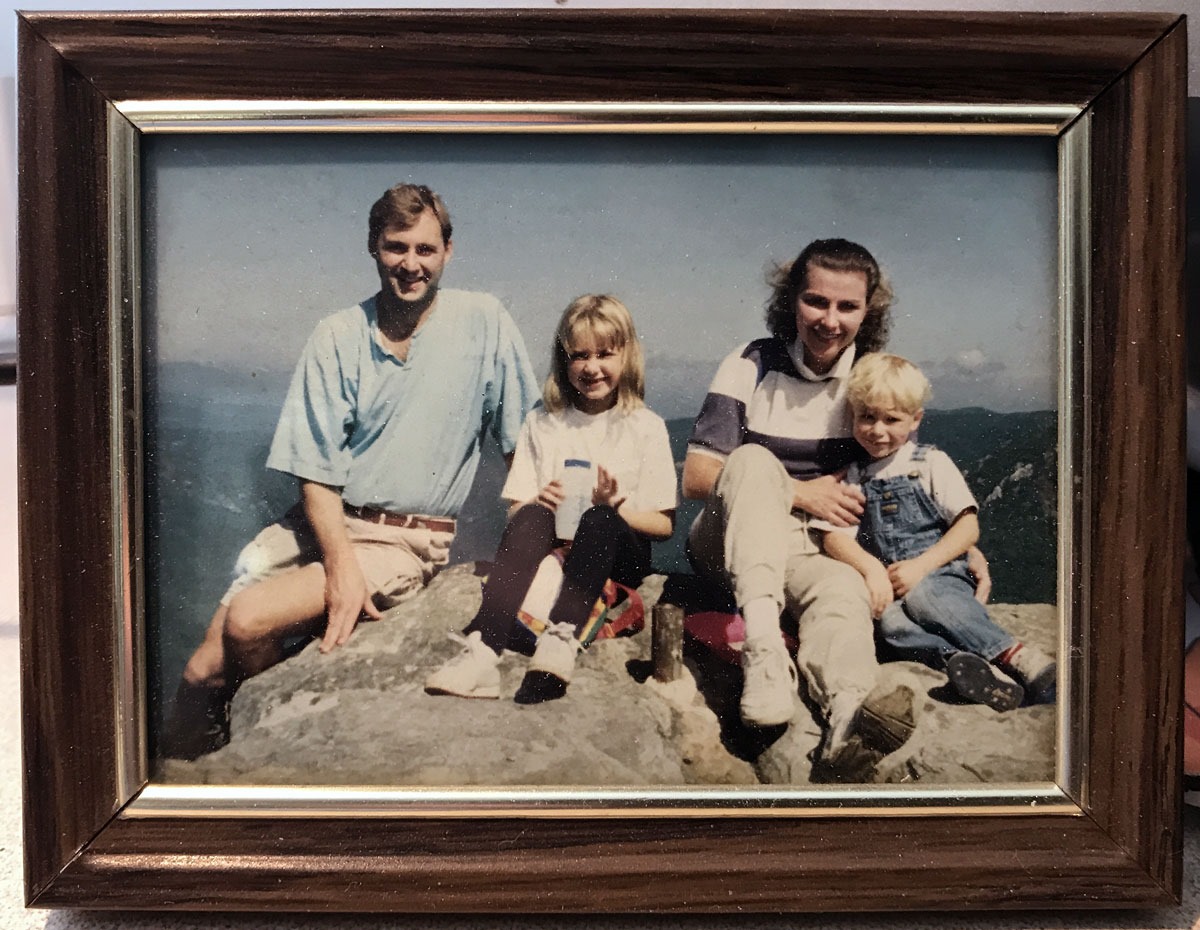 but we made memories. The later years we splurged a bit more and did some cruising; thankfully no Coronavirus worries back then either.
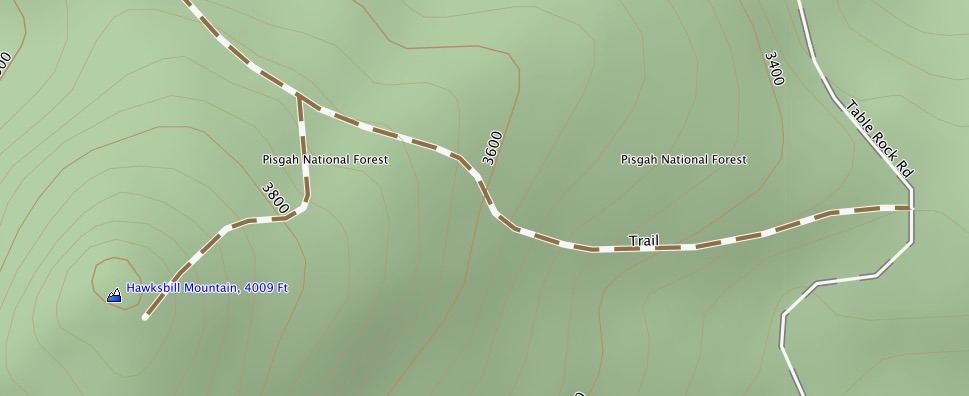
Since I’m adding a Throwback Thursday memory with the kids and mentioned our earlier “tighter budget” hiking and camping, here’s one that sits on my desk 4009 feet on top of Hawksbill Mountain in North Carolina. Another favorite. (also just received a text message from my buddy Jeff who is heading back there later this month).