Posted By RichC on April 5, 2020
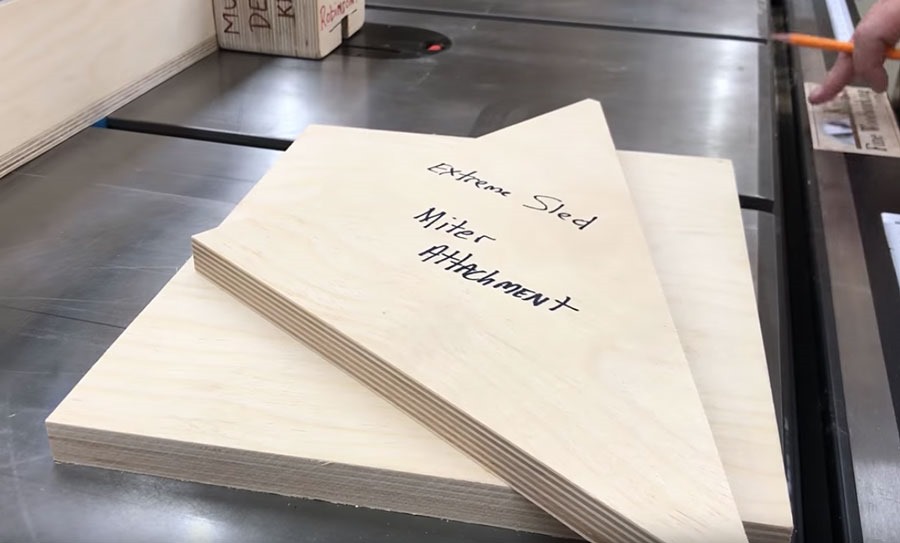
 Snipped an idea for the woodworking workshop that I’m planning to add to my table saw crosscut sled .. nothing complicated, but a way to use geometry in order to make the perfect 45 degree jig for cutting frames. It is a way to use perfect squares to accurately cut the 45 degree jig. Check out the YouTube clip – it is interesting!
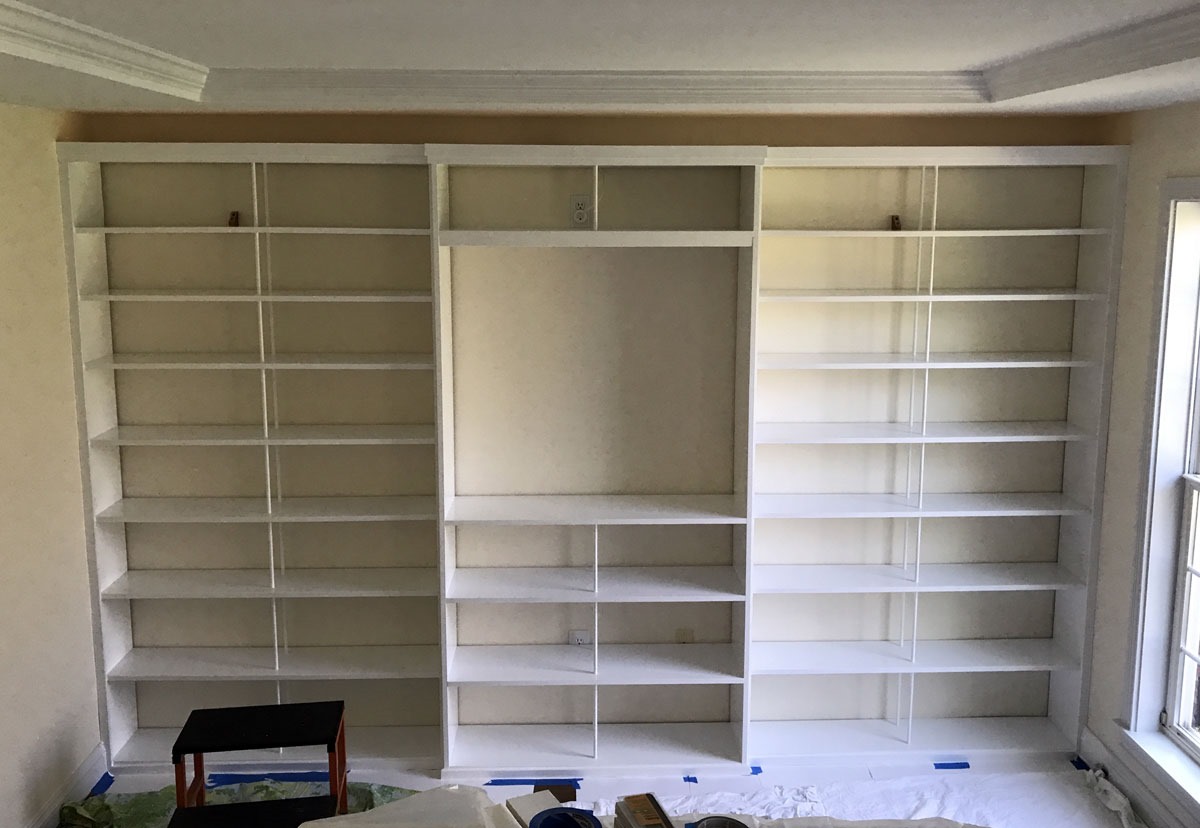
As for the painting and bookshelves projects, they are slowly coming along and until you’ve primed and painted A LOT of bookshelves, you do not realize how long it takes! UGH!
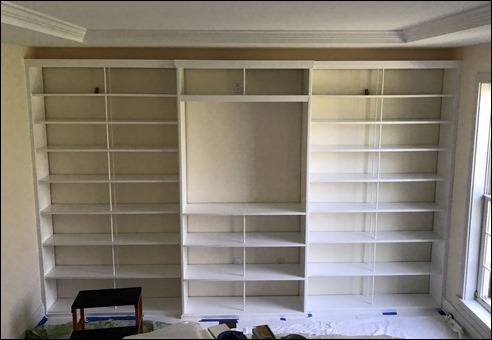
I’ve also been tinkering with the accent lighting above the bookshelves and making my own strip of LEDs with the leftover “tape” (currently way too many) that will highlight the artwork display area. If and when I head to the Home Depot to purchase some additional molding material, etc … the plan is to to add a shadow depth box to the art display area. In other words, the framed art will be off the wall 3 or 4 inches in order to create a little depth and shadow to the artwork … at least that’s my plan?
As for artwork, Brenda and I have collected paintings over the years. Some from our travel and others from a couple artists in our family. We are planning to rotate a few of the pieces we have hanging throughout the house in the Library/ Music room. Hopefully the highlighted viewing will make us re-appreciate each of the pieces again.
Category: Archive, Art, Personal, Photos, Tools, Video, Woodworking |
No Comments »
Tags: Art, artwork, bookshelves, crosscut, jig, library, music room, paintings, project, sled, table saw, woodworking, workshop, youtube
 Likely I’m not the only one needing to de-stress or at least fall back on a few techniques to “Keep Calm and Relax.”
 earn “box breathing” or four-square breathing as a way to reduce anxiety.