More on cellphones, text messaging and driving distracted

Posted By on April 4, 2011

onutextdriving

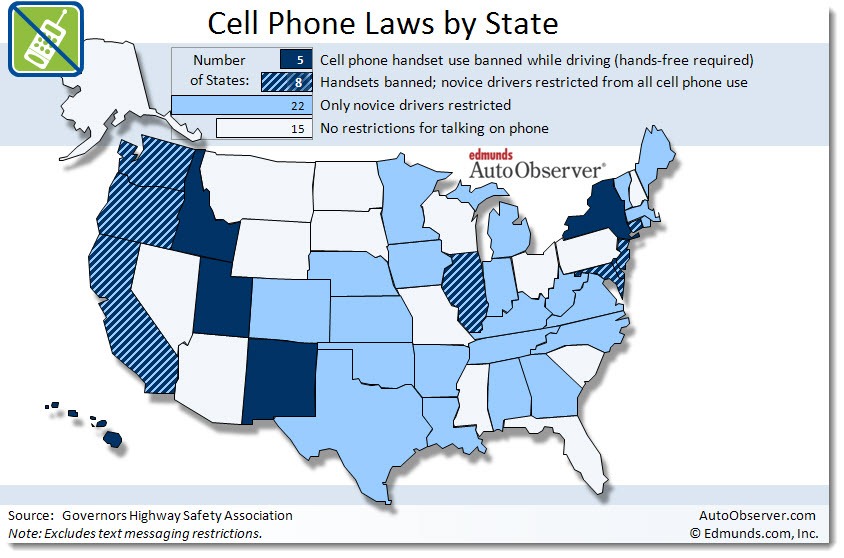
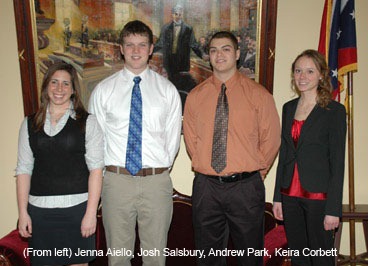
When I posted the current “Cell Phone Laws by State” map the other day, it was in part due to a project my niece was working on at Ohio Northern University. My brother mentioned she was asked to present their finding to Ohio lawmakers on House Bill 99 (summary) in Columbus last month – kudos to both ONU and my niece Keira. I have no doubt that Ohio will eventually adopt tougher laws regarding cellphone use while driving … BUT being an advocate for smaller-less intrusive government, I see adding this kind of legislation as delegating more of our personal responsibility to the government – a bigger and bigger … and more inefficient and expensive … government at that.
cellphonelawsstate110329

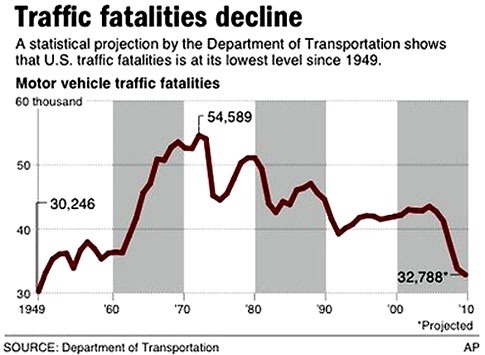
As we’ve continued to improve automobiles and highway safety, deaths at a 60 year low (NATSA PDF), thanks to vehicle improvements and a push to combat drunk driving. Noting this, I am concerned over where government stops in legislating our trafficfatalitiesdecline110lives, citing safety as their reason. Concern on my part grows as we are being inundated by well intended laws mandating personal behavior. Yes the laws protect the public, but they also infringe on personal liberty. Bureaucrats thinking for their citizens eventually creates generations of government dependent citizens who do not demonstrate personal responsibility or make good decisions for themselves or their families (take a look at those living in poverty today … they are more dependent than ever). From the federal government now mandating Obama national healthcare law, to state laws regulating everything from lane use to seatbelts … and now how we use electronic communication devices (although I noticed that the new proposed Ohio legislation doesn’t apply all of its citizens equally).
The bill declares that the prohibition does not apply to any of the following:

(1)  A person using an electronic wireless communications device in that manner for emergency purposes, including an emergency contact with a law enforcement agency, hospital or health care provider, fire department, or other similar emergency agency or entity;

(2)  A person driving a public safety vehicle who uses an electronic wireless communications device in that manner in the course of the person’s duties;

I’m not suggesting that it isn’t wise to have insurance, wear seatbelts or put the “mobile” phone (cellphone) away when driving, but am concerned over the lack of personal responsibility and the intrusion of a growing government into areas that we should be personally responsible for (not to mention we need to pay cost of paying the bigger government and in this case the enforcement of yet another law).

The more bureaucracy we create, the more independence and liberty we give up and turn over to the state. How much personal responsibility are you willing to give up?

Research Driven

Ohio lawmakers consult ONU undergraduate research during debate of potential texting ban.

The direct application of research changes lives for the better. Beyond the theoretical, practical research addresses real problems and provides solutions.

Researchers strive for this practical application, something a group of Ohio Northern University biology students achieved on March 16, 2011, when they presented their research to Ohio lawmakers debating a potential new law.

onuresearch1103

Ohio House Bill 99 would “prohibit driving a vehicle while writing, sending or reading a text-based communication on an electronic wireless communications device” statewide. Offering proponent testimony for the bill, juniors Jenna Aiello, a premed major from Mentor, Ohio; Keira Corbett, a predentistry major from Tipp City, Ohio; Andrew Park, a premed major from Bryan, Ohio; and Joshua Salsbury, a prephysical therapy major from Bryan, Ohio; shared research that showed how text-messaging can impede reaction time by as much as 0.708 seconds, valuable data to those interested in improving public safety.

The research project initiated in the students’ Medical Physiology 1 class, which focused on neuromuscular physiology.

“We knew we wanted to do research on reaction time, but that was kind of a popular topic for the class, so we had to think of our own spin for it to make it different from other ideas,” said Park.

The group also wanted their topic to be relevant as well as unique. After considering a study on the effects of a substance—such as caffeine—on reaction time, they decided that text messaging would be more interesting and just as relevant, if not moreso.

According to a recent national study by the Nielsen Company, young adults (age 18–24) exchange 1,630 texts each month. While that number may seem high, it is a distant second to teens (age 13–17) who exchange an incredible 3,339 texts each month. The students themselves could attest to the prevalence of this behavior while driving, while also noting that most of their peers don’t realize how dangerous it can be.

“Our focus was definitely on the fact that lots of our peers text message and drive,” said Aiello. “Watching the participants, every single one of them would get red in the face trying to text and do the reaction time. And they realized, ‘Wow, this is really important to not do.’”


Giving proponent testimony before Ohio lawmakers.

The group modeled their experiment using a computer-based reaction time test featuring a stoplight that changed from red to green at random. Subjects were asked to press a key on the computer keyboard as fast as they could when the light changed. Then the researchers introduced a text messaging distraction—asking the subjects to respond to questions typed on a slip of pager via text message—while performing test.

“We had 40 participants do five trials each without text messaging and then averaged it to get their reaction time with no distractions. Then we asked them to do it again with the text messaging,” said Corbett.

The students’ experiment showed a 0.708 second increase in reaction time when faced with a text messaging distraction, the equivalent of traveling 68 feet while driving at 65 mph.

The group submitted their findings to The Ohio Journal of Science under the title “Effect of text-messaging distractions on reaction time,” and it was selected for publication in the winter 2011 issue. This article caught the attention of Ohio State Rep. Nancy Garland, the co-author of H.B. 99 who invited the group to testify.

“I was very pleased that the Ohio Northern students participated in the hearings on H.B. 99 that would prohibit driving and texting. I think colleges and universities can provide valuable research to the legislature as we consider legislation,” Garland said.

The students feel that being college students themselves may have played a part in their research being singled out.

“We were thinking about why they reached out to us, and we think it might be because they are trying to reach our age group with this legislation,” said Salsbury.

For the students’ instructor, Dr. Rema Suniga, associate professor of biology, the experience has been a memorable and rewarding one.

“Kiera sent me an email right after being contacted by Rep. Garland’s office, and it was wonderful to see the excitement in her email,” she said.

The students will have one more chance to share their text-messaging research when they present at the Ohio Academy of Science annual meeting in April.
See article at ONU.edu

Fatigue cracking on Southwest planes is a problem

Posted By on April 3, 2011

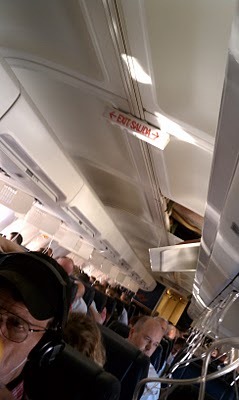
IMAG1624Citizen journalism was alive and well (‘alive’ being the appropriate word) this weekend as an emergency landing was made by a Southwest jet in Yuma Arizona. Shawna MalviniRedden, a blogger at The Bluest Muse, ‘tweeted’ comments and photos.

Share photos on twitter with Twitpic

Shortly after take off the Boeing 737 had a hole 5 foot long and 1 foot wide open in the top of the fuselage. The plane was at 36,000 feet and depressurized injuring one of the flight attendants. Pilots quickly descended to 11,000 feet and made a safe and control emergency landing. After the harrowing event, Southwest grounded some 300 flights and began inspections on their planes. From today’s CNN article, the findings were not all that comforting.

(CNN) — Investigators found "widespread cracking" on the skin of a Southwest Airlines Boeing 737 that made an emergency landing in Arizona after a hole opened on top of the aircraft during flight Friday, a National Transportation Safety Board member said Sunday.

See CNN article

Deja vu – Pain at the Pump II. When will we learn?

Posted By on April 3, 2011

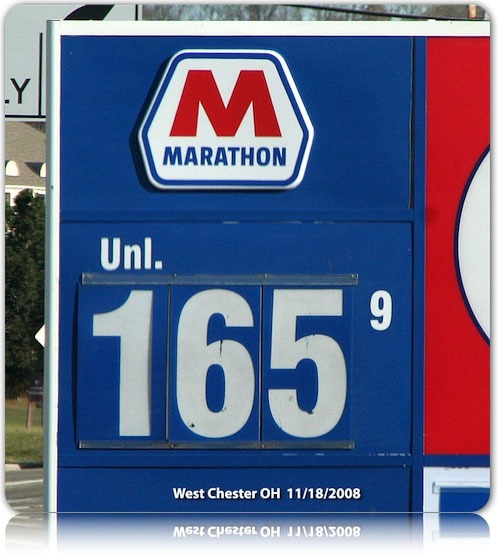
gas165_westchesteroh081118My son borrowed my Honda Pilot this weekend (just after I filled up – but I received a “Thanks Dad” text message from him), so I’ve  been driving his Volkswagen GTI … fun. Of course the fuel tank is exactly where most college students keep their cars – empty – so I ended up filling another tank. Ouch .. $50 to fill it with midgrade gasoline ($3.68) on Saturday night. The pinch from the high price of gasoline is starting to hurt considering how much fuel we use each week.
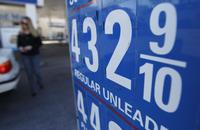
gasprice_orlandofl_110305It wasn’t but just a couple years ago that I was posting about the low price of fuel. About the time of the 2008 elections the slow economy caused oil inventories to rise and gasoline prices to drop. A couple of goods things about the recession (and election) were the lower fuel prices and lack of inflation. Above was a photo I took at a local station just after the presidential election in November of 2008. Wow, what a difference from the prices we’re seeing today … or the one I saw in Orlando (regular unleaded $5.299) last month.

On a similar note, several articles, mostly right leaning editorials, pointed out that gas prices have doubled since President Obama took office. Although I’m not politically aligned with our President or the Democrats legislating a bigger government, higher taxes and their socialist leaning programs, the rise in oil it isn’t entirely Obama’s fault. On the other hand, his policies shutting down domestic drilling do little to secure our nation from the political unrest (or unscrupulous oil countries) in the Middle East. Unfortunately without American production, we are once again forced to pay the prices of overseas import oil — will we ever learn?

Oil up 100% under Obama

About the same time,

Feeling pain at the pump? Gas prices have doubled since Mr. Obama took office. According to the GasBuddy gasoline price tracking web site, the price of a gallon of regular gas was around $1.79 when Mr. Obama took office. Today the national average is $3.58. The lowest average price in the continental United States is $3.31 in Tulsa Oklahoma, the highest is $4.14 in Santa Barbara, CA. Pain at the pumpFour-dollar-a-gallon gas has arrived on average throughout California, and a number of other states are headed in that direction.
Consumer price index (CPI) figures from February show an unadjusted 12 month gasoline inflation rate of 19.2%, but in the last month alone prices jumped 6.8%, probably because of oil price increases due to instabilities in the Middle East. If the trend continues, gas prices would double again within a year. 100% gasoline price inflation is nothing to brag about, but imagine Mr. Obama going into the 2012 election having to explain why gas costs $7.00 a gallon. I’m sure the White House would spin it as one of their “Green” initiatives.

Ordered Rawhide Down and watched 127 Hours

Posted By on April 2, 2011

rawhidedownimage 
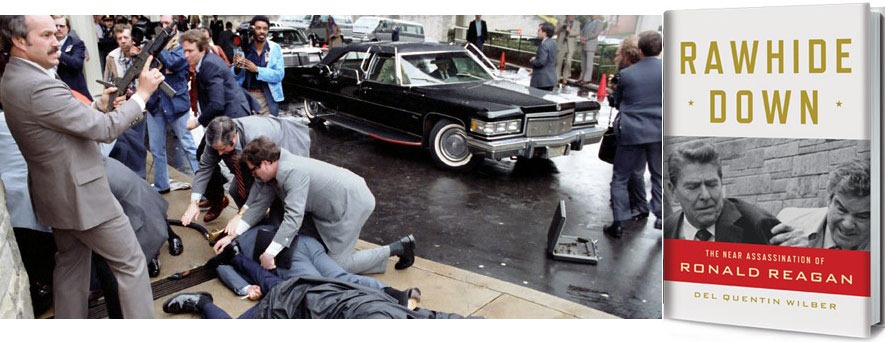
I’m looking forward to reading a new book, Rawhide Down, the near assassination of Ronald Reagan, by Del Quentin Wilber, after listening to a couple of interviews while driving this week. The history and medical component to the story really sounded compelling, particularly since it was a piece of history that I remember – besides my daughter wants to read it too. 
Between_a_Rock_and_a_Hard_Place_Cover

1: WHYY Radio Times interview with Del Quentin Wilber

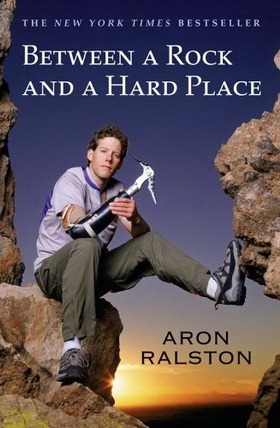
NetFlix sent a movie from my queue called 127 Hours – it was way too intense! Do not watch if you have a queasy stomach when in comes to outdoor survival stories. This is the movie version of the real life story of Aron Ralston; he was trapped for 5 day by a boulder in Robbers Roost, Utah before he cut off his own arm … it is an amazing feat of survival. The film (trailer below) is based on his autobiography, Between a Rock and a Hard Place (book cover left).

Taylor, a couple of his Miami friends and pondering Facebook

Posted By on April 1, 2011

IMG_4858

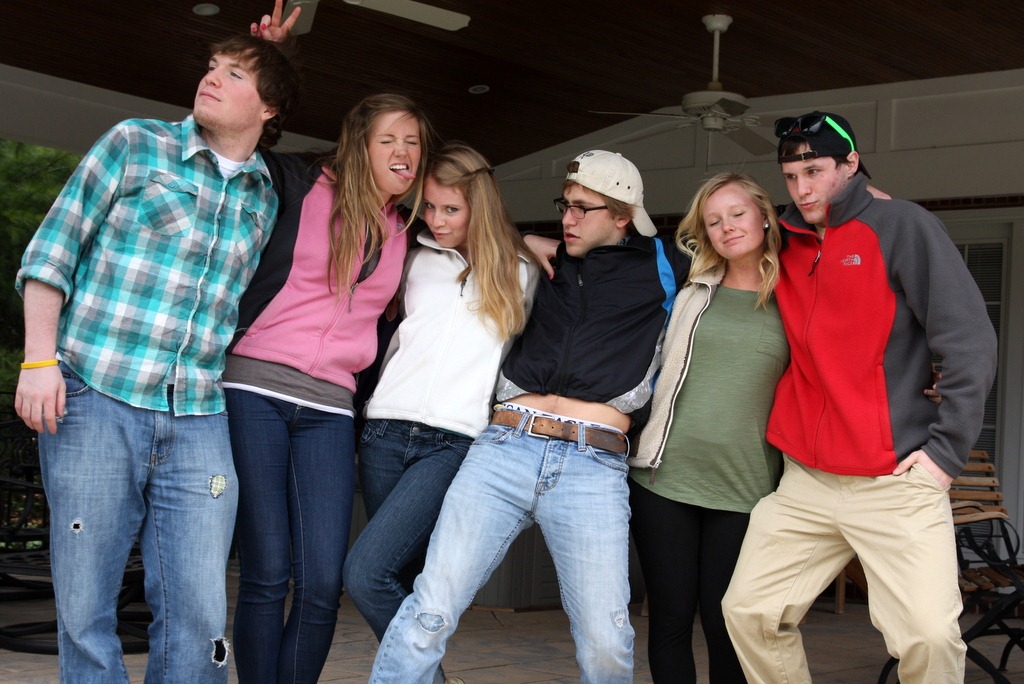
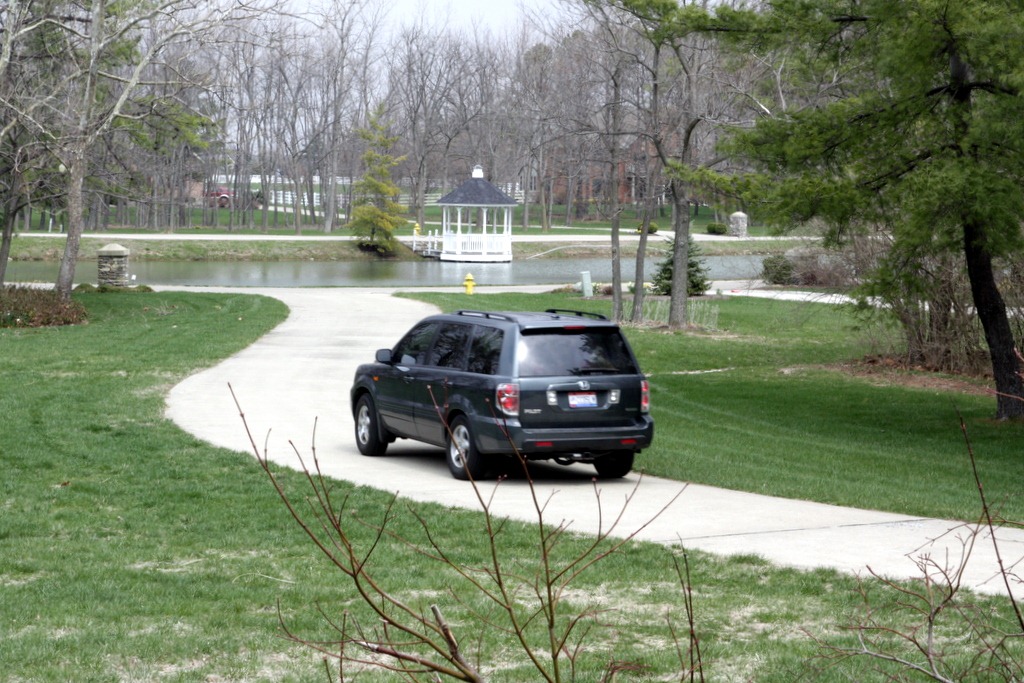
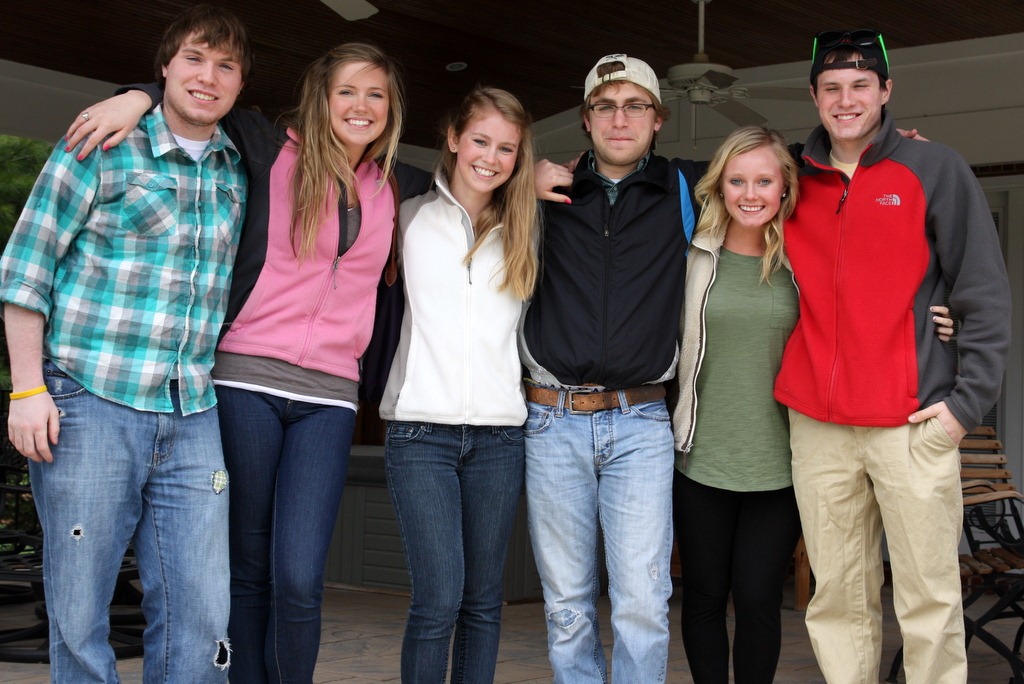
I thought I had posted a photo of Taylor and his friends heading to their college fraternity formal last year (2010), but I must have sent it only to FacebookI was probably thinking it was a better way to maintain privacy between just “friends and family?” I’m changing my mind this year, unless I hear an objection or some good argument against posting photos of 20 year old college student on my blog … hmm, now that I think about it, I posted their photos when they were in high school? Anyway the gang borrowing the Honda Pilot and are heading south to Gatlinburg Tennessee for their 2011 SigEp Formal this weekend. Have a good time … but not too good.

IMG_4864IMG_4860IMG_4868

Thinking out-loud about Facebook

Ever since my kids set up their Facebook accounts in high school, I’ve limited myself to participating on that particular social networking site. Perhaps it has something to do with the privacy and independence that I desired when I was in high school and college, or maybe it’s just that I don’t want to know everything … I have enough to worry about. Then when I was just starting to come around to social networking and the thought of utilizing Facebook a bit more, the privacy issue arose and several of the tech gurus and friends I know began to deactivate their accounts … so I put Facebook on hold again.

fbdeactivate

Back to the question: should I start using Facebook more to connect with friends and family? My two children don’t seem to mind sharing their social life with me (nor do many of my nieces and nephews), in fact several of my children’s’ friends have even asked to connect with me (I’ve known some of them most of their lives). To their credit, I don’t know if I would have done the same with my parents or their friends “back in the day?”

Hmm if I decide to post a bit more on Facebook … now how should I consolidate my Facebook accounts?

  1. facebook.com/richc.us <= sort of my current main account
  2. facebook.com/rdcorbett
  3. facebook.com/richcorbett.us

Random … or “desultory” thought:

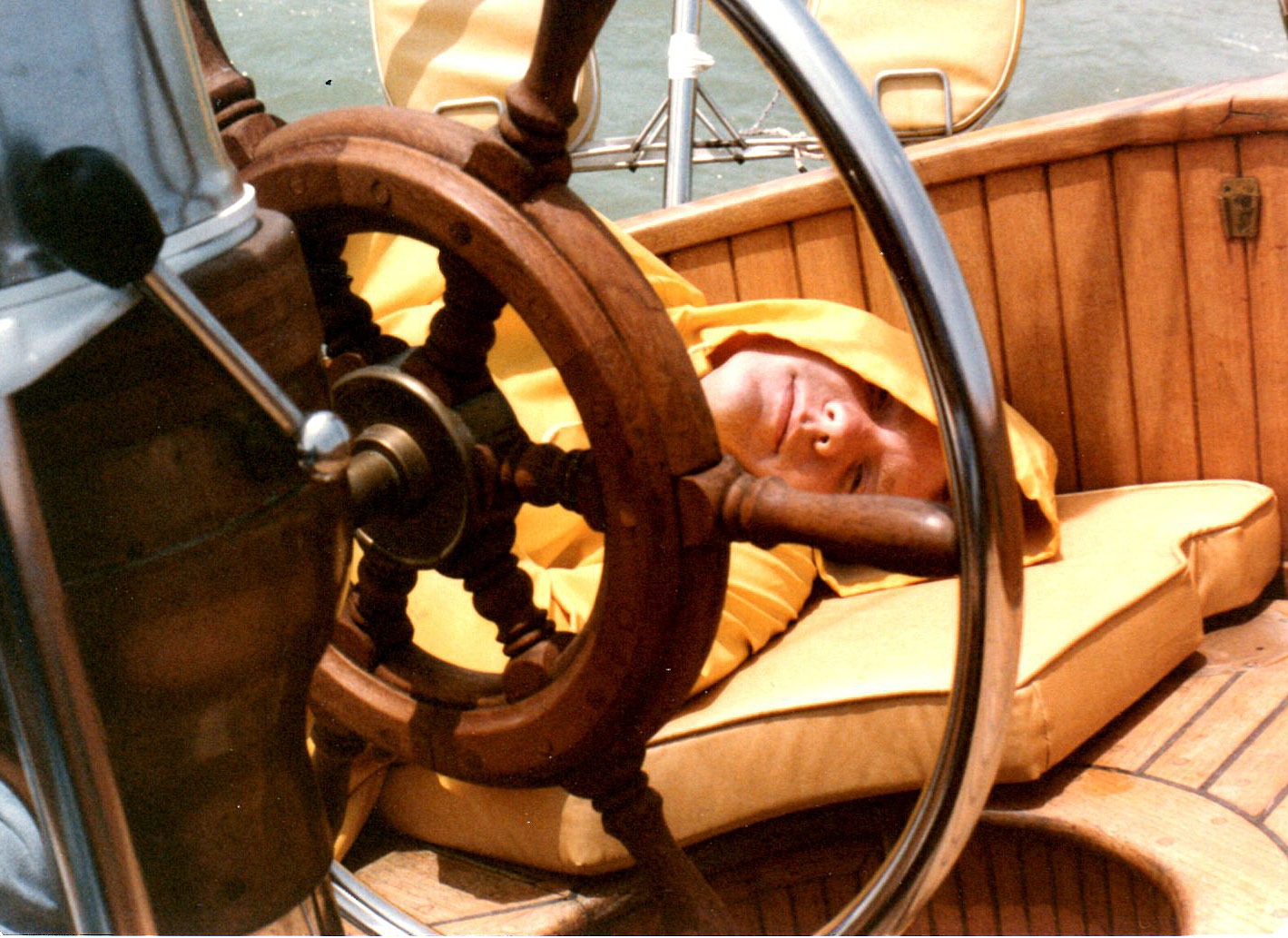
Seeing my son with his roommate and “little” had me remembering my college roommates. Hmm, about the only photo I have handy as I type this is of my undergrad roommate Jerry Moody a couple years after college a day or so before he married Pam (one of my wife’s roommates, by the way). Doesn’t he look happy spending the day sailing with me? Looking back on it, this was probably not the kind of ‘upset stomach’ that he should have had before getting married.
Smile
sailingwithmoody1984,jpg

More snow, you must be kidding?

Posted By on April 1, 2011

snow-protest

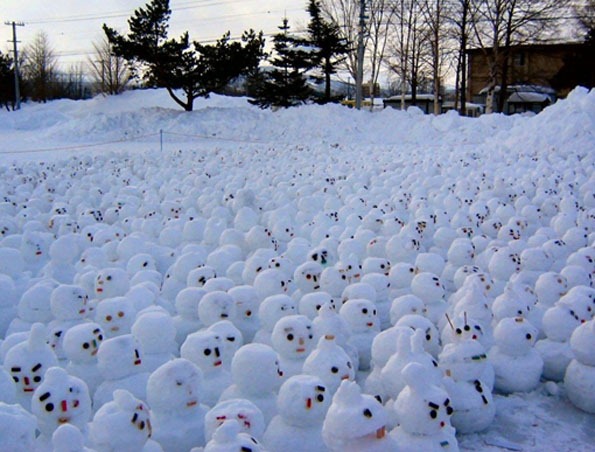
Woke up this morning to protesting snow-people … we’ve had far too much winter weather this year here in Ohio (and I suspect many other areas feel the same way). It started at the beginning of December and didn’t give us much of a reprieve … unfortunately the forecast isn’t for spring quite yet either.

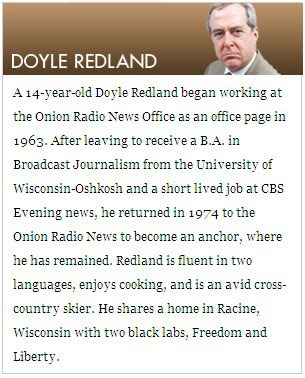
doyleredlandphotoMeteorologist Doyle Redland says there will be snow, heaviest to the east of Cincinnati with total accumulation of 2"-5" with higher amounts east of the city.  Lows in the 30s with winds from the west at 5-15 mph. Saturday will be mostly cloudy with early snow tapering to snow showers and flurries.  Little additional accumulation expected.  Highs in the middle to upper 30s. 

By the way …

|
|
|
|
|
|
|
|
|
|
|
|
|
|
|
|
|
|
|
|
|
|
|
|
|
|
|
|
|
V

doyleredland

A P R I L   F O O L S  Smile

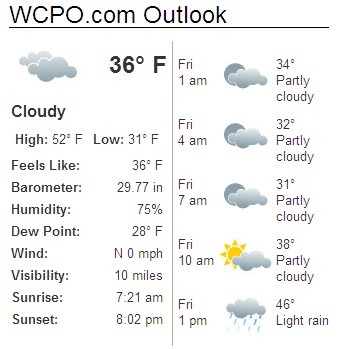
Here’s the real Cincinnati area forecast from WCPO.com weather.

wcporealforecast110401

Growing legislation against using cellphones while driving

Posted By on March 31, 2011

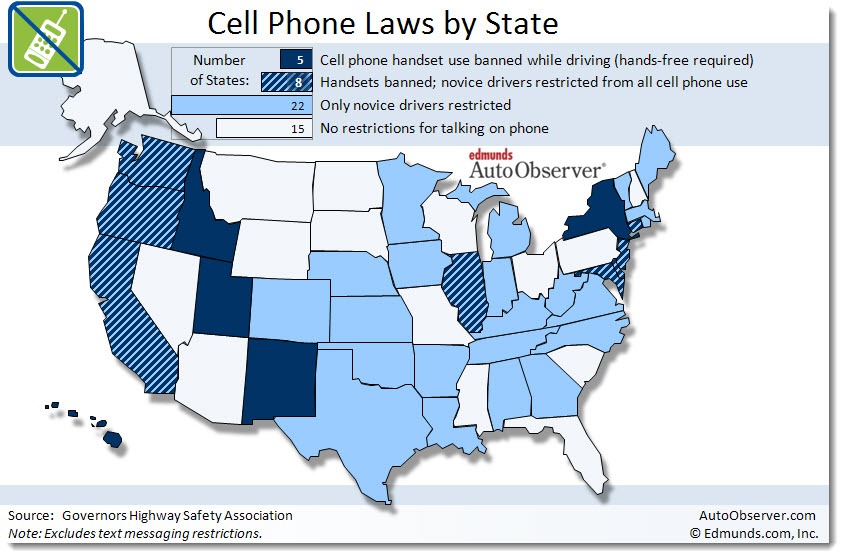
Keeping and eye on (and archiving) where one can and can’t use a cellphone while driving a car (posted in an AutoObserver).

cellphonelawsstate110329
Click image for larger map

Cell Phone States of Mind

We’ve all been inspired to at least think, if not actually scream “Hang up and DRIVE!”, when we see a car drifting out of its lane, sitting motionless at a green light or slamming on the brakes at the last minute — all while the driver talks into a phone he or she is cradling in one hand. Yet, depending on where you live, said driver could be in clear violation of the law or represent entirely legal behavior.

Restrictions on driver cell phone use range from banning all activity of any kind (handheld or hands-free) to no cell phone restrictions whatsoever. In the former case, states like Colorado, Indiana and 26 others have banned any form of cell phone use by novice drivers. At the other extreme are states like Montana, Nevada and Ohio, which have no cell phone restrictions at all, including no limits on teens and school bus drivers. In between are states that only ban handheld phone use by teens, with no additional restrictions on adults.

And what happens when driver’s break these phone use restrictions? Is it a primary offense, meaning it alone is enough for a police officer to pull them over, or can drivers only be cited after being pulled over for another infraction (making it a secondary offense)? That also varies on a state-by-state level. Then there are the laws against texting while driving, which vary between states as much as the hand-held restrictions.

What does it all mean from a driver’s perspective? First, if you’re going on a cross-country road trip you better have a hands-free option for using your phone, because even if you’re home state doesn’t have any restrictions it’s likely a neighboring state does. Furthermore, it’s not uncommon for cities and counties to have their own restrictions that go beyond state laws. In the Detroit area, for example, it’s entirely possible to have a daily commute that crosses areas with restricted and non-restricted cell phone laws.

Even more disconcerting than the lack of legal consistency is the lack of both compliance and enforcement of these laws. In California, for instance, the law states that nobody — adult, teen, bus driver, extra-terrestrial, etc. — is allowed to hold a phone while operating a motor vehicle.

Yet you see this behavior all the time in the Golden State. It’s actually quite easy to spot by simply observing the cars driving erratically. Certainly the police can’t intercept every instance of a California driver holding their phone while behind the wheel. But the frequency (and blatant accident potential) of distracted, weaving drivers in a state with some of the most aggressive handheld bans suggests the legal restrictions are having minimal effect.

On April 1st, 2010 the Department of Transportation and the Environmental Protection Agency instituted new national greenhouse gas standards that every automotive manufacturer must meet, regardless of where a specific vehicle is ultimately sold in the U.S. This was the first time the federal government had established a national standard, and while the requirements to meet these new emissions standards are relatively high most automakers are thrilled to finally have only one standard to content with.

Prior to this national standard the emissions requirements had fragmented among various states, forcing automakers to either meet the emissions standards of the most restrictive states or develop multiple emissions standards and ensure the right cars went to the right states.

Now, with such a wide disparity in cell phone laws across the country, it’s the consumer that must content with multiple legal requirements based on where he is at any given moment. It’s likely this patchwork of standards is only contributing to the lack of compliance by drivers, even in states with laws against using a handheld phone. A similar situation exists with seat belt laws that currently range from primary offenses to no requirement at all (thank you New Hampshire).

And as with seat belt laws, establishing a national standard for cell phone use may be difficult, or even impossible from a purely legal standpoint. The Supreme Court is currently looking into the role of state’s rights versus uniformity of law as it relates to vehicle safety. When you strip away all the vagaries of the legal arguments the question is pretty simple: is consumer safety better served by a national standard or the ability of each state to determine its own standard?

I submit the answer is only as obvious as the drivers who are holding their phones while driving.

See the entire Karl Brauer article in AutoObserver.com.

Rain and wind cause havoc at Sun n Fun in Lakeland Florida

Posted By on March 31, 2011

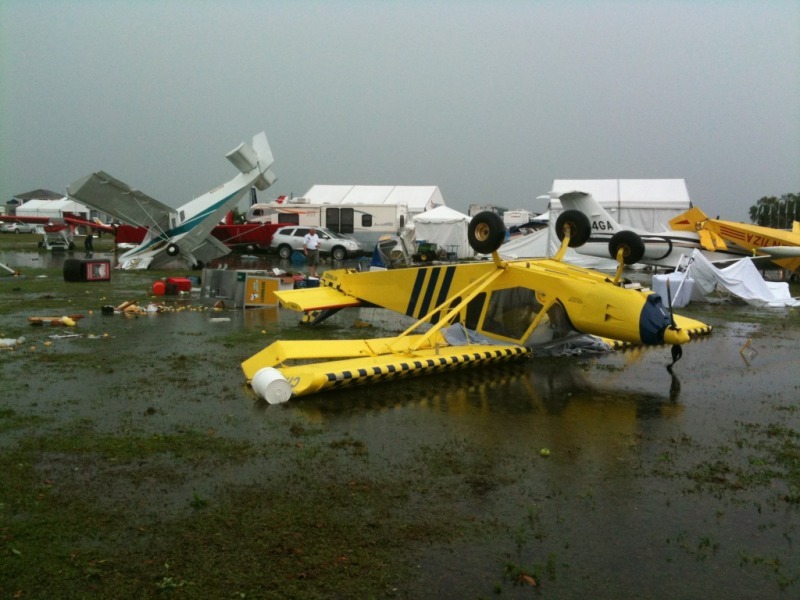
sunnfundamage

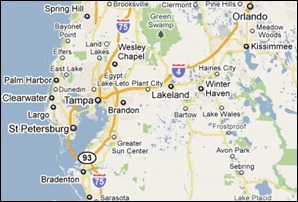
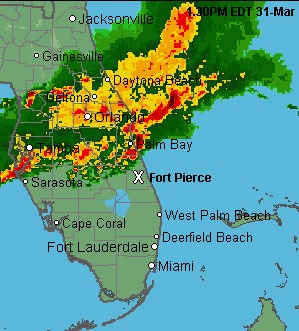
The annual Sun ‘n Fun air and trade show is a rite of spring for many pilots who regularly enjoy one of the premier fly-ins in the country. This year the weather in central Florida (Lakeland) did not cooperate and sent heavy ran and damaging winds through the airport ground. Early reports indicating that people were trapped in a collapsed hanger proved to be inaccurate, although there have been injuries.

Lakeland Regional Medical Center has received six patients with minor injuries." Early unconfirmed reports indicated people had been trapped in a collapsed building or tent.  Officials dispute those reports and say there are some injuries, but all people have been accounted for.

Polk Sheriff Grady Judd says seven people total were injured, including one person with a broken hip.

It has not been confirmed if damage was caused by a tornado. 

Tampa’s Ch 10 News

lakelandmap weatherradar110331

Snow, Snow, go away and a nice dinner out

Posted By on March 31, 2011

latemarchsnowneoh110329

Isn’t it about time for this long winter to end? It was a slippery day of driving and another couple of inches of snow while making my way around northeastern Ohio on Wednesday. About the only positive was an enjoyable “Two for $20” dinner with my daughter at Applebee’s.

latemarchsnow110329
A couple of spring 2011 snow photos above taken with my Palm Pre (click for larger)

Google takes another crack at social networking with +1

Posted By on March 30, 2011

plusoneiconThe next big Google thing?

Not wanting to fall too far behind leading social sharing sites (primarily Facebook), Google is rolling out it’s new socially connected experiment they are calling “+1.”  The new “+1” button is an opt-in service and will permit socially connected users to give their stamp of approval to a search results, therefore helping friends “find the best stuff.”

Not unlike the Facebook “Like” button, the Google “+1” button will keep a log of your favorite finds on Google and then use them to gauge the content that you’ll receive on the search page – and obvious plus for Google is for ad placement. The changes to the algorithm that Google uses is also suppose to reduce the “cluttery” on a user’s search results and help them hone in on quality results. According to Google, their goal “is to get you the most relevant results as quickly as possible.”

googleplus1

The opt-in page explains: "Your +1’s are public. They can appear in Google search results, on ads, and sites across the Web. You’ll always be able to see your own +1’s in a new tab on your Google Profile, and if you want, you can share this tab with the world." If this sounds a little like Delicious to you, you’re not alone, although remember Google has been experimenting with "social stuff" for awhile with the likes of Wave and Buzz.

According to tech news sites, Google admittedly considered buying Digg too, a user voting service that ranked popular links, but the talks fell through – Digg has since languished. With Google’s “+1” there isn’t a Digg-like central repository for the most popular links. There isn’t a list of how many people have given each result a seal of approval, only that one of your Google contacts has given a +1 to a link. Who know’s what Google is collecting behind the scenes?

Desultory - des-uhl-tawr-ee, -tohr-ee

  1. lacking in consistency, constancy, or visible order, disconnected; fitful: desultory conversation.
  2. digressing from or unconnected with the main subject; random: a desultory remark.
My Desultory Blog