It has been too long between truly “desultory” posts, so I’ll add one on the topic of iOS photo editing and iOS apps.
Ever since I updated my iPhone from the long-lasting iPhone 7 Plus almost a year ago, I’ve been missing the magnifier highlighting tool that was part of Apple’s previous iOS. Now that I’m up-to-date and using the iPhone 16 Pro Max, the extra tool that I occasionally used is missing. Hopefully Apple will decide to include it in future releases and although it has been missed, I’ve been reluctant to shell out the money for a questionable app called Annotable.
First, it wants access to my full photo archive (don’t like that) and second if I want to use the magnifier tool, it requires a purchase. So for now, it will be no magnifier highlighting for me.
As for the desultory question: “Would you eat this black dot on your salami?”
After seeing a new WSJ poll, I decided to work up some new right-column commentary for TheHustings, but still wanted to archive it on MDB too (below).
Yet even as my attitude is positive in mid-2025, I suspect our government will find a way to continue the bloat of government, borrow more from future generations and raise taxes; no doubt the deficits and debt cycle will continue until we crash. ☹️
Over the past six months, President Trump and his administration has delivered an economic resurgence that defies the gloomy predictions of economists, mainstream media and the so-called experts. With a robust economy and a thriving capital market, the administration’s policies are turning skeptics into believers.
Since taking office, Trump’s focus on deregulation, tax cuts, and America-first policies has fueled unprecedented growth. Unemployment is at historic lows, small businesses are booming and consumer confidence is soaring. The capital markets have responded with record-breaking rallies, shrugging off the doomsday forecasts that dominated headlines. This isn’t just data—it’s a testament to leadership that prioritizes the American people over political narratives.
The Wall Street Journal’s recent poll on economic sentiment tells the story loud and clear. In July 2025, a notable percentage of Americans — higher than any point since November 2021 — thinks that the economy is positive. Compared to previous polls during the Biden administration back in 2022, 2023 and 2024, the upward trend is undeniable. This marks a significant shift from the pessimism under Biden or Trump’s tariffs announcement, reflects a growing trust in the direction of the economy. The naysayers’ propaganda is losing its grip as public perception shifts when it comes to President Trump and his polices on the economy.
The stock market has been an even brighter spot, with the Dow and S&P 500 hitting new highs, driven by investor confidence in Trump’s pro-business agenda. This surge contradicts the mainstream media’s relentless negativity, which predicted economic collapse. Instead, we’re witnessing a market that thrives on stability and optimism proof that the American spirit, led by strong leadership, prevails. Who knows, there might even be a few extra dollars from the tariffs to start paying down our national debt and/or a rebate check for Americans who need it most?
Six months in, the Trump administration has laid a foundation for sustained prosperity. As the WSJ poll shows, more Americans are recognizing this reality every day. The era of fake news and economic doom-saying is fading, replaced by a renewed faith in a stronger, wealthier America.
During the early years of World War II, few aircraft turned as many heads—or changed the tide of air power—like the Lockheed P-38 Lightning. With its distinctive twin-boom design and central nacelle cockpit, the P-38 didn’t just look different; it was different. This radical design, the brainchild of Lockheed’s legendary engineer Clarence “Kelly” Johnson and his Skunk Works team, made the Lightning one of the most innovative fighters of its time.
What truly set the P-38 apart was its versatility.It could serve as an interceptor, long-range escort fighter, ground-attack aircraft, and reconnaissance platform.
The aircraft was powered by twin Allison V-1710 engines with turbo-superchargers, enabling it to fly at high altitudes and reach speeds of over 400 mph—impressive for the early 1940s. It was also the only American fighter in continuous production from the beginning to the end of U.S. involvement in WWII.
Pilots nicknamed it the “Fork-tailed Devil,” a moniker first given by German adversaries who quickly learned to respect its speed, firepower and ability to absorb damage. With all of its armament—four .50-caliber machine guns and a 20mm cannon—mounted in the nose, the P-38 delivered concentrated firepower without the convergence issues faced by wing-mounted guns.
Perhaps its most famous mission was the successful interception of Japanese Admiral Isoroku Yamamoto in 1943—an audacious, long-range operation that showcased the Lightning’s unmatched range and precision.
More than just a warplane, the P-38 Lightning cemented Lockheed’s reputation as a premier aircraft manufacturer and helped launch the company into the spotlight. It wasn’t just another fighter—it was a statement of American engineering might during a time the world needed it most.
This past weekend was the last weekend of July 2025(yikes!) and I tried to stay cool by jumping in and out of the pool during the 90+ degree summer heatwave that has been for the most part enjoyed for a few weeks now. I do prefer the heat of summer to the cold of winter … and know, “it is summer in Cincinnati, so what do you expect?”
For the most part, I was still able to accomplish a few chores around the house — cutting a fallen tree and finishing the lawn bench project. I know most people enjoy summer with activities and events “away from home” … but like my youngest granddaughter, “I would like to stay at home”(at least that’s what she told us last week).
Speaking of cutting and hauling the dead tree (above), it was much larger than the photo suggests since much of it was still in the woods. After cutting and hauling the part you can see, I chained the rest to the John Deere 330 and was not able to pull it out of the woods (to avoid the poison ivy). So decided to see if the 2010 BMW X5 35d was up to the task — gently, I was able to pull it out of the woods without a problem. Whew!
Back to staying cool: Instead of working outside on the Lawn Bench project that was started on the previous weekend, I opted to move it all into the basement workshop. It was definitely much more comfortable (my liking hot weather aside). The two coats of polyurethane was dry, but I had yet to dry-fit the new oversized Oostra Oak slates and pieces. It was much tighter than I expected — who knew the difference between .067 and .075 would make that much of a difference – BUT it all worked out perfectly. It is almost too nice to put outside. Then I added a final heavier coat of polyurethane that unfortunately ran a little as I attempted to filling in the area around each stainless steel bolt and screw to protect the wood from absorbing any water and degrading prematurely. So with those drip/runs … it will be much easier to leave outside in the weather. HA!
EDIT Add: Spotted a leftover “pool temperature” photo that is about as warm at I’ve ever seen it.
Some collectors go for muscle cars. Others chase rare diecasts or obscure dealership brochures. But @Car_Guy_Tom? He had a more refined ambition: cornering the global market on Cordoba keychains.
It all began on a lazy Sunday morning at a suburban Chicago area garage sale. Nestled between a box of spark plugs and a velvet Elvis was a bronze medallion gleaming with elegance. Two proud lions. A noble crest. The word CORDOBA emblazoned below like a royal decree. It was less keychain and more of a statement.
Tom held it up to the light and swore he heard a faint whisper in the wind: “Rich, Corinthian… leather.”
Soon, his obsession turned into a mission. He began acquiring every Cordoba keychain he could find—on eBay, Facebook Marketplace, Argentine souvenir sites, and even from a retired Chrysler executive’s estate sale. He outbid pensioners. He bartered with classic car guys. He once traded a mint-condition AMC Pacer rear window for a rare Cordoba fob with gold trim.
Due to my college roommate Jerry Moody’s love for bands and brass instruments (he played the tuba and sousaphone in ONU’s marching band), we listened to plenty of Chuck Mangione on our stereo. During the 4 years we roomed together (three years in Founders Hall and then one in an off-campus apartment where we both met our wives-to-be), I would watch him practice songs and enjoy the diversion from our normal albums and tapes. I actually learned to appreciate brass band music and even jazz (see 1, 2 and 3).
One of the icons during the late 1970s was Chuck Manigione; he was an impressive performer and band leader … even for someone lacking in musical talent like me.
History doesn’t always repeat, but as Mark Twain supposedly said, it often rhymes. That was my lingering thought after reading Oren Kessler’s “Palestine 1936: The Great Revolt and the Roots of the Middle East Conflict.” If you’re curious about how today’s Middle East complexities came to be, this well-researched and engaging book takes you back to one of the earliest and most defining chapters in the modern Arab-Israeli struggle.
Kessler does a solid job walking readers through the 1936 Arab revolt in British-controlled Palestine—a moment that rarely gets the attention it deserves. He paints the backdrop with clarity: Jewish immigration rising, Arab nationalism growing restless, and Britain caught in the middle with imperial fatigue and political missteps.
The book doesn’t take sides but it doesn’t sugarcoat either. It’s heavy on facts but accessible, and while the politics are intense, Kessler’s writing is surprisingly readable. What stuck with me most is how many modern debates—from borders to governance to foreign meddling—echo from that time.
If you enjoy books that explain how we got here by revisiting there, “Palestine 1936” will give you a solid foundation and is worth your time. It’s not light beach reading, but for those who appreciate history and geopolitics with clarity and context, this one hits the mark.
It has also intrigued me enough to put Penny Sinanoglou’s book on “Partitioning Palestine” on my CheapCharts app wishlist in case it heads back down to the 5/8/2025 low of $2.99 (below)? Also it was a way for me to plug and app my buddy Jeff uses to buy books for his iPad … although I’m more of a Kindle reader myself.
The breeze if any was from the south and it was in the 90s with a heat index likely over 100 degrees. Still we – well I mean I – had a good time revisiting the property and neighborhood where I grew up. It has definitely changed, but in talking with my brother Ron who is planning on building (plans submitted), says the area still has many of the same families in ownership as when we were kids. The jabber-box that I am sometimes, I walked our granddaughters along the beach area (noticing the sandcastle left by Ron and Claire and their granddaughters the day before) and then back to the “crick” and dike behind Lagoon Drive. We walked up to the community beach area (in the heat) and I rambled on about clearing the rocks and cutting the weeds for our baseball field. It seemed much larger, as did our yard, back then???
We drove down to the other west-end community beach where my grandmother Bluhm would set up her easel and then charcoal sketched another one of my favorite paintings — she added “boys walking” (I suspect me and my brother and it hangs in our bedroom today). Obviously, only after thinking about this, I realized that I’ve mentioned it before — a sign that I’m a grandfather and am getting old?
Those were definitely days that both my brother and I look back on fondly … and “now” sort of wish that they could have lasted much longer. My grandma Bluhm died in 1970, only a year after my namesake grandfather back in 1969 (link) … but my memories of them are strong.
Since today’s post was a little weak for Tech Friday, I’ve decided to add a second post updating my battle against DOS attacks on my server. Half the battle is fending off BOTs that originate overseas and I’ll give you one guess as to the country hammering my server the most?
Since the WordPress plugin Wordfence does a pretty good job tracking and isolating the originating IP addresses, I do have a pretty good idea. Next step is trying to figure out the best way to limit the resources drain on since even having PHP handling such requests is taxing a lightweight Linux server. Time to do some additional reading in not letting a request even request anything.
Really … there’s no comment or commentary needed. Just watching this baby (and mom) laugh is enough to brighten even the dreariest day. Have a great weekend!
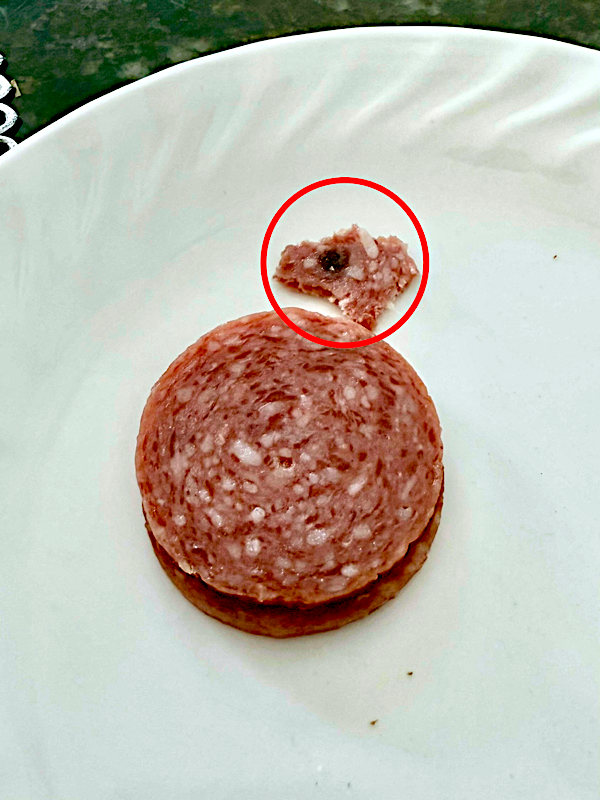 Ever since I updated my iPhone from the long-lasting iPhone 7 Plus almost a year ago, I’ve been missing the magnifier highlighting tool that was part of Apple’s previous iOS. Now that I’m up-to-date and using the iPhone 16 Pro Max, the extra tool that I occasionally used is missing. Hopefully Apple will decide to include it in future releases and although it has been missed, I’ve been reluctant to shell out the money for a questionable app called Annotable.




 buddy
buddy 


 having PHP handling such requests is taxing a lightweight Linux server. Time to do some additional reading in not letting a request even request anything.