Learning about Dinghy-Tow – an option to towing or davits

Posted By on September 17, 2014

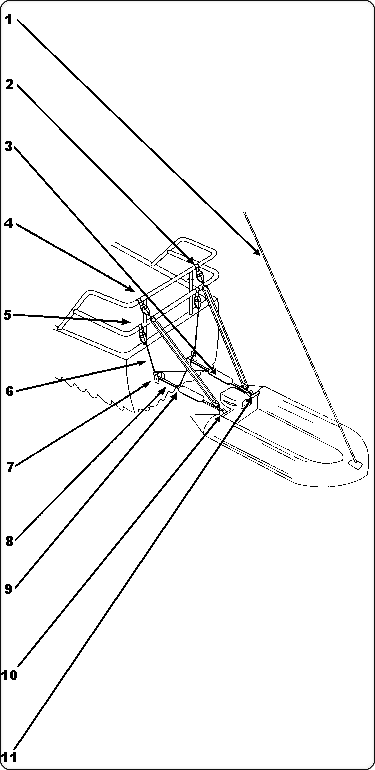
A small Canadian company called Davron Marine Products has an innovative stainless steel, block and line option for half lifting and half towing an inflatable dinghy for boating. Their Dinghy-Tow system looks simple and do-able.

dinghy-tow-features1f_towing

I’ve been pondering adding davits that would work with our Cape Horn self-steering gear for Encore since 2012. What ever is added needs to be able to conveniently keep our roll-up Zodiac (or perhaps a new inflatable) available for use. The Dinghy-Tow system is ingenious in that it raise the stern of the inflatable out of the water while trailing the bow all with very little drag or risk of losing the dinghy. I’ve heard several stories where a sudden squall flips a dinghy being towed or swamping it.

According to David Foster, the components that are fastened to the stern would “need to be 15-18” above the waterline and would fit around our current Cape Horn steering gear.” I’m unsure how much space there is to the “port” of the centerline, but his “absolute minimum would be 20” between the 2”x2” stern brackets. It looks like it might work.

encore_stern_dinghytow

I’ll include a sketch above adding the Dinghy-Tow to estimate how it might work. I’m still waiting on a price quote … might be worth a trip to Annapolis for the United States Sailboat Show October 9-13, 2014!

UnitedStatesSailboatShowOct2014

Mishmash of goings-on and photos from the last few days

Posted By on September 16, 2014

We had a quick but great week with Taylor and his friends. He was home for a scheduled weeks vacation from Williston, kara_dadmarkNorth Dakota primarily and for his long time friend Kara and Simon’s wedding. We had a great time Saturday as the weather was perfect for the outdoor wedding and for the many guest here from the UK (Simon is British). Her parents, Jody and Mark Kannel were wonderful hosts and both Brenda and I enjoyed being part of the celebration. They had the wedding ceremony and reception at the Pinecroft in Cincinnati (Powel Crosley Estate). It was a nice venue for an outdoor wedding. Congratulations Mr. and Mrs. Simon Jefferis.

Besides the wedding, Taylor had a full … and I mean full … week of activities. He will definitely need to get back to work on Wednesday so he can rest up.

First he was off with his buddy Mike Agler to Red River Gorge in Kentucky for a little hiking and camping … and reconnecting (I think they miss hanging out together). I don’t think the weather was perfect, but the rain didn’t seem to dampen their time together. So glad Mike was in town (travels for work) to see Taylor.

MikeTaylorRedRiverGorg2014 MikeTaylorRedRiverGorge2014

KatieTaylorSep2014I think being in a small town, Taylor misses a few of the things offered in our area. He worked hard to cram a few of them in:

  1. Cincinnati Reds game
  2. Downtown nightlife
  3. Believe it or not … fast foods like Taco Bell (not in Williston, ND … yet!)
  4. Bengals game
  5. Being with other friends including his birthday buddy Katie (right)
  6. Even a couple dinners at home and out with mom and dad
  7. Sitting by the fireplace and “debating” with Dad, who thinks he knows it all.
  8. Oh … and mom’s laundry service Smile

fireplace140915All in all it was great to see Taylor appreciate the opportunity and career building work as a “Planner” in “boom” area of northwestern North Dakota. I think he knows that his fast pace job and hefty responsibility is rare for young college graduates just starting their careers. I love hearing him talk about what he is doing and can definitely see that he has learned a lot. A big take away for me is what a difference it makes when one respects and appreciates their boss and the mentoring he provides (thanks Ray Pacheco).

I’d be remiss not to mention Katelyn and Drew in Minnesota; all is well with them as they had a nice weekend of fun too. Drew sent a bunch of photos from a Renaissance Festival in Shakopee, MN that included his parents who were visiting for the first time in Wayzata. As parents, I’m sure they enjoyed seeing them so happy. It looked as if they had a great time.

K_D_ShakopeeMN140913

CNBC talks boom growth with North Dakota Sen Heidi Heidcamp

Posted By on September 15, 2014

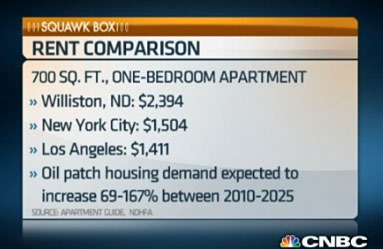
Since visiting my son Taylor a couple times in northwestern (Williston) North Dakota, I pay closer attention to what is happening in his area and the boom growth as well as the politics around moving energy. Unless someone sees the train tanker cars lined up or drive on the roads which are rentwilliston140915packed with truck caravans with their own eyes, it is not fair to weigh in “against” pipeline project on the ground that the pipeline is dangerous to the environment.  It is hard to imagine that the pipeline would do more damage than the 1000s of trucks or miles of tanker cars? I suspect the real fight is against fossil fuels in general, not the the pipeline itself.

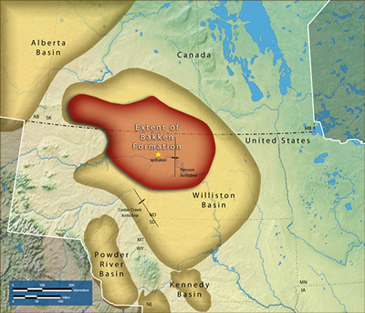
Monday morning on CNBC, Senator Heidi Heitkamp (D) represented her state well considering her party is for the most party responsible for the Keystone Pipeline hold up. Not only are there considerable jobs in areas that would benefit America at a time when jobs are a big issue, the oil from North America insulate us from being held hostage by OPEC. Heitkamp  would be a far better Republican than Democrat IF you were only to hear her 100212BakkenFormationon Squawkbox, but unfortunately her “D” keeps Harry Reid in control of what is even discussed in the Senate … in this case pressuring President Obama to approve the pipeline. Below are embeds from CNBC and remarks from Senator Heitkamp  talking about pluses and minus when it comes to boom growth in North Dakota. My question (which wasn’t asked or answered) has to do with most of the oil tax revenue staying in other parts of the state rather then helping Bakken (western less populated) part of North Dakota with the challenges of living in a boomtown (graphic above) as well as many of their infrastructure needs. (video below)


Continuing Bull Market, Deflation fear or is Inflation coming?

Posted By on September 14, 2014

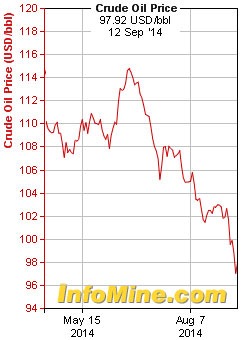
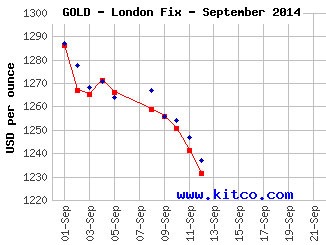
There was a spirited debate this past week concerning the Federal Reserves’ exit strategies and what will happen when the Fed balance sheet is deleveraged. crudeoilinfomineThe equity bulls continue to believe the U.S. will see economic grow as interest rates remain low and continued tame inflation numbers (some like Wilbur Ross are more concerned about deflation). Most guests I heard on CNBC last week concluded that the U.S. is best positioned to attract capital as stability elsewhere in the world and that will continue to drive investment capital to the U.S. goldkitcosept2014
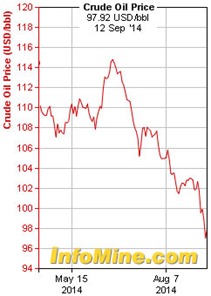

The low yields on bonds and fix income investments along with collapsing commodities (oil, gold, etc) are making the U.S. stock markets one of the only attractive investments, especially since companies continue to report strong earnings.

The opposite side was represent well by comments from Peter Schiff, who has held bearish views on the U.S. economy and U.S. dollar (he’s been wrong so far). In a September 10, 2014 europac.net posting, he points to the disappointing August payroll numbers as a “wake up call warning. (the 142,000 jobs created was almost 40% below the consensus estimate)” Below are a few more of his concerns …

Since the markets crashed in 2008, central banks around the world have worked feverishly to push up the prices 800px-Peter_Schiff_by_Gage_Skidmoreof financial assets and to keep consumer prices rising steadily. They have done so in the official belief that these outcomes are vital ingredients in the recipe for economic growth. The theory is that steady inflation creates demand by inspiring consumers to spend in advance of predictable price increases. (The flip side is that falling prices "deflation," strangles demand by inspiring consumers to defer spending). The benefits of inflation are supposed to be compounded by rising stock and real estate prices, creating a wealth effect for the owners of those assets which subsequently trickles down to the rest of the economy. In other words, seed the economy with money and inflation and watch it grow.

Thus far the banks have been successful in creating the bubbles and keeping inflation positive, but growth has been a no show. The theory says the growth is right around the corner, but like Godot it stubbornly fails to show up. This has been a tough circle for many economists to square.

Two explanations have emerged to explain the failure. Either the model is not functioning (and higher inflation and asset bubbles don’t lead to growth) or the stimulus efforts thus far, in the form of zero percent interest rates and quantitative easing, have been too timid. So either the bankers must devise a new plan, or double down on the existing plan. You should know where this is going. The banks are about to go "all in" on inflation.

Despite their much ballyhooed "independence", central bankers have proven that they operate hand in glove with government. They are also subject to all the same political pressures and bureaucratic paralysis. There is an unwritten law in government that when a program doesn’t produce a desired outcome, the conclusion is almost never that the program was flawed, but that it was insufficient. Hence governments continually throw good money after bad. The free market discipline of cutting losses simply does not exist in government.

This is where we are with stimulus. Six years of zero percent interest rates and trillions and trillions of new public debt have failed to restore economic health, but our conclusion is that we just haven’t given it enough time or effort. My theory is a bit different. Maybe zero percent interest rates and asset bubbles hinder rather than help a real recovery. Maybe they resurrect the zombie of a failed model and prevent something viable and lasting from gaining traction? This is a possibility that no one in power is prepared to consider.

But what if they succeed in getting the inflation, but we never get the growth? What if we are headed toward stagflation, a condition that in the late 1970s gripped the U.S. more tightly than Boogie Fever? It may come as a surprise to the new generation of economists, but high inflation and high unemployment can coexist. In fact, the two were combined in the 70s and 80s to produce "the Misery Index." But according to today’s economic thinking, the Index should not be possible. Inflation is supposed to cause growth. If unemployment is high they say there is no demand to push up prices. But it’s the monetary expansion that pushes prices up, not the healthy job market.

The tragedy is that if the policy fails to produce real growth, as I am convinced it will, the price will be paid by those elements of society least able to bear it, the poor and the old. Inflation and stagnation mean lost purchasing power. The rich can mitigate the pain with a rising stock portfolio and more modest vacation destinations. But they won’t miss a meal. Those subsisting on meager income will be hit the hardest.

Many economists are now trying to make the case that the United States had hit on the right stimulus formula over the past few years and is now reaping the benefit of our bold monetary experimentation. They continue the argument by saying Europe and Japan were too timid to implement adequate stimulus and are now desperately playing catch up. But this theory is false on a variety of fronts. First off, the U.S. is not recovering but decelerating. Annualized GDP in the first half of 2014 has come in at just a shade over one percent, which is lower than all of 2013, which itself was lower than 2012. The unemployment rate is down, but labor participation is at a 36-year low, and wages are stagnant. We have added more than $5 trillion in new public debt, but very little to show for it. We are not the model that other countries should be following but a cautionary tale that should be avoided.

It is also spectacularly wrong to assume that the problems in Europe and Japan can be solved by a little more inflation. Higher prices will just be a heavier burden for European and Japanese consumers, not an elixir that revitalizes their economies. The problems in Europe, Japan and the U.S. all have to do with an oppressive environment for savings, investment, and productivity that is created by artificially low interest rates, intractable budget deficits, restrictive business regulation, antagonistic labor laws, and high taxes. Since none of the governments of these countries have the political will to tackle these problems head on, they simply hope that more monetary magic will do the trick.

So as the Fed, the ECB, the Bank of Japan, and all the other banks that follow suit, push all their chips into the pot and hope that a little more inflation will save us from the abyss, we can wish them luck. It’s going to take a miracle.

LINK

Video: The Zipper Merge vs the polite Midwestern Early Merge

Posted By on September 13, 2014

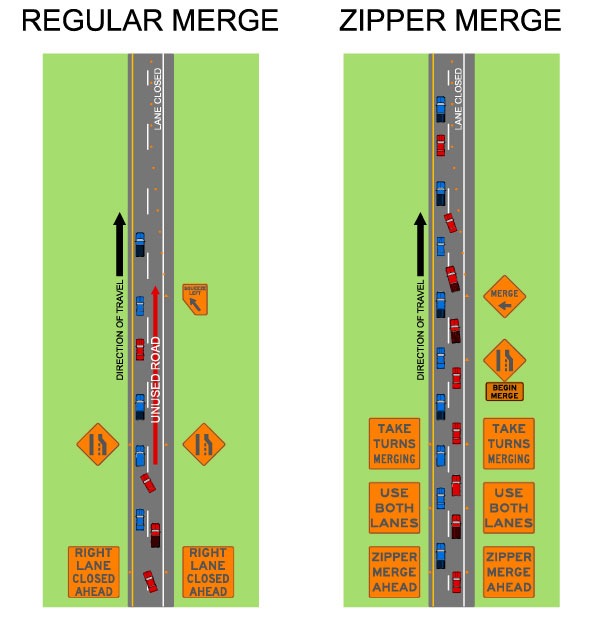
What do Minnesotans (and a few others) know that Ohio drivers haven’t figured out yet? They realized that the “Zipper Merge” is better than the polite “Early Merge.”

merging zippermerge

According to traffic experts, the “Zipper Merge” reduces construction congestion, improves highway speeds in work zones and helps to reduce accidents (Sue Groth, MnDOT traffic safety and technology director). Read the MnDOT link or check out their YouTube video below and see if you agree.

TechFriday: Pondering switching from Sprint to Ting

Posted By on September 12, 2014

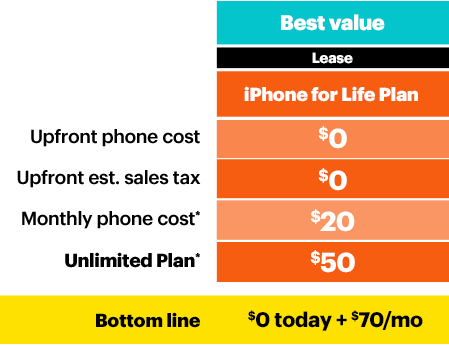
While waiting on the discount cellphone carrier Ting (my daughter’s referral) to welcome my Sprint-based iPhone 5s, I’m tinglogo[27]also weighing Sprint’s new promos iphoneforlife_sprint (iPhone for life, etc). Since Ting is only approved as a month-to-month reseller for non-current iPhone models, switching to them requires waiting a few more days or weeks until my second-hand “s” model is approved for the switch (Brenda’s iPhone5 is already ok). The current Sprint announcements are suppose to keep them competitive with not only the cheaper resellers (like Ting), but the offerings coming from the big boys. I’ve heard that Verizon will be giving away the iPhone6 with a trade-in and 2-year contract and no doubt AT&T will be offering something within a few days too (CNN plans/prices compared article). Walmart has already announced that they will be selling the iPhone 6 and 6 plus for $20 less than Apple$179 with a contract.

iphone6flat

iphonesapplegoldapplewatch

As a gadget lover, I’d like the new iPhone 6 or 6 plus … and probably would mind the AppleWatch either, but let’s be real, there are other places to spend money. Frankly I’d like to move away from the monthly bills as I begin to think about how to manage cash flow considering in a decade or so I need to be thinking fixed income and retirement (gulp). It’s never too early to figure out what technology is really worth paying for in monthly bill.sprintframily2lines Cellphones, Internet access, cable and excessive utilities are all areas I’d like to cut. For years I’ve had multiple lines on our family wireless plan (kids, parents, etc) … and in this past year, we are finally down to just two of us on a cellphone plan. That’s the good news … but the bad news is that we’re still spending $113/mo for our two phones on the Sprint Framily Plan. I know we’re better than some but far worse than others … and both have out of contract phones that we like.

Enter our plan to switch to Ting … but only hearing positive reports from my daughter as to where here monthly bill really ended up and if she noticed any difference in service from our Sprint plan. She made the change in August after porting her phone from our plan and taking advantage of Ting’s offer to help with the tingdashboardaug2014Early Termination Fee (ETF). So far she has been very pleased and her bill (under $40/mo) and sent me a “dashboard” screenshot (image right). The usage may be a little higher for me, although I have so many options for making VoIP outbound calls on my phone that minutes should not be an issue so as long as I’m connected to WiFi. Data use might be an issue, but again most of the time that we are doing anything bandwidth intensive it would be on WiFi. In fact a quick look at last months “Usage Summary” indicates that I was only at 700MB and Brenda about 100 … suggesting we can remain under the 1GB tier (below). As for text messages, our totals were under 500. After plugging in my numbers, the Ting bill should be nearly half that of Sprint – $54 plus taxes and surcharges (est $7). That’s over $600 saved each year.

OurTingEst_140911

Remembering 9/11 – The all important slurry wall

Posted By on September 11, 2014

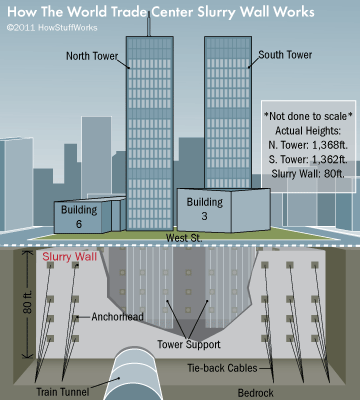
how-the-world-trade-center-slurry-wall-works-3While thinking about those who lost their lives on September 11, 2001 in 2014, I thought about symbols of strength and endurance that are highlighted in displays at the 9/11 Memorial Museum. One such unseen design element was that of underground “slurry walls” built in 1964. Thanks to the engineers and architects who designed the base for the World Trade Towers, many lives and definitely more devastation was prevented. While reading, one realizes just how close New York City came to having the Hudson River flood, not only the Twin Towers site, but possibly much of lower Manhattan including the subway lines. Because so much of NYC is underground, sophisticated plans were created prior to building the World Trade complex. In the design, a “slurry wall” was trenched and cabled to bedrock up to 80 feet under the ground. In some areas the “special powdered clay containing bentonite trucked from Wyoming”  had to be worked around the 100 year old subway tunnels. This “slurry” was saturated with water and applied to the walls of the excavated trench and reinforced with concrete to create a waterproof barrier … purposed to hold back the Hudson River. This 3 foot thick underground wall encircled the basement of the towers and “stretched for 3,500 feet.” (LINK)

As the 9/11 Memorial Museum FAQ states:

Had it breached, lower Manhattan and the subway lines that run through it might have been flooded, and the destruction could have been even more unimaginable. In the original master plan for the new World Trade Center, architect Daniel Libeskind felt that the slurry wall, in its ability to withstand the forces of destruction, itself had become a symbol of the strength and endurance of our country and its foundational values.

Are Bull Sharks the most dangerous at popular beaches?

Posted By on September 10, 2014

sharkbiteMention Great White, Tiger and Hammerhead to most people at the beach and they will usually bullsharkbristle with concern or at least know you are talking about “dangerous” sharks. Mention the Bull Shark and NOT many realize that IF the minuscule chance of a shark attacked occurred, the Bull Shark would very likely be the offender at many popular U.S. beaches.

I haven’t made a count this summer, but I would venture a guess that most of the stories about shark bites were associated with the Bull Shark … just as was the report the other day at the west end of Dauphin Island, Alabama. A more aggressive specie? Brackish waters? Or just their numbers and proximity to man?

Here’s what National Geographic concludes:

Bull sharks are aggressive, common, and usually live near high-population areas like tropical shorelines. They are not bothered by brackish and freshwater, and even venture far inland via rivers and tributaries.

Because of these characteristics, many experts consider bull sharks to be the most dangerous sharks in the world. Historically, they are joined by their more famous cousins, great whites and tiger sharks, as the three species most likely to attack humans.

Bull sharks get their name from their short, blunt snout, as well as their pugnacious disposition and a tendency to head-butt their prey before attacking. They are medium-size sharks, with thick, stout bodies and long pectoral fins. They are gray on top and white below, and the fins have dark tips, particularly on young bull sharks.

They are found cruising the shallow, warm waters of all the world’s oceans. Fast, agile predators, they will eat almost anything they see, including fish, dolphins, and even other sharks. Humans are not, per se, on their menus. However, they frequent the turbid waters of estuaries and bays, and often attack people inadvertently or out of curiosity.

Bull sharks currently are not threatened or endangered. However, they are fished widely for their meat, hides, and oils, and their numbers are likely shrinking. One study has found that their average lengths have declined significantly over the past few decades.

The AppleEvent was successful, but the bar was high

Posted By on September 9, 2014

Tim Cook lead another #AppleEvent in the age of social media and I both watched and "tweeted" along with the tech interested across the country and world. applewatchThe event was "as expected" in that Apple launched the new iPhone6 and 6plus … larger phones. They will be offering up their new iOS8 on September 19th for all devices (free) and a new option for the NFC AppleWallet for their "new iPhone6 models." (see my question/comment below)
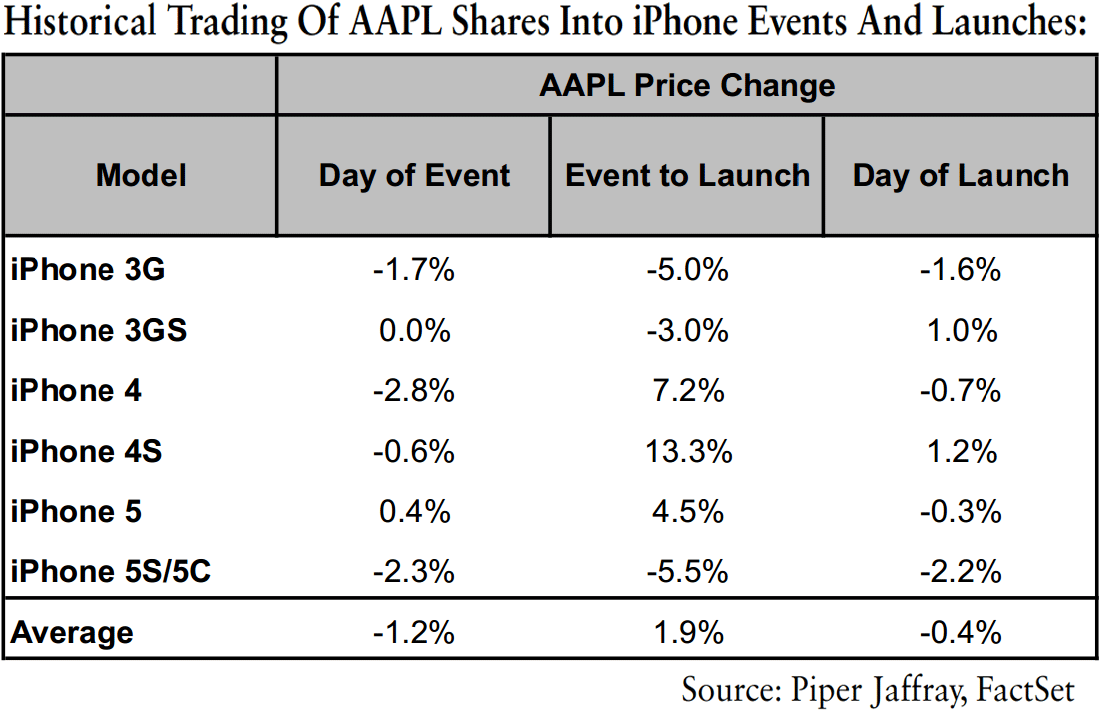
The final product was the AppleWatch … which initially looked a little "squareish" to me, but seems very functional especially considering it functions as an AppleWallet. At this point $AAPL traded up just over $103/share, but inched down after it was noted that the Watch is used pared with an iPhone (but can be used with the iPhone 5 and up). Unfortunately for shareholders, the stock has moved below the day’s opening price and is back to "flat" at 3:30PM. It does look to be following the pattern for past AppleEvents in closing down after product announcements (although "flat" is currently better than past events).

appleeventsstock

My  Question: If the AppleWatch can be paired with both the iPhone 5s and 6s, will the AppleWallet function on the AppleWatch when paired with the older iPhone 5 and 5s?

===

Watching $AAPL as the buzz is all about Apple today

Posted By on September 9, 2014

This content is restricted.

Desultory - des-uhl-tawr-ee, -tohr-ee

  1. lacking in consistency, constancy, or visible order, disconnected; fitful: desultory conversation.
  2. digressing from or unconnected with the main subject; random: a desultory remark.
My Desultory Blog