Holy Toledo! It looks like a Rivian R1T EV being charged
Posted By RichC on March 27, 2022
This content is restricted.
Posted By RichC on March 27, 2022
This content is restricted.
Posted By RichC on March 26, 2022
The “pain at the pump” is definitely real if you are buying fuel and if you have spend the last decade with gas and diesel at 40+% lower than we are seeing today. That said, in inflation-adjusted dollars, we are still off the highest per barrel prices that we have seen (chart below). Most oil traders expect the refined fuels at the pump to be even higher this summer before any additional capacity makes in “into the pipeline.”
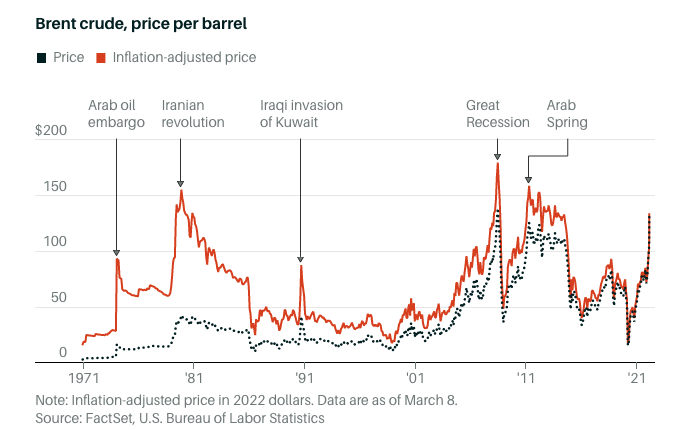
Unfortunately that additional capacity, expected in 6 to 9 months, “could” come too late to prevent the next recession or the ability for most American to spend and keep the economy chugging along. If people stop buying, traveling, etc … people stop working and will have fewer dollars. If history teaches us anything, inflation is often brought into check by a recession or two. We can still hope that the Federal Reserve can manage a “soft landing” as they say and that perhaps the supply chain issues will ease some shortage pressure. BUT … now that Russia has invaded of Ukraine (major food supplier to Europe) we could see food shortages … and therefore higher prices … the next inflation kick.
Normally this is where I would add that the “lack of government discipline” (both DEMs and GOP) when it comes to borrowing and spending/wasting money, but I’ll refrain for now. Instead will point out an economic chart that points out Treasury yield curve inversions … a very accurate predictor of a recession, as mentioned before.
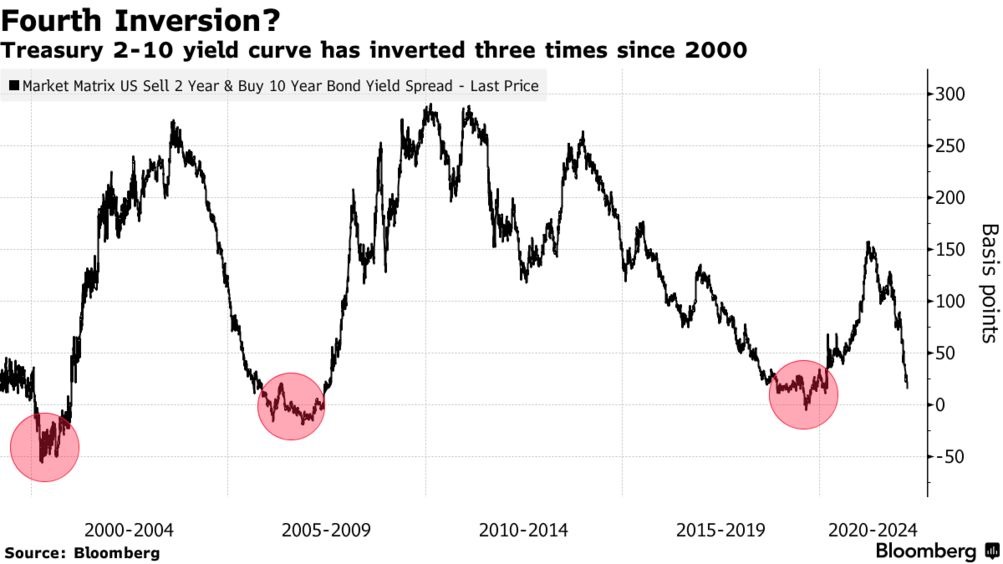
The Yield Curve Is Inverted! Remind Me Why I Care
If you’re wondering what a yield curve is and why there’s so much fretting in the U.S. over it flattening — and parts of it even inverting — you’re not alone. Late last year, Google searches for “yield curve inversion” shot up to their highest level ever. Here’s what the fuss is about.
1. What’s a yield curve?
Posted By RichC on March 25, 2022
 Those who know me likely have noticed that I’m often wearing an Aftershokz headset. I’ve worn them for the last several years and since my hearing has been impacted by Ménière’s disease way back in the late 1990s (long story) … in dealing with Menieres related hearing loss, I have found a bone conduction headset helpful … at least until I either need hearing aids (probably already do) or find out there is some kind of hearing implant that would be helpful for me. Until then, I’m very fond of both the quality and the helpfulness of Shokz headsets.

That said, the newest version after their name and logo change to “Shokz,” (from AfterShokz) has been reviewed and is a minor improvement  to my current Aeropex version – the new headset is called OPENRUN (or a premium version called OpenRunPro).
They are nearly identical from visual look, but now have a quick charging feature, are IP67 waterproof and feature Bluetooth 5.1 rather than 5.0. If my current Aeropex fail, I’ll likely opt for the OpenRun since added bass is not really something I want or need … but wireless inductive charging would be nice.
Posted By RichC on March 24, 2022
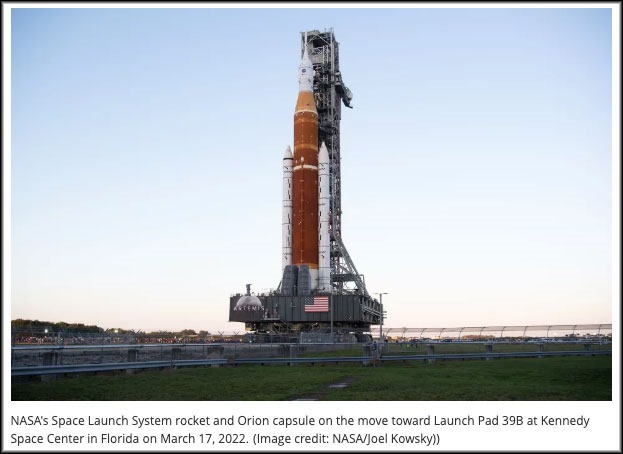
It was exciting to see the new Space Launch System (SLS) and Orion capsule move toward Kennedy Space Center’s Launch Pad 39B this month as space-nerds anticipate NASA’s Artemis 1 moon mission. The sight of such a large rocket “crawling” toward the launch pad brings back the Apollo program of my youth and the Space Shuttle that enamored my daughter.
Below is an interesting rocket poster (click it for larger) (more…)
Posted By RichC on March 23, 2022
From a John Steele Gordon lecture at Hillsdale College … “money is just another commodity, no different from petroleum, pork bellies, or pig iron. So money, like all commodities,  can rise and fall in price, depending on supply and demand. But because money is, by definition, the one commodity that is universally accepted in exchange for every other commodity, we have a special term for a fall in the price of money: we call it inflation. As the
  price of money falls, the price of every other commodity must go up.” (see link)
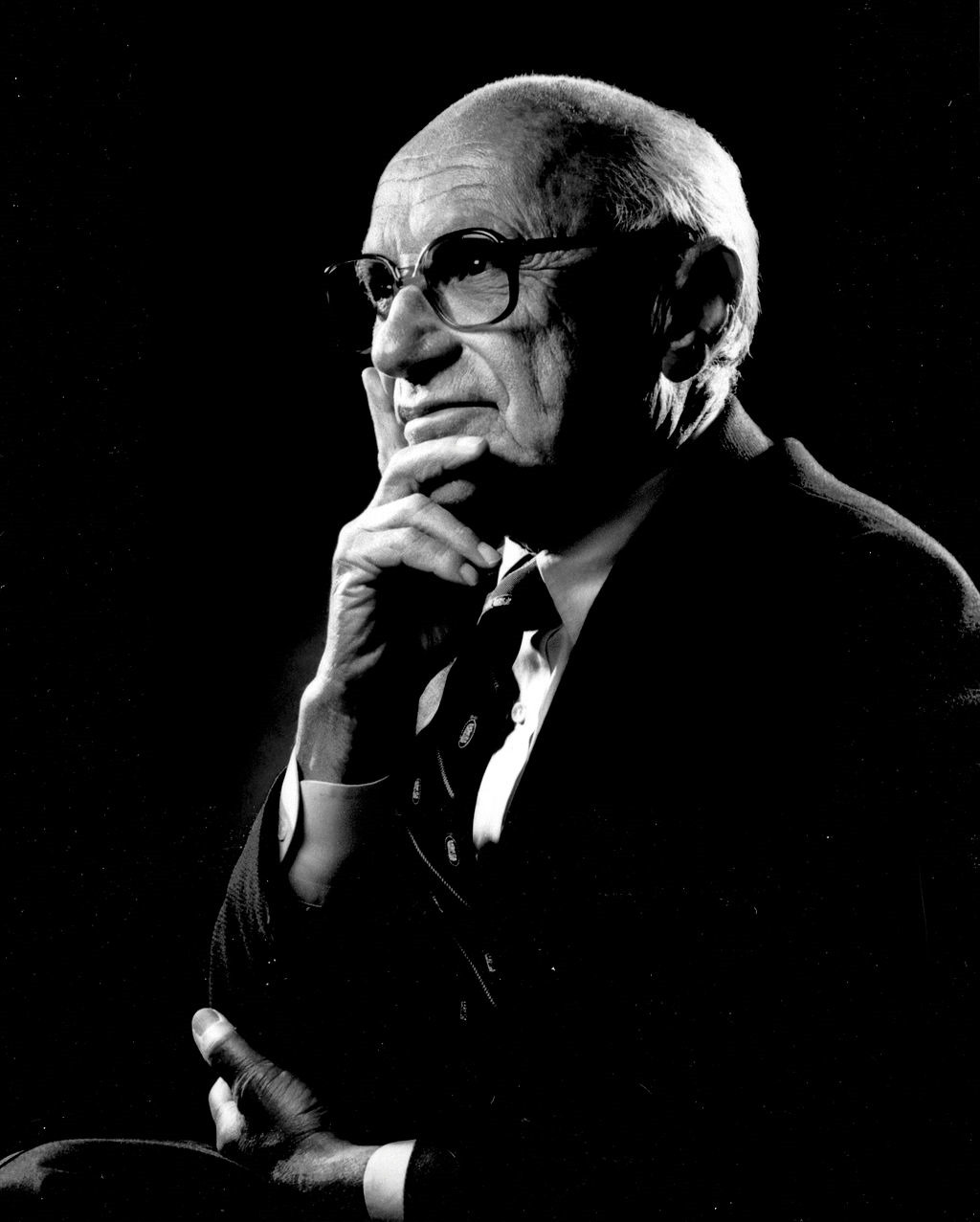
“Inflation is always and everywhere a monetary phenomenon in the sense that it is and can be produced only by a more rapid increase in the quantity of money than in output.”
– Milton Friedman, Nobel Prize-winning economist
The history lesson of inflation was most interesting as we all too often recognize it based on our limited personal history. For me, that would be starting in the 1960s after the the death of President John F. Kennedy when Vice President Johnson assumed office.
He pushed through a number of programs, including Medicare and Medicaid, Head Start, and the Mass Transit Act. These new programs caused a breathtaking rise in non-defense federal expenditures. Between 1965 and 1968, they rose by a third, from $75 billion to $100 billion. Because of the Vietnam War, military expenses went up as well, from $50 billion to $82 billion.
This new spending inevitably caused an increase in inflation, which had been minimal since the immediate post-war years. A vicious cycle developed, with lenders demanding higher interest rates to protect them from inflation, while the Federal Reserve pumped up the money supply by buying federal bonds to keep interest rates down.
..
By 1980, the inflation rate hit 13.5 percent, the highest peacetime rate in history. Although the national debt increased by two-and-a-half times in the 1970s, so great was the inflation in that decade that the debt actually declined as a percentage of GDP.
Only when Paul Volcker became chairman of the Federal Reserve in 1979, and Ronald Reagan became president in 1981, did inflation end. The Federal Reserve sharply increased interest rates, pushing the economy into a deep recession. Unemployment hit 10.8 percent at its peak, the highest since the 1930s. But it worked. Inflation, which had been 13.5 percent in 1980, was down to 4.1 percent in 1984 and would stay low for the next few decades.
The current look at inflation we may have studied often … but the deeper history when talking about rises and falls of great societies is also interesting.
Posted By RichC on March 22, 2022

“A place for everything and everything in its place,” is probably not the most fitting idiom for my cluttered workshop, since the debatable originate has to do with “neatness” according to an Ohio Repository (Canton, Ohio) article by Charles A. Goodrich in 1827. Although with a little sleuthing, it has  also been credited to Benjamin Franklin as well as a
  nautical publication – Masterman Ready, or the Wreck of the Pacific in 1842 by Frederick Marryat ("In a well-conducted man-of-war every thing is in its place, and there is a place for every thing.")
Whoever is credited, I do appreciate having a place for tools and things. In today’s case, I’ve grown tired of trying to store my awkward 18v Ridgid Snake Light and decided to make an oak hook above the garage charger.
An aside on the GEN5X 18v Flexible Dual-Mode LED Work Light …  I am not really a fan of it. It is not bright enough nor is the flexible snake arm stiff enough to hold the head in position.
On the other hand, the GEN5X 18V Hybrid Folding Ridgid Panel Light is far more helpful in nearly all situation … and it can be powered by 110vac (it is a bit bulky though).


Posted By RichC on March 21, 2022
Old black and while films have never been top picks for Brenda and me when selecting a movie for the weekend, but as the Coronavirus pandemic shutdowns started, we decided to  add a few classic movies as a way to broaden our life experience. Like reading classic literature as part of a higher education,
  watching a few early films and knowing the names of famous actors, producers and directors should be part of being educated, at least in my opinion. What started as a weekend “classic movie” educational experience, has now shifted to something we both look forward to and enjoy. For the last year, we’ve even planned a “dinner and a movie” for a Friday or Saturday night.
Last weekend, the movie pick was “Watch on the Rhine” from 1943 based on the screenplay by Dashiell Hammett. The movies of the time were often associated with World War II and that was also the plot of this movie.
Considering the war in Ukraine we’re dealing with in 2022, watching this movie has some similarity to the unrest in Europe in the late 1930’s and war in the early 1940s. The refugee situation and anti-Fascist response to Nazism in the movie plot is eerily similar to what we are experiencing today. We can only hope that we’re not on the verge of a World War III … this time with Russia’s Vladimir Putin behaving like last century’s Adolf Hitler.

As for Music Monday, I mentioned to Brenda that Bette Davis was the lead actress in the movie “Watch on the Rhine” and wondered if she remembered the 1982 song by Kim Carnes titled “Bette Davis Eyes” — it won Record of the Year. Of course after playing the YouTube music video … she did.
Posted By RichC on March 20, 2022

Photo from February 2013 in Delray Beach while visiting Brenda’s parents
For years … well decades really … we have been fortunate enough to escape winter in February or sometimes March or April and head to sunny or warmer climates for a week. Often it was to visit either Brenda’s or my parents who would stay for a few months in Florida (a 2007 post). MomH and DadH would always go to the east coast (2012) and MomC and DadC after retiring would often go to the Florida Panhandle. Our family  liked both areas and we always enjoyed spending time with them. I’m so glad we were able to take time off and spend time with them before it was too late.
Hopefully, Brenda and I will be able to do something similar in a few years, but for now, we’ll escape when we can get the time off (and do pretty often) … and enjoy going down in the early fall and late spring before and after the snowbirds … although it does seem like there are a few more are deciding it might be time to relocate permanently in Florida (or other no-income-tax-states. Not a bad idea … although that reminds me that I need to get taxes done!)
For now, enjoy these guys enjoying the ocean waves on their spring break!
Posted By RichC on March 19, 2022
Sometimes people are too politically invested in climate change and environmental policies that they “can’t see the forest through the trees,” as John Heywood’s 1546 proverb propends (an idiom).  This is not to say we can’t improve … or that we should be resist/thwart the shift towards renewables and improve our environmental footprint, BUT we ALL need to have our eyes open and tread responsibility as we move forward. We must wisely use our existing resources too while maintaining a strong economy and fiscal footing … not to mention remain a world superpower that is big enough to deter existing or want-to-be adversaries … like the latest personification of evil.
 With that prefaced, here is a short article posted to LinkedIn by Brett Alexander, a geologist with a business background.
Batteries, they do not make electricity – they store electricity produced elsewhere, primarily by coal, uranium, natural gas-powered plants, or diesel-fueled generators. So, to say an EV is a zero-emission vehicle is not at all valid.
Also, since forty percent of the electricity generated in the U.S. is from coal-fired plants, it follows that forty percent of the EVs on the road are coal-powered, do you see?”
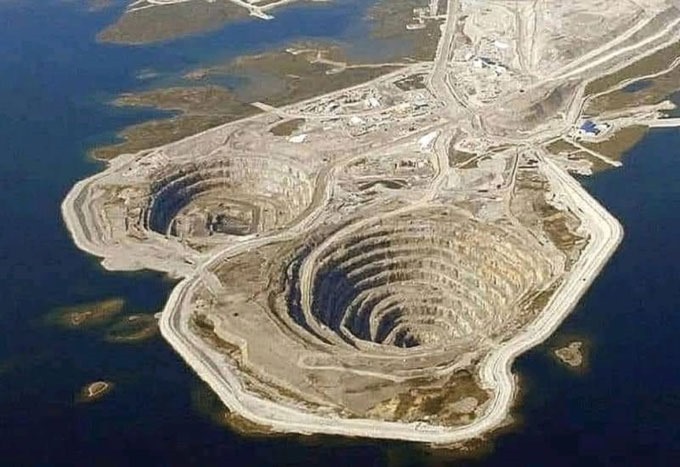
But that is not half of it. For those of you excited about electric cars and a green revolution, I want you to take a closer look at batteries and also windmills and solar panels. A typical EV battery weighs one thousand pounds, about the size of a travel trunk. It contains twenty-five pounds of lithium, sixty pounds of nickel, 44 pounds of manganese, 30 pounds cobalt, 200 pounds of copper, and 400 pounds of aluminum, steel, and plastic. Inside are over 6,000 individual lithium-ion cells.
To manufacture each EV auto battery, you must process 25,000 pounds of brine for the lithium, 30,000 pounds of ore for the cobalt, 5,000 pounds of ore for the nickel, and 25,000 pounds of ore for copper. All told, you dig up 500,000 pounds of the earth’s crust for one battery.”
The main problem with solar arrays is the chemicals needed to process silicate into the silicon used in the panels. To make pure enough silicon requires processing it with hydrochloric acid, sulfuric acid, nitric acid, hydrogen fluoride, trichloroethane, and acetone. In addition, they also need gallium, arsenide, copper-indium-gallium- diselenide, and cadmium-telluride, which also are highly toxic. Silicon dust is a hazard to the workers, and the panels cannot be recycled.
Windmills are the ultimate in embedded costs and environmental destruction. Each weighs 1688 tons (the equivalent of 23 houses) and contains 1300 tons of concrete, 295 tons of steel, 48 tons of iron, 24 tons of fiberglass, and the hard to extract rare earths neodymium, praseodymium, and dysprosium. Each blade weighs 81,000 pounds and will last 15 to 20 years, at which time it must be replaced. We cannot recycle used blades.
There may be a place for these technologies, but you must look beyond the myth of zero emissions.
“Going Green” may sound like the Utopian ideal but when you look at the hidden and embedded costs realistically with an open mind, you can see that Going Green is more destructive to the Earth’s environment than meets the eye, for sure.
I’m not opposed to mining ,electric vehicles, wind or solar. But showing the reality of the situation.
Posted By RichC on March 18, 2022
Each year I think I take a photo of either our flowers or trees coming back to life in the spring. I know from a quick search that there are at least ten posts similar to this one over the years … here is one from February 2017.  Since this particular lilac plant can’t be missed as I walk out the back door, I definitely know when the buds begin to blossom.
I should have grabbed the Lumix GX8, but since my aging iPhone 7 plus seems on its last legs and might not be around next spring, I’ll use a photo from it.
EDIT: “Genius” as Elon Musk tweeted!